

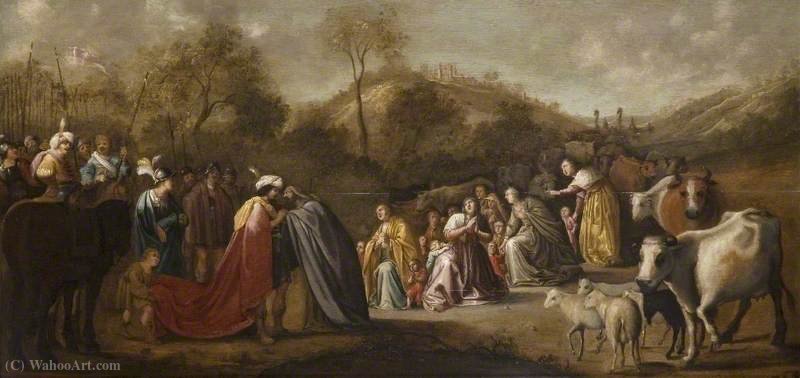
 プレビュー
プレビュー
 シェアする
シェアする シェアする
シェアする
 詳細を見る
詳細を見る

 ダウンロード
 似ている作品
 X線調査
X線調査 スライドショー
The Meeting of Jacob and Esau
 詳細を見る
詳細を見る
ジークレー/アートプリント
迅速な制作と多彩な仕上げオプションを備えた、ミュージアムクオリティのジークレーまたはキャンバスプリント。 ( 手描きの絵画を購入 画像を購入)




































作品のオリジナル比率に合わせた、当店の規定サイズからお選びください。

特定のフレームやスペースに合わせて、ご自身でサイズを指定することも可能です。選択されたサイズが元の画像の比率と一致しない場合、作品をトリミングするか、鏡面反射または単色での塗りつぶしによって画像を拡張いたします。制作を開始する前に、ご確認用のデジタルモックアップをお送りいたします。
画面上のプレビューには、実際のトリミングや拡張は反映されませんのでご注意ください。最終的な構図を正確に確認できるのは、モックアップのみとなります。
カスタムサイズも承っておりますが、元の比率を維持するためには、あらかじめ用意されたリストからサイズを選択することをお勧めいたします。


 ガラスオプションは、110cm未満のサイズでのみご利用いただけます。

The Meeting of Jacob and Esau
ジークレー/アートプリント
複製画のサイズ
-


合計金額
$ 62
関連作品









アーティストの略歴
The Serene Vision of Gerrit Claesz Bleker
In the vibrant tapestry of the Dutch Golden Age, where the light of a new republic shimmered across canal-side houses and fertile plains, Gerrit Claesz Bleker carved out a space of profound tranquility. Born in the historic city of Haarlem around 1592, Bleker emerged from an era defined by both intense maritime struggle and unprecedented artistic flourishing. While history often reserves its loudest praises for the dramatic shadows of Rembrandt, Bleker offered a different kind of mastery—one rooted in the quiet observation of the natural world and the subtle, atmospheric nuances of the Dutch landscape.
Bleker’s artistic journey was deeply anchored in the traditions of his home city. Under the guidance of Nicolaes Moeyaert, he began to refine a technique that favored clarity and meticulous detail over theatrical bravado. His style was profoundly shaped by the influence of masters such as Jacob van Ruysdael, whose ability to capture the vastness of the sky and the textured reality of the earth provided a blueprint for Bleker’s own vision. This connection to the Ruysdael tradition allowed Bleker to move beyond mere topography, infusing his landscapes with a sense of poetic stillness that invited viewers to linger within the dunes, forests, and pastoral vistas he so lovingly rendered.
A Mastery of Landscape and Allegory
The breadth of Bleker’s oeuvre reveals an artist capable of navigating between the earthly and the divine. His compositions often functioned as windows into a balanced world, where the rugged beauty of the Dutch countryside met the structured narratives of biblical and classical themes. In his landscapes, one might encounter the rhythmic movement of windmills or the undulating textures of coastal dunes, yet these scenes were frequently populated by figures engaged in the timeless rhythms of daily life—hunting parties, travelers, and laborers who lent a human pulse to the scenery.
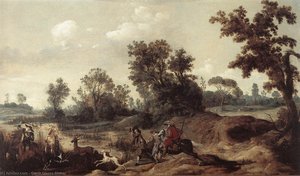
<- Stag Hunting in the Dunes: A breathtaking display of kinetic energy from 1625, where the artist captures the breathless pursuit of prey across a sandy terrain, demonstrating his ability to inject life into the landscape.
- The Baptism of the Eunuch: An evocative religious scene that showcases his skill in blending historical narrative with atmospheric depth, imbuing the moment with spiritual weight.
- Cavalry Battle Scene: A rare foray into the more turbulent side of the Baroque, where Bleker utilizes dynamic composition and rich color to depict the chaos of conflict.
- Adoration of the Magi: A testament to his ability to handle complex, multi-figure compositions with a sense of reverence and classical grace.
Beyond the purely naturalistic, Bleker was a skilled practitioner of historical allegory. He possessed the rare ability to weave symbolic richness into his canvases, using light and shadow not just for visibility, but to suggest deeper moral or spiritual truths. Whether through an engraving like The Raising of Lazarus or a meticulously painted panel, his work served as a bridge between the tangible reality of the Netherlands and the eternal themes of human existence.
Legacy and the Haarlem Tradition
Bleker’s significance extends far beyond his individual canvases; he was a vital pillar of the Haarlem Guild of St. Luke, joining its ranks before 1643. His professional standing was not merely a matter of personal achievement but a role of stewardship for the next generation of Dutch talent. As a mentor, he passed on the secrets of light and composition to rising artists such as Dirck Bleker, Pieter Adelaar, and David Decker, ensuring that the meticulous traditions of Haarlem would endure through the late seventeenth century.
Though his name may not resonate with the same thunderous fame as the titans of the Baroque, the enduring appeal of Gerrit Claesz Bleker lies in his ability to capture the soul of a landscape. His work remains a vital record of a period when the Dutch landscape was being reimagined as a site of both national pride and spiritual reflection. To look upon a Bleker landscape is to experience a moment of pause—a chance to breathe in the cool air of the dunes and witness the quiet, enduring beauty of a world captured in perfect, golden light.
gerrit claesz bleker
1593 - 1656 , Netherlands
基本情報
- Artistic Movement Or Style: Dutch Golden Age
- Artists Who Influenced This Artist:
- Jacob van Ruysdael
- Nicolaes Moeyaert
- Date Of Birth: 1592
- Full Name: gerrit claesz bleker
- Nationality: Dutch
- Notable Artworks:
- Stag Hunting in the Dunes
- Philip baptizes the Moor
- The Raising of Lazarus
- Place Of Birth: Haarlem, Netherlands

