

 プレビュー
プレビュー
 シェアする
シェアする シェアする
シェアする
 詳細を見る
詳細を見る

 ダウンロード
 似ている作品
 X線調査
X線調査 スライドショー
 統計情報
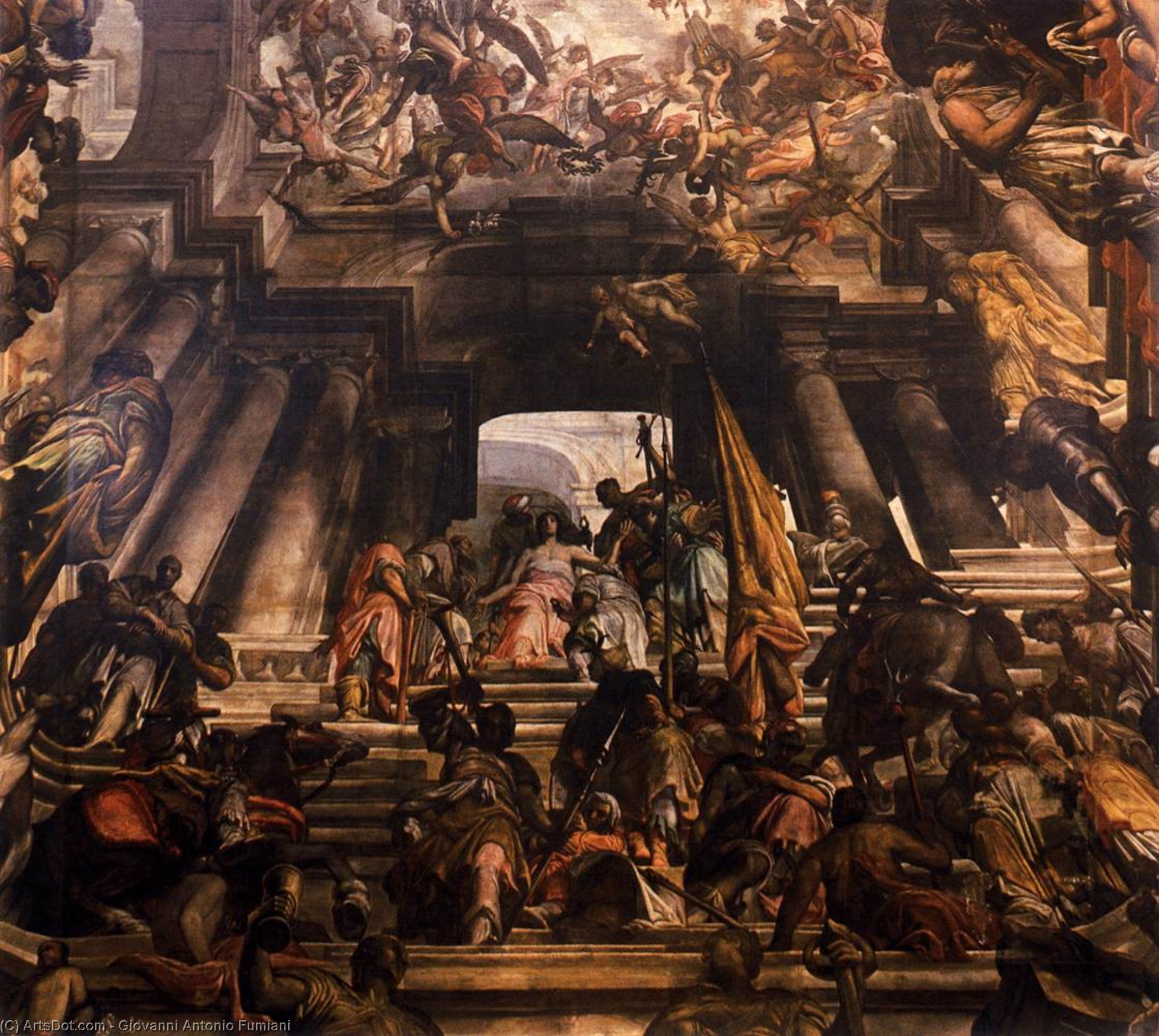
統計情報Martyrdom and Glory of St Pantaleon


 詳細を見る
詳細を見る
ジークレー/アートプリント
迅速な制作と多彩な仕上げオプションを備えた、ミュージアムクオリティのジークレーまたはキャンバスプリント。 ( 手描きの絵画を購入 デジタル画像販売へ切り替え)




































作品のオリジナル比率に合わせた、当店の規定サイズからお選びください。

特定のフレームやスペースに合わせて、ご自身でサイズを指定することも可能です。選択されたサイズが元の画像の比率と一致しない場合、作品をトリミングするか、鏡面反射または単色での塗りつぶしによって画像を拡張いたします。制作を開始する前に、ご確認用のデジタルモックアップをお送りいたします。
画面上のプレビューには、実際のトリミングや拡張は反映されませんのでご注意ください。最終的な構図を正確に確認できるのは、モックアップのみとなります。
カスタムサイズも承っておりますが、元の比率を維持するためには、あらかじめ用意されたリストからサイズを選択することをお勧めいたします。


 ガラスオプションは、110cm未満のサイズでのみご利用いただけます。

Martyrdom and Glory of St Pantaleon
ジークレー/アートプリント
複製画のサイズ
-


合計金額
$ 62
関連作品
アーティストの略歴
The Architect of Illusion: The Life and Legacy of Giovanni Antonio Fumiani
In the heart of the Venetian Baroque, where light dances upon canal waters and grandeur meets the divine, the name Giovanni Antonio Fumiani resonates as a master of spatial enchantment. Born in Venice around 1645, Fumiani was far more than a mere painter; he was an architect of the unseen, a virtuoso of quadratura who possessed the rare ability to dissolve the physical boundaries of a ceiling and replace them with the infinite heavens. His journey began not in the salt-aired streets of his birthplace, but in the scholarly studios of Bologna. Under the tutelage of Domenico degli Ambrogi, a specialist in the complex mathematics of architectural perspective, Fumiani mastered the art of perspectival illusionism. This rigorous training provided him with the technical foundation to manipulate sightlines, allowing him to construct soaring, imaginary architectures that seemed to extend far beyond the reach of any mortal eye.
By 1668, Fumiani returned to his native Venice, bringing with him a sophisticated command of spatial trickery that would soon redefine the city's ecclesiastical landscapes. His artistic evolution was shaped by a brilliant synthesis of diverse influences. From the humanist traditions of Bolognese Mannerism, inherited through his exposure to Ludovico Carracci and Alessandro Tiarini, he drew a sense of structural dignity and emotional depth. Yet, it was his profound fascination with the theatrical opulence of Paolo Veronese that truly ignited his palette. This connection infused his work with a vibrant, luminous color scheme and an appreciation for the grand, sweeping compositions that characterize the Venetian spirit. As his career progressed, Fumiani’s style matured into a singular voice—one that balanced the meticulous precision of architectural detail with a breathtaking, dramatic dynamism.
The Monumental Vision of San Pantalon
The zenith of Fumiani’s career, and perhaps the most audacious feat in the history of Baroque painting, is found within the modest walls of the church of San Pantalon. Between 1684 and 1704, Fumiani undertook a project of staggering proportions: the decoration of the nave with a series of canvases that would become legendary. Unlike the traditional fresco, which binds the image to the plaster, Fumiani utilized canvas to create The Martyrdom and Apotheosis of San Pantalon. This massive undertaking, spanning forty-four individual canvases across a surface measuring twenty-five by fifty meters, remains one of the largest paintings in existence. Through the masterful application of di sotto in sù—the technique of depicting figures as if seen from below—he transformed the ceiling into a window to the divine, where saints and martyrs ascend through layers of painted clouds and illusory cornices.
This masterpiece serves as a profound testament to his skill in quadratura. To the viewer standing in the nave, the heavy architecture of the church seems to vanish, replaced by a dizzying upward surge of light and motion. This work does not merely decorate a space; it redefines it, creating an immersive experience that parallels the grandest Roman ceiling decorations of the era, such as those by Andrea Pozzo. It is a triumph of both physical endurance and artistic intellect, representing a moment where the boundaries between the earthly and the celestial are rendered entirely permeable.
A Legacy Written in Light and Stone
Beyond the colossal scale of San Pantalon, Fumiani’s contributions to Venetian art were diverse and deeply impactful. His ability to navigate different scales allowed him to move seamlessly from the monumental to the intimate. In his smaller works, such as the modelli created for the Grand Prince Ferdinand de' Medici in Florence, he revealed a delicate, decorative sensibility and a penchant for animated, sensual subjects that showcased a much more lyrical side of his talent. His influence can be traced through the lineage of Venetian masters, acting as a bridge between the late Mannerist traditions and the soaring, light-filled heights of the Rococo period later championed by Tiepolo.
The historical significance of Giovanni Antonio Fumiani lies in his role as a pioneer of the theatrical Baroque. He understood that art in the seventeenth century was a tool of persuasion and wonder, capable of moving the soul through the sheer spectacle of beauty. Whether executing the intricate mosaics for San Marco or painting the dramatic Charity of St. Roch for San Rocco, his work always sought to elevate the viewer's gaze. Though legend suggests he may have met his end following a fall from the very scaffolds used to decorate San Pantalon, his spirit remains eternally suspended in the magnificent, illusory heavens he so brilliantly created.
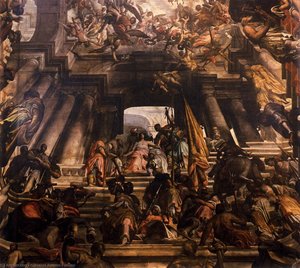
Giovanni Antonio Fumiani
1645 - 1710 , Italy
基本情報
- Artistic Movement Or Style: Baroque
- Artists Or Movements Influenced By This Artist: ['Tiepolo']
- Artists Who Influenced This Artist:
- Ludovico Carracci
- Alessandro Tiarini
- Paolo Veronese
- Date Of Birth: ca. 1645
- Date Of Death: 1710
- Full Name: Giovanni Antonio Fumiani
- Nationality: Italian
- Notable Artworks:
- Virgin Appearing to Pius V
- The Martyrdom and Apotheosis of St Pantalon
- Place Of Birth: Venice, Italy