

 プレビュー
プレビュー
 プリントを購入
 シェアする
シェアする シェアする
シェアする
 詳細を見る
詳細を見る

 ダウンロード
 似ている作品
 X線調査
X線調査 スライドショー
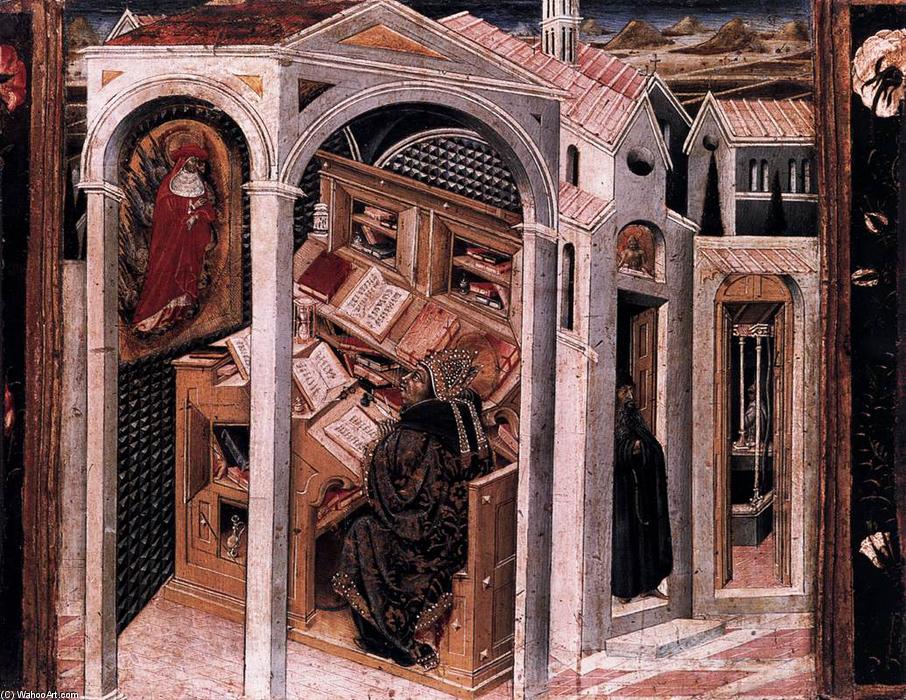
St Jerome Appearing to St Augustine
 Acrylic On Canvas
- WallArt
- Renaissance Gothic Style
 1456
1456 37.0 x 40.0 cm
 国立博物館群
 詳細を見る
詳細を見る




P118B $10

P118H $10

P118W $10

P438Z $10

P508JH $12

P508YH $12

P805H $10

P805Z $10

P919BZ $10

P919G $10

P919XJ $10

P959ZH $10

P968JZ $12

W106C $8

W218G $10

W218JH $8

W218Y $10

W307PJ $10

W316G $10

W316PJ $8

W316Y $10

W398PJ $8

W4111J $10

W500HY $15

W500JH $15

W692G $12

W849H $8

W940BG $15

W953PJ $8




作品のオリジナル比率に合わせた、当店の規定サイズからお選びください。

特定のフレームやスペースに合わせて、ご希望のサイズをご入力いただけます。選択されたサイズが元の画像の比率と異なる場合、アートワークをトリミングするか、手描きで要素を追加して絵画を拡張いたします。デジタルモックアップ を制作し、制作開始前にご確認(承認)をいただきます。
画面上のプレビューは、実際のトリミングや拡張を正確に反映しているものではありません。最終的な構図は、モックアップによってのみ正確にご確認いただけます。
カスタムサイズもご利用いただけますが、元の比率を維持するためには、あらかじめ用意されたリストからサイズを選択することをお勧めいたします。
ご注文後、ArtsDot.com チームより詳細な指示をお送りするとともに、仕上がりイメージ(モックアップ)をご提供いたします。


 ガラスオプションは、110cm未満のサイズでのみご利用いただけます。

St Jerome Appearing to St Augustine
複製技法
複製画のサイズ
-


合計金額
$ 263
作品解説
Giovanni di Paolo: A Synthesis of Gothic Spirit and Renaissance Innovation
Giovanni di Paolo (c.1403-1482) stands as a pivotal figure in the burgeoning artistic landscape of early Renaissance Italy, embodying a fascinating paradox—a steadfast devotion to Gothic traditions interwoven with subtle acknowledgements of emerging Renaissance sensibilities. While contemporaries like Masaccio and Donatello championed groundbreaking naturalism, Giovanni carved his own distinctive path, prioritizing lyrical intensity and preserving the expressive power of medieval aesthetics. His life, documented in fragmentary records, reveals an artist deeply rooted in Siena’s vibrant artistic community, initially serving as a manuscript illuminator for the Dominican Order from approximately 1417—a formative experience that honed his meticulous attention to detail and refined color application—skills which would become hallmarks of his singular style. Speculation surrounds his precise artistic lineage, with scholars suggesting potential instruction from established Sienese masters such as Taddeo di Bartolo or Martino di Bartolomeo; however, definitive evidence remains elusive. Nevertheless, Giovanni’s prolific output testifies to a remarkable creative energy and demonstrates an artist acutely attuned to the evolving currents of European art history.- Early Training & Gothic Influence: Giovanni's initial apprenticeship as a manuscript illuminator instilled in him a profound understanding of Gothic artistic conventions—characterized by flattened figures, stylized drapery, and luminous color palettes—principles that would continue to inform his oeuvre throughout his career. This heritage is particularly evident in works like “Miracle of St. Nicholas,” where the depiction of saints retains a palpable sense of solemn grandeur and spiritual contemplation typical of Gothic iconography.
- The Siena Workshop & Artistic Collaboration: Giovanni operated within a dynamic Sienese workshop environment, fostering collaborative relationships with fellow artists—a practice common during the period—resulting in ensembles of paintings that showcase shared stylistic concerns and technical prowess. The “St. Catherine Series,” for instance, exemplifies this collaborative spirit, demonstrating meticulous attention to detail and harmonious color orchestration.
- Renaissance Sensibilities: Despite his adherence to Gothic traditions, Giovanni’s artistic vision absorbed subtle influences from the Renaissance, notably in terms of perspective—though rarely fully realized—and a heightened awareness of anatomical accuracy. This nascent engagement with Renaissance ideals is discernible in “Christ in the Garden,” where the depiction of Jesus exhibits a degree of realism that surpasses conventional Gothic representations.
- Technique & Color Palette: Giovanni’s masterful technique involved layering thin glazes upon prepared poplar panels—a favored medium for Sienese artists—resulting in surfaces imbued with remarkable luminosity and depth. His distinctive color palette—characterized by rich reds, blues, and golds—contributed significantly to the emotive impact of his paintings, conveying spiritual fervor and artistic virtuosity.
- Symbolism & Narrative Vision: Giovanni’s artworks are replete with symbolic imagery—drawing upon Christian iconography and medieval folklore—serving as vehicles for conveying moral lessons and evoking profound emotional responses. The “Nativity” panel exemplifies this narrative vision, depicting the birth of Christ with meticulous detail and capturing the solemn beauty of the sacred event.
Notable Works & Artistic Legacy
Giovanni di Paolo’s artistic legacy extends beyond his individual creations—he served as a mentor to younger artists and contributed significantly to the flourishing Sienese art scene—leaving an indelible mark on subsequent generations of painters. His influence can be discerned in the works of contemporaries like Gentile da Fabriano and Martino di Bartolomeo, who adopted Giovanni’s stylistic innovations while retaining their own distinctive artistic voices. Furthermore, Giovanni’s meticulous attention to detail and harmonious color orchestration established precedents for artists pursuing naturalistic representation—a hallmark of the Renaissance—demonstrating a remarkable capacity for synthesizing disparate artistic traditions into a cohesive aesthetic framework. His enduring appeal lies in his ability to capture the sublime beauty of Gothic spirituality alongside the burgeoning promise of Renaissance innovation—a testament to his profound contribution to European art history.Exploring Giovanni di Paolo’s Artistic Vision
Giovanni di Paolo's oeuvre represents a fascinating crossroads between medieval and Renaissance artistic ideals, offering invaluable insight into the cultural transformations shaping Europe during the fifteenth century. His paintings are not merely aesthetically pleasing; they embody complex theological concepts and convey profound emotional resonance—reflecting the spiritual fervor of his time and demonstrating an artist’s unwavering commitment to conveying truthfulness and beauty. Studying Giovanni di Paolo's techniques—particularly his masterful glazing method—provides a deeper understanding of how artists achieved luminous surfaces and expressive color palettes—skills that continue to inspire contemporary painters. Examining his symbolic imagery illuminates the rich tapestry of medieval folklore and Christian iconography—revealing the artistic conventions informing Sienese art during this pivotal period.Giovanni di Paolo: A Masterpiece Revisited
The Basilica dei Santi Giovanni e Paolo in Venice houses a remarkable collection of artworks—including masterpieces by Bellini and Veronese—representing the apex of Venetian Renaissance artistry. Among these treasures stands “St Jerome Appearing to St Augustine,” attributed to Giovanni di Paolo—a predella panel that exemplifies his distinctive Gothic-Renaissance style. The painting’s composition—featuring two figures positioned before a monumental archway—captures the grandeur of Sienese ecclesiastical architecture while simultaneously conveying spiritual contemplation—reflecting the artistic sensibilities of the era. Analyzing Giovanni di Paolo's meticulous attention to detail—particularly in the depiction of drapery and facial expressions—reveals his mastery of technique and underscores his commitment to portraying human form with anatomical accuracy—a departure from conventional Gothic representations. The painting’s luminous color palette—dominated by reds, blues, and golds—contributes significantly to its emotive impact—evoking feelings of solemn reverence and artistic virtuosity.関連作品
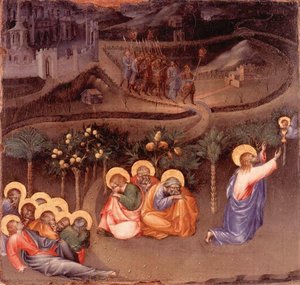
![Legend Of St Francis - [21] - Apparition To Fra Agostino And To Bishop Guido Of Arezzo — ジョット, Proto-renaissance](/media/artworks/images-thumb/8a/06/8a0632ef03ba49f12919faa78718a88b.jpg)
アーティストの略歴
夢を描くシエナの画家
1403年頃、シエナに生を受けたジョヴァンニ・ディ・パオロは、イタリア初期ルネサンスという芸術の風景の中に、魅惑的でどこか謎めいた存在として君臨しています。マサッチオやドナテッロといった、新たな自然主義を掲げた同時代の巨匠たちの影に隠れがちではありましたが、ジョヴァンニは独自の道を切り拓きました。彼はゴシック様式が持つ叙情的な強烈さを守り抜きながら、芽生えつつあったルネレンサンスの感性を繊細に吸収していったのです。断片的な記録しか残っていない彼の生涯からは、シエナの芸術コミュニティに深く根ざした画家の姿が浮かび上がります。1417年頃からはドミニコ会のために写本彩飾師として活動しており、この初期の修行が、後の彼の代名動となる緻密な細部へのこだわりと、洗練された色彩表現を磨き上げることとなりました。タッデオ・ディ・バルトロやマルティーノ・ディ・バルトロメオといった、当時のシエナを代表する巨匠たちから指導を受けた可能性も示唆されていますが、その師弟関係の詳細は今なお学術的な議論の対象となっています。ゴシックの伝統と新たな影響の受容
ジョヴァンニ・ディ・パオロの芸術的発展は、移り変わる美意識の潮流の中で展開されました。かつて芸術の主要拠点であったシエナは、次第にフィレンツェで勃興するルネサンスの革新にその座を譲りつつありました。しかし、ジョヴァンニはシエナが誇る豊かなゴシックの遺産と、固い絆で結ばれ続けていたのです。彼の初期作品には、引き伸ばされた人物像や装飾的なパターン、そして時に鮮烈で衝撃的な色彩の組み合わせなど、先人たちの様式美への忠実な継承が明確に見て取れます。しかし、1420年頃、ジェンティーレ・ダ・ファブリアーノのシエナ訪問という決定的な瞬間が訪れます。この出会いは、ジョヴァンニの芸術的ヴィジョンに深い影響を与えました。彼はジェンティーレの様式、特に宗教画の中に繊細な花々や緻密に描かれた風景といった自然主義的なディテールを取り入れる手法を、熱心に吸収していったのです。これは、それまでのシエナの画家たちが好んだ厳格な描写からの脱却を意味し、彼の作品に新たな観察眼と細部への生命力を吹き込みました。しかし、ジョヴァンニは単なる模倣に留まりませんでした。彼はこれらの影響を自分だけのものへと昇華させ、しばしば空想的で夢のような質感を持つ、彼にしか到達し得ない独自の構図を生み出したのです。超現実的なヴィジョンの傑作
ジョヴァンニ・ディ・パオロの作品群は驚くほど多岐にわたり、祭壇画からパネル画、そして極めて美しい写本彩飾に至るまで、その幅広さは目を見張るものがあります。彼の最も名高い作品は、伝統的な宗教的物語を、見る者を虜にする視覚体験へと変貌させる類まれな才能を示しています。1455年頃に描かれた聖ニコラウスの奇跡は、彼の超現実的なスタイルの典型と言えるでしょう。その絵画には、引き伸ばされた人物たちが彷徨う幻想的な風景が広がっており、この世のものとは思えない空気に満たされています。それは単なる奇跡の描写ではなく、精神的な歓喜と神の介入を呼び起こすものなのです。同様に心を揺さぶるのは、現在は各地の美術館に散逸している、シエナの聖カタリナの生涯を描いた一連のパネル画です。これらの作品は、物語画としての卓越した技量と表現力豊かな人物描写を見せつけ、聖女の敬虔さ、知的な強さ、そして神秘的な体験を、驚くべき感受性で捉えています。さらに、ダンテの神曲を彩った写本などは、細部への職人技と鮮やかな色彩に満ちており、異なる媒体においても彼が変幻自在な芸術家であったことを証明しています。また、『ゲッセマネの園のキリスト』(1430年頃)も、彼の劇的な物語構成力と豊かなパレットを示す、抗いがたい魅力を持った傑作の一つです。再発見された遺産
1482年にジョヴァンニ・ディ・パオロがシエナで没した後、彼の名声は次第に忘却の彼方へと消えていきました。数世紀もの間、彼はルネサンスのより著名な巨匠たちの影に隠れ、美術史家たちからも見過ごされてきたのです。しかし、20世紀に入ると、彼の比類なき芸術的ヴィジョンに対する再評価の機運が高まりました。研究者たちは、彼を後期ゴシックと初期ルネサンスの架け橋となったシエナ派の極めて重要な人物として再認識したのです。形態や色彩に対する実験的な精神と、あの独特な夢幻的エステティクスは、同時代の画家たちから彼を際立たせる要素となりました。今日、彼は単なる伝統の継承者としてではなく、マニエリスムの側面を予見し、さらには20世紀芸術の表現主義的な傾向をも先取りした革新者として認められています。ジョヴァンニ・ディ・パオロが遺した真の価値は、中世の精神性に深く根ざしながらも、芸術的感性においては驚くほど未来を見据えた作品を生み出した点にあります。それは、真に独創的なヴィジョンが持つ、時代を超越した力を物語っているのです。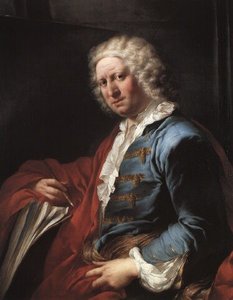
ジョヴァンニ・ディ・パオロ
1403 - 1482 , イタリア
基本情報
- Artistic Movement Or Style: ゴシックおよびルネサンス
- Artists Or Movements Influenced By This Artist:
- マニエリスム
- 表現主義
- Artists Who Influenced This Artist:
- タデオ・ディ・バルトロ
- マルティーノ・ディ・バルトロメオ
- ジェンティーレ・ダ・ファブリアーノ
- Date Of Birth: 1403年頃
- Date Of Death: 1482年
- Full Name: ジョヴァンニ・ディ・パオロ・ディ・グラツィア
- Nationality: イタリア
- Notable Artworks:
- 聖ニコラウスの奇跡
- 聖カタリナ・シリーズ
- 園のキリスト
- 降誕
- 磔刑
- Place Of Birth: イタリア、シエナ
関連記事

ジョット・ディ・ボンドーネ:至高の25選 - ルネサンスの夜明けを彩る傑作たち | ArtsDot
ジョット・ディ・ボンドーネの至高の25選。ルネサンス美術を牽引した巨匠の傑作と、その感動的な物語を紐解きます。高品質な絵画複製やインテリアアートで、名画の世界をあなたの空間に。ArtsDot.com でコレクションをご覧ください。
The Radiant Dusk of Medieval Vision: Exploring Late Gothic Art's Synthesis of Faith, Form & Emotionality (c. 1300-1500)
Explore the exquisite beauty & spiritual depth of Late Gothic art (c. 1300-1500). Discover key artists, symbolism, and its lasting influence on the Renaissance. Expert insights at ArtsDot.
ヴェネツィア・ビエンナーレ厳選25作品:芸術と歴史が織りなす至高のコレクション | ArtsDot
ヴェネツィア・ビエンナーレの至宝25選。印象派から現代アートまで、名画の背景にある物語と芸術家の情熱を紐解きます。ArtsDotで、キャンバスアートや油絵複製をお楽しみください。今すぐコレクションをご覧ください。
The Shadow of Faith: Exploring Gothic Art's Spiritual Intensity & Architectural Innovation
Explore the spiritual intensity & architectural innovation of Gothic art! Discover the symbolism behind cathedrals, stained glass & master artists like Giotto and Monet. A deep dive into medieval history & artistic expression.
Paolo Uccello: Pioneering Perspective & the Renaissance Pursuit of Visual Truth
Explore the revolutionary art of Paolo Uccello, a Florentine Renaissance master who pioneered perspective. Discover his iconic paintings like 'St. George & The Dragon' and learn about his lasting influence on art history.

