
- ホーム

- キャンバスプリント用
- girolamo francesco maria mazzola or mazzuoli, dit parmigianino (in french le parmesan)
 シェアする
シェアする シェアする
シェアする
 詳細を見る
詳細を見る

 ダウンロード
 似ている作品
 スライドショー
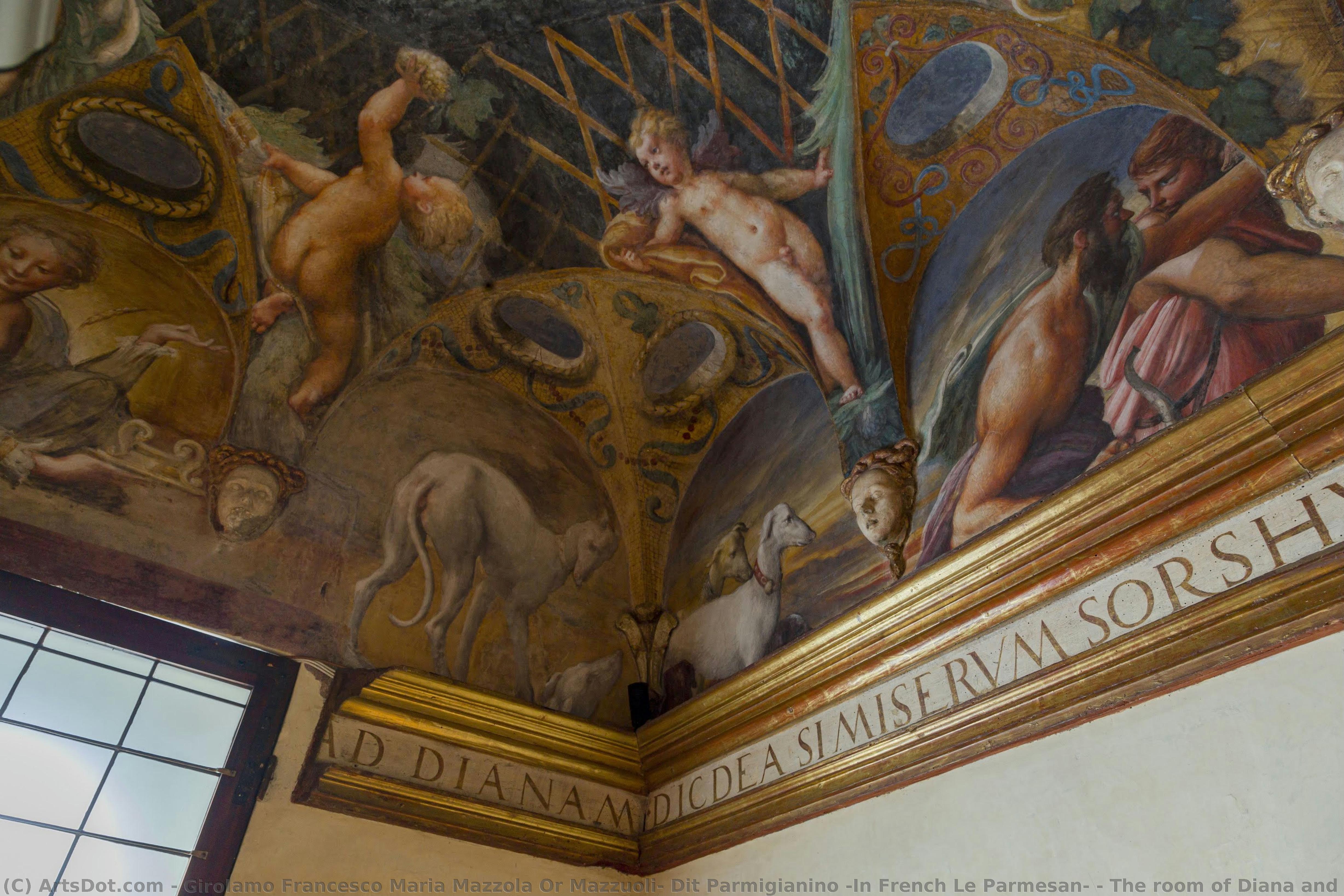
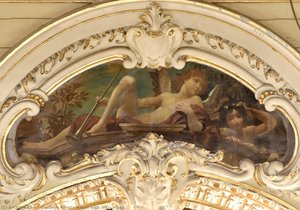
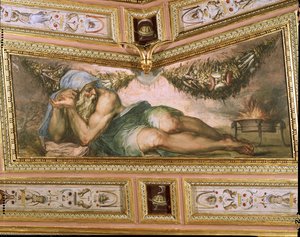
The room of Diana and Atteone - Atteone


 詳細を見る
詳細を見る
ジークレー/アートプリント
迅速な制作と多彩な仕上げオプションを備えた、ミュージアムクオリティのジークレーまたはキャンバスプリント。 ( 手描きの絵画を購入 画像を購入)




































作品のオリジナル比率に合わせた、当店の規定サイズからお選びください。

特定のフレームやスペースに合わせて、ご自身でサイズを指定することも可能です。選択されたサイズが元の画像の比率と一致しない場合、作品をトリミングするか、鏡面反射または単色での塗りつぶしによって画像を拡張いたします。制作を開始する前に、ご確認用のデジタルモックアップをお送りいたします。
画面上のプレビューには、実際のトリミングや拡張は反映されませんのでご注意ください。最終的な構図を正確に確認できるのは、モックアップのみとなります。
カスタムサイズも承っておりますが、元の比率を維持するためには、あらかじめ用意されたリストからサイズを選択することをお勧めいたします。


 ガラスオプションは、110cm未満のサイズでのみご利用いただけます。

The room of Diana and Atteone - Atteone
ジークレー/アートプリント
複製画のサイズ
-


合計金額
$ 62
A Vision of Mannerist Elegance
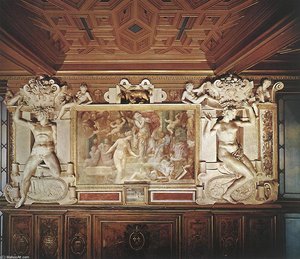
In the delicate dance of light and shadow captured within The room of Diana and Atteone, we encounter the quintessential essence of the Italian Mannerist movement. The artist, the legendary Girolamo Francesco Maria Mazzola, known to history as Parmigianino, invites us into a frescoed world where reality bends toward grace and artifice. This masterpiece is not merely a depiction of a mythological encounter; it is a sophisticated tapestry of elongated forms and ethereal beauty that defines the transition from the High Renaissance to the more stylized, emotive era of Mannerism. As one gazes upon the scene, the eye is immediately drawn to the central figure of Diana, whose poised presence commands the composition with a divine, almost otherworldly serenity.
The narrative unfolds through a complex arrangement of figures that seem to float within a meticulously detailed landscape. At the heart of this fresco, the goddess Diana, armed with her iconic bow and arrow, stands as a symbol of both strength and purity. Surrounding her is a lively assembly of characters—a man clutching a shield, other archers poised in motion, and various figures that populate the background like whispers of an ancient epic. The inclusion of animals, such as the horse, cow, and sheep, grounds this mythological drama in a pastoral reality, creating a striking contrast between the celestial nature of the deities and the earthly simplicity of the livestock. This juxtaposition serves to heighten the tension between the divine and the mortal, a hallmark of Parmigianino's intellectual depth.
Technique and the Mastery of Form
To appreciate this work is to admire the technical virtuosity of Parmigianino. His brushwork—or in this case, his masterful application of fresco—demonstrates an unparalleled ability to manipulate light to create volume and movement. The composition is characterized by a rhythmic flow, where the curves of the bodies and the placement of the architectural elements guide the viewer's gaze in a continuous, sweeping motion. The artist utilizes a subtle palette that allows for soft transitions, making the skin of his subjects appear luminous, almost as if lit from within. This technique, often referred to as sfumato-influenced elegance, lends a dreamlike quality to the entire room, transforming a physical space into a portal to antiquity.
For the discerning collector or interior designer, this piece offers more than just historical significance; it provides a profound emotional resonance. The intricate details—the glint of an arrow, the texture of a shield, and the architectural window that hints at a larger, unseen world—provide layers of visual interest that reward prolonged contemplation. A high-quality reproduction of this fresco brings with it an atmosphere of classical sophistication and intellectual curiosity. It is a work that does not merely decorate a wall but enriches the very soul of a room, offering a timeless connection to the golden age of Italian art and the enduring allure of mythological storytelling.
アーティストの略歴
The Grace of Distortion: The Life and Legacy of Parmigianino
Girolamo Francesco Maria Mazzola, known to the world by the evocative moniker Parmigianino, was a virtuoso of the Italian Renaissance whose brushstrokes redefined the boundaries of elegance. Born in Parma around 1503 into a family of artists, his early years were steeped in the rich visual language of the Lombardy region. As the son of a sculptor, he possessed an innate understanding of form and volume, yet it was his encounter with the expressive, emotive style of Correggio that would ignite his true genius. From this influence, Parmigianino inherited a profound ability to manipulate light and shadow, creating atmospheres that felt both ethereal and tangibly present.
As his talent matured, Parmigianino moved beyond the balanced harmonies of the High Renaissance toward the more complex, stylized realm of Mannerism. This transition was not merely a change in technique but a profound shift in artistic philosophy. He began to embrace deliberate distortions—elongating limbs, tapering necks, and twisting figures into graceful, almost impossible poses—to evoke a sense of sophisticated beauty and psychological tension. His work became a dance of sprezzatura, an effortless grace that masked the immense technical difficulty required to execute such fluid compositions.
Mastery of Form and the Florentine Zenith
The zenith of Parmigianino’s career was reached during his transformative period in Florence, where he operated under the prestigious patronage of Cardinal Giovanni Pier Luigi Farnese. It was within this vibrant intellectual circle that his most iconic imagery emerged. His masterpiece, Madonna with the Long Neck, serves as the definitive manifesto of his style. In this work, the traditional maternal warmth of the Madonna is elevated by a surreal, aristocratic elegance; the elongated neck and serpentine posture of the figures create a dreamlike quality that challenges the viewer's perception of reality.
Beyond his religious commissions, Parmigianino demonstrated an extraordinary versatility in both fresco and panel painting. His ability to command large-scale decorative schemes is evident in his work for the Palazzo Farnese, where he utilized illusionistic techniques to expand architectural spaces through paint. Whether depicting the mythological pursuit in Atteone chases the Nymph or the profound spiritual devotion found in St. Francis adoring the crucifix, his hand remained consistent in its pursuit of a refined, rhythmic beauty that felt both classical and avant-garde.
An Enduring Influence on Art History
Though his life was tragically brief—concluding in Cremona at the age of only 37—the impact of Parmigianino’s vision resonated far beyond his short years. He left behind a legacy that bridged the gap between the structured perfection of the Renaissance and the emotive, often restless energy of later Mannerist movements. His works continue to fascinate because they occupy a unique space between the recognizable world and a realm of pure, stylized aestheticism.
The significance of his contribution can be summarized through several key artistic pillars:
- Innovation of Line: He pioneered the use of the linea serpentinata, or serpentine line, which added movement and grace to static figures.
- Psychological Depth: Through subtle facial expressions and delicate poses, he introduced a layer of sophisticated ambiguity to portraiture.
- Spatial Mastery: His ability to manipulate perspective and light allowed for the creation of complex, multi-layered compositions that redefined spatial realism.
Today, Parmigianino remains a cornerstone of the Italian Renaissance canon, remembered as an artist who dared to stretch the limits of human anatomy to capture the limitless possibilities of the human spirit.
基本情報
- Artistic Movement Or Style: Mannerism
- Artists Or Movements Influenced By This Artist: ['European Mannerism']
- Artists Who Influenced This Artist:
- Michelangelo Buonarroti
- Raphael
- Date Of Birth: January 11, 1503
- Date Of Death: August 24, 1540
- Full Name: Girolamo Francesco Maria Mazzola or Mazzuoli
- Nationality: Italian
- Notable Artworks:
- Woman Seated on the Ground
- St. Francis adoring the crucifix
- Studies for female figures
- Place Of Birth: Parma, Italy
関連記事

家族の遺産を壁画で彩る:伝統技法が紡ぐ、時を超越する美と記憶
古代から現代までの壁画の歴史と技法を解説。日本の壁画文化やカスタムオーダーによる家族の遺産表現、保存・修復技術まで網羅。専門家が時を超越する美と記憶を紡ぐ芸術的価値をご案内します。

The Enduring Legacy of Fresco Painting: Techniques, History & Contemporary Relevance
Explore the rich history & enduring artistry of fresco painting – from Giotto to Michelangelo! Discover techniques, conservation efforts, & modern applications. Learn how ArtsDot brings this timeless art form to your home.

The Enduring Legacy of Fresco: Technique, History & Artistic Expression Across Cultures
Explore the rich history & enduring legacy of fresco painting! Discover ancient techniques, Giotto's masterpieces, and modern applications. Expert insights for art lovers & professionals.

Art That Lives With You: The Emotional Power of a Custom Interior Fresco
Discover the emotional power & timeless beauty of custom interior frescoes. Explore history, design tips & expert guidance from – creating lasting legacies.
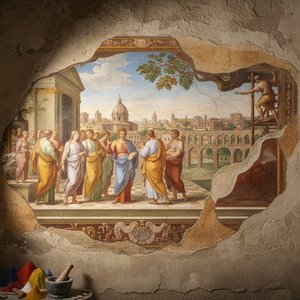
The Enduring Legacy of Fresco: Technique, History & Artistic Expression
Explore the rich history & enduring artistry of fresco painting. Discover techniques from Giotto to Michelangelo, conservation efforts, & modern applications. Learn how ArtsDot brings this timeless art form to your home.