

 プレビュー
プレビュー
 シェアする
シェアする シェアする
シェアする
 詳細を見る
詳細を見る

 ダウンロード
 似ている作品
 X線調査
X線調査 スライドショー
 Stats
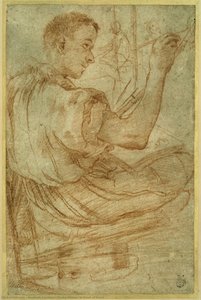
StatsWoman Seated on the Ground/Woman Holding a Distaff\n\nWoman Seated on the Ground (recto)
 Oil On Canvas
- WallArt
- Early Mannerism
 1524
1524 23.0 x 17.0 cm
 Courtauld Gallery
 詳細を見る
詳細を見る
手描き油彩複製画
当社のアーティストが、お客様のご希望のサイズと額縁に合わせて、キャンバスに手描きで制作する油彩画です。 ( Switch to Print Switch to Digital Image)




P118B $10

P118H $10

P118W $10

P438Z $10

P508JH $12

P508YH $12

P805H $10

P805Z $10

P919BZ $10

P919G $10

P919XJ $10

P959ZH $10

P968JZ $12

W106C $8

W218G $10

W218JH $8

W218Y $10

W307PJ $10

W316G $10

W316PJ $8

W316Y $10

W398PJ $8

W4111J $10

W500HY $15

W500JH $15

W692G $12

W849H $8

W940BG $15

W953PJ $8




作品のオリジナル比率に合わせた、当店の規定サイズからお選びください。

特定のフレームやスペースに合わせて、ご希望のサイズをご入力いただけます。選択されたサイズが元の画像の比率と異なる場合、アートワークをトリミングするか、手描きで要素を追加して絵画を拡張いたします。デジタルモックアップ を制作し、制作開始前にご確認(承認)をいただきます。
画面上のプレビューは、実際のトリミングや拡張を正確に反映しているものではありません。最終的な構図は、モックアップによってのみ正確にご確認いただけます。
カスタムサイズもご利用いただけますが、元の比率を維持するためには、あらかじめ用意されたリストからサイズを選択することをお勧めいたします。
ご注文後、ArtsDot.com チームより詳細な指示をお送りするとともに、仕上がりイメージ(モックアップ)をご提供いたします。


 ガラスオプションは、110cm未満のサイズでのみご利用いただけます。

Woman Seated on the Ground/Woman Holding a Distaff\n\nWoman Seated on the Ground (recto)
複製技法
複製画のサイズ
-


合計金額
$ 263
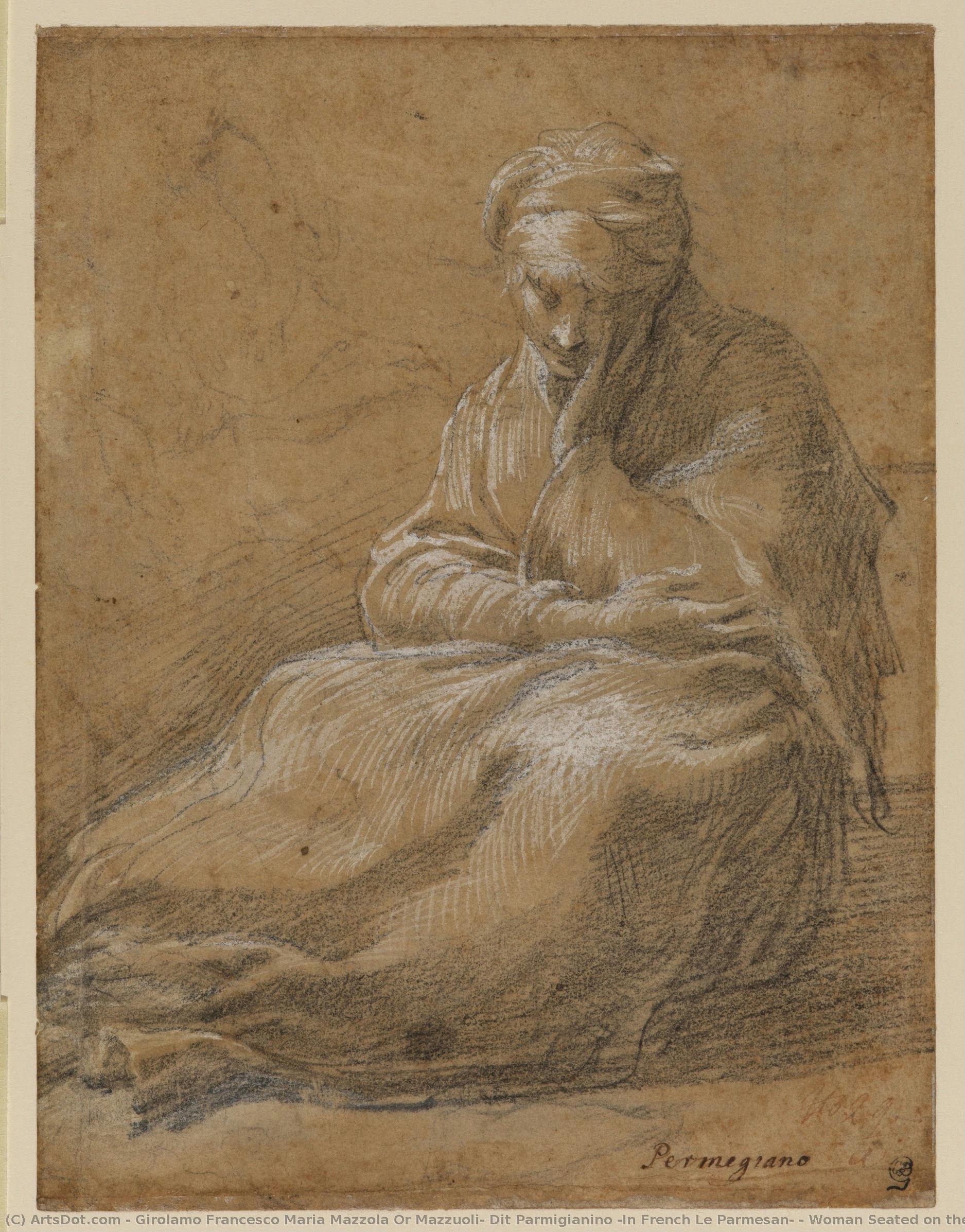
A Study in Delicate Contrast: Parmigianino’s ‘Woman Seated on the Ground’
The Renaissance artist Girolamo Francesco Maria Mazzola, better known as Parmigianino (1503–1540), stands as a beacon of Mannerist elegance and psychological depth. His oeuvre is marked by elongated figures, subtly distorted proportions—a deliberate departure from the idealized forms championed by Raphael and Michelangelo—and an unparalleled mastery of chiaroscuro, creating dramatic contrasts between light and shadow that imbue his canvases with palpable emotion. ‘Woman Seated on the Ground,’ executed around 1523-1524, exemplifies these stylistic hallmarks and offers a profound meditation on stillness, contemplation, and the elusive nature of beauty.The Experiment in Technique: White Bodycolour and Black Chalk
Parmigianino’s innovative approach to pigment application distinguishes this drawing from its contemporaries. Rather than adhering to the conventional practice of utilizing white solely for highlights—a technique favored by artists striving for visual perfection—he employed it extensively across the woman’s face, hands, and drapery. This bold decision wasn't merely a stylistic flourish; it represented a calculated experiment in achieving volume and textural complexity. Simultaneously, he juxtaposed this luminous white bodycolour with meticulously rendered black chalk lines, producing a subtle interplay of tonal values that enhances the figure’s meditative posture and conveys an aura of serene introspection. The artist skillfully exploited the inherent properties of each medium to amplify its expressive potential.Symbolism Within Stillness: A Portrait of Inner Reflection
The pose itself—the woman seated gracefully on the ground, hands clasped together in a gesture of prayer or repose—is laden with symbolic significance. Traditionally interpreted as representing humility and piety, it speaks to a broader preoccupation with spiritual contemplation prevalent during the Renaissance. The woman’s gaze directs upwards, suggesting an engagement with something transcendent beyond the earthly realm. Furthermore, the inclusion of a small clock on the wall serves as a poignant reminder of time's relentless passage—a visual paradox that underscores the drawing’s central theme: the preservation of inner peace amidst the anxieties of existence. Parmigianino’s masterful composition invites viewers to contemplate not only the beauty of the figure but also the profound questions concerning human experience and spiritual aspiration.A Masterpiece of Mannerist Elegance
‘Woman Seated on Ground’ embodies the core tenets of Mannerism, a stylistic movement that reacted against the harmonious balance of High Renaissance art. Parmigianino deliberately distorted anatomical proportions—a characteristic trait of Mannerist painters—to heighten expressive intensity and convey psychological nuance. The elongated neck and subtly curved spine contribute to an impression of ethereal grace, reflecting the artist’s fascination with idealized beauty filtered through a lens of melancholy and introspection. This drawing stands as a testament to Parmigianino's unparalleled artistic vision—a timeless masterpiece that continues to inspire admiration for its exquisite craftsmanship and profound emotional resonance.Provenance and Legacy
Acquired by The Courtauld in 1978 from the Princes Gate bequest, this drawing retains its original condition and offers an exceptional opportunity to appreciate Parmigianino’s genius firsthand. Its inclusion within The Courtauld's celebrated collection underscores its significance as a cornerstone of Renaissance art history—a pivotal work that solidified Parmigianino’s reputation as one of the foremost innovators of his time and cemented his enduring legacy as a champion of psychological realism and stylistic experimentation.関連作品


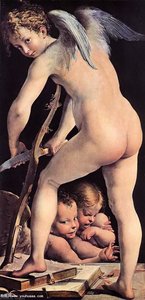
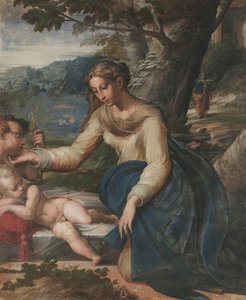
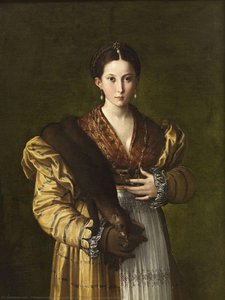
アーティストの略歴
The Grace of Distortion: The Life and Legacy of Parmigianino
Girolamo Francesco Maria Mazzola, known to the world by the evocative moniker Parmigianino, was a virtuoso of the Italian Renaissance whose brushstrokes redefined the boundaries of elegance. Born in Parma around 1503 into a family of artists, his early years were steeped in the rich visual language of the Lombardy region. As the son of a sculptor, he possessed an innate understanding of form and volume, yet it was his encounter with the expressive, emotive style of Correggio that would ignite his true genius. From this influence, Parmigianino inherited a profound ability to manipulate light and shadow, creating atmospheres that felt both ethereal and tangibly present.
As his talent matured, Parmigianino moved beyond the balanced harmonies of the High Renaissance toward the more complex, stylized realm of Mannerism. This transition was not merely a change in technique but a profound shift in artistic philosophy. He began to embrace deliberate distortions—elongating limbs, tapering necks, and twisting figures into graceful, almost impossible poses—to evoke a sense of sophisticated beauty and psychological tension. His work became a dance of sprezzatura, an effortless grace that masked the immense technical difficulty required to execute such fluid compositions.
Mastery of Form and the Florentine Zenith
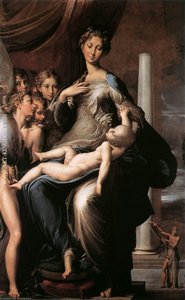
The zenith of Parmigianino’s career was reached during his transformative period in Florence, where he operated under the prestigious patronage of Cardinal Giovanni Pier Luigi Farnese. It was within this vibrant intellectual circle that his most iconic imagery emerged. His masterpiece, Madonna with the Long Neck, serves as the definitive manifesto of his style. In this work, the traditional maternal warmth of the Madonna is elevated by a surreal, aristocratic elegance; the elongated neck and serpentine posture of the figures create a dreamlike quality that challenges the viewer's perception of reality.
Beyond his religious commissions, Parmigianino demonstrated an extraordinary versatility in both fresco and panel painting. His ability to command large-scale decorative schemes is evident in his work for the Palazzo Farnese, where he utilized illusionistic techniques to expand architectural spaces through paint. Whether depicting the mythological pursuit in Atteone chases the Nymph or the profound spiritual devotion found in St. Francis adoring the crucifix, his hand remained consistent in its pursuit of a refined, rhythmic beauty that felt both classical and avant-garde.
An Enduring Influence on Art History
Though his life was tragically brief—concluding in Cremona at the age of only 37—the impact of Parmigianino’s vision resonated far beyond his short years. He left behind a legacy that bridged the gap between the structured perfection of the Renaissance and the emotive, often restless energy of later Mannerist movements. His works continue to fascinate because they occupy a unique space between the recognizable world and a realm of pure, stylized aestheticism.
The significance of his contribution can be summarized through several key artistic pillars:
- Innovation of Line: He pioneered the use of the linea serpentinata, or serpentine line, which added movement and grace to static figures.
- Psychological Depth: Through subtle facial expressions and delicate poses, he introduced a layer of sophisticated ambiguity to portraiture.
- Spatial Mastery: His ability to manipulate perspective and light allowed for the creation of complex, multi-layered compositions that redefined spatial realism.
Today, Parmigianino remains a cornerstone of the Italian Renaissance canon, remembered as an artist who dared to stretch the limits of human anatomy to capture the limitless possibilities of the human spirit.
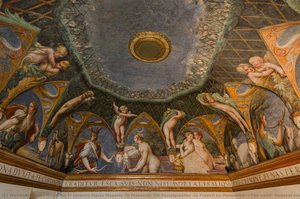
基本情報
- Artistic Movement Or Style: Mannerism
- Artists Or Movements Influenced By This Artist: ['European Mannerism']
- Artists Who Influenced This Artist:
- Michelangelo Buonarroti
- Raphael
- Date Of Birth: January 11, 1503
- Date Of Death: August 24, 1540
- Full Name: Girolamo Francesco Maria Mazzola or Mazzuoli
- Nationality: Italian
- Notable Artworks:
- Woman Seated on the Ground
- St. Francis adoring the crucifix
- Studies for female figures
- Place Of Birth: Parma, Italy
関連記事
Mannerism's Masters: 10 Artworks That Redefined Renaissance Style | ArtsDot
Explore 10 defining Mannerism masterpieces – from Pontormo to El Greco. Discover the stories behind these Renaissance paintings, their unique style & symbolism. Find museum-quality art reproductions at ArtsDot.com and elevate your home decor.
Ivory Black Masters: 10 Paintings That Define Dramatic Art |
Delve into the power of 'Ivory Black' with 10 iconic paintings by masters like Rembrandt & Caravaggio. Explore dramatic chiaroscuro, gothic moods & timeless art history. Find museum-quality reproductions and elevate your home decor at

Dark Masterpieces: 10 Iconic Paintings Dominated by Black Tones |
Explore 10 iconic paintings dominated by black tones, from Rembrandt’s chiaroscuro to Goya's dark expressions. Discover the stories behind these masterpieces & find museum-quality art reproductions for your home at .
Lamp Black & Masterpieces: 10 Paintings That Define Shadow & Light |
Delve into the captivating world of 'Lamp Black' tones with 10 iconic paintings by masters like Rembrandt & Caravaggio. Explore Baroque chiaroscuro, dramatic lighting & shadow in art history. Find museum-quality reproductions at
Mars Black Masterpieces: 10 Iconic Paintings & Timeless Art Decor Ideas
Delve into the power of 'Mars Black' with 10 iconic paintings by masters like Rembrandt & Caravaggio. Explore dramatic chiaroscuro, gothic art, and timeless beauty. Find museum-quality reproductions & elevate your home decor on .