

 プレビュー
プレビュー
 プリントを購入
 シェアする
シェアする シェアする
シェアする
 詳細を見る
詳細を見る

 ダウンロード
 似ている作品
 X線調査
X線調査 スライドショー
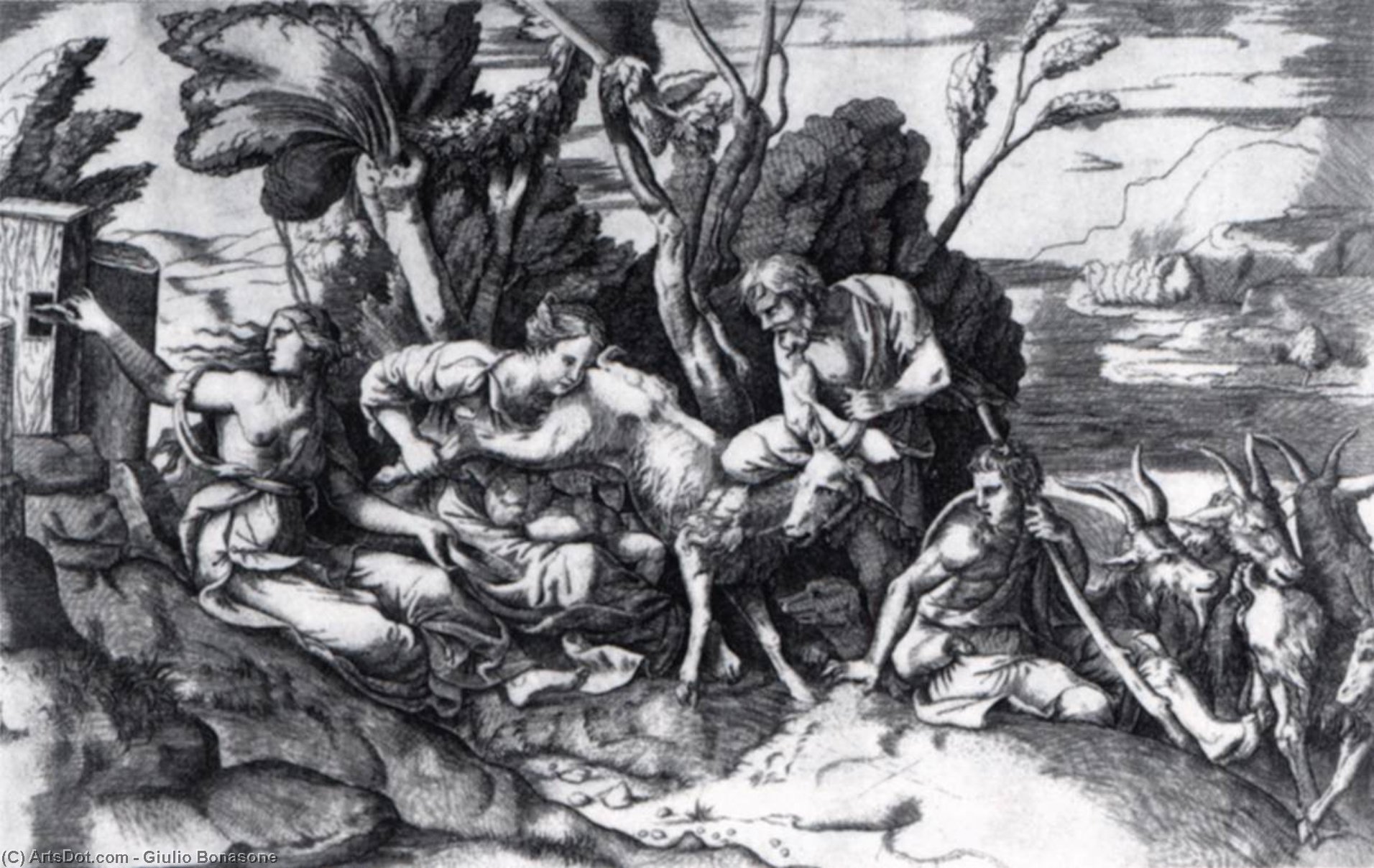
Jupiter Suckled by the Goat Amalthea


 詳細を見る
詳細を見る




































作品のオリジナル比率に合わせた、当店の規定サイズからお選びください。

特定のフレームやスペースに合わせて、ご希望のサイズをご入力いただけます。選択されたサイズが元の画像の比率と異なる場合、アートワークをトリミングするか、手描きで要素を追加して絵画を拡張いたします。デジタルモックアップ を制作し、制作開始前にご確認(承認)をいただきます。
画面上のプレビューは、実際のトリミングや拡張を正確に反映しているものではありません。最終的な構図は、モックアップによってのみ正確にご確認いただけます。
カスタムサイズもご利用いただけますが、元の比率を維持するためには、あらかじめ用意されたリストからサイズを選択することをお勧めいたします。
ご注文後、ArtsDot.com チームより詳細な指示をお送りするとともに、仕上がりイメージ(モックアップ)をご提供いたします。


 ガラスオプションは、110cm未満のサイズでのみご利用いただけます。

Jupiter Suckled by the Goat Amalthea
複製技法
複製画のサイズ
-


合計金額
$ 288
作品解説
Introduction
Giulio Bonasone was an Italian painter and printmaker, known for his engravings. His work is characterized by a strong sense of design and a mastery of chiaroscuro. One of his most famous works is the engraving "Jupiter Suckled by the Goat Amalthea," which is housed in the Bibliothèque nationale (Paris, France).Historical Context
The myth of Jupiter being suckled by the goat Amalthea has its origins in ancient Greek mythology. The story tells that Jupiter was hidden from his father Saturn by his mother Rhea and fed with milk from the goat Amalthea. Bonasone's engraving depicts this moment, showing Jupiter as a baby being held by the goat while he nurses.Artistic Analysis
Bonasone's engraving is a masterpiece of Renaissance printmaking. The artist's use of line and shading creates a sense of depth and volume, giving the image a sculptural quality. The composition is well balanced, with the goat and Jupiter occupying the center of the frame, while the surrounding landscape provides context and scale.Significance
"Jupiter Suckled by the Goat Amalthea" is an important work in the history of printmaking. It showcases Bonasone's skill as an engraver and his ability to convey complex narratives through visual means. The image has been widely reproduced and has influenced generations of artists.Location
The original engraving is housed in the Bibliothèque nationale (Paris, France), one of the largest libraries in the world. The library's collection includes a vast array of printed materials, from medieval manuscripts to modern publications.Conclusion
Giulio Bonasone's "Jupiter Suckled by the Goat Amalthea" is a masterpiece of Renaissance printmaking. Its historical significance and artistic value make it an important work in the history of art. If you are interested in learning more about this piece or other works by Giulio Bonasone, please visit our website ArtsDot. Giulio Bonasone: Jupiter Suckled by the Goat Amalthea (Bibliothèque Nationale (Paris, France), Engraving) Note: This article is a summary and interpretation of the painting "Jupiter Suckled by the Goat Amalthea" by Giulio Bonasone. It is intended to provide an academic perspective on the work and its significance in the history of art. For more information, please consult the original source or visit our website ArtsDot.関連作品
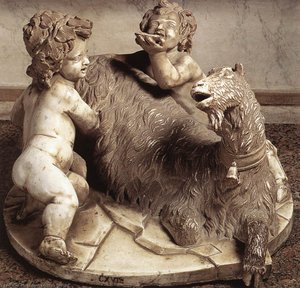
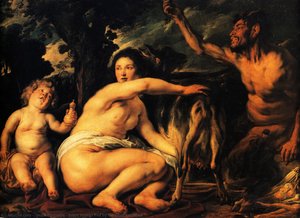
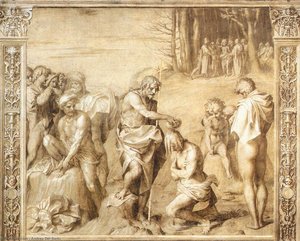
アーティストの略歴
The Master of the Burin: The Life and Legacy of Giulio Bonasone
In the vibrant, intellectually turbulent landscape of the Italian sixteenth century, few artists captured the essence of the High Renaissance and the burgeoning Mannerist style as deftly as Giulio Bonasone. Born in Bologna around 1498, Bonasone emerged from a city steeped in artistic tradition to become one of the most prolific and skilled engravers of his era. While history whispers of his early pursuits as a painter—perhaps under the tutelage of Lorenzo Sabbatini—the physical traces of his canvases have largely vanished into the shadows of time. What remains, however, is a profound and indelible legacy etched in copper, a testament to an artist who mastered the delicate dance between line and light.
Bonasone’s journey was one of movement and metamorphosis, traversing the great artistic hubs of Mantua, Rome, and Venice. It is widely believed that his technical prowess was forged through training with the legendary Marcantonio Raimondi, the master who defined the language of reproductive engraving. This lineage allowed Bonasone to do more than merely copy; he possessed a rare, almost intuitive ability to translate the compositional weight, tonal depth, and spiritual essence of the Old Masters into the medium of print. Whether interpreting the muscular dynamism of Michelangelo or the harmonious grace of Raphael, Bonasone’s burin acted as a bridge, bringing the monumental achievements of the Renaissance into the hands of collectors and scholars across Europe.
A Versatile Visionary: Technique and Subject Matter
The brilliance of Bonasone lies in his technical versatility. He was a pioneer in the sophisticated use of both etching and engraving, often weaving the two techniques together within a single plate to achieve unparalleled texture and atmosphere. This dual approach allowed him to mimic the soft gradations of color and shadow found in painting, creating prints that felt remarkably alive. His work was not confined to a single genre; rather, it spanned the full spectrum of human experience and Renaissance inquiry:
- Religious Devotion: His prints often served as meditative tools, capturing the profound piety and dramatic tension required for sacred imagery.
- Mythological Grandeur: Through his depictions of classical deities, he explored the elegance and complex allegories central to Mannerist culture.
- Secular and Erotic Themes: Bonasone was unafraid to explore the more intimate and provocative aspects of human nature, reflecting the diverse intellectual currents of his time.
Beyond mere reproduction, Bonasone used his art to engage with the pressing religious and cultural controversies of the sixteenth century. His plates were not silent images; they were active participants in the dialogue of an era defined by the Reformation and the Counter-Reformation. Through the precise placement of a shadow or the tension in a figure's pose, he expressed a deep understanding of the shifting social landscapes.
Historical Significance and the Enduring Print
Though debates persist regarding the exact chronology of his life—with some scholars tracing his activity as far back as the early decades of the century—the sheer volume of his output is undeniable. With approximately 357 attributed prints, including roughly 200 that can be dated with certainty, Bonasone stands as a titan of the printmaking tradition. His ability to sign his work under various iterations—Julio Bonaso, Giulio Bolognese, or B. I.B.—speaks to the itinerant and multifaceted nature of an artist navigating the complex guild systems of Italy.
Today, the works of Giulio Bonasone are cherished not just as historical documents, but as masterpieces of graphic art in their own right. He remains a pivotal figure who helped democratize the beauty of the Renaissance, ensuring that the grandeur of the masters could be shared far beyond the walls of Roman basilicas or Venetian palazzos. His legacy is etched forever in the fine, rhythmic lines of his copperplates, reminding us of a time when the engraver's hand was the primary messenger of artistic truth.
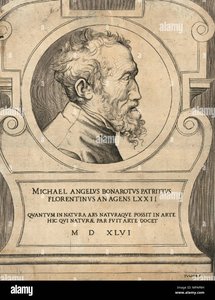
giulio bonasone
1498 - 1574 , Italy
基本情報
- Artistic Movement Or Style: Renaissance, Mannerism
- Artists Who Influenced This Artist: ['Marcantonio Raimondi']
- Date Of Birth: 1498
- Date Of Death: 1574
- Full Name: Giulio Bonasone
- Nationality: Italian
- Place Of Birth: Bologna, Italy
関連記事
Engraving: A Historical Survey of Technique, Artistic Expression & Enduring Legacy
Explore the rich history of engraving with ArtsDot. Discover techniques, iconic artists like Dürer & Callot, collecting tips, and expert guidance for preserving your art investment. Learn about intaglio printing & more!
Engraving's Golden Age: 10 Masterpieces That Redefined Art | ArtsDot
Journey through art history with our Top 10 Legendary Engravings! Explore masterpieces by Dürer, Rembrandt & Goya. Discover the stories behind these iconic prints and find museum-quality reproductions for your home at ArtsDot.com.
The Intricate World of Engraving: A Historical Survey of Technique, Artistic Expression & Enduring Legacy
Explore the rich history of engraving with ArtsDot. Discover techniques, iconic artists like Dürer & Callot, collecting tips, and expert guidance for preserving your art investment. Learn about intaglio printing & more!
The Enduring Legacy of Printmaking: Techniques, Themes & Artistic Innovation Across Centuries
Explore the rich history of printmaking with ArtsDot. Discover techniques from intaglio to lithography, learn about collecting valuable prints & find museum-quality reproductions. Expert insights for art enthusiasts and collectors.
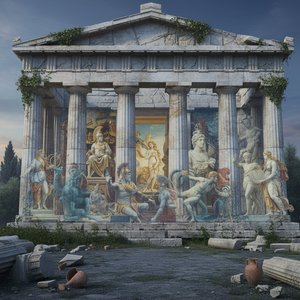
Echoes of Olympus: Mythological Narratives in Western Art Through the Ages
Explore the captivating history of mythological narratives in Western art! From ancient Greece to modern masterpieces, discover iconic artworks & symbolism. Expert analysis and high-quality reproductions at ArtsDot.

