

 プレビュー
プレビュー
 シェアする
シェアする シェアする
シェアする
 詳細を見る
詳細を見る

 ダウンロード
 似ている作品
 X線調査
X線調査 スライドショー
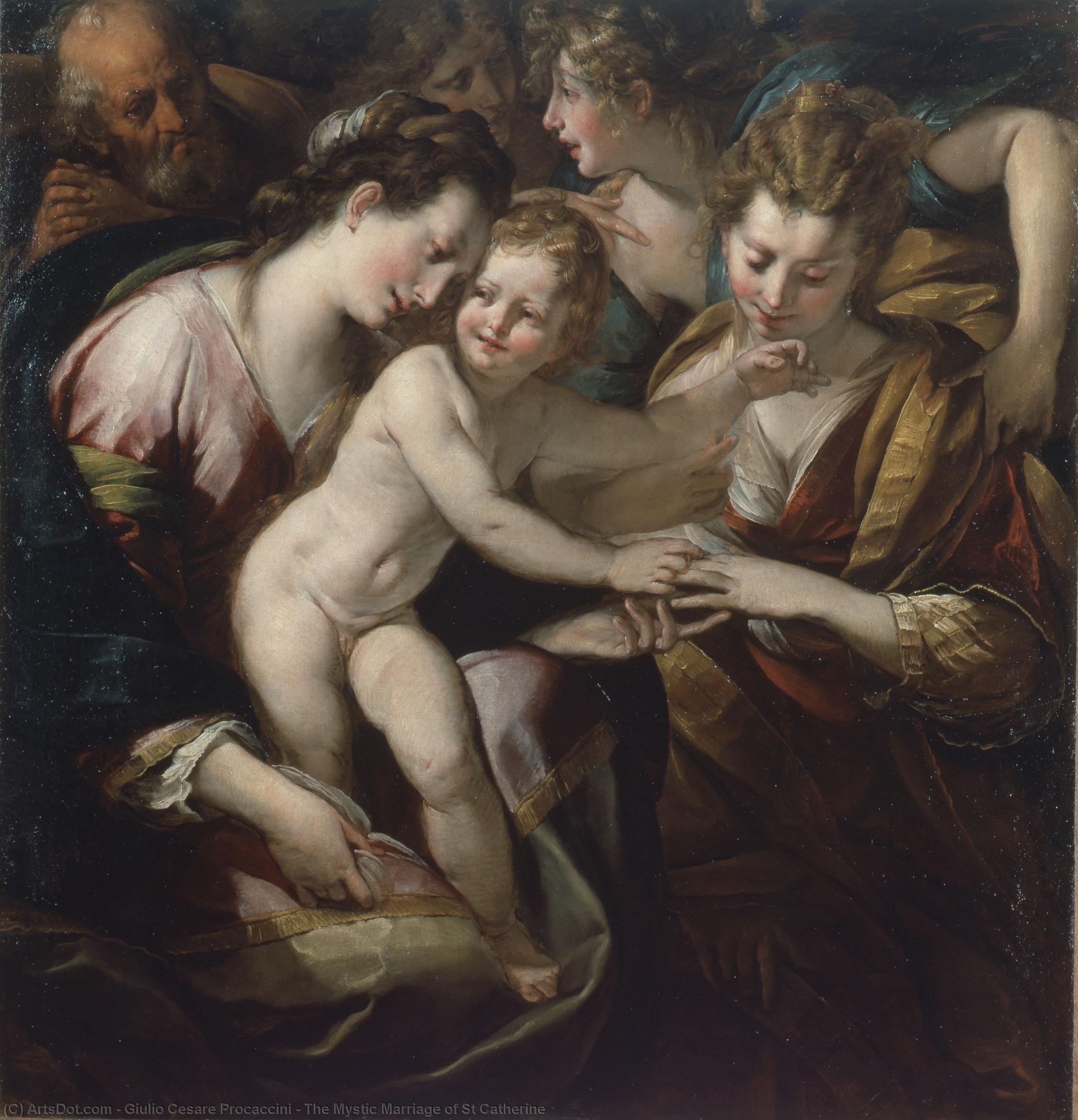
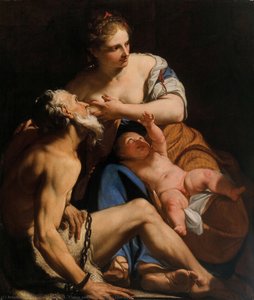
The Mystic Marriage of St Catherine
 Oil On Canvas
- WallArt
- Baroque
 149.0 x 145.0 cm
 ピナコテカ・ディ・ブレラ
 詳細を見る
詳細を見る
ジークレー/アートプリント
迅速な制作と多彩な仕上げオプションを備えた、ミュージアムクオリティのジークレーまたはキャンバスプリント。 ( 手描きの絵画を購入 画像を購入)




P118B $10

P118H $10

P118W $10

P438Z $10

P508JH $12

P508YH $12

P805H $10

P805Z $10

P919BZ $10

P919G $10

P919XJ $10

P959ZH $10

P968JZ $12

W106C $8

W218G $10

W218JH $8

W218Y $10

W307PJ $10

W316G $10

W316PJ $8

W316Y $10

W398PJ $8

W4111J $10

W500HY $15

W500JH $15

W692G $12

W849H $8

W940BG $15

W953PJ $8




作品のオリジナル比率に合わせた、当店の規定サイズからお選びください。

特定のフレームやスペースに合わせて、ご自身でサイズを指定することも可能です。選択されたサイズが元の画像の比率と一致しない場合、作品をトリミングするか、鏡面反射または単色での塗りつぶしによって画像を拡張いたします。制作を開始する前に、ご確認用のデジタルモックアップをお送りいたします。
画面上のプレビューには、実際のトリミングや拡張は反映されませんのでご注意ください。最終的な構図を正確に確認できるのは、モックアップのみとなります。
カスタムサイズも承っておりますが、元の比率を維持するためには、あらかじめ用意されたリストからサイズを選択することをお勧めいたします。


 ガラスオプションは、110cm未満のサイズでのみご利用いただけます。

The Mystic Marriage of St Catherine
ジークレー/アートプリント
複製画のサイズ
-


合計金額
$ 62
作品詳細説明
A Divine Union: Giulio Cesare Procaccini’s Masterpiece
Giulio Cesare Procaccini's “The Mystic Marriage of St Catherine” isn’t merely a painting; it’s an immersion into the heart of early Baroque spirituality. Completed around 1616-1620, this canvas, now residing in the Pinacoteca di Brera in Milan, pulsates with a potent blend of religious fervor and artistic innovation. Procaccini, a pivotal figure in the transition from Mannerism to the dynamism of the Baroque, masterfully captures a moment of profound transformation – the union of St Catherine with Christ, an event imbued with both earthly beauty and celestial significance.
The scene unfolds within a richly detailed, yet subtly shadowed interior. The composition is dominated by three figures: St Catherine herself, radiating serene grace; the infant Jesus, cradled in her arms, representing divine innocence; and the Virgin Mary, observing this sacred union with tender devotion. Procaccini’s genius lies not just in their individual portrayals – each figure rendered with a remarkable sensitivity to anatomy and expression – but in the intricate web of gestures and glances that connect them. The way Catherine's hand reaches out to receive the ring offered by Christ, the Virgin Mary’s gentle gaze, and even the subtle expressions on the faces of the surrounding angels all contribute to an overwhelming sense of intimacy and spiritual connection.
The Influence of Correggio and a Milanese Baroque Aesthetic
Procaccini's work is deeply indebted to the artistic currents swirling through Milan at the time. He was profoundly influenced by the works of Correggio, particularly his innovative use of perspective and illusionistic space. This influence is evident in the painting’s dynamic composition, where figures seem to emerge from a shallow, almost theatrical stage. Furthermore, Procaccini absorbed elements of Titian's Venetian style – a penchant for rich color palettes and dramatic lighting – while retaining a distinctly Mannerist sensibility, characterized by elongated forms and an emphasis on emotional intensity.
The painting’s palette is dominated by deep reds, blues, and golds, creating a sense of opulence and reverence. The use of chiaroscuro—the interplay of light and shadow—is particularly striking, drawing the viewer's eye to key figures and enhancing the drama of the scene. Procaccini skillfully employs this technique to create a palpable atmosphere of mystery and spiritual awakening.
Symbolism and Spiritual Resonance
Beyond its aesthetic beauty, “The Mystic Marriage of St Catherine” is rich in symbolic meaning. The wedding itself represents not just a personal union but also the establishment of a divine covenant between humanity and God. St Catherine’s virginity, symbolized by her purity and grace, is offered to Christ, signifying her complete dedication to his service. The infant Jesus embodies the promise of salvation and eternal life, while the Virgin Mary serves as a witness to this sacred event – a testament to her unwavering faith and devotion.
The inclusion of angels surrounding the scene further emphasizes its spiritual significance. These celestial beings represent God’s presence and his blessing upon this union. The painting's overall effect is one of profound reverence, inviting viewers to contemplate the mysteries of faith and the transformative power of divine love. Procaccini doesn’t simply depict a historical event; he captures a moment of transcendent beauty and spiritual grace.
A Legacy in Milanese Art
Giulio Cesare Procaccini's “The Mystic Marriage of St Catherine” stands as a cornerstone of early Baroque art in Milan. His innovative approach to composition, his masterful use of color and light, and his profound understanding of religious symbolism cemented his place as one of the most important artists of his era. Today, this captivating masterpiece continues to inspire awe and wonder, offering viewers a glimpse into the heart of Renaissance spirituality and the artistic genius of a truly remarkable painter.
関連作品


アーティストの略歴
The Master of Milanese Drama: The Life and Legacy of Giulio Cesare Procaccini
Giulio Cesare Procaccini stands as a pivotal figure in the burgeoning artistic landscape of early Baroque Milan, marking a decisive transition from Mannerist formalism to the expressive dynamism that would define an era. Born in Bologna in 1574, he descended from a lineage steeped in profound artistic tradition; his father, Ercole Procaccini the Elder, was himself a notable Mannerist painter. This heritage profoundly shaped his formative years, instilling within him an appreciation for nuanced stylistic complexities and a technical rigor that would later allow him to masterfully blend grace with grandeur. Around 1585, spurred by the influential patronage of Pierro Visconti, the family relocated to Milan, establishing a crucial connection with one of Italy’s wealthiest art collectors and fostering an environment ripe for the artistic experimentation that would become Procaccini's hallmark.
The artist's creative journey began not with the brush, but with the chisel. His early training was rooted in sculptural endeavors, primarily focused on the sacred spaces of the Milanese Duomo and Santa Maria presso San Celso. This tactile foundation in sculpture left an indelible mark on his later paintings, manifesting in a unique sense of volume, weight, and anatomical presence. However, he eventually transitioned to painting, recognizing its unparalleled capacity for conveying intense emotion and celestial light. During this period of development, Procaccini moved within the highest intellectual circles of Milan, associating with luminaries such as Giovanni Battista Crespi, known as Il Cerano, and Pier Francesco Mazzucchelli, or Il Morazzone. Under the spiritual and material guidance of Cardinal Federico Borromeo, Procaccini's creative output was propelled toward greatness, allowing him to capture the very spirit of the Counter-Reformation.
A Symphony of Light and Devotion
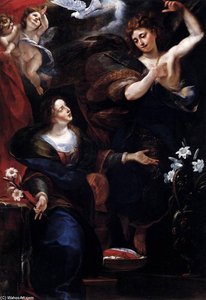
Procaccini’s mature style is a breathtaking synthesis of various European influences, most notably the vibrant colorism of the Venetian school and the sweeping, energetic compositions of Peter Paul Rubens. His works are characterized by a dramatic use of chiaroscuro, where deep shadows dance against luminous highlights to create a sense of theatrical movement. In masterpieces such as The Annunciation, one can witness this Baroque drama firsthand, as vibrant colors and swirling drapery evoke a profound sense of divine intervention. His ability to manipulate light allowed him to breathe life into religious narratives, transforming static icons into living, breathing moments of spiritual ecstasy.
His technical prowess is perhaps most evident in his large-scale religious commissions, which served both as artistic triumphs and instruments of faith. Notable examples include:
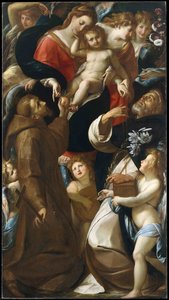
- Madonna and Child with Sts Francis and Dominic and Angels: A monumental oil on canvas commissioned for the church of Madonna dei Miracoli in Corbetta, where he masterfully blends Mannerist elegance with a new, surging Baroque energy.
- The Six Quadroni: Perhaps his most celebrated achievement, these large canvases depicting Saint Charles Borromeo were commissioned for the Basilica della Santissima Annunziata del Vastato in Genoa, showcasing his ability to handle epic, monumental scale.
- St Sebastian Tended by Angels: A work that highlights his delicate touch and his ability to weave together themes of suffering and divine tenderness through fluid, rhythmic compositions.
Historical Significance and Artistic Triumph
The historical significance of Giulio Cesare Procaccini lies in his role as a bridge between two worlds. He took the sophisticated, often artificial elegance of the Mannerist period and infused it with a new, visceral humanity that resonated with the religious fervor of 17th-century Italy. His work does not merely depict a scene; it invites the viewer into a sensory experience of the divine. Through his mastery of color, light, and movement, he helped establish Milan as a major center of Baroque excellence, leaving behind a legacy of altarpieces and frescoes that continue to captivate the modern imagination with their profound emotional depth and technical brilliance.
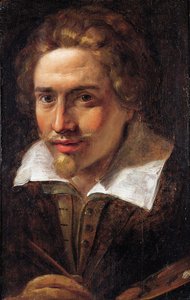
Giulio Cesare Procaccini
1574 - 1625 , Italy
基本情報
- Artistic Movement Or Style: Baroque
- Artists Or Movements Influenced By This Artist: ['Rubens']
- Artists Who Influenced This Artist: ['Ercole Procaccini']
- Date Of Birth: 1574 Bologna, Italy
- Date Of Death: 1625 Milan, Italy
- Full Name: Giulio Cesare Procaccini
- Nationality: Italian
- Notable Artworks:
- St Sebastian Tended by Angels
- Holy Family with John the Baptist and an Angel
- Circumcision
- Last Supper
- Scourging of Christ
- Ecce Homo
- Place Of Birth: Bologna
関連記事
エル・グレコの傑作25選:魂を揺さぶる宗教画と芸術の深淵 | ArtsDot
エル・グレコの傑作25選:魂を揺さぶる宗教画の世界へ。スペイン絵画の巨匠、マニエリスム様式と Toledo の光彩を紐解きます。ArtsDot.com で名画のアートプリントや複製画をお楽しみください。コレクションはこちら →
Mystical Masterpieces: 10 Artworks That Transcends Reality |
Journey into the ethereal with our Top 10 mystical artworks! Explore iconic paintings by Klimt, Dali & more. Discover symbolic art, dreamlike landscapes, and evocative colors – find museum-quality reproductions to transform your home on .
Giulio Romano: A Master of Mannerism & the Palazzo Te Legacy
Explore the revolutionary art of Giulio Romano, master of Mannerism & architect of Palazzo Te. Discover his influence, investment potential, and stunning frescoes – a guide for discerning collectors.

The Allure of Mystical Art: Exploring Emotional Resonance & Symbolic Depth
Explore the captivating world of mystical art with ArtsDot. Discover the emotional resonance & hidden symbolism in masterpieces by De Chirico, Chagall & more. Expert insights for discerning collectors.
Paul César Helleu: Capturing Belle Époque Elegance & Artistic Innovation
Explore the captivating world of Paul César Helleu, master portraitist of the Belle Époque. Discover his innovative techniques, iconic works like 'Portrait of Margaret Kelly,' and investment potential with ArtsDot.

