

 プレビュー
プレビュー
 シェアする
シェアする シェアする
シェアする
 詳細を見る
詳細を見る

 ダウンロード
 似ている作品
 X線調査
X線調査 スライドショー
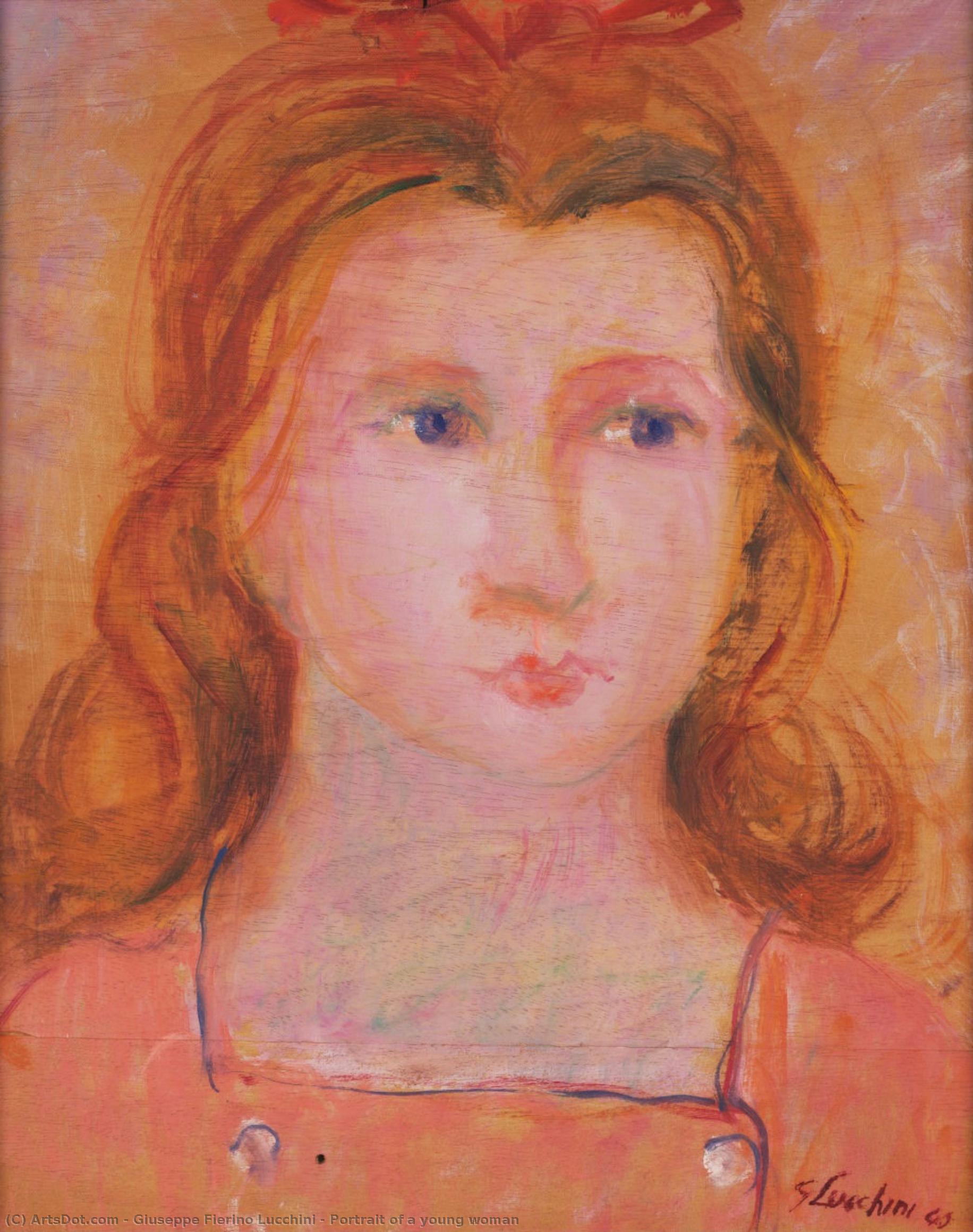
Portrait of a young woman


 詳細を見る
詳細を見る
ジークレー/アートプリント
迅速な制作と多彩な仕上げオプションを備えた、ミュージアムクオリティのジークレーまたはキャンバスプリント。 ( 手描きの絵画を購入 画像を購入)




































作品のオリジナル比率に合わせた、当店の規定サイズからお選びください。

特定のフレームやスペースに合わせて、ご自身でサイズを指定することも可能です。選択されたサイズが元の画像の比率と一致しない場合、作品をトリミングするか、鏡面反射または単色での塗りつぶしによって画像を拡張いたします。制作を開始する前に、ご確認用のデジタルモックアップをお送りいたします。
画面上のプレビューには、実際のトリミングや拡張は反映されませんのでご注意ください。最終的な構図を正確に確認できるのは、モックアップのみとなります。
カスタムサイズも承っておりますが、元の比率を維持するためには、あらかじめ用意されたリストからサイズを選択することをお勧めいたします。


 ガラスオプションは、110cm未満のサイズでのみご利用いただけます。

Portrait of a young woman
ジークレー/アートプリント
複製画のサイズ
-


合計金額
$ 62
関連作品

アーティストの略歴
A Life Immersed in the Italian Landscape
Giuseppe Fierino Lucchini, born in Stradella near Mantua in 1907 and passing away in Casalmaggiore in 2001, was an artist deeply entwined with the subtle beauty of the northern Italian countryside. His life story is one of quiet dedication to capturing the ethereal qualities of light and atmosphere, a pursuit that blossomed from humble beginnings into a recognized artistic legacy. The early years following World War I saw his family relocate to Goito, where his father’s acquisition of farmland proved pivotal. It wasn't merely a change of residence but an immersion in the very subject matter that would define Lucchini’s oeuvre—the rolling plains of the Mincio valley and the delicate interplay of seasons upon the land. Encouraged by his father, he embarked on formal artistic training at the Istituto Superiore per le Industrie Artistiche in Monza in 1922, a formative experience where he forged lasting connections with fellow artists like Oreste Marini, Ezio Mutti, and Ermanno Pittigliani.Formative Years and Artistic Development
Lucchini’s education continued at the Accademia Cignaroli in Verona beginning in 1927, a period that further refined his technical skills and broadened his artistic horizons. His time there brought him into contact with Giulio Perina, another influential figure who shaped his understanding of painting techniques. A brief interruption for military service in Rome in 1928 did little to divert his path; upon his return to Goito in 1929, the economic hardships of the era necessitated a move to Milan, where he found mentorship and camaraderie with Pittigliani once more. This period proved crucial as Lucchini briefly engaged with the Futurist movement, though he ultimately charted an independent course—one that prioritized nuanced observation over radical experimentation. He didn’t embrace the dynamism of Futurism wholesale but absorbed its emphasis on capturing fleeting moments, translating it into a delicate sensitivity towards light and color in his landscapes.A Chiarist Vision: Style and Technique
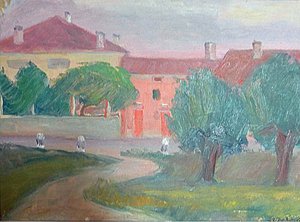
Lucchini's artistic style is best described as *Chiarist*, characterized by a masterful use of light and shadow to create an almost dreamlike quality in his paintings. He wasn’t interested in grand narratives or dramatic compositions; instead, he focused on the subtle shifts in atmosphere, the delicate hues of twilight, and the quiet poetry of rural life. His canvases are often bathed in soft, diffused light, evoking a sense of tranquility and nostalgia. He employed a restrained palette, favoring muted tones that allowed the luminosity of his subjects to shine through. The brushwork is typically loose and fluid, creating an impressionistic effect without sacrificing meticulous detail. His paintings aren’t merely representations of landscapes; they are emotional responses to them—a distillation of feeling rather than a literal transcription of reality. The influence of the Macchiaioli movement, with its focus on capturing fleeting impressions of light and color, is evident in his work, though Lucchini developed a uniquely personal style that set him apart.Themes and Historical Significance
Lucchini’s subject matter remained consistently rooted in the Italian countryside—the fields surrounding Goito, the banks of the Mincio river, and the quiet villages dotting the plains. He found beauty in the ordinary, elevating everyday scenes to a level of poetic significance. His paintings offer a glimpse into a vanishing way of life—a rural Italy characterized by simplicity, harmony with nature, and a deep connection to the land. While he didn’t actively participate in major art movements or seek widespread recognition, his work resonated with those who appreciated its quiet beauty and emotional depth. In an era increasingly dominated by abstraction and conceptual art, Lucchini remained steadfastly committed to representational painting, offering a counterpoint—a reminder of the enduring power of observation and the importance of capturing the subtle nuances of the natural world. His legacy lies in his ability to evoke a sense of place and atmosphere, transporting viewers to the tranquil landscapes that inspired him. He stands as a testament to the value of artistic dedication, quiet contemplation, and the pursuit of beauty in the everyday.Major Achievements & Lasting Impression
- Consistent dedication to capturing the Italian countryside's ethereal qualities.
- Development of a unique Chiarist style emphasizing light, shadow, and atmosphere.
- Evocation of a sense of tranquility and nostalgia in his paintings.
- Preservation of a visual record of a vanishing rural Italy.
- Recognition as an artist who prioritized emotional response over technical display.
giuseppe fierino lucchini
1907 - 2001 , Italy
基本情報
- Artistic Movement Or Style: Chiarist, Fairytale-like
- Date Of Birth: January 22, 1907
- Date Of Death: February 16, 2001
- Full Name: Giuseppe Fierino Lucchini
- Nationality: Italian
- Notable Artworks: ['Portrait of a young woman']
- Place Of Birth: Stradella, Italy

