

 プレビュー
プレビュー
 シェアする
シェアする シェアする
シェアする
 詳細を見る
詳細を見る

 ダウンロード
 似ている作品
 X線調査
X線調査 スライドショー
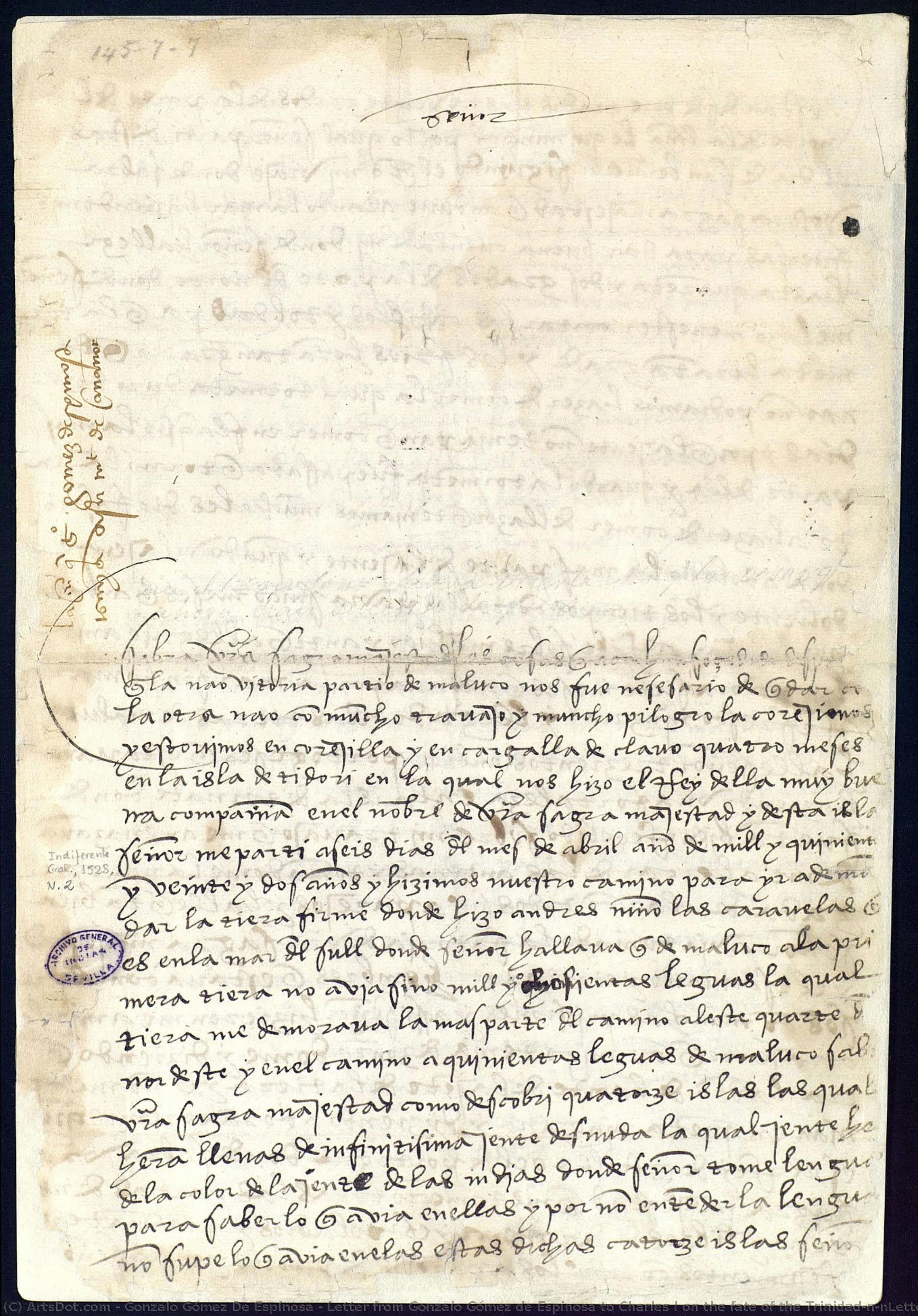
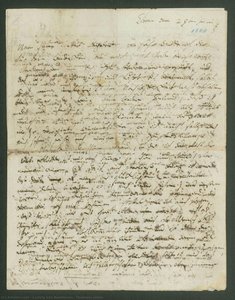
Letter from Gonzalo Gómez de Espinosa to Charles I on the fate of the Trinidad\n\nLetter from Gonzalo Gómez de Espinosa to Charles I on the fate of the Trinidad / Page 01


 詳細を見る
詳細を見る
ジークレー/アートプリント
迅速な制作と多彩な仕上げオプションを備えた、ミュージアムクオリティのジークレーまたはキャンバスプリント。 ( 手描きの絵画を購入 画像を購入)




































作品のオリジナル比率に合わせた、当店の規定サイズからお選びください。

特定のフレームやスペースに合わせて、ご自身でサイズを指定することも可能です。選択されたサイズが元の画像の比率と一致しない場合、作品をトリミングするか、鏡面反射または単色での塗りつぶしによって画像を拡張いたします。制作を開始する前に、ご確認用のデジタルモックアップをお送りいたします。
画面上のプレビューには、実際のトリミングや拡張は反映されませんのでご注意ください。最終的な構図を正確に確認できるのは、モックアップのみとなります。
カスタムサイズも承っておりますが、元の比率を維持するためには、あらかじめ用意されたリストからサイズを選択することをお勧めいたします。


 ガラスオプションは、110cm未満のサイズでのみご利用いただけます。

Letter from Gonzalo Gómez de Espinosa to Charles I on the fate of the Trinidad\n\nLetter from Gonzalo Gómez de Espinosa to Charles I on the fate of the Trinidad / Page 01
ジークレー/アートプリント
複製画のサイズ
-


合計金額
$ 62
関連作品

アーティストの略歴
The Navigator of History: The Legacy of Gonzalo Gómez de Espinosa
In the grand, sweeping tapestry of the Age of Discovery, certain names resonate not through the brushstrokes of a canvas, but through the ink of historical chronicles and the salt-stained logs of maritime expeditions. Gonzalo Gómez de Espinosa stands as one such figure, a man whose life was defined by the perilous boundaries of the known world. Born in 1479 in the Spanish town of Espinosa de los Monteros, his destiny was inextricably woven into the fervent spirit of the Renaissance—a period when the horizon was not a limit, but a challenge to be conquered. While he may not have wielded a palette of oils, his life serves as a profound historical narrative, a lived masterpiece of courage and strategic intellect that shaped the geopolitical landscape of the sixteenth century.
The essence of Espinosa’s significance lies in his role during one of history's most audacious maritime endeavors: the Magellan expedition. Serving as the Alguacil Mayor—the Marshal of the Fleet—Espinosa was far more than a mere passenger on this voyage of unprecedented scale. He was a pillar of stability amidst the chaos of the unknown. As the fleet navigated the treacherous waters around Cape Horn and ventured into the vast, silent expanse of the Pacific, Espinosa was tasked with the monumental responsibility of maintaining order aboard the Trinidad. His leadership was tested in the crucible of storms, starvation, and the terrifying uncertainty of encountering uncharted lands and hostile populations, making him a vital witness to the dawn of global connectivity.
A Chronicle of Resilience and Loss
The narrative of Espinosa’s career is marked by a poignant duality of triumph and tragedy. Following the death of Ferdinand Magellan in the Philippines, the weight of command fell upon his shoulders. He assumed leadership of the Trinidad, attempting to navigate the complex political and physical perils that followed the expedition's fragmentation. However, the era of exploration was often as much about loss as it was about discovery. The capture of the Trinidad by Portuguese forces remains a somber chapter in his biography, illustrating the brutal maritime rivalries that defined the struggle for dominance over the lucrative spice trade.
Yet, even in the face of such devastating setbacks, Espinosa’s spirit remained unbroken. His subsequent service under the Spanish Crown, specifically during the reign of Charles I, underscores a life of enduring commitment to his nation. He transitioned from the salt-sprayed decks of exploration to the strategic corridors of military defense, contributing to the preservation of Spanish interests during a period of intense global competition. His ability to navigate both the literal oceans and the complex political tides of the Spanish Empire speaks to a profound resilience that transcends simple biography.
The Written Legacy: Documents as Art
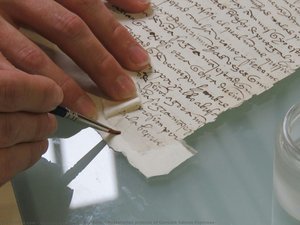
To understand Espinosa is to engage with the primary sources he left behind, which function much like historical artifacts in an art gallery. His correspondence, most notably his detailed letter to Charles I regarding the fate of the Trinidad, serves as a hauntingly beautiful window into the past. These documents are more than mere reports; they are evocative pieces of historical literature, written on aged parchment with a script that captures the tension, the fear, and the awe of an era where every horizon held the potential for both glory and death.
Through these writings, we encounter the true scale of his experience:
- The Human Element: His accounts provide a visceral connection to the hardships endured by the crew, transforming abstract history into a tangible human struggle.
- The Cartographic Impact: His observations contributed to the burgeoning understanding of global geography and the intricate details of the Pacific route.
- Historical Documentation: His letters act as essential primary sources that allow modern scholars to reconstruct the logistical and emotional realities of the Magellan voyage.
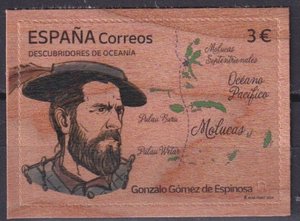
gonzalo gómez de espinosa
1479 - , Spain
基本情報
- Artistic Movement Or Style: Renaissance Explorer
- Artists Or Movements Influenced By This Artist: ['European Exploration']
- Artists Who Influenced This Artist: ['Fernando Magellan']
- Date Of Birth: 1479
- Full Name: Gonzalo Gómez de Espinosa
- Nationality: Spanish
- Notable Artworks: ['Trinidad Letter']
- Place Of Birth: Espinosa de los Monteros, Spain
関連記事
Marianne North's Masterpieces: 25 Botanical Paintings That Bloom With Adventure | ArtsDot
Journey through the vibrant world of Marianne North’s botanical paintings! Explore 25 iconic artworks from this Victorian artist, celebrating exotic flora & travel. Find museum-quality reproductions and curated decor ideas at ArtsDot.com.
The Golden Age Reforged: Dramatic Realism & Religious Zeal in Spanish Baroque Art
Explore the dramatic world of Spanish Baroque art! Discover masters like Zurbarán & the powerful influence of religious zeal on painting techniques – a guide for collectors and enthusiasts.

Rafael de Penagos: A Study in Spanish Portraiture & Artistic Identity
Explore the life & art of Rafael de Penagos, a leading Spanish Art Deco illustrator. Discover his iconic 'Penagos Woman', commercial work, and lasting legacy. Learn about this pivotal figure in 20th-century Spanish art history.
José Gutiérrez Solana: A Chronicle of Spanish Society Through Expressionist Vision
Explore the captivating world of José Gutiérrez Solana, a pivotal Spanish Expressionist painter. Discover his haunting depictions of early 20th-century Spain, influenced by Goya & El Greco. Learn about his key works and lasting legacy.

Manuel Benedito Vives: A Study of Light, Color & Emotional Resonance in Contemporary Spanish Painting
Explore the captivating world of Manuel Benedito Vives, a celebrated Spanish painter influenced by Sorolla. Discover his masterful portraits, luminous landscapes & enduring legacy – a favorite of the Spanish Royal Family. Art collectors will appreciate this in-depth study.

