

 プレビュー
プレビュー
 プリントを購入
 シェアする
シェアする シェアする
シェアする
 詳細を見る
詳細を見る

 ダウンロード
 似ている作品
 X線調査
X線調査 スライドショー
Mill Workers
 1939
1939 44.0 x 36.0 cm
 詳細を見る
詳細を見る




































作品のオリジナル比率に合わせた、当店の規定サイズからお選びください。

特定のフレームやスペースに合わせて、ご希望のサイズをご入力いただけます。選択されたサイズが元の画像の比率と異なる場合、アートワークをトリミングするか、手描きで要素を追加して絵画を拡張いたします。デジタルモックアップ を制作し、制作開始前にご確認(承認)をいただきます。
画面上のプレビューは、実際のトリミングや拡張を正確に反映しているものではありません。最終的な構図は、モックアップによってのみ正確にご確認いただけます。
カスタムサイズもご利用いただけますが、元の比率を維持するためには、あらかじめ用意されたリストからサイズを選択することをお勧めいたします。
ご注文後、ArtsDot.com チームより詳細な指示をお送りするとともに、仕上がりイメージ(モックアップ)をご提供いたします。


 ガラスオプションは、110cm未満のサイズでのみご利用いただけます。

Mill Workers
複製技法
複製画のサイズ
-


合計金額
$ 263
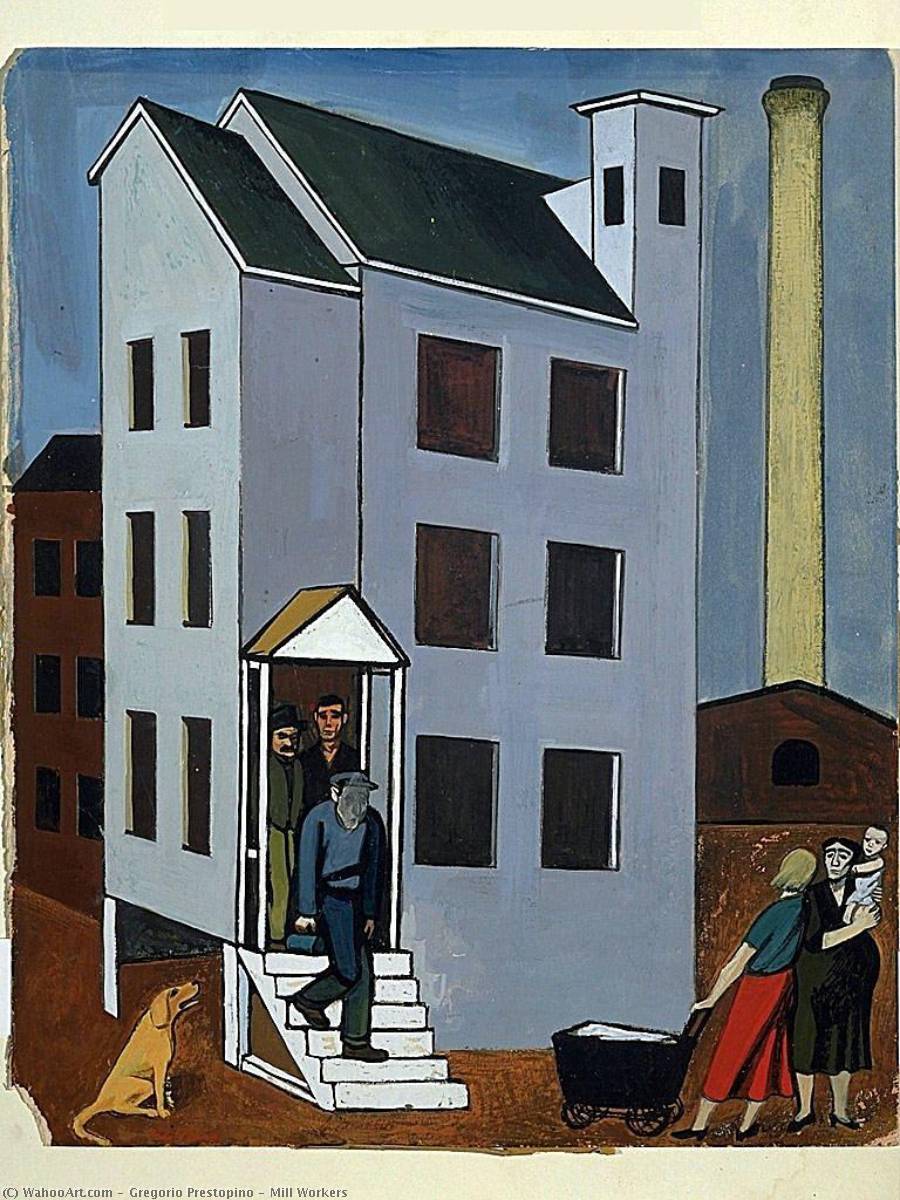
The scene depicts a group of people standing in front of a large building with many windows, giving it an industrial or commercial appearance. The overall atmosphere suggests that this could be a painting of workers from a mill or factory, gathered outside their workplace during a break or after completing their shift. A dog is also present in the painting, located near the left side of the image, adding a sense of warmth and humanity to the scene.
Artistic Style and Technique
Gregorio Prestopino's use of gouache as a medium adds a unique texture and depth to the painting. The bold lines and vibrant colors used in the artwork create a sense of energy and movement, drawing the viewer's eye to the central figures. The artist's attention to detail is also evident in the intricate depiction of the building's architecture and the workers' clothing.Some notable works by Gregorio Prestopino include Rock and Pine, which can be found on /art/list/?Filter=AQZSYW-Gregorio-Prestopino-Rock-and-Pine. For more information on the artist and his works, visit /art/list/?Filter=gregorio+prestopino,gregorio,prestopino&.
Conclusion
The painting Mill Workers by Gregorio Prestopino is a powerful representation of the lives of workers during the 1930s. The artwork's use of gouache and bold lines creates a sense of energy and movement, while the attention to detail adds depth and texture to the scene. As a handmade oil painting reproduction specialist, https://ArtsDot.com offers a unique opportunity to own a piece of art history. Visit our website to explore more artworks by Gregorio Prestopino and other notable artists.- View Mill Workers on /art/list/?Filter=AQZSYG-Gregorio-Prestopino-Mill-Workers
- Learn more about Gregorio Prestopino on /art/list/?Filter=gregorio+prestopino,gregorio,prestopino&
- Discover more artworks at the Smithsonian American Art Museum on /art/list/?Filter=smithsonian+american+art+museum,smithsonian,american,museum&
関連作品








アーティストの略歴
The Soul of the City: The Life and Legacy of Gregorio Prestopino
In the vibrant, crowded streets of New York City’s Little Italy, a profound artistic vision began to take shape. Born in 1907 to Italian immigrants Antonino Prestopini and Letteria Rando, Gregorio Prestopino was destined to become one of the most poignant chroniclers of the American urban experience. His early years were marked by a precocious talent that earned him a scholarship to the prestigious National Academy of Design. It was here, under the mentorship of figures like Charles Hawthorne, that Prestopino developed a rigorous foundation in observation. This training did more than teach him how to render form; it instilled in him a deep reverence for the minute details of life, a quality that would later allow him to transform the mundane activities of city dwellers into profound meditations on the human condition.
As his style matured, Prestopino moved away from the soft edges of Impressionism toward the gritty, unvarnished truth of Social Realism. He found kinship with the Ashcan School, drawing inspiration from the unflinching depictions of laborers and marginalized communities seen in the works of Reginald Marsh. His canvases became windows into the heart of the Great Depression, capturing the heavy atmosphere of industrial life and the quiet dignity of the working class. In masterpieces such as Mill Workers, created in 1939, he utilized the textured depth of gouache to portray the collective spirit of those gathered outside factory gates, blending a sense of social urgency with an intimate, almost tender, observation of everyday struggle.
A Mastery of Light and Shadow
The trajectory of Prestopino’s career reached a transformative milestone in 1972 when he was awarded the prestigious Rome Prize. This period of immersion in European art history allowed him to refine his technical command, particularly through the study of chiaroscuro. By mastering the dramatic interplay between light and shadow, he infused his later works with a theatrical intensity that elevated his subjects beyond mere reportage. Whether painting a bustling street scene or a solitary figure, Prestopino used light to sculpt emotion, creating a sense of depth that was both physical and psychological.
His artistic evolution also saw him embracing more expressive modes, blending the boundaries between realism and modernism. In works like Brown Brook, one can witness a shift toward bolder colors and geometric forms, where the energy of Expressionism meets a structured, modern sensibility. This versatility allowed him to remain relevant across decades of shifting aesthetic trends, moving from the stark social commentary of the 1930s to the more complex, textured landscapes of his later years.
The Harlem Studio and Historical Significance
Perhaps the most evocative chapter of Prestopino’s life was his time spent in Harlem. Establishing a studio in this culturally rich neighborhood, he became an integral part of the local artistic fabric. His presence was so deeply felt that filmmakers John Hubley and Faith Elliot famously captured the immediacy of his process in the film Harlem Wednesday, documenting the artist as he worked directly before his canvases. This period solidified his reputation as a painter who did not merely observe the city from a distance but lived within its pulse, capturing the very essence of urban humanity.
Prestopino’s significance lies in his refusal to abandon the human image during an era when much of the art world was turning toward total abstraction. Alongside contemporaries like Ben Shahn and Philip Evergood, he championed a way of seeing that honored the figure and the social reality it inhabited. His legacy is preserved in the permanent collections of institutions such as the Smithsonian American Art Museum, where his works continue to resonate with their characteristic warmth, honesty, and enduring truth.
gregorio prestopino
1907 - 1984
基本情報
- Artistic Movement Or Style: American Realism; Expressionism
- Artists Or Movements Influenced By This Artist:
- Ben Shahn
- Philip Evergood
- Artists Who Influenced This Artist:
- Charles Hawthorne
- French Impressionists
- Date Of Birth: June 21, 1907
- Date Of Death: December 19, 1984
- Full Name: Gregorio Prestopino
- Nationality: American
- Notable Artworks:
- Mill Workers
- Grey Wind
- Supper in Bethlehem
- Place Of Birth: New York City, United States