

 プレビュー
プレビュー
 シェアする
シェアする シェアする
シェアする
 詳細を見る
詳細を見る

 ダウンロード
 似ている作品
 X線調査
X線調査 スライドショー
 統計情報
統計情報Case No.1675
 Baroque
 1836
1836 57.0 x 44.0 cm
 Gordon Museum
 詳細を見る
詳細を見る
手描き油彩複製画
当社のアーティストが、お客様のご希望のサイズと額縁に合わせて、キャンバスに手描きで制作する油彩画です。 ( プリント版に切り替え デジタル画像販売へ切り替え)




































作品のオリジナル比率に合わせた、当店の規定サイズからお選びください。

特定のフレームやスペースに合わせて、ご希望のサイズをご入力いただけます。選択されたサイズが元の画像の比率と異なる場合、アートワークをトリミングするか、手描きで要素を追加して絵画を拡張いたします。デジタルモックアップ を制作し、制作開始前にご確認(承認)をいただきます。
画面上のプレビューは、実際のトリミングや拡張を正確に反映しているものではありません。最終的な構図は、モックアップによってのみ正確にご確認いただけます。
カスタムサイズもご利用いただけますが、元の比率を維持するためには、あらかじめ用意されたリストからサイズを選択することをお勧めいたします。
ご注文後、ArtsDot.com チームより詳細な指示をお送りするとともに、仕上がりイメージ(モックアップ)をご提供いたします。


 ガラスオプションは、110cm未満のサイズでのみご利用いただけます。

Case No.1675
複製技法
複製画のサイズ
-


合計金額
$ 263
関連作品
アーティストの略歴
The Visionary of the Qing Dynasty: The Life and Legacy of Guan Qiaochang Lamqua
In the twilight of the Qing Dynasty, a period often characterized by rigid tradition and cultural isolation, there emerged an artist whose brush dared to bridge the gap between East and West. Guan Qiaochang Lamqua (1801–1860) was not merely a painter but a profound innovator who challenged the established boundaries of Chinese aesthetics. Born into a prosperous family in Shandong Province, Lamqua’s early artistic foundations were laid through the classical discipline of traditional ink painting, a craft he mastered under the watchful eye of his father, a distinguished scholar and artist. Yet, beneath this veneer of classical training lay a restless, inquisitive spirit that would eventually lead him toward a revolutionary embrace of European oil painting techniques.
The trajectory of Lamqua’s career was irrevocably altered during his formative years at Peking University. It was here that he encountered the profound influence of Jesuit missionaries, who introduced him to the burgeoning realism and anatomical precision of Western art. This encounter ignited a lifelong fascination with the physical reality of the human form. Unlike many of his contemporaries who sought beauty in idealized, ethereal figures, Lamqua pursued a scientific truth. He famously engaged in the meticulous study of human anatomy—a practice as controversial as it was daring for the era—dissecting cadavers to grasp the intricate complexities of musculature and bone structure. This dedication to anatomical accuracy allowed him to translate the weight and texture of life onto canvas with an unprecedented level of realism.
A Master of Light, Shadow, and Human Suffering
Lamqua’s body of work is defined by a haunting ability to capture the intersection of physical deformity and psychological depth. He became a master of chiaroscuro, utilizing dramatic contrasts between light and shadow to sculpt faces out of the darkness, lending his portraits an almost tactile, three-dimensional presence. His fascination with the macabre and the visceral is perhaps most poignantly expressed in his celebrated oil paintings, which often serve as windows into the human condition's more difficult realities.
His most iconic contributions to the art world include works that explore themes of hardship and transformation:
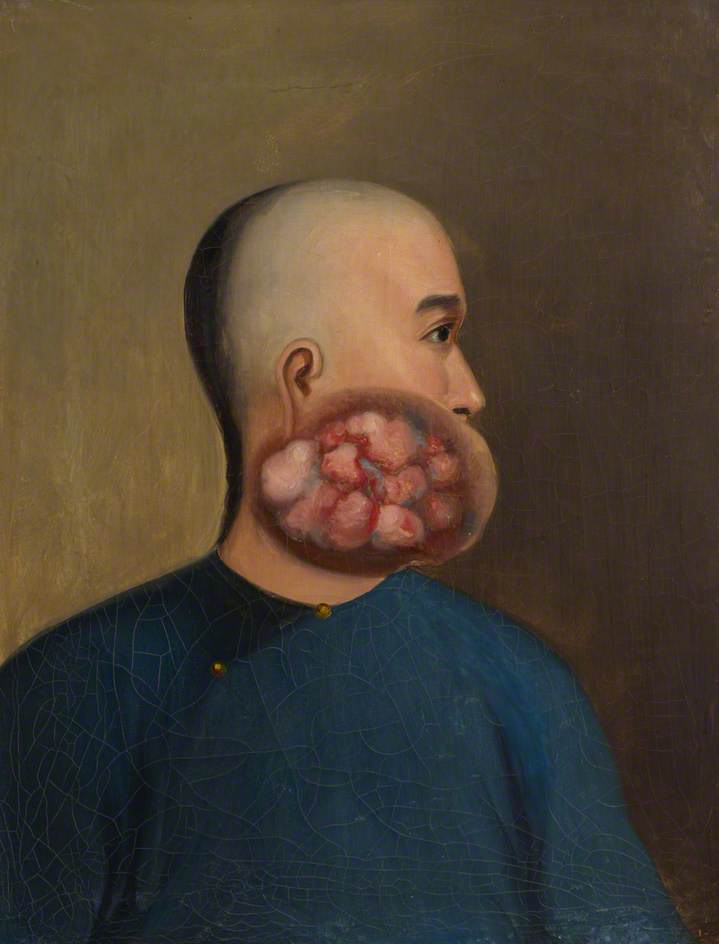
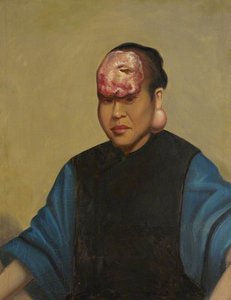
- Case No.1675 (1836): A masterpiece of symbolic depth, this unsettling portrait depicts a man afflicted with a tumor. Through masterful lighting, Lamqua captures not just the physical contours of the ailment but the profound psychological torment of the subject, creating a work that is both beautiful and deeply disturbing.
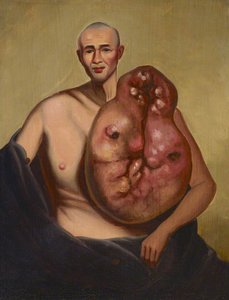
- Case No.4849 (1838): A hauntingly realistic exploration of human vulnerability, this piece continues his investigation into the visceral realities of the flesh, showcasing his unparalleled skill in rendering texture and emotion.
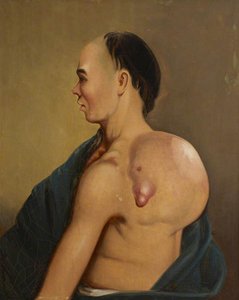
- Case No.3438 (1837): This work exemplifies his use of dramatic lighting to highlight anatomical precision, serving as a poignant testament to the artist's ability to find gravity and meaning within moments of intense suffering.
Historical Significance and Artistic Innovation
The historical importance of Guan Qiaochang Lamqua lies in his role as a cultural conduit. At a time when the boundaries between Chinese ink traditions and Western oil techniques were strictly delineated, Lamqua synthesized them into a singular, visionary language. He did not simply copy Western styles; he adapted them to express a unique perspective that resonated with the complexities of 19th-century China. His work represents a rare moment of artistic hybridization, where the scientific rigor of European realism met the profound symbolic traditions of the East.
Today, Lamqua remains an enigmatic figure whose portraits continue to captivate modern scholars and collectors. His legacy is found in his courage to look closely at the world—even its most unsettling aspects—and his ability to find a haunting, sculptural beauty within the shadows of human existence. Through his innovative use of medium and his unflinching gaze, he forever altered the landscape of Chinese portraiture, leaving behind a body of work that stands as a testament to the power of artistic evolution.
guan qiaochang lamqua
1801 - 1860
基本情報
- Artistic Movement Or Style: Realism
- Artists Or Movements Influenced By This Artist: ['']
- Artists Who Influenced This Artist: ['']
- Date Of Birth: 1801
- Date Of Death: 1860
- Full Name: Guan Qiaochang Lamqua
- Nationality: Chinese
- Notable Artworks:
- Case No.4849
- Case No.1675
- Case No.3438
- Place Of Birth: China
関連記事
Echoes of Change: Exploring Themes & Techniques in 19th-Century Art
Explore the captivating world of 19th-century art! Discover Romanticism & Realism's key artists, masterpieces, and social commentary. Expert insights for collectors & enthusiasts.
The Gaze of Reality: Exploring Themes & Techniques in 19th-Century Realist Painting
Explore the captivating world of 19th-century Realist painting! Discover key artists like Courbet & Manet, groundbreaking techniques, and the powerful social commentary that defined this influential art movement. Expert insights at ArtsDot.
The Poetic Truth of Observation: Exploring 19th-Century Realism in Painting
Explore the captivating world of 19th-century Realism! Discover key artists like Courbet & Millet, masterpieces, and the powerful social commentary behind this influential art movement. Expert insights at ArtsDot.
19th Century Masterpieces: 10 Paintings That Defined an Era | ArtsDot
Journey through 19th century art with ArtsDot! Explore 10 iconic paintings – from Monet & Renoir to Courbet – and discover the stories behind Romanticism, Realism & Impressionism. Find museum-quality reproductions for your home decor. Explore the full collection online!
写実主義を定義する至宝:時代を映した10大名作の世界
時代を写し出す写実主義の名作10選。クールベ、ミレーなど巨匠たちの世界と技法を紐解き、至高のアートが空間にもたらす感動を体験してください。ArtsDot.comで、ミュージアム品質の複製と洗練されたインテリアを見つけましょう。