

 プレビュー
プレビュー
 プリントを購入
 シェアする
シェアする シェアする
シェアする
 詳細を見る
詳細を見る

 ダウンロード
 似ている作品
 X線調査
X線調査 スライドショー
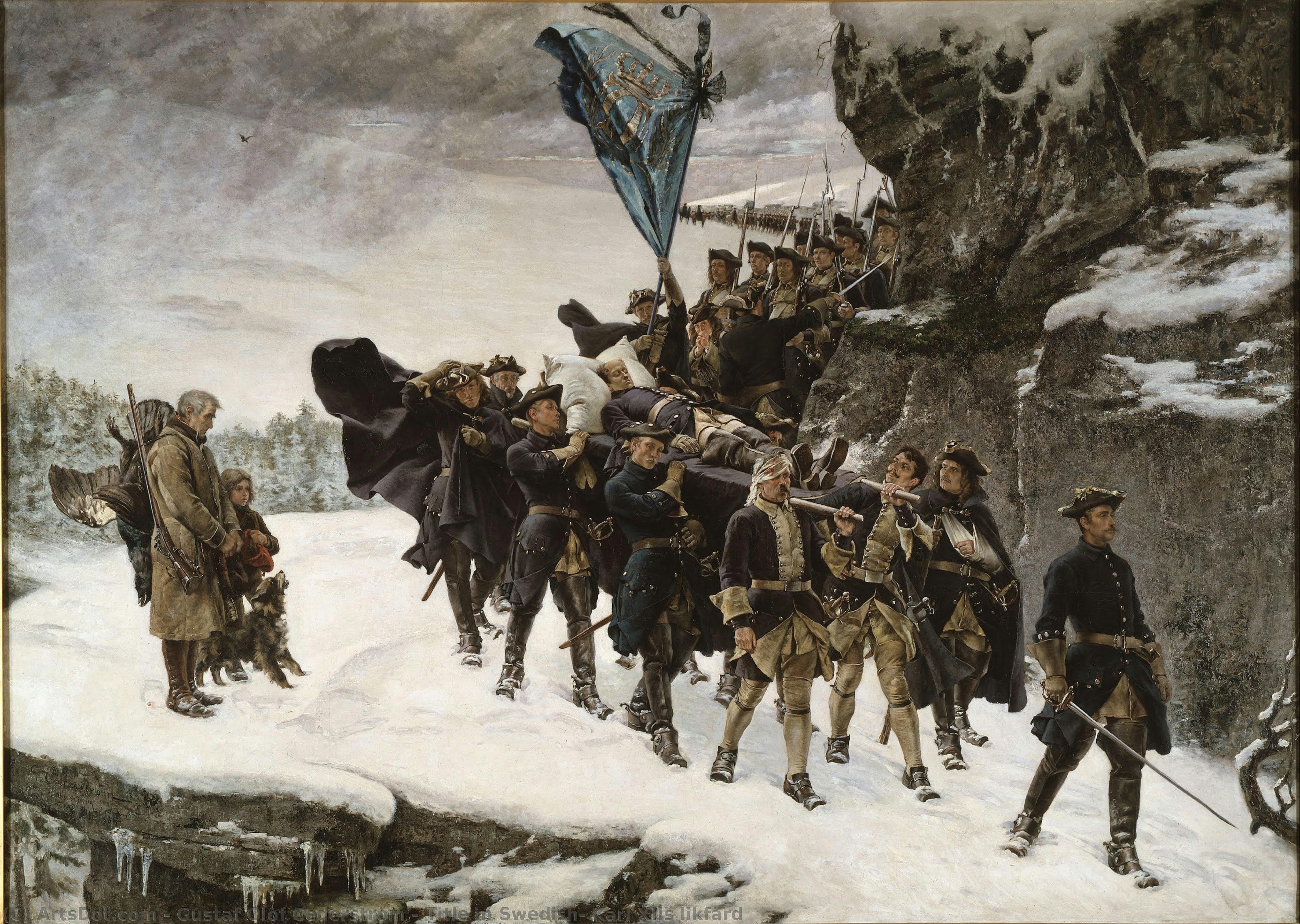
Title in Swedish: Karl XIIs likfärd
 Oil On Canvas
- WallArt
- Historical Painting
 1884
1884- 19th Century
 3710.0 x 2650.0 cm
 国立美術館
国立美術館
 詳細を見る
詳細を見る




P118B $10

P118H $10

P118W $10

P438Z $10

P508JH $12

P508YH $12

P805H $10

P805Z $10

P919BZ $10

P919G $10

P919XJ $10

P959ZH $10

P968JZ $12

W106C $8

W218G $10

W218JH $8

W218Y $10

W307PJ $10

W316G $10

W316PJ $8

W316Y $10

W398PJ $8

W4111J $10

W500HY $15

W500JH $15

W692G $12

W849H $8

W940BG $15

W953PJ $8




作品のオリジナル比率に合わせた、当店の規定サイズからお選びください。

特定のフレームやスペースに合わせて、ご希望のサイズをご入力いただけます。選択されたサイズが元の画像の比率と異なる場合、アートワークをトリミングするか、手描きで要素を追加して絵画を拡張いたします。デジタルモックアップ を制作し、制作開始前にご確認(承認)をいただきます。
画面上のプレビューは、実際のトリミングや拡張を正確に反映しているものではありません。最終的な構図は、モックアップによってのみ正確にご確認いただけます。
カスタムサイズもご利用いただけますが、元の比率を維持するためには、あらかじめ用意されたリストからサイズを選択することをお勧めいたします。
ご注文後、ArtsDot.com チームより詳細な指示をお送りするとともに、仕上がりイメージ(モックアップ)をご提供いたします。


 ガラスオプションは、110cm未満のサイズでのみご利用いただけます。

Title in Swedish: Karl XIIs likfärd
複製技法
複製画のサイズ
-


合計金額
$ 263
作品解説
A Somber Procession Through Time
In the sweeping, dramatic canvas of Gustaf Olof Cederström, we are not merely observers of a historical event, but witnesses to a nation's grief. Karl XIIs likfärd (The Funeral Transport of King Charles XII) serves as a profound window into the Swedish soul, capturing the heavy, atmospheric moment when the legendary monarch is brought home. The painting transcends simple documentation; it is an immersive journey into the late 19th-century romantic fascination with heroism and tragedy. As the eye wanders across the rugged, rocky hillside, one feels the weight of the soldiers' footsteps and the biting chill of the landscape. Cederström masterfully orchestrates a scene where the silence of death meets the disciplined movement of an army, creating a tension that is both haunting and deeply reverent.
The composition is a triumph of narrative depth, populated by at least fourteen figures whose varied uniforms tell a story of different ranks and units brought together by a singular, mournful purpose. Some soldiers stand vigilant with muskets, their silhouettes etched against the terrain, while others appear weary from the journey, their backpacks laden with the remnants of campaign life. The inclusion of a solitary dog and a sturdy horse adds a layer of poignant realism, suggesting that even in the midst of royal mourning, the rhythms of life and the companionship of animals persist. This meticulous attention to detail—from the texture of the gear to the ruggedness of the earth—invites collectors and enthusiasts to lose themselves in the sheer scale of this historical reconstruction.
Mastery of Light and Historical Grandeur
Technically, Cederström employs a style that bridges the gap between rigorous academic realism and the emotional intensity of Romanticism. His brushwork is incredibly detailed, capturing the interplay of light across the metallic surfaces of weapons and the coarse fabrics of military tunics. This precision serves to ground the imaginative elements of the painting in a palpable reality, making the historical event feel immediate and visceral. For the interior designer or art lover, this piece offers an unparalleled sense of gravitas. The muted, earthy palette of the landscape provides a sophisticated backdrop that allows the dramatic figures to command attention without overwhelming a curated space.
Beyond its visual splendor, the painting functions as a symbolic meditation on legacy and loss. The "funeral transport" is more than a movement of a body; it is the movement of an era. Cederström, whose own life was deeply intertwined with Swedish history, imbues the scene with a sense of duty and national identity. To possess a reproduction of this work is to hold a piece of cultural memory—a fragment of a time when art sought to immortalize the very essence of a people's triumphs and tribulations. It is an ideal centerpiece for those seeking to infuse their surroundings with a sense of timelessness, strength, and profound historical narrative.
関連作品


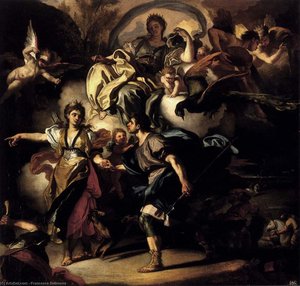
アーティストの略歴
A Life Etched in History: The World of Gustaf Olof Cederström
Gustaf Olof Cederström, born in Stockholm in 1845, was a painter whose name became synonymous with historical narrative in Swedish art. His life’s work wasn't merely the depiction of past events; it was an immersive journey into them, fueled by a deep-seated fascination with his nation’s legacy and a talent for dramatic composition. Cederström’s lineage itself hinted at the duality that would define his career—his father, Carl Emanuel Cederström, was a naval officer embodying duty and discipline, while his mother, Theresine, nurtured an artistic sensibility within the home. This early exposure to both worlds laid the foundation for a life spent bridging the gap between rigorous historical accuracy and compelling visual storytelling. A pivotal moment in young Gustaf’s imagination occurred with the discovery of an ancestor's participation in the Skirmish at Bender, sparking a lifelong obsession with Swedish history that would permeate his canvases.From Military Aspirations to Artistic Pursuit
Initially following in his father’s footsteps, Cederström embarked on a military career, joining an infantry regiment in Värmland in 1864. However, the call of art proved too strong to ignore. He continued to pursue artistic studies alongside his military duties at the Royal Swedish Academy of Fine Arts, recognizing that his true vocation lay not on the battlefield but within the realm of creative expression. In 1870, he made the decisive break, resigning his commission and dedicating himself fully to painting. This commitment led him abroad, first to Düsseldorf under Ferdinand Fagerlin’s tutelage, then to Paris where he studied with Léon Bonnat. It was in Paris that Cederström truly found his artistic footing, absorbing the influences of the French academic style while developing a uniquely Swedish perspective on historical themes. He settled permanently in Paris in 1873, establishing himself within the vibrant international art scene.Triumph and Recognition: The Funeral Transport of Charles XII
Cederström’s breakthrough arrived at the Exposition Universelle of 1878 with his monumental painting, Karl XIIs likfärd (The Funeral Transport of Charles XII). This work, depicting the solemn procession carrying the body of the Swedish king home after his death in battle, was an immediate sensation. The scene wasn’t simply a historical record; it was a powerfully emotive portrayal of national mourning and heroic sacrifice. The painting's dramatic lighting, meticulous detail, and palpable sense of grief resonated deeply with audiences, earning Cederström a medal and securing its purchase by the Russian Grand Duke Konstantin. Later returned to Sweden, it now resides in the Göteborgs konstmuseum as a testament to his skill. This success propelled him into the forefront of Swedish art, leading to his election as a member of the Royal Academy that same year and solidifying his reputation as a master of historical painting. His marriage to Amalia Katarina Jaeder further enriched his life, and their daughter Carola would also follow an artistic path.A Legacy Beyond the Canvas
Cederström’s influence extended beyond his paintings. He was appointed Professor at the Academy in 1887 and later served as its Director from 1899 to 1911, shaping the next generation of Swedish artists. While he engaged with projects like historical murals for the Nationalmuseum—a commission ultimately relinquished due to artistic differences with Carl Larsson—his true passion remained focused on large-scale historical compositions. He continued to explore themes of Swedish identity and national narrative throughout his career, producing works that captured pivotal moments in the nation’s past. In later life, he turned to writing, publishing his autobiography, En gammal konstnärs minnen (An Old Artist's Memories) in 1926, followed by Gammalt och nytt (Old and New) in 1929. These writings offered invaluable insights into his artistic philosophy and the historical context that informed his work. Gustaf Olof Cederström passed away in 1933, leaving behind a rich legacy of paintings and writings that continue to inspire and captivate audiences today. His ability to breathe life into history, to transform events into emotionally resonant visual experiences, ensures his place as one of Sweden’s most important and beloved artists.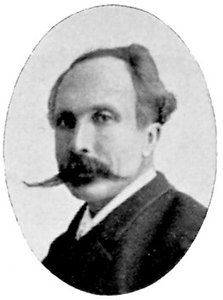
Gustaf Olof Cederström
1845 - 1933 , Sweden
基本情報
- Artistic Movement Or Style: Historical painting
- Artists Who Influenced This Artist:
- Ferdinand Fagerlin
- Léon Bonnat
- Date Of Birth: 1845
- Date Of Death: 1933
- Full Name: Gustaf Olof Cederström
- Nationality: Swedish
- Notable Artworks: ["Karl XII's Funeral Transport"]
- Place Of Birth: Stockholm, Sweden
関連記事
グスタフ・クリムト傑作25選:華麗なる装飾性と象徴が織りなす世界 | ArtsDot
グスタフ・クリムトの傑作25選。華麗なる装飾性と象徴が織りなす世界を紐解きます。キス、ポートレートなど、美術史に残る名画の物語と技法をArtsDotで。高品質複製画やインテリアアートも豊富に。今すぐコレクションをご覧ください。

アール・ヌーヴォーを彩る至宝:10の傑作が語る芸術と装飾の世界
アール・ヌーヴォーの魅力を再発見!ムンロ、ドレ、ガウディ…10の傑作が織りなす曲線美の世界。芸術と装飾が融合した至高のアートをArtsDotで堪能し、お部屋に新たな彩りを。コレクションをオンラインで探索しましょう。

Johan Krouthén: Navigating Swedish Romanticism Through Landscape & Light
Explore the captivating landscapes of Johan Krouthén, a Swedish artist who broke from tradition to embrace realism & idealism. Discover his technique, influences, and legacy with ArtsDot.
Gustave Loiseau: Capturing the Ephemeral Light of French Landscapes
Explore the captivating landscapes of Gustave Loiseau, a key Post-Impressionist painter. Discover his unique 'en treillis' technique and artistic legacy with our comprehensive guide.
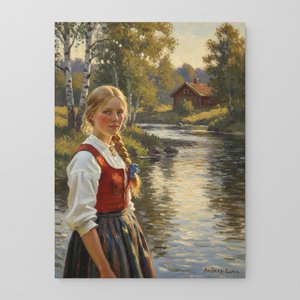
Anders Zorn: A Master of Swedish Impressionism & Ephemeral Light
Explore the life & art of Anders Zorn, a celebrated Swedish Impressionist painter renowned for his masterful portraits, vibrant watercolors, and captivating etchings. Discover his legacy at ArtsDot.

