 プレビュー
プレビュー
 プリントを購入
 シェアする
シェアする シェアする
シェアする
 詳細を見る
詳細を見る

 ダウンロード
 似ている作品
 X線調査
X線調査 スライドショー
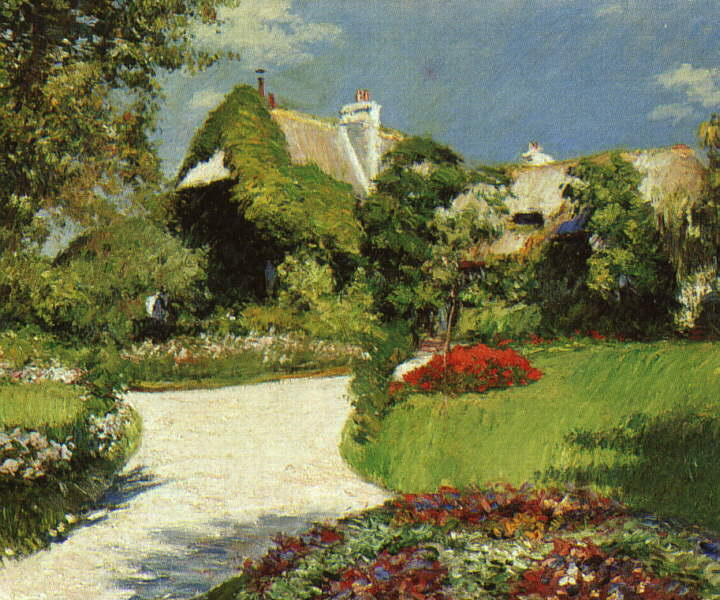
Thatched Cottage at Trouville


 詳細を見る
詳細を見る




































作品のオリジナル比率に合わせた、当店の規定サイズからお選びください。

特定のフレームやスペースに合わせて、ご希望のサイズをご入力いただけます。選択されたサイズが元の画像の比率と異なる場合、アートワークをトリミングするか、手描きで要素を追加して絵画を拡張いたします。デジタルモックアップ を制作し、制作開始前にご確認(承認)をいただきます。
画面上のプレビューは、実際のトリミングや拡張を正確に反映しているものではありません。最終的な構図は、モックアップによってのみ正確にご確認いただけます。
カスタムサイズもご利用いただけますが、元の比率を維持するためには、あらかじめ用意されたリストからサイズを選択することをお勧めいたします。
ご注文後、ArtsDot.com チームより詳細な指示をお送りするとともに、仕上がりイメージ(モックアップ)をご提供いたします。


 ガラスオプションは、110cm未満のサイズでのみご利用いただけます。

Thatched Cottage at Trouville
複製技法
複製画のサイズ
-


合計金額
$ 263
A Snapshot of Trouville’s Tranquility: Gustave Caillebotte's Thatched Cottage
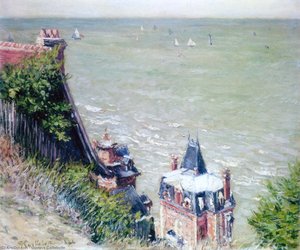
The painting “Thatched Cottage at Trouville,” completed in 1882 by Gustave Caillebotte, isn’t merely a depiction of a rural scene; it’s a carefully constructed meditation on the complexities of modern life viewed through the lens of idyllic simplicity. Situated in the Normandy region of France – Trouville being a charming seaside town – the artwork captures a moment frozen in time, offering a poignant contrast between the burgeoning industrial revolution and the enduring beauty of the natural world.Subject Matter and Composition
At its core, the painting presents a humble thatched cottage nestled amidst verdant foliage. The house itself is rendered with understated elegance—a pale white exterior punctuated by windows that invite glimpses into its interior. However, it’s not just the cottage that commands attention; Caillebotte skillfully arranges figures throughout the landscape – several individuals strolling leisurely along a path, and a dog playfully bounding near the center of the composition – to create a dynamic interplay between stillness and movement. This deliberate juxtaposition speaks volumes about Caillebotte's artistic intention: he seeks not just to represent what is seen but also to convey an emotional resonance that transcends mere visual observation.Style and Technique
Caillebotte’s style aligns squarely with Impressionism, though he distinguishes himself from many of his contemporaries by eschewing the overtly expressive brushstrokes favored by Monet or Renoir. Instead, Caillebotte employs a technique characterized by meticulous detail and precise tonal gradations—a hallmark of Academic painting—yet infused with an Impressionistic sensibility. He achieves this remarkable feat through careful layering of thin glazes applied in multiple sessions, allowing for subtle shifts in color and luminosity as the paint dries. This painstaking process lends the canvas an ethereal quality, capturing not just the visual appearance of Trouville but also its atmosphere – a sense of calm repose and understated beauty. The artist’s use of perspective is particularly noteworthy; he employs aerial perspective to create depth and realism, subtly blurring distant elements to convey the hazy air characteristic of coastal landscapes.Historical Context: Modernity's Quiet Reflection
Painted during the height of Impressionism’s influence, “Thatched Cottage at Trouville” reflects a broader cultural preoccupation with reconciling progress and tradition. The Industrial Revolution was transforming Paris into a bustling metropolis, yet artists like Caillebotte recognized the importance of preserving glimpses of rural tranquility—a refuge from the pressures of urban life. Furthermore, Caillebotte’s fascination with photography – he himself experimented extensively with the medium – underscores his awareness of new artistic possibilities and challenges to established conventions. He wasn't simply celebrating a picturesque landscape; he was engaging in a dialogue with contemporary visual culture, subtly questioning its dominant narratives.Symbolism: Beyond Surface Beauty
The thatched cottage itself serves as a potent symbol—representing simplicity, rural contentment, and perhaps even nostalgia for a bygone era. The figures strolling along the path embody human connection and leisurely enjoyment of life’s pleasures. Even the dog adds to the painting's symbolic richness, representing companionship and spontaneity. Collectively, these elements contribute to an overarching message about finding beauty and solace in the everyday—a theme that resonates powerfully with viewers today.Emotional Impact: A Moment Preserved
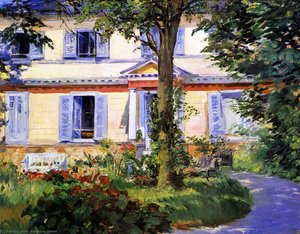
Ultimately, “Thatched Cottage at Trouville” succeeds in evoking a profound sense of serenity and contemplation. The muted palette – dominated by greens, whites, and browns – reinforces this mood, creating an immersive experience for the viewer. Caillebotte’s masterful rendering captures not just what is seen but also what is felt—a quiet appreciation for the beauty of nature and a subtle awareness of the passage of time. It remains a testament to the enduring power of Impressionism's ability to convey emotion through visual form, cementing Caillebotte’s place as one of France’s most astute observers of its own artistic evolution.関連作品
アーティストの略歴
新時代のパリ人:ギュスターヴ・カイユボットの生涯と芸術
1848年、パリの裕福な家庭に生を受けたギュスターヴ・カイユボットは、変わりゆく自らの街の劇的な変貌を捉えるべく、比類なき立場に置かれた芸術家でした。父マルシャル・カイユボットは、成功したテキスタイル事業を継承し、裁判官を務める人物であり、ギュスターヴに経済的な安定と、勃興する近代世界を観察するための絶好の視点を与えました。当初、彼は法学の道に進み、1868年と1870年には法学士号を取得していますが、彼の真の天職は芸術の世界にありました。レオン・ボナールのもとで本格的な修行を開始し、絵画に没頭する一方で、当時登場したばかりのメディアである写真にも深い関心を寄せました。この写真技術への初期の接触――フレーミング、遠近法、そして一瞬の光景を切り取る手法――は、彼の独特なスタイルの象徴となりました。カイユボットは単に変化を記録していたのではありません。彼は、その変化が提示する新たな美学的可能性に対して、能動的に向き合っていたのです。印象派の光を纏った写実主義
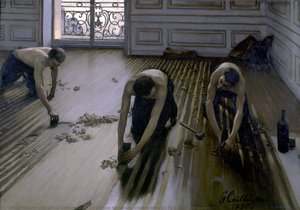
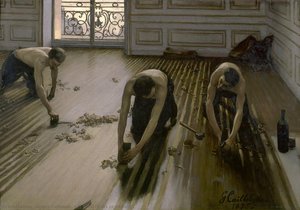
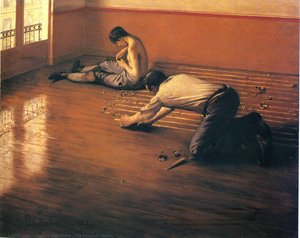
カイユボットの芸術的歩みは、厳格なアカデミズムの伝統とは一線を画していましたが、同時に、多くの印象派の仲間たちが追求した純粋に光学的な探求を完全に取り入れたわけでもありませんでした。彼はエドガー・ドガやジュゼッペ・デ・ニッティスといった画家たちと親交を結び、近代生活への情熱を共有しながらも、緻密な写実主義というレンズを通してその世界にアプローチしました。1875年のサロンで発表された初期の傑作床磨きをする人々(Les Raboteurs de Parquet)は、大胆かつ型破りな画家としての彼の名声を瞬時に確立しました。木製の床を丹念に削る三人の労働者を描いたこの作品は、見る者を驚かせるほどの剥き出しの誠実さで描かれ、一部の人々を魅了しました。単に、高尚な芸術のキャンバスには滅多に登場しない「労働者階級」という主題を選んだことだけでなく、切り取られたような、時に衝撃を与えるほど直接的な構図、そして感傷的な美化を排した姿勢こそが重要だったのです。現代生活を飾ることなく描き出すこの決意は、鉄橋のような作品にも引き継がれ、急速に変貌を遂げるパリの工業化された風景を見事に捉えました。しかし、カイユボットもまた印象派の影響から逃れることはできませんでした。彼のパレットは次第に明るさを増し、筆致を分割させ、大気の効果を実験的に用いるようになります。それは、雪の屋根(View of Rooftops (Snow))に見られるような、雪に覆われたパリの屋根の素晴らしい情景に顕著に表れています。パトロンとして、そして先駆者として:芸術界を切り拓く
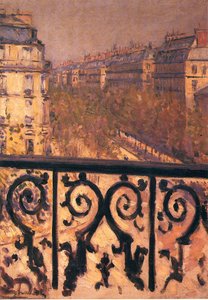
自らの創作活動にとどまらず、カイユボットは印象派運動を支える上で極めて重要な役割を果たしました。彼の経済的な自立は、彼を重要なパトロンへと変えました。モネ、ルノワール、ピサロ、セザンヌ、ドガといった画家たちの作品が、当時の公式なサロンから拒絶されていた時代に、彼は積極的にそれらを購入したのです。彼は単なるコレクターではありませんでした。従来の芸術規範に抗う印象派の展覧会を自ら組織し、資金を提供することで、これらの画家たちを積極的に擁護したのです。この革新を育む献身は、自身のコレクションにも及びました。1894年に彼が亡くなった際、そのコレクションはフランス国家に遺贈されました。当初はこの遺贈に対して抵抗もありましたが、最終的にはオルセー美術館の誇る印象派コレクションの礎となりました。カイユバーットの独自の視点は、その構図にも現れています。1880年に描かれた上から見た大通り(Boulevard vu d’en haut)などの作品は、高所からの視点とダイナミックなトリミングを用い、20世紀の写真的な遠近法を予見させるような、驚くほどモダンな感性を示しています。日本美術の影響や自身の写真実験から得られたであろうこの革新的な構図のアプローチは、彼を真の先駆者として際立たせています。遺産と再発見:蘇る近代の巨匠
彼の死後、数十年にわたりカイユボットの作品は、より有名な印象派の巨匠たちの影に隠れ、比較的目立たない存在でした。しかし、20世紀後半になり、学術的な研究や大規模な展覧会に後押しされ、彼の芸術に対する包括的な再評価が始まりました。この再発見によって明らかになったのは、卓越した技術、知的な深み、そして先見的な洞察力を備えた芸術家の姿でした。カイユボットの絵画は、単なる近代生活の描写ではありません。それは、都市生活の複雑さ、変化する社会情勢、そして芸術と現実との進化し続ける関係についての深い瞑想なのです。写実主義と印象派の手法をシームレスに融合させる能力、革新的な構図、そして周囲の世界を描き出そうとする揺るぎない信念は、彼を19世紀美術における極めて重要な人物として確立させました。今日、カイユボットの作品は、その独自の視点、見事な技法、そして時代を超えた普遍性によって称賛されています。それは、新しい時代の精神を捉えようと果敢に挑んだ芸術家の、不滅の証なのです。代表作
- 床磨きをする人々(Les Raboteurs de Parquet) (1875): カイユボットの写実主義と型破りな構図を示す画期的な作品。
- 雪の屋根(View of Rooftops (Snow)) (1878): 写真や日本美術の影響を受けた、高所からの視点と大気の効果を駆使した作品。
- 上から見た大通り(Boulevard vu d’en haut) (1880): ダイナミックな遠近法を用いた、驚くほどモダンな構図。
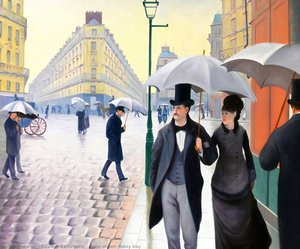
- 雨の日のパリ街(Paris Street; Rainy Day) (1877): おそらく彼の最も有名な作品であり、パリの賑やかなエネルギーを独特かつ情緒的な手法で捉えている。
- ベジークのゲーム(The Bezique Game) (1881): パリの余暇を描いた、魅惑的な印象派の絵画。
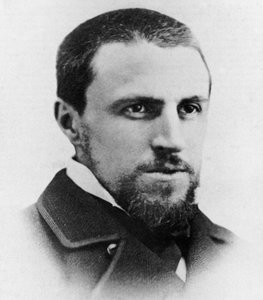
ギュスターヴ・カイユボット
1848 - 1894 , フランス
基本情報
- Artistic Movement Or Style: 写実主義、印象派
- Artists Or Movements Influenced By This Artist: 印象派
- Artists Who Influenced This Artist:
- エドガー・ドガ
- ジュゼッペ・デ・ニティス
- Date Of Birth: 1848年8月19日
- Date Of Death: 1894年2月21日
- Full Name: ギュスターヴ・カイユボット
- Nationality: フランス人
- Notable Artworks (List Of Titles):
- 「床削り職人たち」
- 「雪の屋根裏部屋」、「大通りの眺め」
- Place Of Birth (City And Country): パリ、フランス
関連記事

グスタフ・クリムト傑作25選:華麗なる装飾性と象徴が織りなす世界 | ArtsDot
グスタフ・クリムトの傑作25選。華麗なる装飾性と象徴が織りなす世界を紐解きます。キス、ポートレートなど、美術史に残る名画の物語と技法をArtsDotで。高品質複製画やインテリアアートも豊富に。今すぐコレクションをご覧ください。
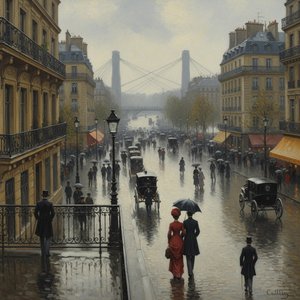
Gustave Caillebotte: Bridging Realism & Modernity in Parisian Life
Explore the life & art of Gustave Caillebotte, a pivotal figure bridging Realism & Impressionism. Discover his iconic Parisian scenes and lasting legacy with ArtsDot.
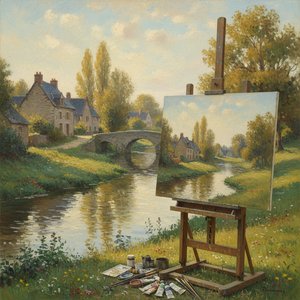
Gustave Loiseau: Capturing the Ephemeral Light of French Landscapes
Explore the captivating landscapes of Gustave Loiseau, a key Post-Impressionist painter. Discover his unique 'en treillis' technique and artistic legacy with our comprehensive guide.
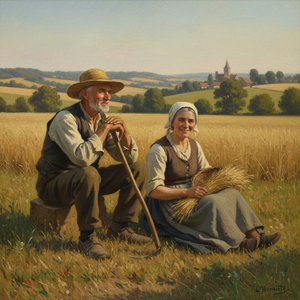
Léon Augustin L'Hermitte: Capturing the Soul of French Rural Life
Discover the captivating realist paintings of Léon Augustin L'Hermitte, masterfully depicting French rural life. Explore his technique, influences & legacy – a cornerstone of 19th-century art.

Impressionism's Masterpieces: 10 Paintings That Defined a Movement | ArtsDot
Journey through Impressionism's heart with 10 iconic paintings by Monet, Renoir & Degas. Explore light, color & the stories behind these masterpieces. Find museum-quality art reproductions and elevate your home decor on ArtsDot.com.