

 プレビュー
プレビュー
 プリントを購入
 シェアする
シェアする シェアする
シェアする
 詳細を見る
詳細を見る

 ダウンロード
 似ている作品
 X線調査
X線調査 スライドショー
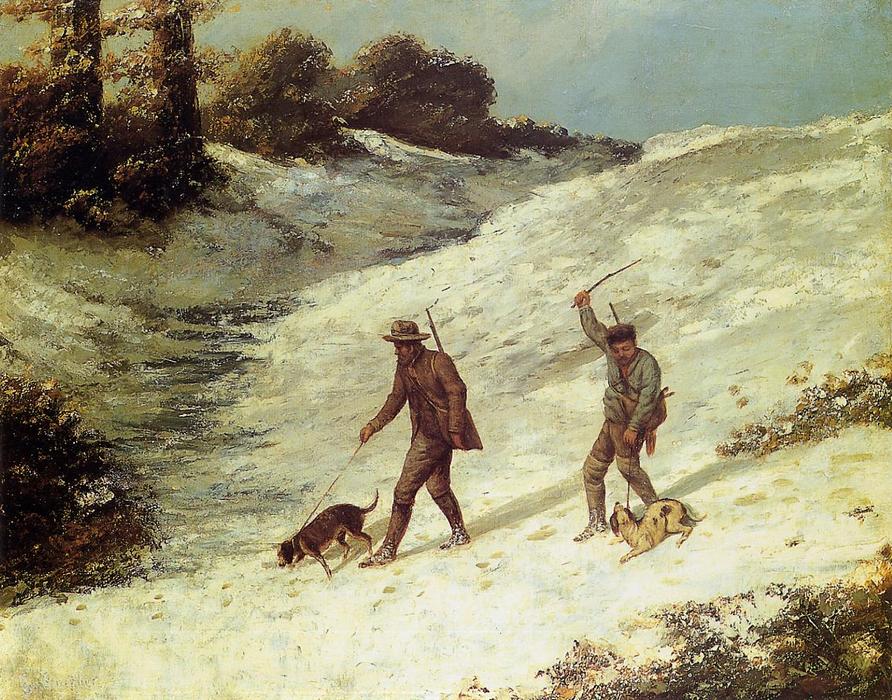
Poachers in the Snow
 Oil On Canvas
- WallArt
- Realism
 1867
1867- 19th Century
 65.0 x 81.0 cm
 Musée des Beaux-Arts
 詳細を見る
詳細を見る
オンラインプレビューをはるかに凌ぐ、高解像度で鮮明なデジタル画像をご購入いただけます。
各ファイルは、社内の専門家が高度なツールと熟練した手作業によるレタッチを用いて、細心の注意を払って準備されています。すべての画像において、卓越した鮮明度、正確な色彩再現性、そして繊細なディテールを保証いたします。
最終ファイルは、プロフェッショナルな編集・印刷環境ですぐにご利用いただけるよう最適化された状態で、72時間以内にメールにてお届けいたします。これは、一流のデザインスタジオ、出版社、ギャラリーから信頼されているものと同等の品質です。
デジタル画像のご注文に付随する特典
高品質なデジタル画像配信を、確かな品質で。
ArtsDot.com を選ぶことは、単に画像を手に入れることではありません。それは、プロの手によって精密に仕上げられ、満足保証が付いた高品質なデジタルアートワークを受け取ることを意味します。ご注文いただいた際に自動的に付随する内容は、以下の通りです:

メールですぐにお届け
ご注文から72時間以内に、高解像度のデジタル画像ファイルがメールでお手元に届きます。すぐにそのままご利用いただけます。

AI技術で最適化されたデジタルファイル
お客様の作品は、高度なAIツールと専門家による手作業の編集を組み合わせてプロフェッショナルに最適化されており、細部のディテール、鮮明さ、そして正確な色再現性を最大限に引き出しています。

一生涯無料の再送サービス
ファイルを誤って削除したり、紛失してしまったりしましたか?ご安心ください。いつでも無料で再送いたします。

輸入手数料は一切かかりません
関税や手数料、配送料を気にすることなく、お気に入りのアートワークをすぐにお楽しみいただけます。デジタルダウンロードは常に免税です。

色彩再現の保証
プロ仕様のツールとカラーマネジメント技術を用いることで、デジタル画像が元の色を最大限に忠実に再現することを保証いたします。

60日間満足保証
ご購入いただいたデジタル画像にご満足いただけない場合は、60日以内であれば、修正または100%の返金(理由を問う必要はありません)をさせていただきます。

100% 返金保証
ご満足いただけない場合は、デジタルファイルを受け取ってから60日以内であれば、理由を問わず全額返金いたします。

まとめ買い割引
3枚購入で10%OFF - 5枚購入で15%OFF - 10枚以上購入で20%OFF。クリエイティブなプロジェクト、ギャラリー、エージェンシーに最適です。
作品の詳細
A Stark Winter Tableau: Gustave Courbet’s “Poachers in the Snow”
Gustave Courbet's "Poachers in the Snow," painted in 1867, isn’t merely a depiction of a winter scene; it’s a profound statement about humanity’s relationship with nature and the realities of rural life. This oil-on-canvas masterpiece, now housed within the Musée des Beaux-Arts et d’archéologie de Besançon, France, stands as a cornerstone of the Realist movement, demanding viewers confront the often uncomfortable truths of everyday existence without romantic glossing. Measuring 65 x 81 cm, the painting immediately draws the eye with its muted palette – predominantly whites and browns – mirroring the harshness and unforgiving beauty of a snow-laden landscape. Yet, within this seemingly simple composition lies a complex narrative woven through careful observation and deliberate artistic choices. The scene unfolds with two figures, clad in heavy coats and hats, trudging purposefully through the deep snow. Their postures suggest both weariness and determination, hinting at the difficult labor involved in their pursuit. The man on the left, leading a dog, embodies a cautious approach, while his companion, wielding a stick, exudes a more assertive energy – a clear indication of the illicit activity taking place. Courbet masterfully utilizes light and shadow to create a sense of depth and atmosphere, emphasizing the cold, biting wind that whips across the snow-covered ground. The dogs themselves are integral to the composition, not merely accessories but active participants in this stark drama, their presence adding a layer of companionship amidst the isolation of the scene. The background landscape—a blurred expanse of trees and distant hills—further reinforces the sense of vastness and solitude, underscoring the vulnerability of these figures against the raw power of nature. Courbet’s commitment to Realism is evident in every brushstroke. He eschewed idealized forms and vibrant colors, opting instead for a direct, unvarnished portrayal of reality. The loose application of paint, characteristic of his style, lends a sense of immediacy and spontaneity to the scene, as if captured in a fleeting moment. This deliberate rejection of academic conventions was revolutionary at the time, challenging the prevailing artistic norms that prioritized beauty and grandeur over truth and authenticity. The painting’s subject matter—poaching—was itself controversial, reflecting the social tensions and economic hardships prevalent in rural France during the 19th century. Courbet's choice to depict this illicit activity head-on was a bold statement about his commitment to portraying the lives of ordinary people, regardless of their moral standing. Beyond its immediate subject matter, “Poachers in the Snow” carries significant symbolic weight. The winter landscape can be interpreted as a metaphor for the harsh realities of life—the struggle for survival, the isolation of rural existence, and the conflict between humanity and nature. The figures themselves represent the complexities of human behavior – ambition, desperation, and perhaps even a degree of moral ambiguity. Courbet doesn’t offer judgment; he simply presents the scene as it is, inviting viewers to contemplate its implications. The painting's enduring power lies in its ability to evoke a sense of both melancholy and resilience, reminding us of our shared humanity and our connection to the natural world. It’s a testament to Courbet’s genius that this seemingly straightforward depiction continues to resonate with audiences today, prompting reflection on timeless themes of survival, morality, and the human condition.The Artist's Context: Gustave Courbet and the Rise of Realism
To fully appreciate “Poachers in the Snow,” it’s essential to understand the broader context within which Gustave Courbet was working – the rise of Realism in 19th-century France. Born in Ornans, France, in 1819, Courbet initially trained at the École des Beaux-Arts in Paris, but quickly grew disillusioned with the rigid conventions and idealized subjects favored by the Academy. He rejected the romanticism and historical narratives that dominated the Salon system, instead seeking to depict the world as he saw it – truthfully and without embellishment. Courbet’s artistic development was profoundly influenced by artists like Eugène Delacroix and Théodore Géricault, but he ultimately distanced himself from their Romantic ideals, prioritizing direct observation and a commitment to portraying everyday life. His early works explored landscapes and portraits, gradually shifting towards scenes of rural labor and the lives of working-class individuals. This shift was driven by a desire to break free from the constraints of academic art and to create paintings that reflected the realities of contemporary society. Courbet’s decision to paint subjects considered “unworthy” of artistic attention—such as peasants, laborers, and even criminals—was a deliberate act of rebellion against the established order. The painting "Poachers in the Snow" exemplifies this commitment to Realism. It's not a heroic depiction of hunters; it’s a stark portrayal of individuals engaged in an illegal activity, stripped of any romantic or idealized qualities. Courbet’s focus on detail—the texture of the snow, the weariness of the figures’ faces, the ruggedness of the landscape—creates a powerful sense of immediacy and authenticity. His rejection of traditional artistic techniques—such as smooth brushstrokes and carefully composed backgrounds—further emphasizes his commitment to portraying reality in its rawest form. Courbet's work was often met with criticism and controversy during his lifetime. Many critics dismissed his paintings as crude, vulgar, or lacking in aesthetic merit. However, he remained steadfast in his artistic vision, continuing to produce works that challenged the conventions of the art world and paved the way for future generations of artists. His influence on modern art is undeniable, establishing Realism as a dominant movement and inspiring countless artists to embrace direct observation and social commentary in their work.Technical Details & Artistic Techniques
The execution of “Poachers in the Snow” reveals Courbet’s mastery of oil painting techniques and his meticulous attention to detail. The canvas measures 65 x 81 cm, providing ample space for the artist to capture the vastness of the winter landscape and the physicality of the figures. Courbet employed a technique known as *alla prima*, meaning “at first sight,” which involved completing the painting in a single session without extensive underpainting or sketching. This approach resulted in a sense of spontaneity and immediacy, capturing the fleeting effects of light and shadow with remarkable precision. The color palette is deliberately muted—dominated by shades of white, brown, and gray—to evoke the cold, bleak atmosphere of the winter scene. Courbet skillfully used *chiaroscuro*, the contrast between light and dark, to create a sense of depth and volume, emphasizing the figures’ forms and the texture of the snow-covered ground. The brushstrokes are loose and expressive, contributing to the painting's overall sense of realism and immediacy. Courbet’s technique is characterized by a directness and honesty that reflects his commitment to portraying reality without idealization or embellishment. The composition itself is carefully constructed, with the two figures positioned diagonally across the canvas to create a dynamic and engaging visual arrangement. The use of perspective—particularly in the depiction of the distant hills—adds depth and realism to the scene. Courbet’s attention to detail extends beyond the main subjects to include subtle elements such as the texture of the snow, the folds of the figures’ clothing, and the reflections of light on the ground. These small details contribute significantly to the painting's overall sense of authenticity and immediacy. The artist’s ability to capture these nuances demonstrates his exceptional skill and his unwavering commitment to portraying reality with remarkable accuracy.A Legacy of Realism: Courbet and Beyond
“Poachers in the Snow” stands as a pivotal work in Gustave Courbet’s oeuvre and a defining example of the Realist movement. Its impact extended far beyond its immediate context, influencing generations of artists who followed. Courbet's rejection of academic conventions and his commitment to portraying everyday life without romanticization paved the way for future movements such as Impressionism and Social Realism. Artists like Jean-François Millet, Édouard Manet, and Honoré Daumier were deeply influenced by Courbet’s work, adopting his techniques and exploring similar themes of rural labor and social injustice. Manet's "Le Déjeuner sur l'herbe" (1863), for example, challenged traditional notions of beauty and morality, mirroring Courbet’s own rebellious spirit. Furthermore, Courbet’s legacy extends beyond the realm of painting. His commitment to depicting reality in its rawest form influenced other art forms, including photography and sculpture. The rise of Realism as a dominant movement in 19th-century France marked a significant shift in the history of art, challenging established conventions and opening up new possibilities for artistic expression. For those interested in exploring more of Courbet’s works or delving deeper into the world of Realist art, we recommend visiting the Musée des Beaux-Arts et d’archéologie de Besançon, France, where “Poachers in the Snow” is proudly displayed. Additionally, examining the work of Eugène-Louis Decisy, another prominent figure in the Realist movement, offers a valuable perspective on the diverse range of artistic approaches within this influential movement.関連作品
作家の略歴
Gustave Courbet: 現実の筆致 – 人生の軌跡と芸術的遺産
フランス東部の小さな村、オルナンで1819年に生まれたギュスターヴ・クールベは、その時代のアート界の確立された規範に対する大胆な反逆者として現れました。彼の物語は単なる絵画やキャンバスの話ではなく、社会的なコメント、政治的な信念、そして彼が見た世界を飾り立てることなく、生々しく、深く現実的に表現するという揺るぎない決意が織り込まれた物語です。比較的裕福なブルジョワ階級の家庭で育ち、母親からの芸術的才能への奨励を受け、それが彼の芸術革命の燃料となりました。1839年にパリのアカデミー・ド・ボザールでの正式な訓練はすぐに学術的な慣習やロマン主義的な理想主義に反発し、彼自身の道を切り開きました。それは想像力よりも観察を優先し、伝統よりも真実を重視する道でした。リアリズムの誕生:芸術的慣習への挑戦
クールベの芸術的発展は、支配的な美学基準に対する意図的な拒絶によって特徴づけられました。彼は神話物語や英雄的寓話に興味がなく、彼の視線は労働に従事し、農村生活を送る普通の人の日常生活に向けられていました。この世界を飾り立てることなく表現するというリアリズムへのコミットメントは、より洗練された理想化された表現に慣れ親しんだ批評家から当初は軽蔑と嘲笑を受けました。初期の作品は風景画や肖像画を探求しましたが、すぐに労働者階級の生活を描いた場面へと移行し、伝統的に歴史的または宗教的な絵画のために予約されていた巨大なスケールで描かれました。この意図的な選択は単なるスタイルではなく、しばしば見過ごされるこれらの主題の本質的な尊厳と重要性を示す声明でした。「石炭採掘者」は1849年に完成しましたが、第二次世界大戦中に悲劇的に破壊され、このアプローチを例証しました。– 疲労と苦難で顔が隠された二人の労働者の鮮明な描写です。「オルナンの埋葬」とともに、この絵画は「ふさわしい」芸術の定義そのものを覆しました。主要作品と芸術的哲学
1850年から51年にサロンに展示された巨大なキャンバス「オルナンの埋葬」は、そのスケールの大きさで、通常は壮大な歴史画のために予約されていたものと、揺るぎないリアリズムの組み合わせにより、観客を衝撃させました。クールベは悼み人を高貴または悲しみに満ちた人物として描くのではなく、彼らを悲しみ、退屈、そして諦めの混合が刻まれた普通の人間として提示しました。この誠実さは革命的でした。彼の芸術的哲学は主題を超えて技法にも及びます。彼は素材そのものを強調する厚い絵の具をキャンバスに塗布する直接的なインパストスタイルを好み、「画家のスタジオ」 (1855) は、彼の芸術的信念と現代社会問題への関与を反映した寓意的な作品であり、彼を挑発的で独立したアーティストとしての地位をさらに確固たるものにしました。 1863年のレフュゼのサロンへの参加は、反逆者としての彼の地位と芸術的自由の擁護者を強化しました。フォンテーヌブローの森の眺め (1855) のような風景画でさえ、ロマンチックな表現を避けて、森の自然の美しさを捉え、リアリズムに浸っていました。遺産と歴史的意義
ギュスターヴ・クールベの影響は、その後の芸術運動において否定できません。彼は17世紀のカラヴァッジョのような初期の巨匠から影響を受け、彼らの劇的なリアリズムと光と影の使用を参考にしましたが、単なる模倣を超えた影響力を行使しました。彼は、伝統的な表現の制約から解放し、世界を見る新しい方法を探求することを奨励することで印象派や後期印象派に深く影響を与えました。彼の社会的なコメントは、彼らの仕事を政治的活動のためのプラットフォームとして使用した後の社会的に関与したアーティストたちの道を開きました。クールベは画家であるだけでなく、芸術的自由と政治的変化の熱心な擁護者であり、1871年のパリ・コミューンのような彼の時代の大混乱した出来事に積極的に参加し、それがスイスへの亡命につながりました。彼は1877年に亡くなり、今日でも聴衆にインスピレーションを与え、挑発する作品を残しました。- リアリズムの先駆者
- 学術的慣習への挑戦
- 印象派と後期印象派に影響
- 芸術的自由の擁護者
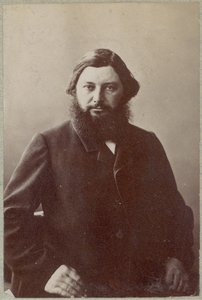
ギュスターヴ・クールベ
1819 - 1877 , フランス
プロフィール概要
- フルネーム: ギュスターヴ・クールベ
- 主な作品:
- 石割り
- オルナンの埋葬
- 画室
- 出生地: オルナンの町、フランス
- 国籍: フランス人
- 影響を与えたアーティストまたはムーブメント:
- 印象派
- 後期印象派
- 影響を受けたアーティスト:
- ドラクロワ
- ジェリコー
- カラヴァッジョ
- 死亡年月日: 1877年12月31日
- 生年月日: 1819年6月10日
- 芸術運動またはスタイル: 写実主義

