

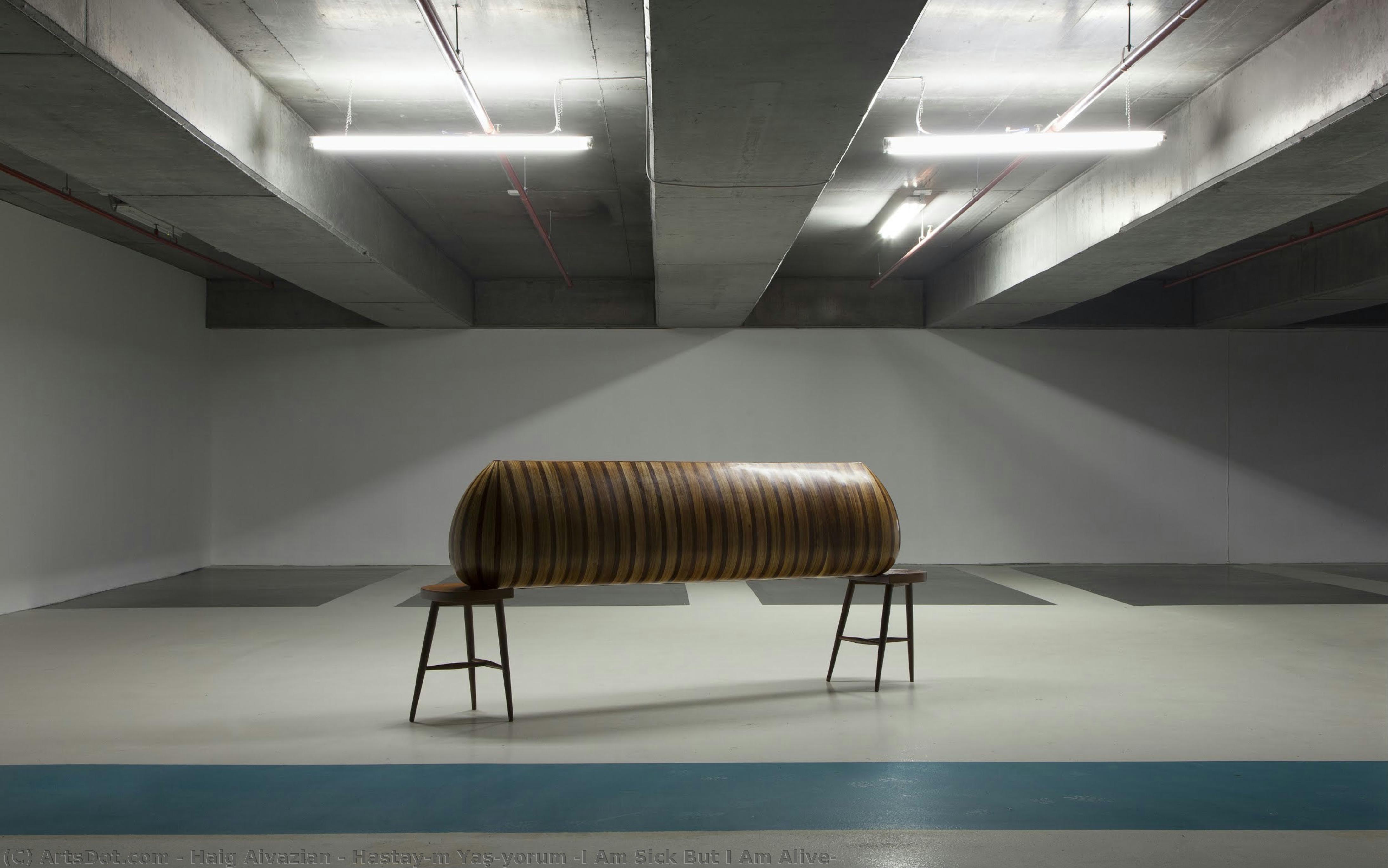
 プレビュー
プレビュー
 シェアする
シェアする シェアする
シェアする
 詳細を見る
詳細を見る

 ダウンロード
 似ている作品
 X線調査
X線調査 スライドショー
 統計情報
統計情報Hastayım Yaşıyorum (I Am Sick But I Am Alive)
 36.0 x 235.0 cm
 The Moving Museum
 詳細を見る
詳細を見る
手描き油彩複製画
当社のアーティストが、お客様のご希望のサイズと額縁に合わせて、キャンバスに手描きで制作する油彩画です。 ( プリント版に切り替え デジタル画像販売へ切り替え)




































作品のオリジナル比率に合わせた、当店の規定サイズからお選びください。

特定のフレームやスペースに合わせて、ご希望のサイズをご入力いただけます。選択されたサイズが元の画像の比率と異なる場合、アートワークをトリミングするか、手描きで要素を追加して絵画を拡張いたします。デジタルモックアップ を制作し、制作開始前にご確認(承認)をいただきます。
画面上のプレビューは、実際のトリミングや拡張を正確に反映しているものではありません。最終的な構図は、モックアップによってのみ正確にご確認いただけます。
カスタムサイズもご利用いただけますが、元の比率を維持するためには、あらかじめ用意されたリストからサイズを選択することをお勧めいたします。
ご注文後、ArtsDot.com チームより詳細な指示をお送りするとともに、仕上がりイメージ(モックアップ)をご提供いたします。


 ガラスオプションは、110cm未満のサイズでのみご利用いただけます。

Hastayım Yaşıyorum (I Am Sick But I Am Alive)
複製技法
複製画のサイズ
-


合計金額
$ 263
関連作品









アーティストの略歴
A Cartography of Power: The Artistic Journey of Haig Aivazian
Born in Beirut, Lebanon, in 1980, Haig Aivazian’s artistic practice is deeply rooted in a landscape marked by political turbulence and layered histories. To understand his work is to recognize it as an ongoing investigation into the pervasive nature of power – not simply as a top-down force exerted by governments or institutions, but as a diffuse energy that permeates objects, spaces, bodies, and even the very air we breathe. Aivazian doesn’t offer definitive statements about power; instead, he meticulously constructs scenarios, employing performance, video, drawing, installation, and sculpture to *reveal* its subtle operations and often unsettling consequences. His early life in Beirut, a city constantly negotiating memory, conflict, and reconstruction, undoubtedly shaped this sensibility. The echoes of past traumas, the visible scars of urban decay, and the precariousness of daily existence all find resonance within his artistic explorations.From Observation to Intervention: Early Development
Aivazian’s initial forays into art were characterized by a keen observational eye. He began by documenting the everyday – seemingly mundane scenes in Beirut transformed through the lens of political awareness. These early works weren't overtly confrontational; rather, they possessed a quiet intensity, hinting at underlying tensions and unspoken narratives. This phase gradually evolved into more direct interventions, where Aivazian started to actively manipulate his surroundings and engage with specific sites and histories. He became interested in the ways architecture embodies power structures – how buildings can both protect and oppress, commemorate and erase. His exploration of these themes led him to experiment with different mediums, seeking those best suited to convey the complexities he perceived. The shift from documentation to intervention signaled a growing desire not just to *represent* reality but to actively *question* it.Multifaceted Practice: Performance, Video and Beyond
Aivazian’s artistic toolkit is remarkably diverse. His performances are often characterized by a deliberate slowness and repetition, creating a hypnotic effect that draws attention to the physicality of labor and the subtle dynamics of control. These aren't grand theatrical gestures but rather intimate, almost ritualistic actions performed in specific locations, frequently referencing historical events or architectural spaces. Video plays a crucial role in his practice, allowing him to extend these performances beyond their immediate context and explore the temporal dimensions of power. He often employs archival footage alongside newly created imagery, creating layered narratives that challenge conventional understandings of history. Sculpture, too, is integral to Aivazian’s work, manifesting as fragmented objects or architectural interventions that disrupt established spatial relationships. His installations are particularly compelling, transforming galleries into immersive environments where viewers are invited – and sometimes compelled – to confront their own relationship to power.International Recognition and Artistic Impact
Aivazian’s work has garnered significant international recognition, with exhibitions at prestigious venues such as the 60th Venice Biennale and cph:dox. This wider exposure has allowed him to engage with a broader audience and contribute to ongoing dialogues about political art and social justice. His participation in the Venice Biennale, for example, provided a platform to explore themes of displacement and memory within a global context. He doesn’t shy away from difficult subjects, tackling issues such as surveillance, migration, and environmental degradation with nuance and sensitivity. Aivazian's impact lies not only in the aesthetic qualities of his work but also in its ability to provoke critical thinking and challenge established norms. He encourages viewers to question their own complicity in systems of power and to consider alternative ways of being in the world. His art is a testament to the enduring power of artistic expression as a tool for social change, offering a compelling vision of resistance and resilience in an increasingly complex global landscape.
haig aivazian
1980 - , Lebanon
基本情報
- Artistic Movement Or Style: Contemporary Art
- Date Of Birth: 1980
- Full Name: Haig Aivazian
- Nationality: Lebanese
- Notable Artworks:
- Hastayım Yaşıyorum (I Am Sick But I Am Alive)
- You May Own the Lanterns, but We Have the Light
- Place Of Birth: Beirut, Lebanon