

 シェアする
シェアする シェアする
シェアする
 詳細を見る
詳細を見る

 ダウンロード
 似ている作品
 スライドショー
 統計情報
統計情報Konrad Peutinger


 詳細を見る
詳細を見る
オンラインプレビューをはるかに凌ぐ、高解像度で鮮明なデジタル画像をご購入いただけます。
各ファイルは、社内の専門家が高度なツールと熟練した手作業によるレタッチを用いて、細心の注意を払って準備されています。すべての画像において、卓越した鮮明度、正確な色彩再現性、そして繊細なディテールを保証いたします。
最終ファイルは、プロフェッショナルな編集・印刷環境ですぐにご利用いただけるよう最適化された状態で、72時間以内にメールにてお届けいたします。これは、一流のデザインスタジオ、出版社、ギャラリーから信頼されているものと同等の品質です。
デジタルアート
個人での鑑賞、印刷、クリエイティブなプロジェクト用に、高解像度ファイルをダウンロードできます。 ( プリント版に切り替え 手描きの絵画を購入)
デジタル画像のご注文に付随する特典
高品質なデジタル画像配信を、確かな品質で。
ArtsDot.com を選ぶことは、単に画像を手に入れることではありません。それは、プロの手によって精密に仕上げられ、満足保証が付いた高品質なデジタルアートワークを受け取ることを意味します。ご注文いただいた際に自動的に付随する内容は、以下の通りです:

メールですぐにお届け
ご注文から72時間以内に、高解像度のデジタル画像ファイルがメールでお手元に届きます。すぐにそのままご利用いただけます。

AI技術で最適化されたデジタルファイル
お客様の作品は、高度なAIツールと専門家による手作業の編集を組み合わせてプロフェッショナルに最適化されており、細部のディテール、鮮明さ、そして正確な色再現性を最大限に引き出しています。

一生涯無料の再送サービス
ファイルを誤って削除したり、紛失してしまったりしましたか?ご安心ください。いつでも無料で再送いたします。

輸入手数料は一切かかりません
関税や手数料、配送料を気にすることなく、お気に入りのアートワークをすぐにお楽しみいただけます。デジタルダウンロードは常に免税です。

色彩再現の保証
プロ仕様のツールとカラーマネジメント技術を用いることで、デジタル画像が元の色を最大限に忠実に再現することを保証いたします。

100日間満足保証
ご購入いただいたデジタル画像にご満足いただけない場合は、100日以内であれば、理由を問わず修正または100%の返金対応をさせていただきます。

100% 返金保証
ご満足いただけない場合は、デジタルファイルを受け取ってから100日以内であれば、理由を問わず全額返金いたします。

まとめ買い割引
3枚購入で10%OFF - 5枚購入で15%OFF - 10枚以上購入で20%OFF。クリエイティブなプロジェクト、ギャラリー、エージェンシーに最適です。
A Glimpse into Renaissance Commemoration
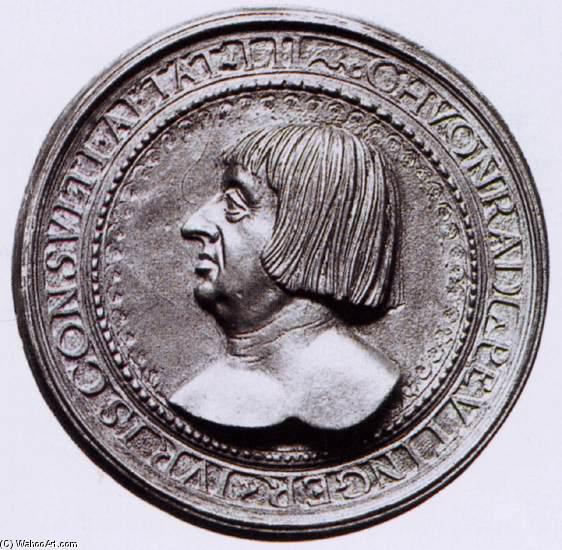
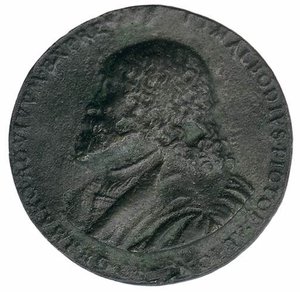
This exquisite piece, depicting Konrad Peutinger on what appears to be an antique medallion or coin, immediately transports the viewer across the centuries. The subject matter itself speaks volumes of historical reverence; it is a tangible echo of Renaissance portraiture and commemorative art. The central profile bust captures the likeness of Konrad Peutinger with remarkable detail, suggesting not merely a man's face, but a figure of considerable intellectual weight within his time. The craftsmanship evident in the embossing—the meticulous rendering of the short hair, the structured headgear, and the neutral yet commanding expression—speaks to the high standards of artistry prevalent during the early sixteenth century.
Mastery in Detail: Technique and Craftsmanship
Examining the surface reveals a fascinating interplay between portraiture and decorative art. The central figure is framed by an elaborate border, a tapestry of stylized patterns including dots, delicate lines, and motifs suggestive of classical foliage or floral arrangements. This rich ornamentation serves to elevate the piece beyond simple portraiture; it transforms it into a miniature work of civic pride or scholarly tribute. The visible signs of age—the subtle discoloration and the patina that speaks of handling over time—do not detract from its beauty but rather deepen its narrative resonance, inviting the collector to contemplate its long journey through history.
The Weight of History: Context and Symbolism
The inscription encircling the object, though partially obscured by time, anchors the piece firmly in a specific historical moment. The very act of creating such an artifact—a medallion bearing Latin inscriptions alongside a portrait—was a powerful statement. It was a means of immortalizing status, patronage, and memory. For the modern admirer, this work symbolizes the enduring human desire to be remembered, to have one's achievements etched into something permanent and beautiful. It connects us directly to the scholarly circles and influential patrons who shaped the cultural landscape of the era.
Bringing Antiquity Home: Aesthetic Impact
For those seeking an object that marries historical gravitas with decorative elegance, this reproduction offers unparalleled depth. Its rich, aged aesthetic allows it to function beautifully in diverse interior settings—from a library paneled with dark wood to a gallery space favoring classical accents. It is not merely decoration; it is a conversation piece, whispering tales of Renaissance scholarship and enduring human legacy. Owning such an item means curating a corner that feels steeped in culture, intellect, and timeless artistry.
関連作品

作家の略歴
Lucian Freud: A Portrait of the Soul
Lucian Michael Freud (1922-2011) remains one of the most significant and intensely debated figures in 20th-century British art. His work, characterized by its unflinching realism, psychological depth, and often unsettling intimacy, continues to provoke and fascinate viewers decades after his death. More than simply a portrait painter, Freud crafted profound explorations of human vulnerability, challenging conventional notions of beauty and revealing the complexities hidden beneath seemingly familiar surfaces.
Born in Berlin during the turbulent years of the Weimar Republic, Freud’s early life was profoundly shaped by his family's Jewish heritage and the looming threat of Nazi persecution. His father, Ernst L. Freud, a renowned architect and the fourth son of Sigmund Freud, instilled in Lucian a deep appreciation for observation and meticulous detail. This familial connection to psychoanalysis subtly informed Freud’s artistic approach, encouraging him to delve into the subconscious motivations and emotional landscapes of his subjects. The family's emigration to London in 1933 provided a refuge but also marked a shift towards assimilation and a conscious effort to establish British identity.
Freud’s artistic journey began with an interest in Surrealism, influenced by the vibrant art scene of Paris during the interwar period. However, he quickly moved beyond this initial phase, developing his distinctive style through studies at Bryanston School and Dartington Hall. It was during this time that he encountered Cedric Morris, a key figure in the development of British modernism, who encouraged him to embrace a more direct and observational approach. His early works, such as “Portrait of Kitty” (1948-49), already hinted at the raw emotionality and intense physicality that would become hallmarks of his mature style. This period also saw him experimenting with various mediums, including etching and printmaking, honing his technical skills and exploring different ways to capture human form.
The 1922 Group and Early Influences
In the early 1950s, Freud became a central member of the elusive 1922 Group, a collective of artists who sought to establish an independent artistic voice outside the established institutions of Scotland. This group, comprised largely of former students of Edinburgh College of Art, was driven by a desire to challenge prevailing artistic conventions and explore new modes of representation. The 1922 Group’s commitment to direct observation and their rejection of academic traditions profoundly influenced Freud's development, encouraging him to prioritize the immediacy of experience over idealized representations.
- Key Members: Arthur Couling, William Crozier, William Gilles, William Geissler, David Gunn, George Wright Hall, William MacTaggart, John Maxwell and George Watson.
- Focus: Challenging established artistic norms and seeking an independent platform for their work.
- Exhibition Venue: The New Gallery in Samuel Peploe’s Shandwick Place studio.
Freud's early exposure to the works of artists like Cedric Morris, who himself was influenced by French modernism, provided a crucial foundation for his artistic development. The emphasis on capturing the essence of the subject through direct observation and intense engagement—a characteristic of the 1922 Group—laid the groundwork for Freud’s later explorations of human psychology and emotional vulnerability.
A Style Defined by Intimacy and Realism
Freud's mature style is instantly recognizable for its uncompromising realism, often bordering on unflinching honesty. He eschewed idealized beauty in favor of portraying his subjects with a remarkable degree of detail, capturing every wrinkle, imperfection, and fleeting expression. His portraits are not merely likenesses; they are intimate studies of character, revealing the sitter’s inner life through subtle shifts in posture, gaze, and gesture.
- Technique: Thickly impastoed paint applied directly to the canvas, creating a tactile surface that emphasizes the physicality of the subject.
- Subject Matter: Primarily portraits of friends, family members, and fellow artists—often depicted in domestic settings or engaged in everyday activities.
- Psychological Depth: Freud’s paintings are renowned for their psychological penetration, offering glimpses into the sitter's vulnerabilities, anxieties, and desires.
His most famous works, such as “Benefits Supervisor Sleeping” (1995), exemplify this approach, presenting a seemingly unremarkable subject—a woman sleeping in a welfare office—with an intensity that transforms the ordinary into the extraordinary. The painting’s unsettling realism and ambiguous narrative invite viewers to contemplate the complexities of human existence and the hidden realities beneath the surface.
Legacy and Critical Reception
Lucian Freud's work has been met with both critical acclaim and controversy throughout his career. While he achieved considerable success in Britain, his uncompromising style and often challenging subject matter have occasionally drawn criticism for their perceived lack of sentimentality or conventional beauty. However, his influence on subsequent generations of artists is undeniable, and his portraits continue to be exhibited and studied worldwide.
Freud’s legacy extends beyond the realm of painting; he redefined the possibilities of portraiture, demonstrating that art could be both deeply personal and profoundly insightful. His commitment to capturing the essence of human experience—warts and all—remains a testament to his artistic vision and enduring power.
hans schwarz
1922 - 2003