

 プレビュー
プレビュー
 シェアする
シェアする シェアする
シェアする
 詳細を見る
詳細を見る

 ダウンロード
 似ている作品
 X線調査
X線調査 スライドショー
 統計情報
統計情報Tree of Faith, Love, and Good Works


 詳細を見る
詳細を見る
ジークレー/アートプリント
迅速な制作と多彩な仕上げオプションを備えた、ミュージアムクオリティのジークレーまたはキャンバスプリント。 ( 手描きの絵画を購入 デジタル画像販売へ切り替え)




P118B $10

P118H $10

P118W $10

P438Z $10

P508JH $12

P508YH $12

P805H $10

P805Z $10

P919BZ $10

P919G $10

P919XJ $10

P959ZH $10

P968JZ $12

W106C $8

W218G $10

W218JH $8

W218Y $10

W307PJ $10

W316G $10

W316PJ $8

W316Y $10

W398PJ $8

W4111J $10

W500HY $15

W500JH $15

W692G $12

W849H $8

W940BG $15

W953PJ $8




作品のオリジナル比率に合わせた、当店の規定サイズからお選びください。

特定のフレームやスペースに合わせて、ご自身でサイズを指定することも可能です。選択されたサイズが元の画像の比率と一致しない場合、作品をトリミングするか、鏡面反射または単色での塗りつぶしによって画像を拡張いたします。制作を開始する前に、ご確認用のデジタルモックアップをお送りいたします。
画面上のプレビューには、実際のトリミングや拡張は反映されませんのでご注意ください。最終的な構図を正確に確認できるのは、モックアップのみとなります。
カスタムサイズも承っておりますが、元の比率を維持するためには、あらかじめ用意されたリストからサイズを選択することをお勧めいたします。


 ガラスオプションは、110cm未満のサイズでのみご利用いただけます。

Tree of Faith, Love, and Good Works
ジークレー/アートプリント
複製画のサイズ
-


合計金額
$ 62
A Tapestry of Virtue: Exploring the Tree of Faith, Love, and Good Works
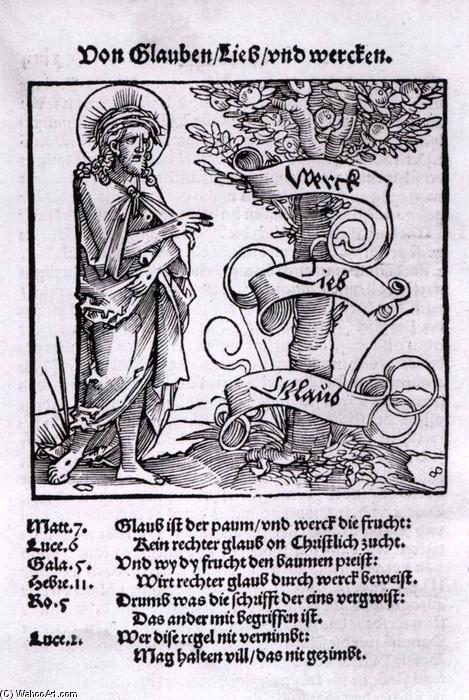
To gaze upon this woodcut print, Tree of Faith, Love, and Good Works by Hans Sebald Beham, is to step directly into the intellectual and spiritual fervor of the early sixteenth century. It is not merely an image; it is a profound theological treatise rendered in stark, masterful black and white lines. The composition immediately draws the eye to the central figure, whose contemplative gesture seems to bridge the earthly realm with divine understanding. Flanking him stands the magnificent, symbolic tree—a veritable repository of human potential and spiritual attainment. Every leaf, every stylized piece of fruit, and every inscribed banner whispers lessons on piety, morality, and the arduous journey toward grace.
The Craftsmanship of Line: Technique and Materiality
What elevates this work beyond simple illustration is the sheer technical brilliance evident in its execution. As a woodcut print, Beham utilized a demanding medium that required immense precision. Observe how the artist achieved depth and texture not through subtle gradations of tone, but through the meticulous dance of line itself. The hatching and cross-hatching techniques are breathtaking; they build volume into the drapery of the figure’s robes and give palpable weight to the bark of the tree. This linear emphasis is characteristic of Northern Renaissance printmaking—a style that prized detail, narrative clarity, and an almost scientific observation of form, even when depicting the sublime.
Symbolism Woven into Wood: Meaning in Every Detail
The core resonance of this piece lies within its rich symbolic vocabulary. The tree itself is a potent metaphor, echoing biblical narratives while simultaneously encapsulating Christian virtues. The banners bearing Latin inscriptions are not decorative flourishes; they are mnemonic devices, guiding the viewer toward specific moral tenets—Faith, Love, and Good Works being paramount among them. The fruit, rendered with stylized perfection, suggests rewards earned through virtuous living. For the modern collector or designer, this piece offers an unparalleled opportunity to integrate profound philosophical depth into a space, transforming mere decoration into a daily meditation.
Historical Echoes: Art at the Dawn of Reformation
Understanding Beham’s context enriches our appreciation immeasurably. Created around 1525, this work emerges from an era of seismic religious and intellectual change—the burgeoning Reformation. In such times of upheaval, visual art served as a crucial vehicle for doctrine and moral instruction. Beham, therefore, was not just recording a scene; he was participating in the very discourse of his time. Owning a reproduction allows one to connect with this powerful moment where artistic mastery met urgent theological necessity.
Bringing Sacred Narrative Home
For those seeking art that speaks volumes without uttering a word, Tree of Faith, Love, and Good Works is an unparalleled choice. Its dramatic contrast, the intricate detail work, and its enduring message of moral aspiration lend it an air of timeless gravitas. Whether displayed in a library, a study, or a gallery setting, this reproduction serves as a sophisticated focal point—a quiet reminder that the pursuit of beauty and virtue are inextricably linked. It is a piece designed not just to be seen, but to be contemplated.
関連作品
アーティストの略歴
Hans Sebald Beham: A Master of Miniature and Reformation
Born in Nuremberg around 1500, Hans Sebald Beham (though often referred to as Hans Sebald Beham due to the “H” in his monogram) emerged during a pivotal period of artistic and religious upheaval in Germany. His life coincided with the dawn of the Reformation, a time when traditional authority was being challenged and new ideas – both artistic and theological – were rapidly spreading. While details about his early life remain scarce, what we know of Beham reveals an artist deeply influenced by the era’s turbulent currents and remarkably adept at navigating them through his intricate prints.
Beham's origins are shrouded in mystery; records concerning his parents are absent. However, he was part of a family connected to the artistic world – his brother, Bartel Beham, also pursued a career as an artist. Their training remains undocumented, suggesting that Beham’s early development relied heavily on observation and perhaps informal apprenticeships rather than structured academic instruction. This lack of formal documentation is characteristic of many artists working during this period, particularly those operating outside the established centers of artistic patronage.
The “Godless Painters” and Nuremberg's Religious Divide
Beham’s career took a dramatic turn in 1525 when he, along with his brother Bartel and Georg Pencz, were banished from Nuremberg. The charges leveled against them – heresy, blasphemy, and a refusal to recognize the authority of the city council – painted a picture of artists deeply involved in radical Protestant beliefs. This expulsion earned them the moniker “godless painters,” a label that reflects the anxieties surrounding religious dissent within the staunchly Catholic city.
The accusations stemmed from Beham’s increasingly outspoken Lutheran views, which clashed directly with Nuremberg's established Catholic leadership. The timing of this event is particularly significant: just two months after the banishment, Nuremberg officially adopted Lutheranism as its state religion. This swift shift highlights the volatile religious climate and underscores the precarious position occupied by artists who dared to challenge prevailing orthodoxies. Despite their subsequent reinstatement, Beham’s hasty departure from Nuremberg in 1528 – prompted by legal threats related to a plagiarism accusation concerning his treatise on horse proportions (allegedly derived from an unpublished manuscript by Albrecht Dürer) – demonstrates the lingering distrust and potential for persecution.
A Prodigious Printmaker: Technique and Subject Matter
Following his time in Nuremberg, Beham spent years working across various German cities, establishing himself as a prolific printmaker. His work is characterized by an extraordinary level of detail—many of his engravings are remarkably small, some even approaching the size of postage stamps. This miniaturization was not merely a technical feat; it reflected a deliberate aesthetic choice, emphasizing precision and meticulous observation.
Beham’s prints encompassed a diverse range of subjects, including scenes from peasant life, classical mythology, and erotic themes – often intertwined in complex allegorical narratives. His depictions of everyday rural life offered a stark contrast to the idealized representations favored by many of his contemporaries, providing a glimpse into the realities of ordinary people during the Renaissance. Simultaneously, he skillfully adapted classical motifs, imbuing them with a distinctly German sensibility. His engravings frequently feature dynamic compositions and dramatic figures, showcasing a mastery of line and perspective.
Influence and Legacy
Beham’s artistic development is inextricably linked to that of Albrecht Dürer, his supposed master. While the precise nature of their relationship remains debated, Beham clearly absorbed many of Dürer's techniques—particularly his meticulous attention to detail and his innovative use of engraving—but he pushed beyond Dürer’s established style, embracing a greater degree of social commentary and exploring more unconventional subject matter. He stands as one of the “Little Masters,” a group of German artists who followed in Dürer’s footsteps but developed their own distinctive voices within the evolving landscape of printmaking.
Despite his relatively obscure status for much of the 20th century, Beham's work has experienced a resurgence of interest in recent decades. His prints are now recognized as significant contributions to German Renaissance art and offer valuable insights into the religious, social, and artistic currents of his time. His legacy lies not only in the beauty and technical brilliance of his engravings but also in his courageous embrace of challenging subjects and his willingness to defy convention.
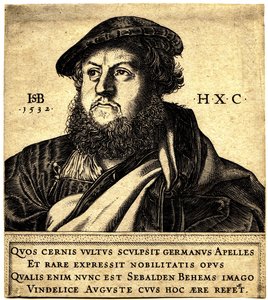
Hans Sebald Beham
1500 - 1550 , Germany
基本情報
- Artistic Movement Or Style: Little Masters
- Artists Or Movements Influenced By This Artist: ['Dürer']
- Artists Who Influenced This Artist: ['Albrecht Dürer']
- Date Of Birth: 1500
- Date Of Death: 1550
- Full Name: Hans Sebald Beham
- Nationality: German
- Notable Artworks:
- Coat of Arms
- Fountain of Youth
- Christ & Samaria
- Place Of Birth: Nuremberg, Germany
関連記事
The Enduring Legacy of Printmaking: Techniques, Themes & Artistic Innovation Across Centuries
Explore the rich history of printmaking with ArtsDot. Discover techniques from intaglio to lithography, learn about collecting valuable prints & find museum-quality reproductions. Expert insights for art enthusiasts and collectors.
Hans Baldung Grien: A Renaissance Master of Allegory, Innovation & the Grotesque
Explore the captivating world of Hans Baldung Grien, a Renaissance master renowned for his allegorical paintings, striking woodcuts & unique depictions of mythology and the grotesque. Discover his life, works & legacy with ArtsDot.

Giclée Prints: Archival Quality & Aesthetic Nuances for the Discerning Collector
Explore the world of giclée prints with ArtsDot. Learn about archival quality, aesthetic nuances & investment potential. Expert guidance for discerning art collectors seeking museum-quality reproductions and lasting value.

The Enduring Legacy of Fine Art Prints: Technique, History & Aesthetic Impact
Explore the rich history & techniques of fine art prints. Discover investment potential, assess authenticity, and learn how to preserve your collection with expert guidance. Trusted insights for discerning collectors.

Echoes of Time: Exploring the Enduring Appeal & Historical Context of Vintage Art Prints
Explore the captivating world of vintage art prints! Discover their history, collecting tips & enduring appeal. Expert insights on chromolithography and building a legacy collection with ArtsDot.