

 プレビュー
プレビュー
 シェアする
シェアする シェアする
シェアする
 詳細を見る
詳細を見る

 ダウンロード
 似ている作品
 X線調査
X線調査 スライドショー
 統計情報
統計情報Coronet
 Hyperrealism
 1980
1980 51.0 x 40.0 cm
 詳細を見る
詳細を見る
手描き油彩複製画
当社のアーティストが、お客様のご希望のサイズと額縁に合わせて、キャンバスに手描きで制作する油彩画です。 ( プリント版に切り替え デジタル画像販売へ切り替え)




































作品のオリジナル比率に合わせた、当店の規定サイズからお選びください。

特定のフレームやスペースに合わせて、ご希望のサイズをご入力いただけます。選択されたサイズが元の画像の比率と異なる場合、アートワークをトリミングするか、手描きで要素を追加して絵画を拡張いたします。デジタルモックアップ を制作し、制作開始前にご確認(承認)をいただきます。
画面上のプレビューは、実際のトリミングや拡張を正確に反映しているものではありません。最終的な構図は、モックアップによってのみ正確にご確認いただけます。
カスタムサイズもご利用いただけますが、元の比率を維持するためには、あらかじめ用意されたリストからサイズを選択することをお勧めいたします。
ご注文後、ArtsDot.com チームより詳細な指示をお送りするとともに、仕上がりイメージ(モックアップ)をご提供いたします。


 ガラスオプションは、110cm未満のサイズでのみご利用いただけます。

Coronet
複製技法
複製画のサイズ
-


合計金額
$ 263
The Artistic Vision
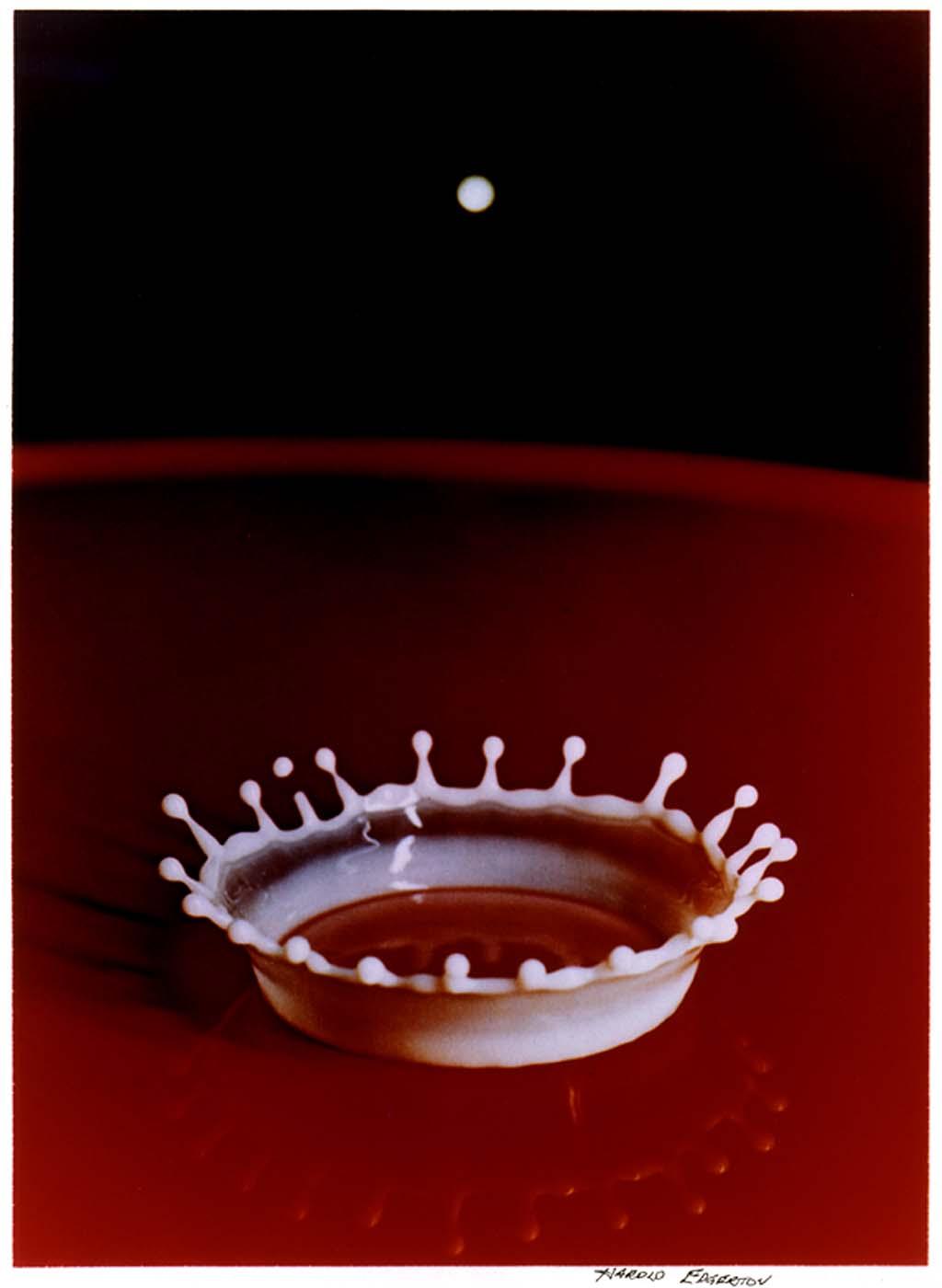
Edgerton's Coronet is a stunning example of his ability to transform everyday moments into works of art. The photograph features a drop of milk splashing into a thin film of milk, creating a coronet shape that is both delicate and powerful. The use of milk as the subject matter adds an element of simplicity and elegance to the piece, making it a masterpiece of Hyper-Realism. As seen on ArtsDot.com, this photograph is a prime example of Edgerton's contribution to the development of modern photography.Technical Expertise
Edgerton's technical expertise was instrumental in creating the Coronet. He developed an electronic flash technology that allowed for color photography with a short exposure time, resulting in a crisp image of the moving milk droplets. The triggering scheme and delay used to capture this critical moment in the evolving shape of the splash were also devised by Edgerton. The Smithsonian American Art Museum is home to many of Edgerton's works, including the Coronet, which is a testament to his innovative approach to photography.- The Coronet is considered one of the most important photographs of all time.
- Edgerton's use of electronic flash technology allowed for color photography with a short exposure time.
- The Smithsonian American Art Museum is home to many of Edgerton's works, including the Coronet.
The Coronet is a masterpiece that continues to inspire artists and photographers today. Its beauty and technical expertise make it a must-see for anyone interested in photography and Hyper-Realism. As seen on ArtsDot.com, Edgerton's works are a testament to his innovative approach to photography and his contribution to the development of modern art.
関連作品
アーティストの略歴
The Architect of Frozen Time: The Life and Legacy of Harold E. Edgerton
In the quiet intersection where rigorous scientific inquiry meets the profound beauty of visual art, few figures loom as large as Harold Eugene Edgerton. Affectionately remembered by many as “Papa Flash,” Edgerton was far more than a physicist or an engineer; he was a visionary who possessed the rare ability to peel back the veil of the invisible. Born in 1903 in Fremont, Nebraska, his journey began in a landscape of intellectual curiosity, shaped by a father whose mastery of language and oratory instilled in him a deep respect for communication. This early foundation would later manifest in his ability to communicate complex physical phenomena through the medium of light, turning the fleeting, imperceptible movements of our world into permanent, breathtaking icons of frozen motion.
Edgerton’s academic path was one of relentless pursuit and precision. After earning his bachelor’s degree in electrical engineering from the University of Nebraska–Lincoln in 1925, he moved toward the prestigious halls of the Massachusetts Institute of Technology (MIT). It was here, through his Master of Science and subsequent Doctor of Science degrees, that his fascination with synchronous motors and stroboscopic studies began to coalesce into a revolutionary methodology. He did not merely study light; he learned to command it. By refining the stroboscope from an obscure laboratory tool into a powerful instrument of illumination, he paved the way for a new era of photography—one where the camera could finally compete with the speed of thought and the velocity of nature.
The Alchemy of Light and Motion
The true magic of Edgerton’s work lies in his mastery of high-speed photography, a technique that allowed him to capture what the human eye is biologically incapable of perceiving. Through his innovative use of strobe lighting, he transformed the chaotic energy of motion into structured, sculptural compositions. His lens did not just record reality; it reinterpreted it. In works such as "Coronet," created in 1957, we witness the sublime beauty of a single drop of milk colliding with a liquid surface, creating a delicate, crown-like shape that exists for only a fraction of a second. This piece remains one of the most significant achievements in photographic history, demonstrating how scientific precision can evoke deep emotional and aesthetic responses.
This ability to freeze time extended to the most dynamic of subjects. Whether it was the intense, muscular exertion captured in his "Boxer" series or the rhythmic, looping energy of "Moving Skip Rope," Edgerton’s images possess a hyper-realistic quality that feels both startlingly present and eternally still. His technical prowess allowed him to explore themes of:
- The Fluidity of Nature: Capturing the intricate patterns of water splashes and droplets in works like "Water Sprinkler."
- Kinetic Energy: Revealing the hidden mechanics of physical movement, from sports to everyday gestures.
- Scientific Visualization: Using photography as a tool to document and explain complex physical processes through visual clarity.
A Lasting Impact on Science and Art
Beyond the frame of his photographs, Edgerton’s contributions to the world were vast and transformative. His research into sonar technology and deep-sea photography revolutionized our understanding of the ocean, even leading to collaborations with legendary explorers like Jacques Cousteau. His equipment played a pivotal role in searching for shipwrecks and exploring the mysteries of the deep, proving that his scientific mind was always tethered to a sense of wonder about the unknown. He bridged the gap between the laboratory and the gallery, demonstrating that the tools used to measure the universe are the very same tools used to celebrate its beauty.
As we reflect on the life of Harold E. Edgerton, we see a legacy defined by the illumination of the dark and the capture of the ephemeral. He taught us that there is an entire universe of motion occurring just beyond our perception, waiting for the right flash of light to bring it into view. His work remains a testament to the idea that science and art are not opposing forces, but rather two different languages describing the same magnificent reality. Through his eyes, the world was never just moving; it was dancing in a series of perfect, unforgettable moments.
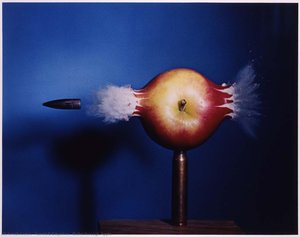
harold e edgerton
1903 - 1990
基本情報
- Artistic Movement Or Style: Hyperrealism
- Artists Or Movements Influenced By This Artist: ['Photography']
- Artists Who Influenced This Artist: ['Charles Stark Draper']
- Date Of Birth: April 6, 1903
- Date Of Death: January 4, 1990
- Full Name: Harold Eugene Edgerton
- Nationality: American
- Notable Artworks:
- Coronet
- Boxer
- Place Of Birth: Fremont, Nebraska
関連記事
Harold Copping: A Life Depicted – Exploring the Narrative Power of a Golden Age Illustrator
Explore the life and art of Harold Copping, renowned for his beautiful biblical illustrations and Victorian depictions. Discover the story behind 'The Copping Bible' and his lasting impact on religious art history.
Resurrecting Memories: Artistic Reconstruction of Low-Resolution Photographs into High-Fidelity Oil Paintings
Transform cherished low-resolution photos into stunning, high-fidelity oil paintings. Expert restoration & museum-quality reproductions by skilled artists. Preserve your memories with lasting beauty.
Berenice Abbott: Documenting a Changing America Through Photographic Vision
Explore the groundbreaking work of Berenice Abbott, a pioneer of documentary photography. Discover her iconic images of New York City, portraits, and scientific studies. Learn about her unique style & lasting legacy at ArtsDot.
Aaron Siskind: Deconstructing Reality – A Photographic Exploration of Texture, Form & the Abstract Landscape
Explore the transformative journey of Aaron Siskind, from social realism to pioneering abstract photography. Discover his iconic series & lasting influence on modern art. A guide for collectors.

Documentary Photography's Defining Moments: 10 Masterpieces for Your Home |
Explore 10 defining documentary photography masterpieces – from Dorothea Lange to Robert Capa. Discover powerful stories, iconic images & timeless art for your home. Museum-quality prints at .