

 プレビュー
プレビュー
 シェアする
シェアする シェアする
シェアする
 詳細を見る
詳細を見る

 ダウンロード
 似ている作品
 X線調査
X線調査 スライドショー
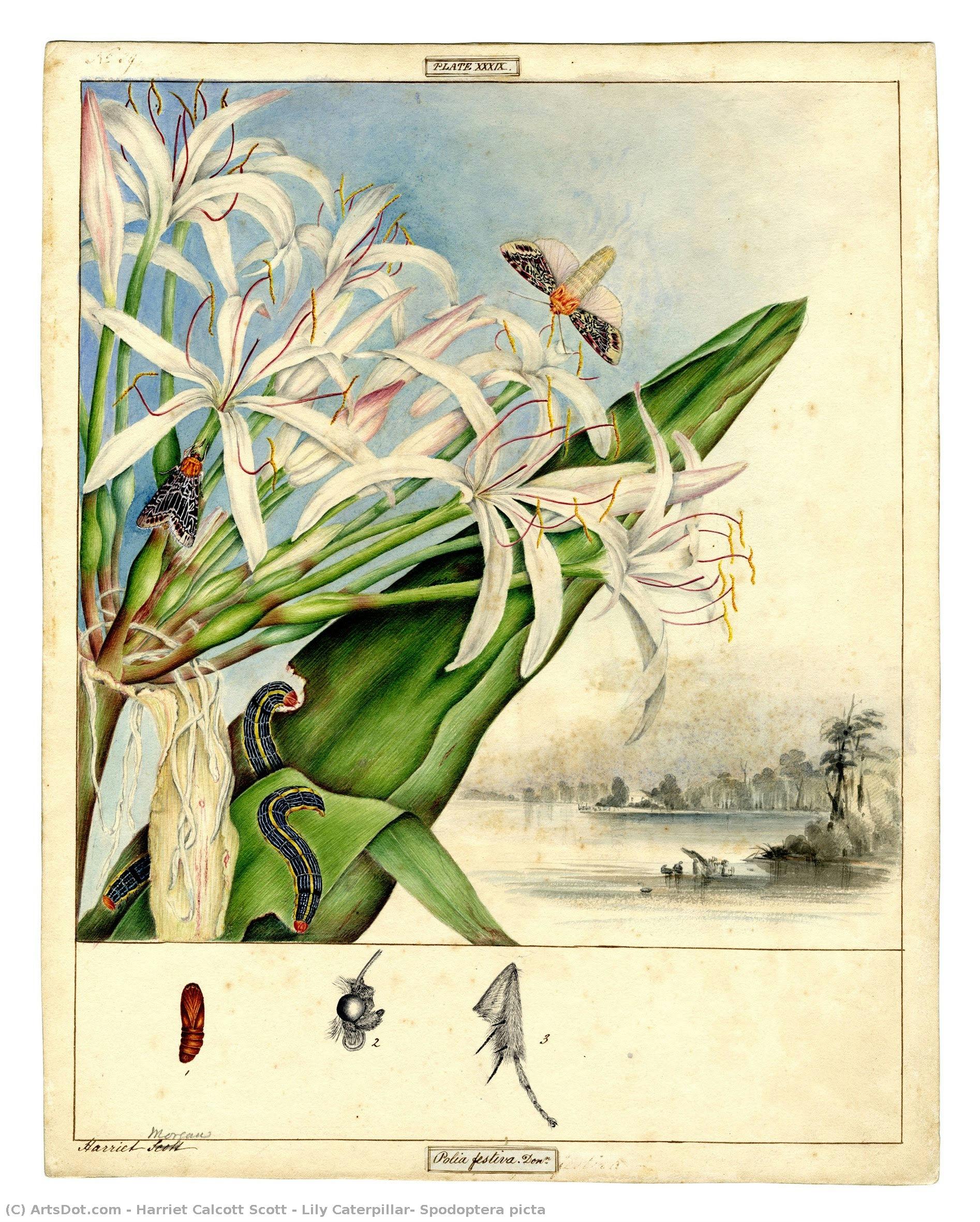
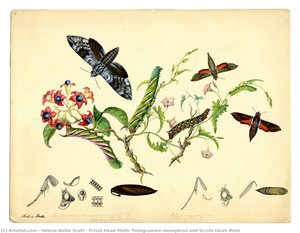
Lily Caterpillar, Spodoptera picta


 詳細を見る
詳細を見る
ジークレー/アートプリント
迅速な制作と多彩な仕上げオプションを備えた、ミュージアムクオリティのジークレーまたはキャンバスプリント。 ( 手描きの絵画を購入 画像を購入)




































作品のオリジナル比率に合わせた、当店の規定サイズからお選びください。

特定のフレームやスペースに合わせて、ご自身でサイズを指定することも可能です。選択されたサイズが元の画像の比率と一致しない場合、作品をトリミングするか、鏡面反射または単色での塗りつぶしによって画像を拡張いたします。制作を開始する前に、ご確認用のデジタルモックアップをお送りいたします。
画面上のプレビューには、実際のトリミングや拡張は反映されませんのでご注意ください。最終的な構図を正確に確認できるのは、モックアップのみとなります。
カスタムサイズも承っておりますが、元の比率を維持するためには、あらかじめ用意されたリストからサイズを選択することをお勧めいたします。


 ガラスオプションは、110cm未満のサイズでのみご利用いただけます。

Lily Caterpillar, Spodoptera picta
ジークレー/アートプリント
複製画のサイズ
-


合計金額
$ 62
作品詳細説明
関連作品
アーティストの略歴
A Legacy of Precision: The Life and Art of Harriet Calcott Scott
In the golden era of Victorian naturalism, few figures bridged the gap between scientific rigor and aesthetic grace as seamlessly as Harriet Calcott Scott. Born in Sydney in 1830, Scott emerged from a background that blended the practicalities of colonial life with an intellectual curiosity deeply rooted in the Australian landscape. As the daughter of Alexander Walker Scott, a man intimately connected to the pastoral expanses of New South Wales, her early environment was a living laboratory of biodiversity. This upbringing did more than merely provide scenery; it instilled in her a profound, lifelong reverence for the intricate details of the natural world, setting the stage for a career that would eventually define much of Australia's early scientific illustration.
Her artistic journey was marked by a pursuit of excellence that took her far beyond the borders of her homeland. Seeking to refine her innate talent, Scott traveled to London, where she immersed herself in the sophisticated art circles of the British Empire. It was here that her technical skills were forged under the influence of the burgeoning Victorian art scene, learning to manipulate watercolor with a delicacy that could capture the most ephemeral textures of life. Yet, while London provided the formal training, it was the vibrant, often overlooked fauna of Australia that remained the true muse of her soul. This duality—the refined technique of the metropole applied to the wild wonders of the colony—became the hallmark of her unique artistic voice.
The Intersection of Art and Entomology
What truly distinguishes Harriet Calcott Scott from her contemporaries was her refusal to view art as a purely decorative pursuit. For Scott, the brush was an instrument of scientific inquiry. Her fascination with entomology led her to become a pivotal figure in the Entomological Society of New South Wales. Joining the society in 1862, she did not merely participate; she ascended to leadership, serving as a Councillor and later as President from 1866 to 1868. This rare achievement for a woman of her era speaks to her profound respect within the scientific community and her ability to translate complex biological structures into visual language.
Her work serves as a breathtaking record of Australian biodiversity, particularly through her masterful depictions of moths and insects. In pieces such as White-stemmed Gum Moth (Chelepteryx collesi) and the majestic Emperor Moth (Opodiphthera eucalypti), one observes more than just pigment on paper; one sees a meticulous study of anatomy, pattern, and light. Her ability to render the velvety texture of a moth's wing or the subtle translucency of a caterpillar's skin allowed her to contribute significantly to the era's natural history documentation. Each stroke was an act of preservation, capturing the fleeting beauty of species that were often unknown to the wider scientific world.
Artistic Mastery and Historical Significance
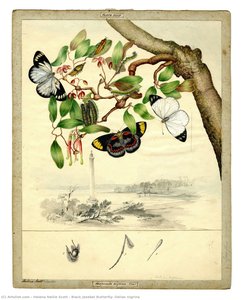
The technical brilliance of Scott’s watercolors lies in their ability to balance scientific accuracy with emotional resonance. While her compositions are grounded in the necessity of detail—essential for identification by naturalists—they possess an ethereal quality that invites contemplation. In works like Lily Caterpillar (Spodoptera picta), she weaves together botanical elements and insect life, creating a miniature ecosystem on the page that feels both alive and eternal. Her use of watercolor allowed for a luminosity that mimicked the natural light of the Australian bush, lending her subjects a sense of vitality that purely technical diagrams often lack.
Ultimately, the historical significance of Harriet Calcott Scott extends beyond her individual paintings. She stands as a pioneer who navigated the rigid societal structures of the 19th century to claim a space where science and art could coexist. Her legacy is found in the enduring beauty of her illustrations, which continue to serve as vital windows into Australia's natural heritage. Through her eyes, the smallest insect was elevated to a subject of profound importance, ensuring that the delicate wonders of the Australian wilderness would be remembered with both precision and passion.
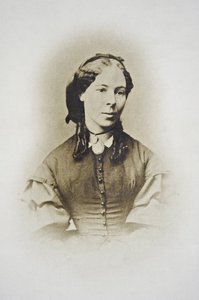
harriet calcott scott
1830 - 1907 , Australia
基本情報
- Artistic Movement Or Style: Botanical Illustration
- Artists Or Movements Influenced By This Artist: ['']
- Artists Who Influenced This Artist: ['']
- Date Of Birth: 1830
- Full Name: Harriet Calcott Scott
- Nationality: Australian
- Notable Artworks:
- Emperor Moth, Syntherata janetta
- Emperor Moth, Opodiphthera eucalypti
- White-stemmed Gum Moth, Chelepteryx collesi
- Anthelid Moth, Anthela excellens and Xyloryctid Moth, Cryptophasa irrorata
- Place Of Birth: Sydney, Australia
関連記事

Watercolor Wonders: 10 Masterpieces That Redefined Art History | ArtsDot
Journey through 10 legendary watercolor masterpieces by Sargent, Turner & Homer! Explore iconic landscapes, portraits & floral art that redefined history. Find museum-quality reproductions and curated decor ideas at ArtsDot.com.

Ephemeral Visions: Exploring the Artistic Legacy & Contemporary Practice of Watercolor Painting
Explore the captivating world of watercolor painting! Discover its rich history, essential techniques, influential artists & collecting tips. A comprehensive guide for art enthusiasts from ArtsDot.
The Flourishing Canvas: A Historical & Artistic Exploration of Botanical Illustration
Explore the rich history of botanical illustration! Discover key artists like Havell & Barraband, learn about scientific accuracy & aesthetic beauty. Shop museum-quality reproductions at ArtsDot.
The Flourishing Canvas: A Historical Journey Through Botanical Illustration
Explore the captivating history of botanical illustration! Discover renowned artists like Robert Havell & Mary Walcott, learn about techniques, and find museum-quality art at ArtsDot.com.

Ephemeral Visions: Exploring the Artistic Legacy & Nuances of Watercolor Painting
Explore the captivating world of watercolor painting! Discover its rich history, essential techniques, influential artists & collecting tips from art experts. A comprehensive guide for enthusiasts.

