

 プレビュー
プレビュー
 プリントを購入
 シェアする
シェアする シェアする
シェアする
 詳細を見る
詳細を見る

 ダウンロード
 似ている作品
 X線調査
X線調査 スライドショー
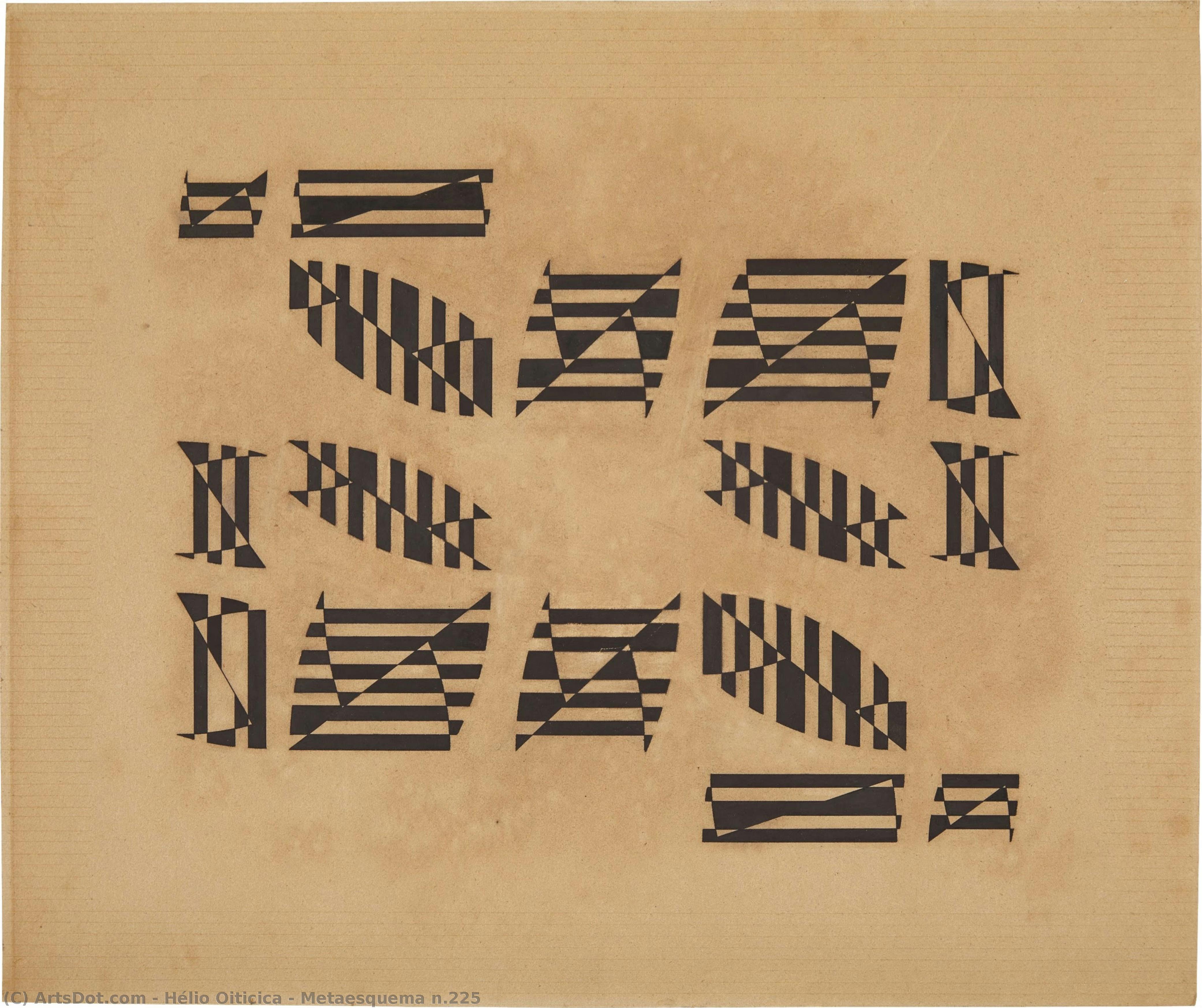
Metaesquema n.225


 詳細を見る
詳細を見る
オンラインプレビューをはるかに凌ぐ、高解像度で鮮明なデジタル画像をご購入いただけます。
各ファイルは、社内の専門家が高度なツールと熟練した手作業によるレタッチを用いて、細心の注意を払って準備されています。すべての画像において、卓越した鮮明度、正確な色彩再現性、そして繊細なディテールを保証いたします。
最終ファイルは、プロフェッショナルな編集・印刷環境ですぐにご利用いただけるよう最適化された状態で、72時間以内にメールにてお届けいたします。これは、一流のデザインスタジオ、出版社、ギャラリーから信頼されているものと同等の品質です。
デジタル画像のご注文に付随する特典
高品質なデジタル画像配信を、確かな品質で。
ArtsDot.com を選ぶことは、単に画像を手に入れることではありません。それは、プロの手によって精密に仕上げられ、満足保証が付いた高品質なデジタルアートワークを受け取ることを意味します。ご注文いただいた際に自動的に付随する内容は、以下の通りです:

メールですぐにお届け
ご注文から72時間以内に、高解像度のデジタル画像ファイルがメールでお手元に届きます。すぐにそのままご利用いただけます。

AI技術で最適化されたデジタルファイル
お客様の作品は、高度なAIツールと専門家による手作業の編集を組み合わせてプロフェッショナルに最適化されており、細部のディテール、鮮明さ、そして正確な色再現性を最大限に引き出しています。

一生涯無料の再送サービス
ファイルを誤って削除したり、紛失してしまったりしましたか?ご安心ください。いつでも無料で再送いたします。

輸入手数料は一切かかりません
関税や手数料、配送料を気にすることなく、お気に入りのアートワークをすぐにお楽しみいただけます。デジタルダウンロードは常に免税です。

色彩再現の保証
プロ仕様のツールとカラーマネジメント技術を用いることで、デジタル画像が元の色を最大限に忠実に再現することを保証いたします。

60日間満足保証
ご購入いただいたデジタル画像にご満足いただけない場合は、60日以内であれば、修正または100%の返金(理由を問う必要はありません)をさせていただきます。

100% 返金保証
ご満足いただけない場合は、デジタルファイルを受け取ってから60日以内であれば、理由を問わず全額返金いたします。

まとめ買い割引
3枚購入で10%OFF - 5枚購入で15%OFF - 10枚以上購入で20%OFF。クリエイティブなプロジェクト、ギャラリー、エージェンシーに最適です。
作品の詳細
A Symphony of Lines: Deconstructing Reality with Helio Oiticica’s Metaesquema n.225
Helio Oiticica, a pivotal figure in Brazilian art and a pioneer of environmental art, invites us into a world where the boundaries between painting, space, and perception dissolve within Metaesquema n.225 (1957). This captivating work, housed at the Centro Cultural Banco do Brasil Rio de Janeiro, isn’t merely a painting; it's an orchestrated exploration of interconnectedness, a visual meditation on the very act of seeing. Oiticica, deeply influenced by both European modernism and the vibrant traditions of his native Brazil – particularly the rhythmic movements of the batuque dances – sought to move beyond traditional artistic constraints, creating art that actively engages with the viewer’s experience.
Image: Metaesquema n.225 by Helio Oiticica (WikiArt)
Neo-Concrete and the Embrace of Phenomenology
Oiticica’s work is firmly rooted in the Neo-Concrete movement, a Brazilian artistic response to the rigid formalism of Concrete Art. Unlike its predecessor, which prioritized objective geometric forms, Neo-Concrete sought to capture the subjective experience of reality – the way we perceive and interact with our surroundings. Metaesquema n.225 exemplifies this philosophy perfectly. The intricate network of lines isn’t intended to represent a fixed image but rather to evoke a state of being, a dynamic interplay between order and chaos, structure and fluidity. Oiticica believed that art should be more than just representation; it should actively shape the viewer's perception.
The Language of Ink: Technique and Process
Executed in ink on cardstock, Metaesquema n.225 reveals a remarkable control over line and form. The artist’s hand guides the ink with deliberate precision, creating a dense tapestry of interconnected lines that seem to pulse with energy. Notice how the varying thicknesses and densities of the lines contribute to the overall sense of depth and complexity. Oiticica's meticulous approach suggests a deep understanding of color theory and spatial relationships – principles he explored extensively in his later “Invencao” monochromes, where he sought to embody light itself. The choice of cardstock provides a subtle textural contrast to the smooth flow of the ink, further enhancing the work’s tactile quality.
Symbolism and Emotional Resonance
While seemingly abstract, Metaesquema n.225 is rich in symbolic meaning. The interconnected lines can be interpreted as representing the complex web of relationships that connect us to one another and to the world around us. The overall composition evokes a sense of dynamism and movement – a feeling of being caught within a swirling vortex of ideas and emotions. Oiticica’s work invites contemplation, prompting viewers to consider their own place within this intricate network. It's not simply a visual puzzle but an invitation to engage in a deeply personal dialogue with the artwork.
A Legacy of Environmental Art
Metaesquema n.225 stands as a crucial precursor to Oiticica’s later, more immersive environmental works, such as his “Penetrables” and “Parangolés.” These pieces – often involving large-scale installations that viewers could physically enter or interact with – pushed the boundaries of artistic practice even further, blurring the lines between art and life. Oiticica's exploration of color, space, and human interaction continues to resonate today, solidifying his position as a visionary artist who fundamentally reshaped the landscape of contemporary art.
関連作品




作家の略歴
The Architect of Experience: The Life and Vision of Hélio Oiticica
To encounter the work of Hélio Oiticica is not merely to view an object, but to enter a living, breathing world. Born in 1937 in the vibrant, culturally dense landscape of Rio de Janeiro, Oiticica emerged from an intellectual lineage that prepared him to dismantle the very boundaries of the canvas. The son of a photographer and entomologist, and the grandson of a prominent anarchist leader, he grew up immersed in a spirit of inquiry and social transformation. His early artistic training under Ivan Serpa at the Museum of Modern Art in Rio provided him with a foundation in geometric abstraction, yet Oiticica’s destiny was never to remain within the confines of two-dimensional tradition. He sought instead a way to bridge the gap between the sterile perfection of European Constructivism and the raw, rhythmic pulse of Brazilian life.
As a central figure in the Neo-Concrete movement, Oiticica participated in a radical rebellion against the rigid, mathematical constraints of previous avant-garde movements. Alongside peers like Lygia Clark, he helped forge an aesthetic that prioritized poetry, subjectivity, and the physical presence of the viewer. He moved away from the idea of art as a window to be looked through, proposing instead that art should be an environment to be inhabited. This shift was deeply informed by his fascination with the batuques—the ritualistic Afro-Brazilian dances of Bahia—and the sensory richness of the streets of Rio. For Oiticica, color was not just a pigment on a surface; it was a spatial force, a weight, and a texture that could envelop the human body.
From Metaesquemas to the Immersive Tropicália
The evolution of Oiticica’s technique is a journey from the controlled to the chaotic, from the grid to the groove. His early Metaesquemas (1957–1958) showcased a mastery of color and form, utilizing gouaches where hues were broken into irregular shapes within a structured grid. However, this formalist precision soon gave way to much more daring explorations. He began to develop his Penetráveis (Penetrables), large-scale installations that invited the audience to physically walk through, touch, and inhabit the artwork. These structures transformed the viewer from a passive observer into an active participant, a concept he termed "supersensoriality."
Perhaps his most enduring legacy is the concept of Tropicália, a term he coined in 1967 to describe an artwork that captured the kaleidoscopic, often contradictory essence of Brazilian identity. This movement was not just an aesthetic style but a cultural manifesto, blending high modernism with the popular, the kitsch, and the visceral. His Parangolés—vibrant, wearable sculptures made from fabric, plastic, and found materials—demanded that the wearer dance to activate the art. In these works, the distinction between the creator and the consumer dissolved; the art only truly existed in the moment of movement, rhythm, and human interaction.
A Legacy of Freedom and Participation
Oiticica’s career was marked by a relentless pursuit of freedom, both artistic and political. During his period of exile in New York following Brazil’s military dictatorship, he continued to push the limits of medium and message. His Cosmococa series, created in collaboration with Neville D’Almeida, utilized slide projections, music, and interactive objects to create a sensory collage that challenged the boundaries of memory and perception. Even as his work became more complex and multimedia-driven, the fundamental constant remained: an unwavering commitment to the physical nature of color and its ability to trigger profound emotional responses.
Though his life was tragically cut short in 1980, Oiticica’s impact on contemporary art remains immeasurable. He paved the way for installation art, performance art, and relational aesthetics, teaching generations of artists that the most powerful medium is the human experience itself. His work stands as a testament to the idea that art should not be a static monument to the past, but a dynamic, participatory force capable of reshaping our perception of space, society, and ourselves.
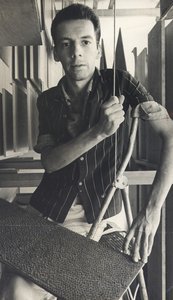
hélio oiticica
1937 - 1980 , Brazil
プロフィール概要
- Artistic Movement Or Style: Neo-Concrete
- Artists Or Movements Influenced By This Artist: ['Lygia Pape']
- Artists Who Influenced This Artist: ['Adriano leite ribeiro']
- Date Of Birth: Rio de Janeiro, Brazil (1937)
- Date Of Death: 1980
- Full Name: Hélio Oiticica
- Nationality: Brazilian
- Notable Artworks:
- Metaesquema n.225
- Tropicália
- Place Of Birth: Rio de Janeiro

