 プレビュー
プレビュー
 シェアする
シェアする シェアする
シェアする
 詳細を見る
詳細を見る

 ダウンロード
 似ている作品
 X線調査
X線調査 スライドショー
 Stats
StatsLe Bassin en Ete


 詳細を見る
詳細を見る
ジークレー/アートプリント
迅速な制作と多彩な仕上げオプションを備えた、ミュージアムクオリティのジークレーまたはキャンバスプリント。 ( 手描きの絵画を購入 Switch to Digital Image)




P118B $10

P118H $10

P118W $10

P438Z $10

P508JH $12

P508YH $12

P805H $10

P805Z $10

P919BZ $10

P919G $10

P919XJ $10

P959ZH $10

P968JZ $12

W106C $8

W218G $10

W218JH $8

W218Y $10

W307PJ $10

W316G $10

W316PJ $8

W316Y $10

W398PJ $8

W4111J $10

W500HY $15

W500JH $15

W692G $12

W849H $8

W940BG $15

W953PJ $8




作品のオリジナル比率に合わせた、当店の規定サイズからお選びください。

特定のフレームやスペースに合わせて、ご自身でサイズを指定することも可能です。選択されたサイズが元の画像の比率と一致しない場合、作品をトリミングするか、鏡面反射または単色での塗りつぶしによって画像を拡張いたします。制作を開始する前に、ご確認用のデジタルモックアップをお送りいたします。
画面上のプレビューには、実際のトリミングや拡張は反映されませんのでご注意ください。最終的な構図を正確に確認できるのは、モックアップのみとなります。
カスタムサイズも承っておりますが、元の比率を維持するためには、あらかじめ用意されたリストからサイズを選択することをお勧めいたします。


 ガラスオプションは、110cm未満のサイズでのみご利用いただけます。

Le Bassin en Ete
ジークレー/アートプリント
複製画のサイズ
-


合計金額
$ 62
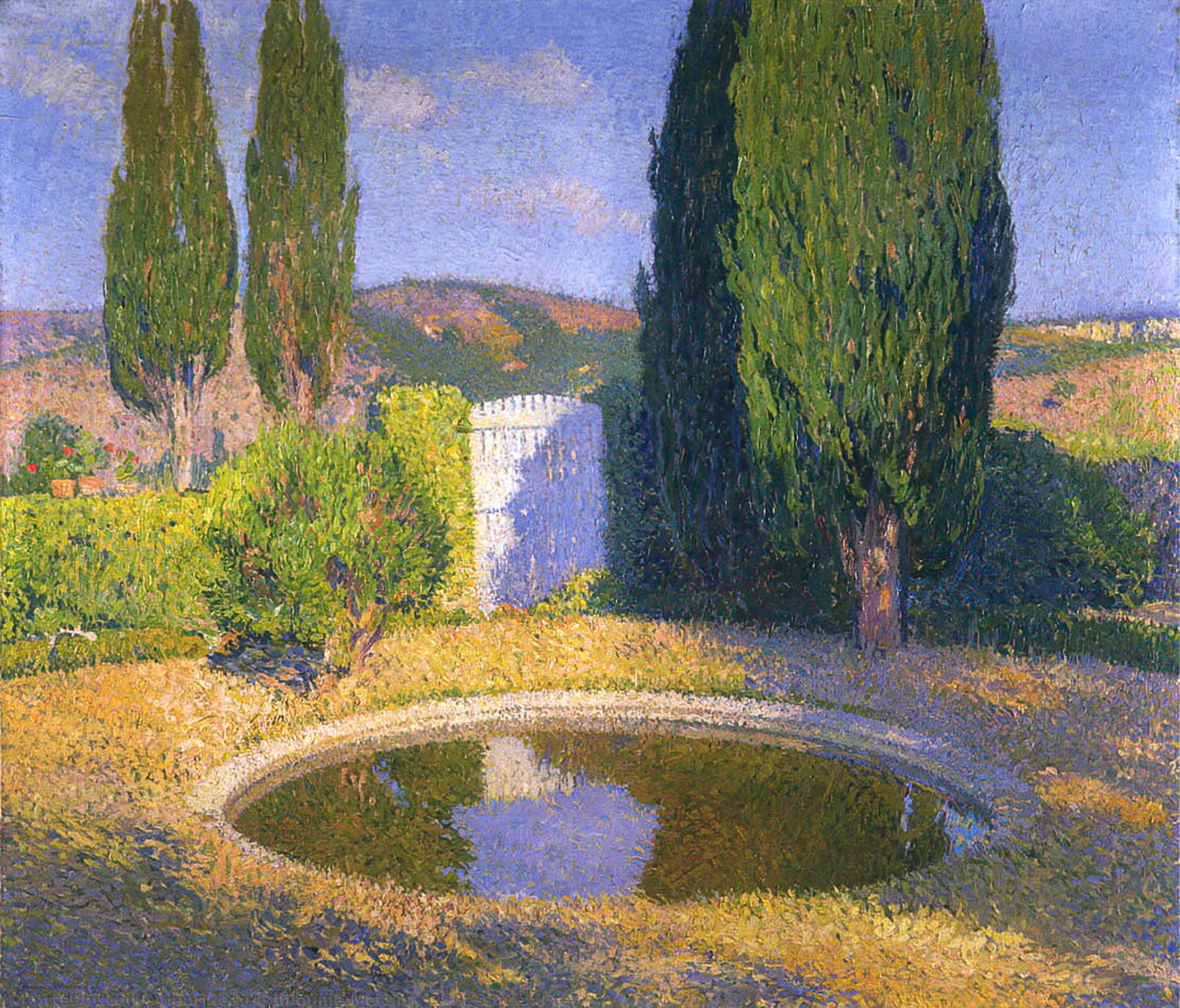
The Serene Embrace of Summer at Le Bassin en Ete
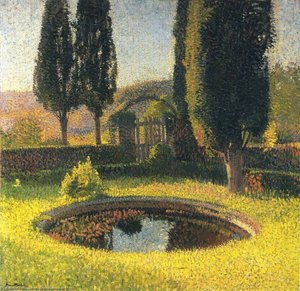
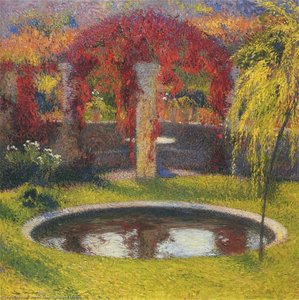
To gaze upon Henri Jean Guillaume Martin's Le Bassin en Ete is to step across the threshold and into a moment suspended in perfect, sun-drenched tranquility. This masterful landscape does more than merely depict a pond; it captures the very essence of summer’s gentle repose. The composition centers around a placid body of water—the basin—whose surface acts as a flawless mirror, doubling the vast expanse of the sky above into liquid sapphire and pale azure. It is a scene built on balance, where the lush vitality of nature meets an almost meditative stillness.
A Study in Light and Verdant Harmony
Martin’s technical brilliance shines through in his handling of light and color. The palette speaks directly to the warmth of high summer—soft golds mingling with deep, cooling greens. Notice how the surrounding foliage frames the central pond; two magnificent, stately trees stand sentinel on either side, their forms anchoring the composition and lending a profound sense of depth. This natural framing technique draws the eye inward, toward the quiet life unfolding at the water's edge. The subtle inclusion of a figure near the left bank is crucial; this human element does not disrupt the peace but rather confirms it, suggesting an intimate communion between man and nature.
Symbolism of Reflection and Passage
Artistically, Le Bassin en Ete invites contemplation. The perfect reflection on the water’s surface has long been a potent symbol in art—it speaks to duality, memory, and the mirroring of the soul. In this context, it suggests that the beauty observed is not just external but deeply internalized. Martin masterfully blends the tangible reality of the trees and grass with the ethereal quality of the reflected sky, creating a visual poem about harmony. It evokes a sense of timelessness, as if the day itself has paused for quiet admiration.
Bringing Pastoral Calm Home
For those who seek to infuse their living spaces or design projects with an atmosphere of enduring calm, this painting offers unparalleled emotional resonance. Reproducing Le Bassin en Ete allows one to curate a corner of perfect pastoral escape. The soft luminosity and balanced composition make it a breathtaking focal point for any room—be it a sunlit drawing-room or a tranquil study. It is an heirloom piece that whispers tales of French countryside serenity, making it not just decoration, but a daily invitation to breathe deeply and slow the hurried pace of modern life.
関連作品


アーティストの略歴
A Toulouse Son: The Life and Art of Henri Jean Guillaume Martin
Henri Jean Guillaume Martin, born in the heart of Toulouse on August 5th, 1860, emerged as a pivotal figure in the transition from Impressionism to Symbolism and early Pointillism. His story is one of artistic conviction, nurtured by a supportive yet initially hesitant father—a cabinet maker who eventually yielded to his son’s fervent desire to paint. This early encouragement proved foundational, setting Martin on a path that would lead him through rigorous academic training and ultimately, to the embrace of innovative techniques and a deeply personal artistic vision. He began his formal studies at the Toulouse School of Fine Arts under Jules Garipuy in 1877, laying the groundwork for his future explorations. A scholarship then propelled him to Paris, where he honed his skills within Jean-Paul Laurens’ studio, absorbing diverse influences that would shape his unique style. Martin wasn't merely a student of technique; he was an observer of light, color, and the subtle nuances of human emotion—qualities that would become hallmarks of his mature work.From Academic Roots to Luminous Landscapes
Martin’s artistic journey wasn’t one of immediate rebellion against established norms. He initially excelled within the academic system, earning recognition at the Paris Salon in 1886 and securing a coveted scholarship for an Italian tour in 1887. This sojourn proved transformative. Immersed in the works of Renaissance masters like Giotto and Masaccio, he developed a profound appreciation for composition, form, and the expressive power of color. However, Italy also sparked a shift towards a more luminous palette and a fascination with capturing fleeting moments of light—influences that would gradually distance him from strict academic conventions. His 1889 canvas submission to the Salon garnered significant acclaim, earning him a gold medal for work described as Pointillist, signaling his embrace of this innovative technique. This wasn’t simply an adoption of style; Martin infused Pointillism with his own sensibility, using it not merely as a scientific exercise but as a means to evoke atmosphere and emotion. He became increasingly associated with the Symbolist painter Puvis de Chavannes, whose emphasis on idealized forms and allegorical themes resonated deeply with Martin's evolving aesthetic.A Master of Light and Atmosphere
Martin’s mature work is characterized by a remarkable ability to capture the essence of light and atmosphere. His landscapes, particularly those depicting Brittany and Collioure, are bathed in a radiant glow, evoking a sense of tranquility and poetic reverie. He wasn't interested in merely replicating nature; he sought to convey its emotional impact—the feeling of warmth on the skin, the scent of salt air, the stillness of a summer afternoon. His technique, while rooted in Pointillism, evolved into something more fluid and expressive. He employed small, carefully placed brushstrokes of vibrant color, allowing them to blend optically and create shimmering effects of light and shadow. This approach lent his paintings a unique luminosity and depth, drawing viewers into the scenes he depicted. Beyond landscapes, Martin also excelled at portraiture and allegorical compositions, often imbuing his subjects with a sense of melancholy and mystery. His friendship with Auguste Rodin further enriched his artistic sensibility, fostering an appreciation for form and emotional intensity.Recognition and Legacy
Throughout his career, Henri Jean Guillaume Martin received numerous accolades, culminating in the Grand Prize at the 1900 World Fair and election to the Académie des Beaux-Arts in 1917. These honors acknowledged not only his technical skill but also his significant contribution to French art. He undertook important public commissions, decorating spaces such as the Salle de l'Assemblée générale in the Palais-Royal, the Élysée Palace, and the Sorbonne—leaving an indelible mark on Parisian landmarks. Seeking respite from the bustling city, Martin eventually settled at the Domaine de Marquayrol near Cahors, where he continued to paint until his death in 1943. This tranquil environment allowed him to fully immerse himself in his art, producing some of his most celebrated works. His legacy extends beyond his paintings; he was also a dedicated teacher, mentoring the American painter Nellie Ellen Shepherd and inspiring generations of artists with his innovative techniques and poetic vision.A Lasting Influence
Henri Jean Guillaume Martin occupies a unique position in art history, bridging the gap between Impressionism and Symbolism while forging his own distinctive path. He wasn’t simply a follower of trends; he was an innovator who synthesized diverse influences into a cohesive and deeply personal style. His mastery of light, color, and atmosphere, combined with his ability to evoke emotion and create a sense of poetic reverie, continues to captivate audiences today. Martin's work serves as a reminder that true artistry lies not in adhering to rigid rules but in expressing one’s unique vision with passion and conviction. His paintings are more than just depictions of landscapes or portraits; they are windows into the soul—invitations to contemplate the beauty and mystery of the world around us.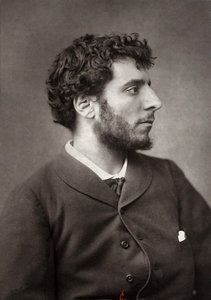
アンリ・ジャン・ギルーム・マルタン
1860 - 1860 , フランス
基本情報
- Artistic Movement Or Style: 印象派、点描技法
- Artists Or Movements Influenced By This Artist: ['ネルリー・エレン・シッドハーバー']
- Artists Who Influenced This Artist: ['ジョットト」「マサッソ」「プヴィス・ド・シャヴァンヌ']
- Date Of Birth: 1860年8月5日
- Date Of Death: 1943年11月12日
- Full Name: Henri Jean Guillaume Martin
- Nationality: フランス人
- Notable Artworks: ['風景画とカップル」「ダフイアスの太陽」「コリアウールの風景']
- Place Of Birth: トゥールーズ、フランス
関連記事
油彩、キャンバス、紙による芸術的再現:技法と鑑賞の深淵を探る
油彩、キャンバス、紙を用いた芸術的再現の技法を深く探求。古典絵画の材料研究からオールドマスターの視点まで、ArtsDotが美術史と実践的な知識を提供します。高品質な手描き複製やカスタムポートレートも承ります。
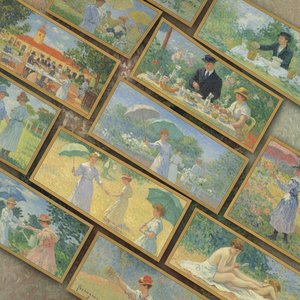
ルノワール傑作25選:光と色彩が織りなす印象派の華麗なる世界 | ArtsDot
ルノワールの傑作25選🎨 印象派の光と色彩が輝く世界へ。絵画の背景、技法、そして時代を超えて愛される理由を紐解きます。ArtsDotで高品質な複製画やインテリアアートを見つけ、お部屋に芸術的な彩りを✨ Explore the full collection online!

印象派風景を彩った至宝:アート史に名を刻む10選
印象派風景の革新を彩った10選。モネ、ルノワールら巨匠の名作を紐解き、色彩と光が生み出す感動の世界へ。アートの歴史とインテリアのインスピレーションをArtsDot.comで。高品質な複製画で、あなただけの空間を創造しましょう。

写真プリントによるカスタムデジタル絵画:オリジナル作品の情感と耐久性を超える表現力
オリジナル作品の情感を損なわずに、高解像度で耐久性に優れたカスタムデジタル絵画を制作します。プロのアーティストによる手作業仕上げ。ArtsDot.comで、特別なアート体験を。

From Initial Sketch to Enduring Legacy: A Comprehensive Exploration of the Oil Painting Reproduction Process
Discover the art of museum-quality oil painting reproduction. Explore our expert process, skilled artists & authentic replicas. Elevate your home with timeless beauty – handcrafted and customized to your vision.