

 プレビュー
プレビュー
 シェアする
シェアする シェアする
シェアする
 詳細を見る
詳細を見る

 ダウンロード
 似ている作品
 X線調査
X線調査 スライドショー
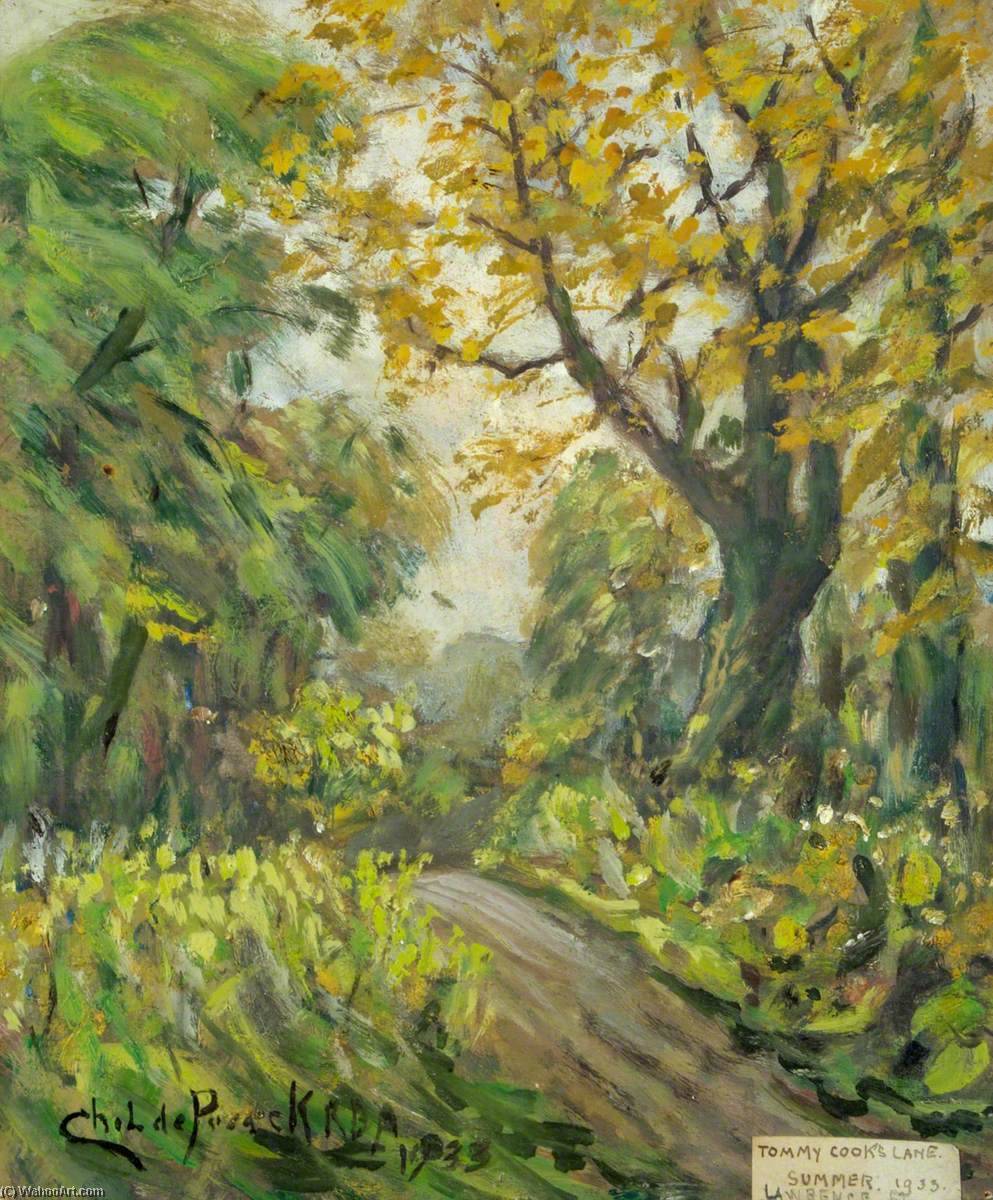
Tommy Cook's Lane, Lawrence Street, Mill Hill
 1933
1933 30.0 x 25.0 cm
 Barnet Local Studies - Archives
 詳細を見る
詳細を見る
ジークレー/アートプリント
迅速な制作と多彩な仕上げオプションを備えた、ミュージアムクオリティのジークレーまたはキャンバスプリント。 ( 手描きの絵画を購入 画像を購入)




































作品のオリジナル比率に合わせた、当店の規定サイズからお選びください。

特定のフレームやスペースに合わせて、ご自身でサイズを指定することも可能です。選択されたサイズが元の画像の比率と一致しない場合、作品をトリミングするか、鏡面反射または単色での塗りつぶしによって画像を拡張いたします。制作を開始する前に、ご確認用のデジタルモックアップをお送りいたします。
画面上のプレビューには、実際のトリミングや拡張は反映されませんのでご注意ください。最終的な構図を正確に確認できるのは、モックアップのみとなります。
カスタムサイズも承っておりますが、元の比率を維持するためには、あらかじめ用意されたリストからサイズを選択することをお勧めいたします。


 ガラスオプションは、110cm未満のサイズでのみご利用いただけます。

Tommy Cook's Lane, Lawrence Street, Mill Hill
ジークレー/アートプリント
複製画のサイズ
-


合計金額
$ 62
関連作品

アーティストの略歴
The Pastoral Vision of Henry Childe Pocock
In the heart of the Victorian era, a period defined by rapid industrialization and shifting social landscapes, Henry Childe Pocock (1854–1934) emerged as a steadfast guardian of the English countryside. A painter of profound sensitivity, Pocock dedicated much of his life to chronicling the serene, untouched beauty of Mill Hill, Hertfordshire. His work serves as more than mere documentation; it is an emotional journey into a pastoral ideal, where the rolling hills and sun-drenched meadows of rural England are rendered with a reverence that borders on the spiritual. Born in London, Pocock’s artistic soul was shaped by the rigorous traditions of British fine art, yet his vision remained uniquely tethered to the quiet, rhythmic life of the landscapes he called home.
The foundation of Pocock’s mastery can be traced back to his formative years at the Slade School of Fine Art. Under the tutelage of the celebrated Pre-Raphaelite master Frederence Leighton, Pocock imbibed a philosophy of meticulous observation and idealized representation. This training instilled in him an unwavering commitment to capturing the natural world with both accuracy and emotional resonance. Influenced by the critical eye of John Ruskin and the vibrant realism of William Holman Hunt, Pocock learned to see the landscape not just as scenery, but as a complex tapestry of light, texture, and atmosphere. This academic rigor allowed him to bridge the gap between classical precision and a more fluid, impressionistic approach that would characterize his later, most evocative works.
Technique and the Luminosity of Light
Pocock’s technical prowess was defined by a remarkable ability to manipulate oil paints to achieve a sense of luminous depth. He often employed the painstaking method of layering thin glazes over the canvas, a technique that allowed light to penetrate the upper layers and reflect back, creating a glowing, translucent effect on the surface of his landscapes. This mastery of tonal subtlety enabled him to capture the fleeting nuances of English weather—the soft haze of a summer morning, the heavy moisture of a damp meadow, or the sharp clarity of a coastal breeze. His compositions frequently utilized horizontal formats, which emphasized the breadth of the horizon and invited the viewer to step into an expansive, open world.
Beyond his technical skill, Pocock’s work is noted for its ability to evoke specific moods through texture and color:
- Atmospheric Precision: His ability to render atmospheric conditions, such as seen in his depictions of Uphill Farm, where the air itself feels palpable.
- Textural Richness: A profound attention to the tactile qualities of nature, from the soft fur of cattle to the rugged bark of ancient trees.
- Tonal Harmony: The use of muted, nostalgic tones in works like Old Cottages, Holcombe Hill to evoke a sense of timelessness and peace.
A Legacy of Rural Tranquility
The significance of Henry Childe Pocock lies in his role as a chronicler of a vanishing way of life. As the world around him grew increasingly urbanized, his canvases remained sanctuaries of stillness. Whether depicting the lively summer energy of The Sheepwash or the quiet, reflective moment of Cattle by a Pond, his work captures a harmony between animals and their environment that feels both eternal and fragile. His paintings are not merely landscapes; they are portraits of a specific English identity, rooted in the soil and the seasons.
Today, Pocock’s legacy continues to resonate through his ability to transport the viewer to a more tranquil era. His works, held in esteemed collections such as the Barnet Local Studies Archives, stand as enduring testaments to the beauty of the English pastoral tradition. Through his eyes, we are reminded that even in the midst of change, there is a profound, lasting grace to be found in the quiet corners of the world.
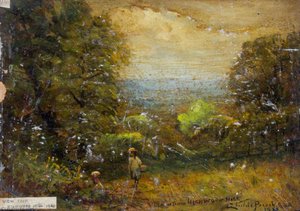
henry childe pocock
1854 - 1934
基本情報
- Artistic Movement Or Style: Romantic Landscape Painting
- Artists Or Movements Influenced By This Artist: ['Hudson Lowe']
- Artists Who Influenced This Artist: ['John Constable']
- Date Of Birth: 1854
- Date Of Death: 1934
- Full Name: Henry Childe Pocock
- Nationality: British
- Notable Artworks: ['Uphill Farm, Mill Hill']
- Place Of Birth: Barnet, England

