

 プレビュー
プレビュー
 プリントを購入
 シェアする
シェアする シェアする
シェアする
 詳細を見る
詳細を見る

 ダウンロード
 似ている作品
 X線調査
X線調査 スライドショー
Harp of the Winds


 詳細を見る
詳細を見る




P118B $10

P118H $10

P118W $10

P438Z $10

P508JH $12

P508YH $12

P805H $10

P805Z $10

P919BZ $10

P919G $10

P919XJ $10

P959ZH $10

P968JZ $12

W106C $8

W218G $10

W218JH $8

W218Y $10

W307PJ $10

W316G $10

W316PJ $8

W316Y $10

W398PJ $8

W4111J $10

W500HY $15

W500JH $15

W692G $12

W849H $8

W940BG $15

W953PJ $8




作品のオリジナル比率に合わせた、当店の規定サイズからお選びください。

特定のフレームやスペースに合わせて、ご希望のサイズをご入力いただけます。選択されたサイズが元の画像の比率と異なる場合、アートワークをトリミングするか、手描きで要素を追加して絵画を拡張いたします。デジタルモックアップ を制作し、制作開始前にご確認(承認)をいただきます。
画面上のプレビューは、実際のトリミングや拡張を正確に反映しているものではありません。最終的な構図は、モックアップによってのみ正確にご確認いただけます。
カスタムサイズもご利用いただけますが、元の比率を維持するためには、あらかじめ用意されたリストからサイズを選択することをお勧めいたします。
ご注文後、ArtsDot.com チームより詳細な指示をお送りするとともに、仕上がりイメージ(モックアップ)をご提供いたします。


 ガラスオプションは、110cm未満のサイズでのみご利用いただけます。

Harp of the Winds
複製技法
複製画のサイズ
-


合計金額
$ 263
作品解説
A Bridge Between Worlds: The Life and Art of Homer Dodge Martin
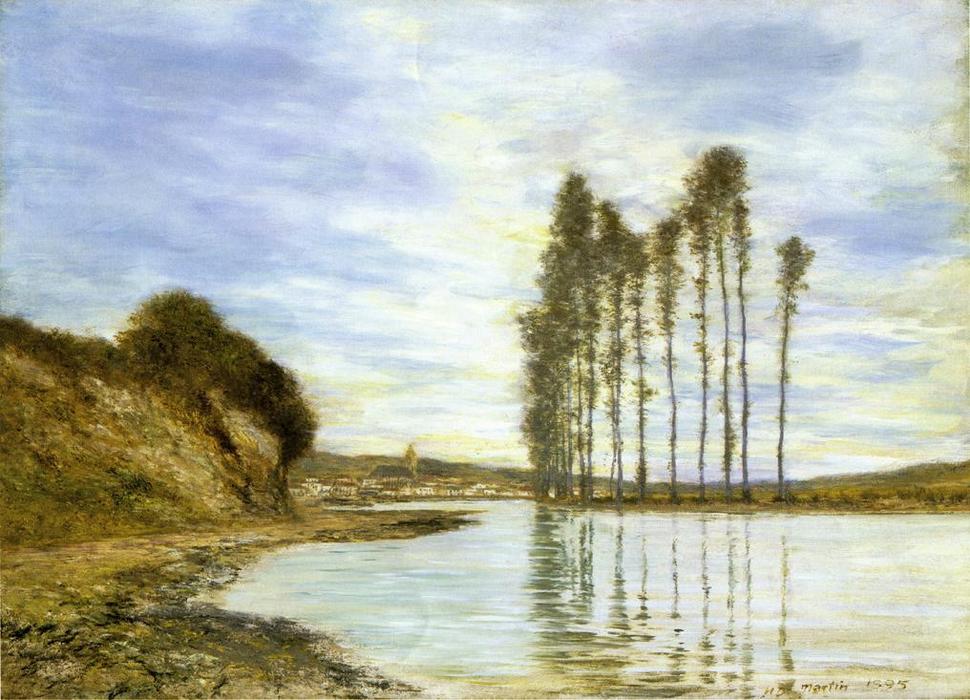
Homer Dodge Martin (1836–1897) stands as an intriguing figure in the annals of American landscape painting, representing a pivotal moment where the grandeur of the Hudson River School began to yield to the burgeoning spirit of Impressionism. His formative years were steeped in artistic influence; briefly tutored by William Hart, he swiftly absorbed the prevailing aesthetic—a dedication to meticulous realism combined with a nascent appreciation for capturing fleeting atmospheric sensations. This early exposure fostered an environment of collaborative creativity within Albany’s vibrant artist community, including George Boughton and Edward Gay, shaping Martin's artistic trajectory and establishing foundational connections that would reverberate throughout his career. ## Early Landscapes: Echoes of the Hudson River School Martin’s formative years witnessed the zenith of the Hudson River School, a movement characterized by grand vistas rendered with painstaking detail and imbued with spiritual reverence for America’s untamed wilderness. Artists like Hart championed the pursuit of sublime beauty—the awe-inspiring grandeur of mountains and rivers—aiming to elevate viewers' souls through contemplation of nature’s majesty. This influence is palpable in Martin’s early works, where meticulous brushstrokes capture the textures of bark, stone, and foliage with remarkable accuracy. The compositions often prioritize horizontal lines mirroring the expansive skies and reflecting a belief in the restorative power of landscapes. ## Impressionistic Vision: Embracing Light and Atmosphere However, Martin swiftly moved beyond the formal constraints of the Hudson River School, embracing the burgeoning spirit of Impressionism—a movement that championed spontaneity and subjective perception. Artists like Claude Monet and Pierre-Auguste Renoir had begun to prioritize capturing fleeting moments of light and color over precise representation, prioritizing feeling over factual detail. This shift is evident in “View on the Seine: Harp of the Winds,” where Dodge Martin skillfully employs loose brushstrokes and a muted palette to convey an atmosphere of tranquil contemplation. ## Subject Matter & Composition “View on the Seine: Harp of the Winds” depicts a serene riverside landscape dominated by tall, slender trees reflected in calm water—a motif frequently explored by Barbizon painters seeking inspiration from the unspoiled beauty of rural France. The composition is deliberately horizontal, emphasizing the expansive vista and mirroring the stillness of the water surface. A distant town silhouette adds depth to the scene, guiding the viewer’s eye across the canvas and fostering a sense of perspective. Dodge Martin's careful placement of the trees contributes to a dynamic balance, preventing the image from feeling static or overly formal. ## Artistic Style & Technique: Impressionistic Vision Homer Dodge Martin stands as a pivotal figure in bridging the gap between the grandeur of the Hudson River School and the burgeoning spirit of Impressionism—a movement that championed capturing fleeting moments of light and atmosphere above meticulous detail. “View on the Seine: Harp of the Winds,” created circa 1893-95, exemplifies this transitional aesthetic with remarkable precision. The painting’s technique is characterized by loose brushstrokes—a hallmark of Impressionism—that prioritize conveying the essence of the scene rather than replicating it photographically. Martin skillfully employed wet-on-wet layering, blending colors seamlessly to achieve a luminous effect that captures the diffused sunlight filtering through the trees and reflecting on the tranquil waters of the Seine. This masterful approach aligns perfectly with the broader artistic movement’s fascination for capturing fleeting moments of beauty and atmosphere. The artwork depicts a serene landscape dominated by a dense grove of tall, slender birch trees—a motif frequently explored in Barbizon painters' works—their branches gracefully swaying in the breeze. The water surface mirrors the foliage above, creating an illusionistic depth that enhances the overall impression of tranquility. Careful observation reveals subtle variations in tonal color and brushstroke texture, indicative of Impressionist techniques aimed at conveying light and shadow rather than precise representation. Homer Dodge Martin’s “View on the Seine: Harp of the Winds,” completed in 1893-95, stands as a testament to the enduring influence of the Barbizon School on American landscape painting. While acknowledging the broader stylistic currents of Impressionism—particularly the embrace of plein air painting and fleeting atmospheric effects—Martin’s vision retains a core connection to the Barbizon tradition's focus on capturing the grandeur and solemn beauty of rural landscapes. This artistic lineage is palpable in the muted palette dominated by earthy browns, ochres, and soft blues, mirroring the tonal harmonies favored by artists like Jean-François Millet and Théodore Rousseau. The artwork itself depicts a serene vista featuring a dense grove of tall trees reflected in tranquil waters—a motif frequently explored during the Romantic era as a symbol of contemplation and connection with nature’s sublime power. The composition is deliberately asymmetrical, placing the tree line slightly off-center to create visual dynamism and subtly emphasizing the artist's perspective. Careful attention has been paid to atmospheric perspective; distant elements appear paler and less defined than those closer to the viewer, reinforcing the impression of depth and conveying a sense of vastness. Homer Dodge Martin’s masterful use of oil paint on canvas exemplifies Impressionism—a movement that prioritized capturing fleeting moments of light and color rather than striving for photographic realism. The artist employed loose brushstrokes and wet-on-wet techniques to blend hues seamlessly, resulting in a luminous surface texture that embodies the spirit of Barbizon landscape painting. Visible impasto adds textural richness, particularly evident in the depiction of tree bark and foliage—a deliberate choice intended to evoke tactile sensations and heighten visual engagement. The artwork "View on the Seine: Harp of the Winds," created by Homer Dodge Martin in 1893-95, stands as a testament to the burgeoning Impressionist movement’s fascination with capturing fleeting moments of atmospheric beauty. Departing from the meticulous detail favored by the Hudson River School, Martin embraced a more subjective approach—one that prioritized emotional resonance over photographic accuracy. Influenced profoundly by Barbizon painters and the serene landscapes of the Adirondacks, he sought to convey not merely what he saw but how he felt when confronted with nature’s grandeur. Martin skillfully employed wet-on-wet painting techniques, blending colors seamlessly on the canvas to achieve a luminous effect that mimics the diffused light characteristic of overcast days or early morning hours. The impasto brushstrokes—thickly applied paint—add textural richness and depth to the scene, capturing the rugged beauty of the trees and the tranquil surface of the water. This technique was particularly favored by Impressionists who wished to capture fleeting moments of visual experience. The artwork’s composition centers around a horizontal line formed by the row of tall trees, creating a sense of stability while simultaneously directing the viewer's gaze across the landscape. The shoreline on the left introduces a diagonal element that enhances dynamism and contributes to the overall atmospheric perspective—a hallmark of Impressionism—where distant objects appear paler and less defined than those closer to the eye. A subtle town nestled in the distance reinforces this depth, grounding the scene within its surroundings. The artwork "View on the Seine: Harp of the Winds," created by Homer Dodge Martin in 1893-95, stands as a testament to the burgeoning Impressionist movement’s fascination with capturing fleeting moments of beauty and emotion. Departing from the meticulous realism championed by the Hudson River School, Martin embraced loose brushstrokes and vibrant color palettes—techniques directly influenced by artists like Claude Monet and Camille Pissarro—to convey an atmosphere of serene contemplation. The scene depicts a tranquil riverside landscape bathed in diffused sunlight, dominated by towering trees whose branches reach towards the sky, mirroring the gentle sway of wind through their foliage. Martin’s masterful use of impasto technique – applying paint thickly onto the canvas – lends textural richness to the depiction of bark and leaves, capturing the essence of the natural world with remarkable precision. The artist skillfully employs wet-on-wet painting methods, blending colors seamlessly to achieve subtle tonal variations that heighten the sense of depth and luminosity. These techniques are characteristic of Impressionism’s core aesthetic: prioritizing light and color over meticulous detail to evoke emotion and capture a fleeting moment in time—a serene landscape bathed in diffused sunlight. The artwork, titled “View on the Seine: Harp of the Winds,” by Homer Dodge Martin, dates back to 1893-95 and represents a pivotal juncture in American art history. Emerging from the shadow of the Hudson River School’s grand narratives of sublime beauty, Martin embraced the burgeoning influence of Impressionism while retaining a core aesthetic rooted in observation and tonal harmony. This stylistic fusion is palpable in every brushstroke—a deliberate rejection of photographic realism favoring instead a painterly approach that prioritizes capturing fleeting atmospheric conditions. Martin's inspiration drew heavily from Barbizon landscapes, where artists sought to depict the natural world with uncompromising honesty and emotional resonance. The Seine River dominates the composition, reflecting not merely its physical presence but also its symbolic role as a conduit between humanity and nature—a motif frequently explored by Romantic painters preceding Martin’s time. However, unlike many of his contemporaries who focused on grand vistas or idealized beauty, Martin opted for a quieter scene: a row of slender trees bathed in diffused sunlight against the backdrop of a distant village. This deliberate choice underscores a fascination with atmospheric perspective and an appreciation for subtle nuances of color and texture—characteristics that firmly establish him within the burgeoning Impressionist movement. The painting’s style is unmistakably Impressionistic, prioritizing fleeting moments of light and sensation over meticulous detail. Martin eschews the precise rendering demanded by the Hudson River School, favoring loose brushstrokes that capture the ephemeral qualities of a particular scene. These visible marks of paint—a technique known as impasto—create a palpable sense of physicality and contribute to the artwork’s overall textural richness. The artist skillfully blends colors wet-on-wet関連作品
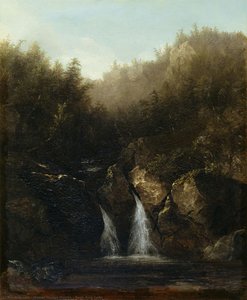
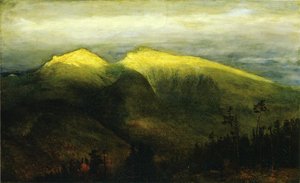
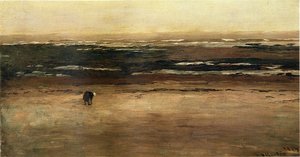
アーティストの略歴
二つの世界の架け橋:ホーマー・ドッジ・マーティンの生涯と芸術
1836年、ニューヨーク州オールバニに生を受けたホーマー・ドッジ・マーティンは、アメリカ風景画における極めて重要な人物としてその名を刻みました。彼は、確立された威厳を誇るハドソン・リバー派と、胎動しつつあった印象派の革新的な潮流の間を、優雅に渡り歩いた過渡期の芸術家でした。その若き日は、芸術的な前途の明るさに満ちていました。ウィリアム・ハートに師事したことで、彼は当時の主流であった美学、すなわち細部まで描き込まれた写実主義への敬意と、アメリカの原生林が持つ崇高な美を瞬く間に吸収していきました。また、オールバニの活気ある芸術家コミュニティ、ジョージ・ボートンやエドワード・レイといった面々との交流も、彼の形成期において創造的な刺激を与え、その後の発展に不可欠な土壌となりました。初期の風景画は、緻密な描写を通じて自然の威容を捉えようとするハドソン・リバー派の精神を反映していましたが、そこにはすでに、より個人的で情緒的な、大気の揺らぎを感じさせる独自のヴィジョンが兆し始めていました。彼は夏になるとアディロンダック、キャッツキル、ホワイトマウンテンへと足を運び、屋外でのスケッチ(プレネール)をニューヨークのスタジオへと持ち帰り、完成作へと昇華させていきました。これは、自然からのインスピレーションと都市生活の利便性の両方を求める当時の画家たちにとって、極めて一般的な手法でした。こうした献身的な活動は着実に評価され、ナショナル・アカデミー・オブ・デザインの準会員、そして後に正会員として選出されたことは、19世紀後半のアート界における彼の地位を揺るぎないものにしました。ヨーロッパでの目覚めと芸術的変容
マーティンの芸術的旅路における決定的な転換点は、1876年のヨーロッパへの渡航によってもたらされました。それは単なる観光旅行ではなく、前衛芸術の核心へと身を投じる没入体験でした。自然主義的な農村生活の描写と直接的な観察を重視するバルビゾン派、そして誕生したばかりの印象派運動との出会いは、彼の芸術的感性を根底から変容させました。初期作品に見られた緻なった構図や磨き上げられた表面は、より自由な筆致、情緒豊かな色彩の使用、そして大気の効果に対する鋭敏な感受性へと道を譲り始めたのです。彼は単に新しい技法を模倣したのではなく、それらを自らの内面へと取り込み、独自の視点というフィルターを通して再構築していきました。この変化は一夜にして成されたものではありません。それは緩やかな進化であり、アメリカ風景画の確立された規範からの、繊細ながらも重大な脱却でした。その影響は単なる模倣ではなく、むしろインスピレーションとしての広がりであり、マーティンが自らの芸術において新たな可能性を探求することを可能にした地平の拡大だったのです。ノルマンディーでの歳月と場所の真髄
この芸術的な目覚めの集大成は、1882年から1886年にかけて、主にフランスのノルマンディー地方で過ごした4年間の滞在において結実しました。彼はエタップルという活気ある芸術家村の一員となり、他の画家たちとアイデアを交わしながら、フランスの田園風景に深く浸りました。この時期は驚くほど実り多いものであり、彼の最も名高い作品の数々を生み出しました。例えば、エタップルの港は、造船や海上活動の喧騒を捉えた、説得力のある地形的な眺望を見せてくれます。森の中のコテージでは、大気遠近法の習熟と、光と色の微妙な変化を通じて情緒を伝える卓越した手腕が示されています。しかし、彼の名声を決定づけたのは、セーヌ川沿いのヴィルヴェルヴで描かれた風の竪琴でした。現在はメトロポリタン美術館に収蔵されているこの作品は、マーティンの成熟したスタイルを象徴しています。それは観察と感情の調和のとれた融合であり、単なる風景ではなく、その場所が持つ「感覚」や「本質」を捉えているのです。これらのフランス時代の絵画は、風景の形ある現実と、目に見えない情緒的な響きの両方を伝える驚異的な能力を証明しています。晩年、遺産、そして不朽の魅力
輝かしい芸術的功績の一方で、マーティンの晩年は困難に彩られたものでした。貧困と視力の衰えにより、1893年にはミネソタ州セントポールへと移り住み、親族とともに暮らすこととなりました。驚くべきことに、視力が失われゆく中でも、彼の創造的な精神が屈することはありませんでした。ほとんど盲目に近い状態で、記憶を頼りに描かれたアディロンダックの風景は、彼の不朽の情熱と芸術的技能の証であり、真の芸術性は肉体的な限界を超越することを私たちに切々と伝えています。生前には商業的な成功こそ限定的でしたが、マーティンの評価は死後に高まっていきました。1897年の逝去後まもなく、アディロンダックの風景が5500ドルという驚くべき価格で落札されたことは、彼の才能に対する遅すぎた承認の象徴となりました。今日、彼の作品はメトロポリタン美術館、スミソニアン・アメリカン・アート・ミュージアム、アディソン・ギャラリー・オブ・アメリカン・アートなど、アメリカの数多くの権威ある美術館に収蔵されており、その芸術は今もなお観る者を魅了し続けています。ホーマー・ドッジ・マーティンは、ハドソン・リバー派の緻密な写実主義と、アメリカ印象派の情緒的な詩情を繋ぐ架け橋として、正当に評価されています。その情緒的なムードと自由な筆致を特徴とする革新的な風景画へのアプローチは、19世紀アメリカ美術における重要かつ永続的な声としての彼の地位を確固たるものにしています。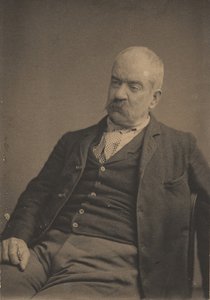
ホーマー・ドッジ・マーティン
1836 - 1897 , アメリカ合衆国
基本情報
- Artistic Movement Or Style: ハドソン・リバー派 & インプレッショニズム
- Artists Or Movements Influenced By This Artist: ['アメリカン・インプレッショニズム']
- Artists Who Influenced This Artist:
- ウィリアム・ハート
- バルビゾン派
- カミーユ・コロー
- Date Of Birth: 1836年10月28日
- Date Of Death: 1897年2月12日
- Full Name: ホーマー・ドッジ・マーティン
- Nationality: アメリカ
- Notable Artworks:
- 風の竪琴
- リーズの橋
- ニューポート近郊
- 森の中のコテージ
- Place Of Birth: アメリカ合衆国、オールバニ
関連記事
ウィンスロー・ホーマー傑作25選:アメリカの魂を揺さぶる絵画の世界 | ArtsDot
ウィンスロー・ホーマーの傑作25選。アメリカ美術を代表する画家、風景画から海洋画まで、その感動的な絵画の世界を探求。ArtsDotで複製画やアートプリントを手に入れ、お部屋に名画の輝きを。コレクションはこちら: ArtsDot.com
ハドソン・リバー派を彩る至宝:10選が示すアメリカ絵画の黄金時代
ハドソン・リバー派の至宝10選を紐解き、アメリカ絵画の黄金時代へ。壮大な自然描写と巨匠たちの技が織りなす感動の世界を体験してください。トーマス・コールからチャーチまで、ArtsDot.comで高品質なアートプリントとインテリアアイデアを見つけましょう。

The Sublime Landscape: Exploring the Hudson River School Movement
Explore the captivating world of the Hudson River School! Discover the history, artists, and defining characteristics of this iconic American art movement. Learn about Romanticism's influence & find inspiration for your collection.

印象派風景を彩った至宝:アート史に名を刻む10選
印象派風景の革新を彩った10選。モネ、ルノワールら巨匠の名作を紐解き、色彩と光が生み出す感動の世界へ。アートの歴史とインテリアのインスピレーションをArtsDot.comで。高品質な複製画で、あなただけの空間を創造しましょう。

Impressionistic Landscapes: 10 Masterpieces That Changed Art & Decor
Journey into the heart of Impressionism! Explore 10 masterpieces by Monet, Renoir & Degas that revolutionized landscape art. Discover their stories, techniques & find museum-quality reproductions to elevate your home decor on ArtsDot.com.

