

 プレビュー
プレビュー
 シェアする
シェアする シェアする
シェアする
 詳細を見る
詳細を見る

 ダウンロード
 似ている作品
 X線調査
X線調査 スライドショー
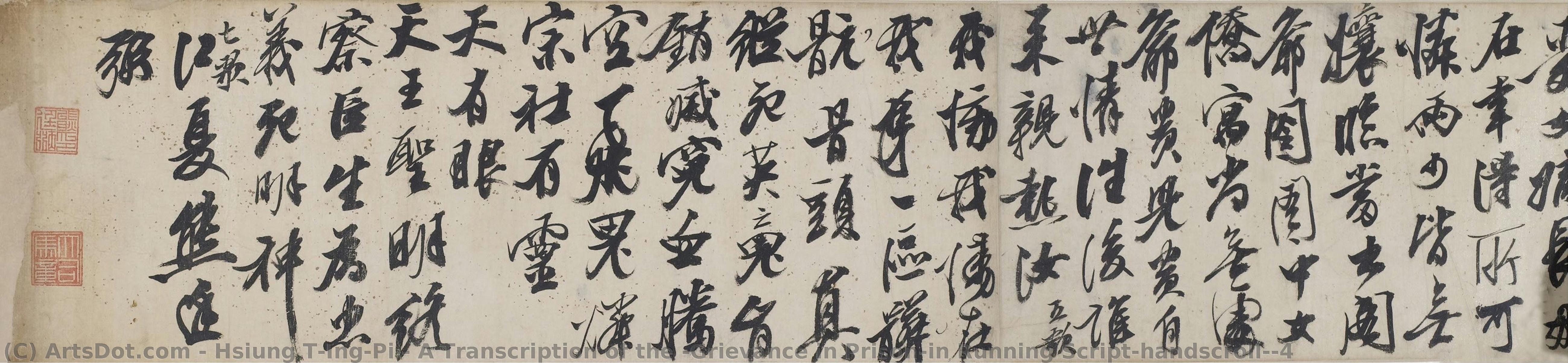
A Transcription of the “Grievance in Prison”in Running Script(handscroll)-4

 詳細を見る
詳細を見る
ジークレー/アートプリント
迅速な制作と多彩な仕上げオプションを備えた、ミュージアムクオリティのジークレーまたはキャンバスプリント。 ( 手描きの絵画を購入 画像を購入)




































作品のオリジナル比率に合わせた、当店の規定サイズからお選びください。

特定のフレームやスペースに合わせて、ご自身でサイズを指定することも可能です。選択されたサイズが元の画像の比率と一致しない場合、作品をトリミングするか、鏡面反射または単色での塗りつぶしによって画像を拡張いたします。制作を開始する前に、ご確認用のデジタルモックアップをお送りいたします。
画面上のプレビューには、実際のトリミングや拡張は反映されませんのでご注意ください。最終的な構図を正確に確認できるのは、モックアップのみとなります。
カスタムサイズも承っておりますが、元の比率を維持するためには、あらかじめ用意されたリストからサイズを選択することをお勧めいたします。


 ガラスオプションは、110cm未満のサイズでのみご利用いただけます。

A Transcription of the “Grievance in Prison”in Running Script(handscroll)-4
ジークレー/アートプリント
複製画のサイズ
-


合計金額
$ 62
関連作品





アーティストの略歴
A Legacy of Ink and Iron: The Dual Life of Hsiung Ting-Pi
In the turbulent twilight of the Ming dynasty, few figures embodied the intersection of scholarly grace and martial fortitude as profoundly as Hsiung Ting-Pi. A man whose life was defined by both the delicate tip of a calligraphy brush and the heavy weight of imperial command, he remains a singular icon in Chinese history. Born around 1583, his existence was a constant dance between the quiet contemplation of the literati and the high-stakes strategy of the battlefield. While many of his contemporaries sought refuge in the purely aesthetic or the strictly political, Ting-Pi navigated a path that demanded excellence in both, carving out a legacy that is as much about the strength of character as it is about the elegance of line.
His early years were steeped in the rigorous traditions of Confucian scholarship. Raised with an appreciation for moral philosophy and social order, his education provided the intellectual scaffolding upon which his artistic vision was built. This foundation allowed him to master the complexities of calligraphy and poetry, disciplines that require not just technical skill, but a deep understanding of symbolism and emotional resonance. To Ting-Pi, a single brushstroke was never merely an aesthetic choice; it was an expression of cosmic balance and ethical clarity. This scholarly upbringing ensured that even when he transitioned into the brutal realities of military governance, his perspective remained infused with the poetic sensitivity of a true master.
The Strategist’s Brush: Artistry Amidst Conflict
The trajectory of Ting-Pi’s life took a dramatic turn as he rose through the imperial ranks to become a vital defender of China's borders. Appointed as a military governor tasked with bolstering defenses against Mongol incursions along the Great Wall, his life became a whirlwind of mobilization and strategic innovation. As the Junior Vice-President of the Ministry of War and later the Chief Military Director of the Liaodong area, he faced the daunting task of securing the empire against the encroaching Later Jin forces. It was during this period of immense pressure that his artistic and military identities merged into a singular, powerful expression of resilience.
His most poignant works often emerged from the shadows of political strife and personal hardship. The famous “Grievance in Prison” handscroll serves as a haunting testament to his turbulent later years. This work, rendered in a masterful running script, transcends simple transcription; it is a visceral outpouring of the soul, capturing the profound injustice he faced when powerful factions sought to dismantle his career. Through the fluid, energetic movements of his calligraphy, one can sense the tension between his disciplined military mind and the raw, unyielding spirit of a man facing wrongful execution. His art became a vessel for truth in an era of political deception.
Historical Significance and the End of an Era
The tragedy of Hsiung Ting-Pi’s life lies in its conclusion, yet his impact on Chinese art and history remains indelible. Despite his successes in stabilizing the Liaodong region and his ability to command respect even from formidable adversaries, he fell victim to the machinations of the powerful eunuch Wei Zhongxian. In 1622, during the second year of the Tianqi period, Ting-Pi was executed for crimes he did not commit, a loss that signaled a dark chapter for the Ming administration. However, the death of the man did not silence the voice of the artist.
Today, we remember Hsiung Ting-Pi not merely as a fallen commander, but as a pioneer who bridged the gap between the martial and the lyrical. His contributions to calligraphy and his ability to infuse ink with the gravity of historical struggle continue to inspire. His life serves as a powerful reminder that true artistry is often forged in the crucible of adversity, and that the most enduring legacies are those written with both courage and grace.
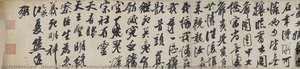
hsiung t’ing-pi
1625 , China
基本情報
- Artistic Movement Or Style: Ming Dynasty Art
- Date Of Death: 1625
- Full Name: hsiung t’ing-pi
- Nationality: Chinese
- Notable Artworks: ['Grievance in Prison Scroll']
- Place Of Birth: China