

 プレビュー
プレビュー
 シェアする
シェアする シェアする
シェアする
 詳細を見る
詳細を見る

 ダウンロード
 似ている作品
 X線調査
X線調査 スライドショー
 Stats
StatsThe Garden of Death
 Painting
- Symbolism
 1896
1896- 19th Century
 17.0 x 16.0 cm
 アテネウム美術館
 詳細を見る
詳細を見る
ジークレー/アートプリント
迅速な制作と多彩な仕上げオプションを備えた、ミュージアムクオリティのジークレーまたはキャンバスプリント。 ( 手描きの絵画を購入 Switch to Digital Image)




P118B $10

P118H $10

P118W $10

P438Z $10

P508JH $12

P508YH $12

P805H $10

P805Z $10

P919BZ $10

P919G $10

P919XJ $10

P959ZH $10

P968JZ $12

W106C $8

W218G $10

W218JH $8

W218Y $10

W307PJ $10

W316G $10

W316PJ $8

W316Y $10

W398PJ $8

W4111J $10

W500HY $15

W500JH $15

W692G $12

W849H $8

W940BG $15

W953PJ $8




作品のオリジナル比率に合わせた、当店の規定サイズからお選びください。

特定のフレームやスペースに合わせて、ご自身でサイズを指定することも可能です。選択されたサイズが元の画像の比率と一致しない場合、作品をトリミングするか、鏡面反射または単色での塗りつぶしによって画像を拡張いたします。制作を開始する前に、ご確認用のデジタルモックアップをお送りいたします。
画面上のプレビューには、実際のトリミングや拡張は反映されませんのでご注意ください。最終的な構図を正確に確認できるのは、モックアップのみとなります。
カスタムサイズも承っておりますが、元の比率を維持するためには、あらかじめ用意されたリストからサイズを選択することをお勧めいたします。


 ガラスオプションは、110cm未満のサイズでのみご利用いただけます。

The Garden of Death
ジークレー/アートプリント
複製画のサイズ
-


合計金額
$ 62
A Gentle Embrace of Mortality: Exploring The Garden of Death
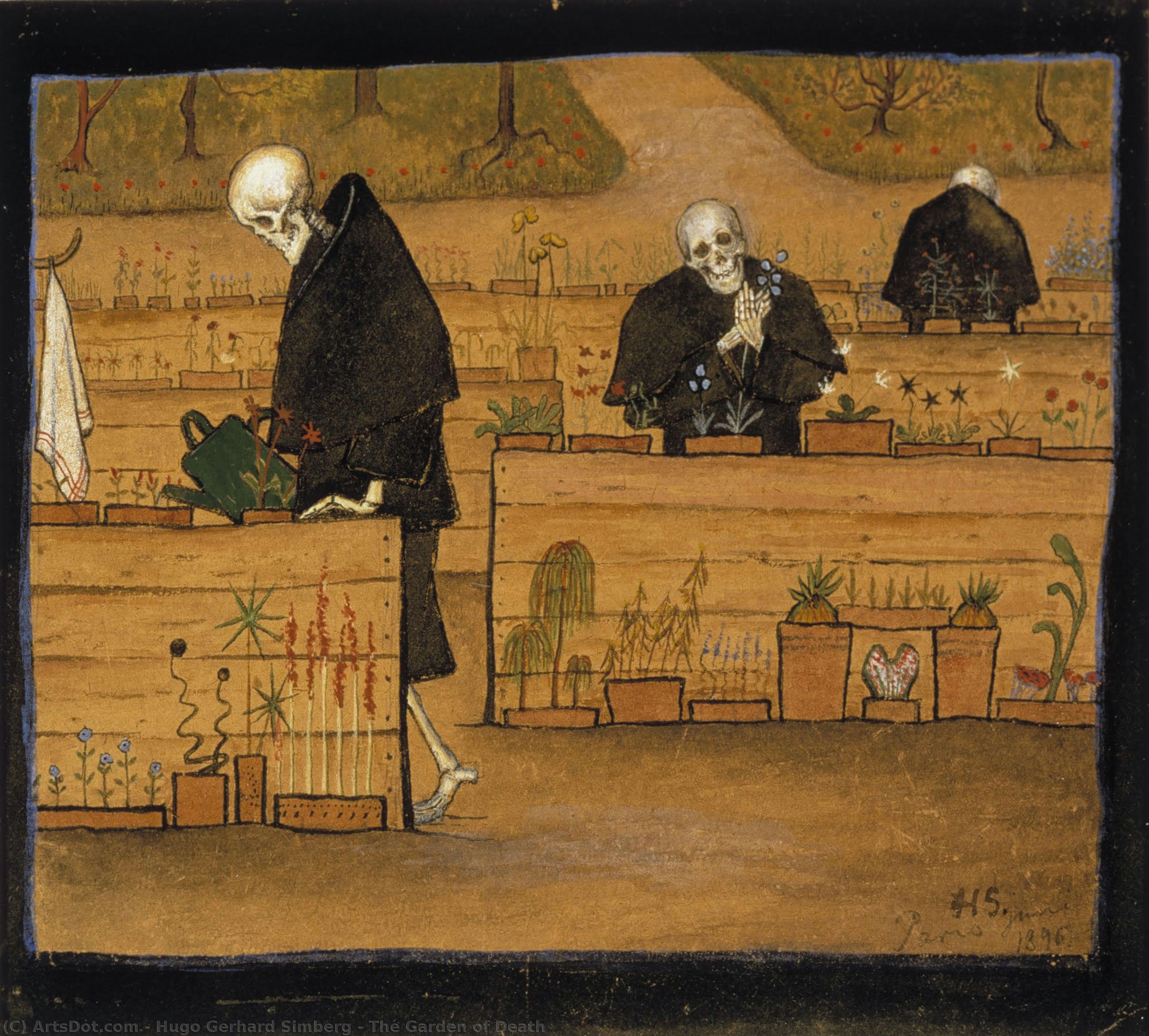
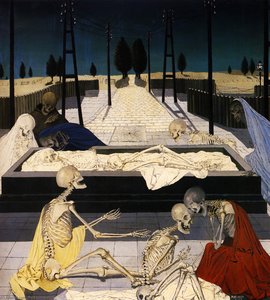
To gaze upon Hugo Gerhard Simberg's "The Garden of Death" is to encounter a vision that defies the expected solemnity associated with themes of mortality. Far from being a bleak tableau, this painting possesses an almost whimsical charm, largely due to Simberg’s masterful depiction of Death itself. Here, the inevitable passage of time and decay are not presented as terrifying specters, but rather as gentle companions tending to life in miniature. The scene unfolds like a secret, overgrown sanctuary, populated by two skeletal figures who seem more like devoted gardeners than harbingers of doom.
Symbolism Woven into Flora and Bone
The core fascination of this piece lies in its delicate balance between the macabre and the pastoral. The skeletons, each holding a skull—a universal memento mori—are engaged in the nurturing act of tending potted plants. This juxtaposition is profoundly symbolic; it suggests that even within the framework of ultimate endings, there persists an enduring cycle of growth and care. The garden itself becomes a metaphor for life's continuous cycle: death feeds new beginnings. Simberg invites us to reconsider our relationship with impermanence, suggesting that remembrance and beauty can bloom even where decay is present.
Simberg’s Symbolist Dreamscape
As a leading figure in Finnish Symbolism, Simberg imbued his work with the ethereal quality characteristic of the movement. His art often drifts between myth, fairy tale, and deep introspection. "The Garden of Death" exemplifies this perfectly; it feels less like a scene from reality and more like a beautiful, poignant dream recalled at dawn. The soft handling of paint and the slightly muted palette contribute to an atmosphere that is both melancholic and deeply serene. For collectors and those seeking art with narrative depth, this piece offers a window into the mystical undercurrents of turn-of-the-century European thought.
A Touch of Timeless Elegance for Your Space
With its intimate scale (17 x 16 cm), "The Garden of Death" possesses an immediate presence, making it ideal for placement in a parlor, study, or gallery setting where thoughtful conversation is encouraged. Whether you are curating a space that speaks to romanticism, intellectual depth, or quiet contemplation, this reproduction captures the original's delicate balance. It serves not as mere decoration, but as a philosophical anchor—a beautiful reminder that life’s most profound truths can be found in the gentlest of settings.
関連作品

アーティストの略歴
early life and artistic beginnings
hugo gerhard simberg, a renowned finnish symbolist painter and graphic artist, was born on june 24, 1873, in hamina, finland. his artistic journey began at the drawing school of the viipuri friends of art in 1891, where he honed his skills under the guidance of various instructors.artistic style and influences
simberg's work is characterized by its dreamlike quality, often incorporating elements of myths, fairy tales, and imagination. this unique approach has led to his recognition as one of the most important artists of finnish symbolism. his artistic language is a testament to the era's fascination with the unknown and the mystical.notable works
some of simberg's most celebrated works include:- the garden of death (1896), a poignant piece showcasing his ability to balance the macabre with the serene.
- the wounded angel (1903), a masterpiece that exemplifies his symbolic approach to art.
- king hobgoblin sleeping, a watercolour piece that delves into the realm of fantasy and the world of hobgoblins.
museums and collections
simberg's works can be found in various museums, including the ateneumin taidemuseo in helsinki, finland, which is part of the finnish national gallery. this museum is a treasure trove of finnish art, showcasing an impressive collection that spans from the 18th century to modernism.legacy and influence
simberg's influence on finnish symbolism is undeniable, with his unique approach to art continuing to inspire artists and art enthusiasts alike. his legacy can be seen in the numerous exhibitions and collections featuring his work, including those found on ArtsDot's platform, which provides a comprehensive look into his artistic world.conclusion
hugo gerhard simberg's enigmatic and imaginative approach to art has solidified his place in the annals of finnish symbolism. his works, now part of various museum collections, including ateneumin taidemuseo, serve as a testament to his enduring influence on the world of art.- view simberg's artwork on ArtsDot: the garden of death
- explore ateneumin taidemuseo's collection: ateneumin taidemuseo (finland) - a haven for finnish art
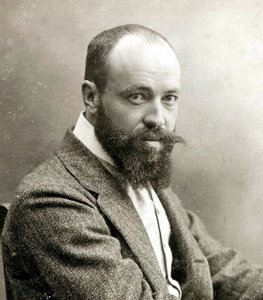
hugo gerhard simberg
1873 - 1917 , Finland
基本情報
- Artistic Movement Or Style: Symbolism
- Artists Or Movements Influenced By This Artist: ['Nightwish']
- Artists Who Influenced This Artist: ['Akseli Gallen-Kallela']
- Date Of Birth: June 24, 1873
- Date Of Death: 1917
- Full Name: Hugo Gerhard Simberg
- Nationality: Finnish
- Notable Artworks:
- The Garden of Death
- Wounded Angel
- King Hobgoblin Sleeping
- Place Of Birth: Hämeenlinna, Finland
関連記事

The Enduring Legacy of Fine Art Prints: Technique, History & Aesthetic Impact
Explore the rich history & techniques of fine art prints. Discover investment potential, assess authenticity, and learn how to preserve your collection with expert guidance. Trusted insights for discerning collectors.

Echoes of Time: Exploring the Enduring Appeal & Historical Context of Vintage Art Prints
Explore the captivating world of vintage art prints! Discover their history, collecting tips & enduring appeal. Expert insights on chromolithography and building a legacy collection with ArtsDot.
パウル・クレー傑作25選:色彩と象徴に満ちた芸術の世界 | ArtsDot
パウル・クレーの傑作25選🎨 色彩と象徴に満ちた抽象絵画の世界を旅。ドイツ表現主義からバウハウスまで、クレーの革新的な技法と感動的な作品群をArtsDotで。高品質な美術品複製やインテリアアートも豊富です。オンラインストアで全コレクションをご覧ください。
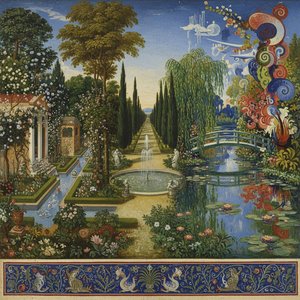
Cultivating Paradise: A Historical & Artistic Exploration of Gardens in Painting
Explore the rich history of gardens in painting! Discover masterpieces from Renaissance to Impressionism & beyond. Learn about symbolism, artists like Monet & Klimt, and find your perfect artwork at ArtsDot.

Giclée Prints: Archival Quality & Aesthetic Nuances for the Discerning Collector
Explore the world of giclée prints with ArtsDot. Learn about archival quality, aesthetic nuances & investment potential. Expert guidance for discerning art collectors seeking museum-quality reproductions and lasting value.