

 プレビュー
プレビュー
 シェアする
シェアする シェアする
シェアする
 詳細を見る
詳細を見る

 ダウンロード
 似ている作品
 X線調査
X線調査 スライドショー
 Stats
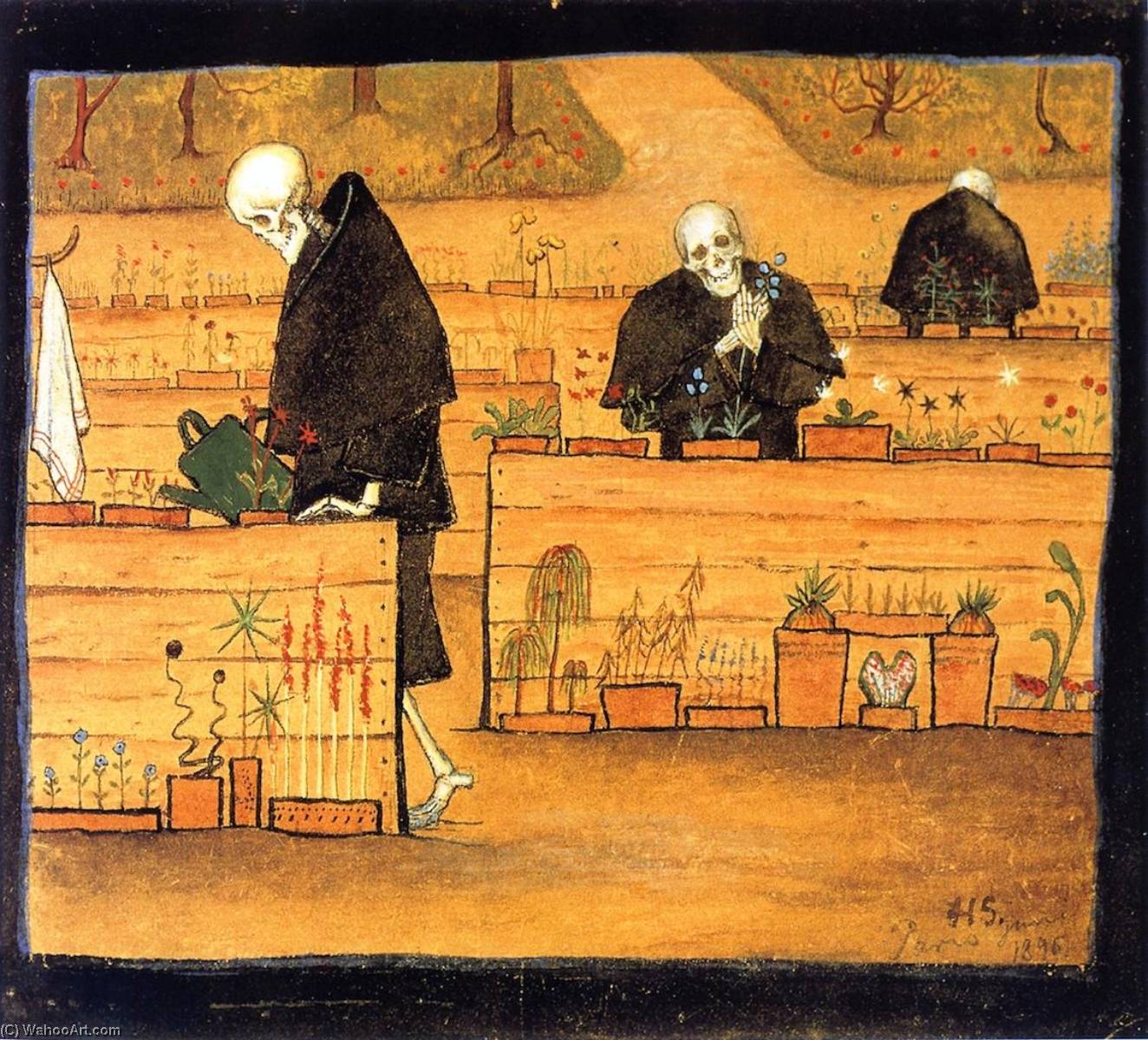
StatsThe Garden of Death
 1896
1896 16.0 x 17.0 cm
 詳細を見る
詳細を見る
ジークレー/アートプリント
迅速な制作と多彩な仕上げオプションを備えた、ミュージアムクオリティのジークレーまたはキャンバスプリント。 ( 手描きの絵画を購入 Switch to Digital Image)




































作品のオリジナル比率に合わせた、当店の規定サイズからお選びください。

特定のフレームやスペースに合わせて、ご自身でサイズを指定することも可能です。選択されたサイズが元の画像の比率と一致しない場合、作品をトリミングするか、鏡面反射または単色での塗りつぶしによって画像を拡張いたします。制作を開始する前に、ご確認用のデジタルモックアップをお送りいたします。
画面上のプレビューには、実際のトリミングや拡張は反映されませんのでご注意ください。最終的な構図を正確に確認できるのは、モックアップのみとなります。
カスタムサイズも承っておりますが、元の比率を維持するためには、あらかじめ用意されたリストからサイズを選択することをお勧めいたします。


 ガラスオプションは、110cm未満のサイズでのみご利用いただけます。

The Garden of Death
ジークレー/アートプリント
複製画のサイズ
-


合計金額
$ 62
関連作品




アーティストの略歴
The Visionary of the Subconscious: The Life and Legacy of Hugo Simberg
In the quiet, mist-shrouded landscapes of late 19th-century Finland, a unique artistic voice emerged that would forever alter the nation's cultural landscape. Hugo Gerhard Simberg (1873–1917) was not merely a painter; he was a weaver of dreams, a chronicler of the unseen, and a master of the Symbolist movement. Born in Hämeenlinna to Colonel Nicolai Simberg and Ebba Matilda Simberg, his early life was steeped in an environment that nurtured both discipline and imagination. While his father’s military background provided a structured foundation, it was the influence of his aunt Alexandra—an amateur painter who taught him to read—that likely planted the first seeds of his artistic vocation. His journey into the depths of the human psyche began far from the battlefield, moving instead toward the ethereal realms of folklore and myth.
Simberg’s formal education was a tapestry of diverse influences and rigorous training. He refined his craft at the Drawing School of the Finnish Art Society between 1893 and 1895, studying under luminaries such as Helene Schjerfbeck and Elin Danielson-Gambogi. However, it was his profound connection to the legendary Akseli Gallén-Kallela that truly sculpted his stylistic identity. Under Gallén-Kallela’s mentorship, Simberg developed a deep reverence for the expressive power of the Finnish wilderness and its darker, more enigmatic qualities. This period of study instilled in him an ability to blend the tangible textures of nature with the intangible weight of psychological complexity, creating a style that felt both grounded in the earth and adrift in the heavens.
A Tapestry of Myth, Macabre, and Melancholy
To encounter a Simberg canvas is to step into a world where the boundaries between reality and nightmare are beautifully blurred. As a central figure of Finnish Symbolism, his work eschewed the literalism of realism in favor of exploring themes of death, the supernatural, and the human condition. His paintings often feature enigmatic figures—hobgoblins, wounded angels, and mysterious travelers—that inhabit landscapes filled with both dread and serenity. In masterpieces such as The Garden of Death and The Wounded Angel, Simberg achieved a rare feat: he made the macabre feel profoundly tender. He did not approach death as a terrifying end, but rather as a quiet, inevitable part of a larger, mystical cycle.
His technical prowess allowed him to navigate various mediums, from haunting watercolors to commanding oil paintings. His ability to manipulate light and shadow created an atmosphere of "macabre serenity," where even the most unsettling subjects were rendered with a delicate, dreamlike grace. This duality is perhaps best seen in works like King Hobgoblin Sleeping, where the use of symbolic animals and mystical shadows invites the viewer into a state of contemplative wonder. Through his participation in the Finnish Artists’ Autumn Exhibitions from 1898 onwards, he brought these private visions to the public eye, captivating critics and audiences alike with his ability to capture the "unseen" elements of existence.
Historical Significance and Eternal Resonance
The legacy of Hugo Simberg extends far beyond the borders of Finland. His travels through London and Paris exposed him to the broader European avant-garde, allowing him to integrate international stylistic innovations into his uniquely Finnish perspective. This synthesis of local folklore and cosmopolitan Symbolism ensured that his work resonated on a much larger stage. One of his most significant architectural contributions was his commission to decorate St John’s Church in Tampere between 1904 and 1906, a feat that demonstrated his capacity to translate his intimate, psychological explorations into grand, communal spaces.
Though his life was tragically short, ending at the age of forty-four, Simberg left behind an indelible mark on the history of art. He remains a pivotal figure whose work continues to haunt and inspire contemporary viewers. His significance lies in his courage to confront the darker aspects of the human soul with beauty rather than fear. Today, his works serve as vital windows into the late 19th-century psyche, reminding us that within the shadows of our fears, there exists a profound and poetic truth about what it means to be alive.
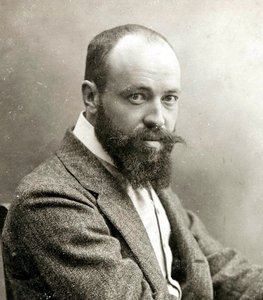
Hugo Simberg
1873 - 1917 , Finland
基本情報
- Artistic Movement Or Style: Symbolism
- Artists Or Movements Influenced By This Artist: ['Romanticism']
- Artists Who Influenced This Artist: ['Akseli Gallén-Kallela']
- Date Of Birth: June 24, 1873
- Date Of Death: July 12, 1917
- Full Name: Hugo Gerhard Simberg
- Nationality: Finnish
- Notable Artworks:
- The Garden of Death
- The Wounded Angel
- Place Of Birth: Hämeenlinna, Finland