

 プレビュー
プレビュー
 プリントを購入
 シェアする
シェアする シェアする
シェアする
 詳細を見る
詳細を見る

 ダウンロード
 似ている作品
 X線調査
X線調査 スライドショー
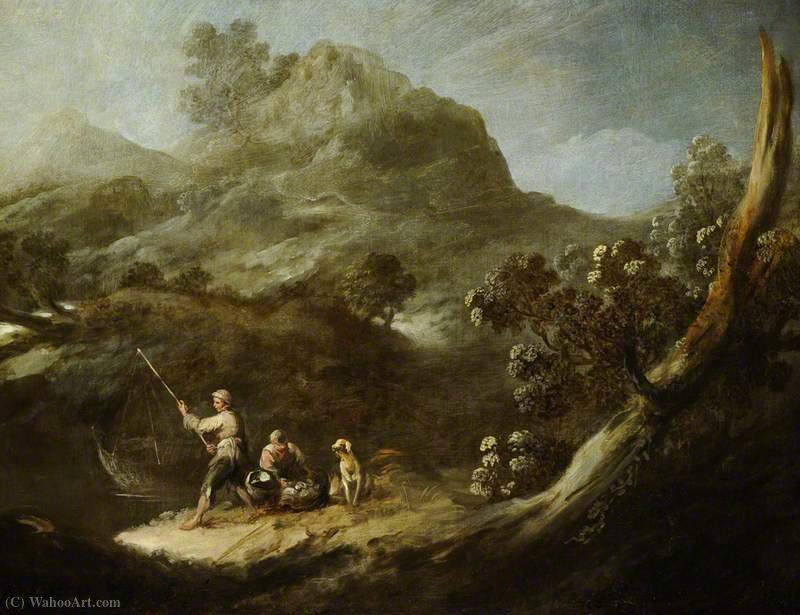
Rocky Wooded Landscape with Two Fisher Boys and a Dog
 詳細を見る
詳細を見る
オンラインプレビューをはるかに凌ぐ、高解像度で鮮明なデジタル画像をご購入いただけます。
各ファイルは、社内の専門家が高度なツールと熟練した手作業によるレタッチを用いて、細心の注意を払って準備されています。すべての画像において、卓越した鮮明度、正確な色彩再現性、そして繊細なディテールを保証いたします。
最終ファイルは、プロフェッショナルな編集・印刷環境ですぐにご利用いただけるよう最適化された状態で、72時間以内にメールにてお届けいたします。これは、一流のデザインスタジオ、出版社、ギャラリーから信頼されているものと同等の品質です。
デジタル画像のご注文に付随する特典
高品質なデジタル画像配信を、確かな品質で。
ArtsDot.com を選ぶことは、単に画像を手に入れることではありません。それは、プロの手によって精密に仕上げられ、満足保証が付いた高品質なデジタルアートワークを受け取ることを意味します。ご注文いただいた際に自動的に付随する内容は、以下の通りです:

メールですぐにお届け
ご注文から72時間以内に、高解像度のデジタル画像ファイルがメールでお手元に届きます。すぐにそのままご利用いただけます。

AI技術で最適化されたデジタルファイル
お客様の作品は、高度なAIツールと専門家による手作業の編集を組み合わせてプロフェッショナルに最適化されており、細部のディテール、鮮明さ、そして正確な色再現性を最大限に引き出しています。

一生涯無料の再送サービス
ファイルを誤って削除したり、紛失してしまったりしましたか?ご安心ください。いつでも無料で再送いたします。

輸入手数料は一切かかりません
関税や手数料、配送料を気にすることなく、お気に入りのアートワークをすぐにお楽しみいただけます。デジタルダウンロードは常に免税です。

色彩再現の保証
プロ仕様のツールとカラーマネジメント技術を用いることで、デジタル画像が元の色を最大限に忠実に再現することを保証いたします。

60日間満足保証
ご購入いただいたデジタル画像にご満足いただけない場合は、60日以内であれば、修正または100%の返金(理由を問う必要はありません)をさせていただきます。

100% 返金保証
ご満足いただけない場合は、デジタルファイルを受け取ってから60日以内であれば、理由を問わず全額返金いたします。

まとめ買い割引
3枚購入で10%OFF - 5枚購入で15%OFF - 10枚以上購入で20%OFF。クリエイティブなプロジェクト、ギャラリー、エージェンシーに最適です。
関連作品

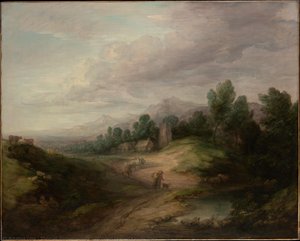
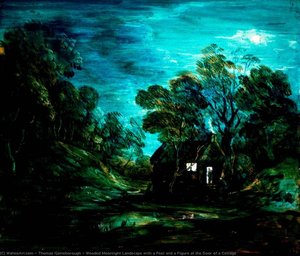

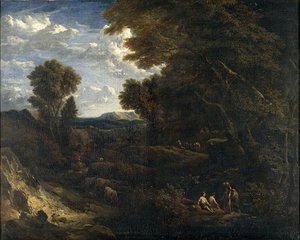
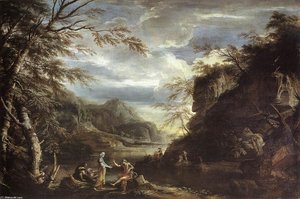
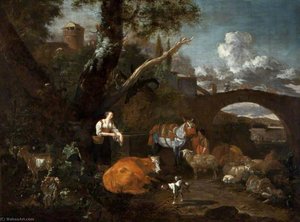
作家の略歴
Ignacio de Iriarte: The Painter of Wild Landscapes
Ignacio de Iriarte, a name perhaps less familiar than those of his contemporaries Murillo or Zurbarán, stands as a pivotal figure in 17th-century Spanish art. Born in Azcoitia, Gipuzcoa, in 1620, he carved out a unique and remarkably successful career dedicated almost exclusively to landscape painting – a path rarely trodden by his peers at the time. His work, characterized by rugged, dramatic scenes often imbued with a sense of wildness and solitude, reveals an artist deeply attuned to the power and beauty of the Spanish countryside, earning him the somewhat evocative title of “the Spanish Claude Lorraine.” This article delves into the life, artistic development, and lasting legacy of this largely unsung master.
Iriarte’s early education was primarily at home, a common circumstance for artists of his era. However, in 1642, he moved to Seville and entered the studio of Francisco Herrera the Elder, where he initially focused on traditional portraiture and religious scenes. While he learned the fundamentals of color theory under Herrera, Iriarte quickly recognized that his true passion lay elsewhere. He found himself drawn to the untamed landscapes surrounding Seville, particularly the mountains near Aracena, a region that would become the enduring subject of much of his work. It was here, in 1646, that he married Doña Francisca de Chaves, though their marriage proved tragically short-lived.
His artistic trajectory shifted dramatically after this early period. Iriarte deliberately distanced himself from the prevailing trends of the time, rejecting the highly polished and often idealized depictions favored by many of his contemporaries. Instead, he embraced a more raw and expressive style, drawing inspiration from the works of Salvator Rosa, another master of dramatic landscapes. His paintings are not serene vistas; they are imbued with an atmosphere of drama, tension, and even melancholy. He captured the essence of the Spanish wilderness – its rugged peaks, dense forests, and turbulent rivers – with a remarkable sense of realism and emotional depth.
Iriarte’s association with Bartolomé Esteban Murillo proved to be one of the most significant collaborations in 17th-century Spanish art. The two artists shared a deep respect for each other's talents, and they frequently worked together on large-scale projects. Murillo typically focused on the human figures within his compositions, while Iriarte meticulously rendered the landscapes that framed them. A particularly poignant example of this collaboration is an unfinished landscape painting depicting a scene from the life of David, where Murillo sketched in the figures and Iriarte left the background incomplete – a testament to their falling out over the project. This episode highlights the differing approaches of the two artists: Murillo’s emphasis on narrative and human emotion versus Iriarte's dedication to capturing the sublime beauty of nature.
Iriarte’s career was further solidified by his membership in the Academia de Bellas Artes de Sevilla, where he served as its first secretary from 1660 to 1669 and again from 1667 to 1669. His work gained recognition throughout Spain and beyond, attracting the attention of collectors and patrons alike. He was celebrated for his ability to evoke a sense of atmosphere and emotion through his landscapes, earning him comparisons to the renowned Italian landscape painter Claude Lorrain. While the comparison isn’t entirely accurate – Iriarte's style possessed a uniquely Spanish character—it underscored the profound impact he had on the development of landscape painting in Spain.
The Style and Technique of a Lone Pioneer
Iriarte’s artistic style is immediately recognizable by its dramatic use of light, shadow, and color. He employed a technique known as *sfumato*, creating hazy, atmospheric effects that blurred the boundaries between foreground and background. His landscapes are often characterized by strong diagonals and dynamic compositions, conveying a sense of movement and energy. He favored earthy tones – browns, greens, and grays – to depict the rugged terrain, punctuated by flashes of vibrant color in the sky or foliage.
Unlike many of his contemporaries who relied on meticulous detail and precise rendering, Iriarte often employed looser brushstrokes and a more expressive approach. He prioritized capturing the *feeling* of a landscape over its literal representation, allowing for a degree of ambiguity and interpretation. This willingness to deviate from established conventions set him apart from other artists of his time and contributed to the distinctive character of his work.
His use of perspective was particularly noteworthy. Iriarte frequently employed aerial perspective – diminishing the clarity and intensity of colors as they receded into the distance – to create a sense of depth and scale. This technique, combined with his masterful handling of light and shadow, allowed him to transform ordinary landscapes into breathtaking vistas.
Major Works and Legacy
Several of Iriarte’s paintings have survived to this day, offering valuable insights into his artistic practice. “Landscape with Hunters” (circa 1640-1685), housed in Madrid, exemplifies his ability to capture the drama and grandeur of the Spanish wilderness. “Landscape with Figures,” also from Madrid, showcases his skill in integrating human figures into a carefully constructed landscape composition. “River Crossing,” currently located in Madrid, demonstrates his mastery of atmospheric perspective and dynamic composition.
Despite his considerable talent and influence, Iriarte’s work was not fully appreciated during his lifetime. He largely operated outside the established artistic circles of Seville, focusing on a niche market of patrons who valued his unique vision. However, in recent decades, Iriarte has experienced a resurgence of interest among art historians and collectors. His landscapes are now recognized as masterpieces of Spanish Baroque painting, offering a powerful testament to the beauty and resilience of the Spanish countryside.
Iriarte’s legacy extends beyond his individual paintings. He is considered a pioneer in the development of landscape painting in Spain, paving the way for future generations of artists who sought to capture the spirit of the Spanish wilderness. His work continues to inspire awe and admiration, reminding us of the enduring power of nature and the transformative potential of art.
Further Exploration
- Wikipedia Entry: https://en.wikipedia.org/wiki/Ignacio_de_Iriarte
- ArtsDot Artwork Page (Landscape with Hunters): https://www.wahoart.com/en/art/ignacio-de-iriarte-landscape-with-hunters-ignacio-de-iriarte-1640-D37TCM-en/
- ArtsDot Artist Page: https://www.wahoart.com/en/artists/ignacio-de-iriarte-en/
This information is provided by ArtsDot.com as of October 26, 2023.
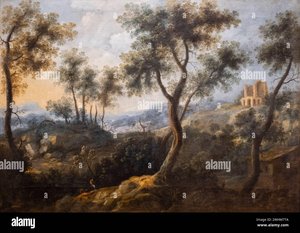
Ignacio de Iriarte
1620 - 1685

