

 シェアする
シェアする シェアする
シェアする
 詳細を見る
詳細を見る

 ダウンロード
 似ている作品
 スライドショー
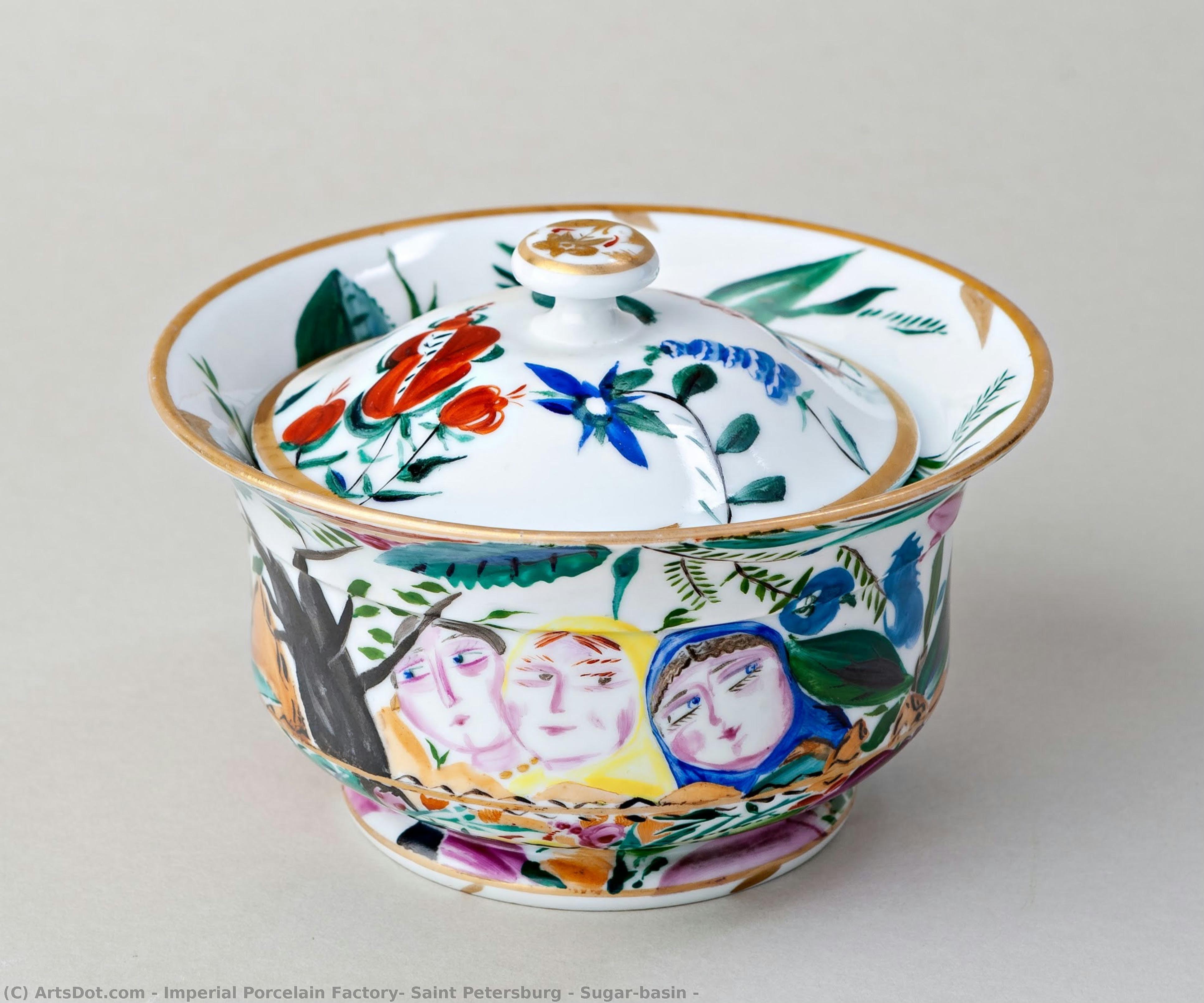
Sugar-basin


 詳細を見る
詳細を見る
ジークレー/アートプリント
迅速な制作と多彩な仕上げオプションを備えた、ミュージアムクオリティのジークレーまたはキャンバスプリント。 ( 手描きの絵画を購入 画像を購入)




































作品のオリジナル比率に合わせた、当店の規定サイズからお選びください。

特定のフレームやスペースに合わせて、ご自身でサイズを指定することも可能です。選択されたサイズが元の画像の比率と一致しない場合、作品をトリミングするか、鏡面反射または単色での塗りつぶしによって画像を拡張いたします。制作を開始する前に、ご確認用のデジタルモックアップをお送りいたします。
画面上のプレビューには、実際のトリミングや拡張は反映されませんのでご注意ください。最終的な構図を正確に確認できるのは、モックアップのみとなります。
カスタムサイズも承っておりますが、元の比率を維持するためには、あらかじめ用意されたリストからサイズを選択することをお勧めいたします。


 ガラスオプションは、110cm未満のサイズでのみご利用いただけます。

Sugar-basin
ジークレー/アートプリント
複製画のサイズ
-


合計金額
$ 62
A Symphony of Porcelain and Propaganda
In the delicate curves of this exquisite sugar-basin, one finds a profound intersection between imperial grandeur and the burgeoning spirit of Soviet realism. This piece is not merely a functional vessel for sweetness; it is a storied artifact that bridges two eras of Russian history. Crafted using forms inherited from the legendary Imperial Porcelain Factory in Saint Petersburg, the basin carries the weight of a vanished aristocracy into the vibrant, transformative landscape of the 1920s. The work reflects the masterful hand of Alexandra Shchekotikhina-Pototskaya, an artist whose brushwork breathed life into the mundane, turning everyday objects into canvases for social narrative and folk-inspired beauty.
The visual journey begins with the striking, colorful motifs that dance across the ceramic surface. Unlike the austere, monochromatic propaganda often associated with early Soviet art, this piece embraces a lush, illustrative style. The presence of faces peering from the porcelain, nestled amidst botanical elements and a central tree, suggests a deep connection to the rhythms of common life and nature. These painted figures, rendered with a soulful vitality, evoke the warmth of human connection and the shared experiences of the era. The technique involves a meticulous application of pigment over fine white kaolin, where each stroke contributes to a sense of movement and depth, making the bowl feel almost alive under the light.
The Legacy of the Imperial Porcelain Factory
To hold or contemplate such a piece is to touch the legacy of the Romanov dynasty. The foundation of this sugar-basin lies in the prestigious traditions established by Empress Elizabeth Petrovna in 1744, an era when the factory sought to rival the finest workshops of Europe. Even as the political tides shifted toward the Soviet Union, the technical excellence and the physical molds of the Imperial Porcelain Factory remained a cornerstone of Russian craftsmanship. This specific basin serves as a fascinating palimpsest; while its form whispers of the opulence of Alexander II’s time, its painted soul belongs to the revolutionary fervor of 1920.
For the discerning collector or interior designer, this piece offers more than just aesthetic appeal; it provides a conversation piece that embodies historical resilience. The juxtaposition of imperial form and Soviet subject matter creates a tension that is both intellectually stimulating and visually captivating. Whether placed as a centerpiece in a curated gallery or used to add a touch of vintage character to a contemporary dining setting, the sugar-basin radiates an aura of timelessness. It is a testament to the idea that true art transcends political boundaries, finding its permanence in the enduring beauty of hand-painted porcelain.
関連作品
アーティストの略歴
A Legacy Forged in Porcelain: The Imperial Porcelain Factory, Saint Petersburg
The story of the Imperial Porcelain Factory is inextricably linked to the ambition and aesthetic vision of Russia’s ruling Romanov dynasty. Founded in 1744 by Empress Elizabeth Petrovna, daughter of Peter the Great, the factory wasn't merely intended as a producer of luxury goods; it was conceived as a symbol of Russia’s burgeoning power and its aspiration to rival the artistic achievements of Western Europe. Elizabeth, deeply impressed by the porcelain she encountered during state visits, recognized the potential for establishing a domestic industry that would eliminate reliance on imports from Meissen, Sèvres, and other renowned European workshops. The initial years were fraught with challenges – finding suitable raw materials proved difficult, and early experiments yielded disappointing results. However, Elizabeth’s unwavering commitment, coupled with the discovery of kaolin deposits near St. Petersburg in 1747, laid the foundation for future success. The factory's earliest productions consciously emulated the Rococo styles prevalent in France and Germany, employing skilled artisans recruited from abroad to impart their expertise. This initial phase was about mastering technique; learning to control the delicate process of firing and glazing, and replicating the forms favored by European aristocracy.From Imitation to Innovation: Defining a Russian Aesthetic
Under Catherine the Great, the factory entered a period of remarkable artistic growth. Catherine herself was a passionate collector and actively involved in shaping the factory’s direction. She commissioned elaborate services depicting scenes from Russian history, mythology, and everyday life, moving beyond simple imitation to forge a distinctly Russian aesthetic. The influence of classicism became increasingly pronounced during this era, reflected in the elegant forms and refined ornamentation of the porcelain wares. Artists like Johann-Peter Schöpper and Dimitri Levitsky contributed designs that celebrated Russia’s imperial grandeur and its expanding territories. Catherine's patronage extended beyond decorative arts; she encouraged the creation of monumental sculptural works in porcelain, showcasing the factory’s technical prowess and artistic ambition on a grand scale. This period saw the development of unique painting styles, incorporating vibrant colors and intricate details that distinguished Imperial Porcelain from its European counterparts. The factory also began to explore new techniques, such as *en plein air* painting on porcelain plaques, further demonstrating its innovative spirit. The emphasis shifted towards narratives – telling stories through meticulously rendered scenes adorning plates, vases, and other objects.The 19th Century: Romanticism, Realism, and Imperial Patronage
The 19th century witnessed a continuation of imperial patronage, with each successive ruler leaving their mark on the factory’s output. Under Nicholas I, the factory embraced Romanticism, producing porcelain depicting scenes from Russian folklore, military victories, and idealized landscapes. The reign of Alexander II saw a growing interest in Realism, reflected in more naturalistic depictions of peasant life and contemporary events. Throughout this period, the factory continued to refine its technical skills, experimenting with new glazes, colors, and firing techniques. The development of cobalt net porcelain – a delicate technique involving intricate openwork designs – became a signature style of the Imperial Porcelain Factory. The factory also played a significant role in creating commemorative wares celebrating important events in Russian history, such as the emancipation of the serfs and the construction of railways. Artists like Alexander Lebedkin and Fyodor Solntsev contributed significantly to the factory’s artistic reputation during this era, pushing the boundaries of porcelain painting and sculpture. The factory's products were increasingly sought after by collectors both within Russia and abroad, solidifying its position as a leading center for porcelain production.Revolution and Renewal: Adapting to a Changing World
The Russian Revolution of 1917 brought profound changes to the Imperial Porcelain Factory. The Romanov dynasty was overthrown, and the factory was nationalized, becoming known as the State Porcelain Factory. Initially, production slowed as the country grappled with political upheaval and economic hardship. However, under the Soviet regime, the factory underwent a period of reinvention, embracing new artistic styles aligned with socialist ideals. Constructivism and Suprematism influenced the designs of porcelain wares during the 1920s and 1930s, resulting in bold geometric forms and abstract patterns. Despite these stylistic shifts, the factory continued to maintain its high standards of craftsmanship and technical excellence. During World War II, production was temporarily halted as the factory focused on manufacturing essential goods for the war effort. After the war, the factory resumed porcelain production, incorporating elements of socialist realism into its designs. Throughout the Soviet era, the factory remained a significant cultural institution, producing both utilitarian wares and decorative objects for domestic consumption and export.The Modern Era: Preserving Tradition and Embracing Innovation
Following the collapse of the Soviet Union in 1991, the factory underwent further transformation, regaining its historical name – the Imperial Porcelain Factory. Today, it continues to produce both reproductions of classic designs and contemporary works by leading Russian artists. The factory remains committed to preserving traditional techniques while embracing innovation, attracting a new generation of skilled artisans and designers. Its legacy as a symbol of Russian artistry and imperial grandeur endures. The factory’s products are highly prized by collectors worldwide, representing not only exceptional craftsmanship but also a rich cultural heritage. The Imperial Porcelain Factory stands as a testament to the enduring power of art and its ability to transcend political boundaries and historical upheavals. It continues to be a vital center for porcelain production in Russia, shaping the future of this timeless art form while honoring its illustrious past.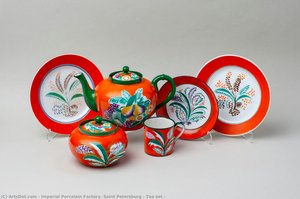
関連記事
The Alchemy of Clay: A Collector's Guide to the Mastery, Texture, and Timeless Form of Ceramic Art
Discover the profound beauty of ceramic art. Our expert guide explores the alchemy of clay, texture, and glaze, offering collectors deep insights into mastering earth and fire to create timeless, sculptural masterpieces for any curated collection.

Socialist Realism: Ideology, Aesthetics & Enduring Legacy of Soviet Art
Explore the fascinating world of Socialist Realism! Discover its historical context, key artists like Deyneka & Brodsky, defining aesthetics, and lasting impact on Soviet culture. A comprehensive guide for art lovers.
Pavlo Makov: Deconstructing Soviet Legacy Through Conceptual Photography & Installation Art
Explore the compelling work of Ukrainian artist Pavlo Makov, renowned for his conceptual photography deconstructing Soviet legacy. Discover his unique artistic process and investment potential.
Blossoms of Time: A Historical & Aesthetic Exploration of Floral Painting Across Cultures
Explore the rich history of floral painting! Discover symbolism, techniques & masterpieces from Van Huysum to O'Keeffe. Expert insights for art lovers & collectors at ArtsDot.

Alexei Harlamoff: A Study in Russian Romantic Landscape Painting & Imperial Patronage
Explore the captivating world of Alexei Harlamoff, a master of Russian Romantic painting. Discover his life, Imperial patronage, signature style & enduring legacy with ArtsDot.

