

 プレビュー
プレビュー
 プリントを購入
 シェアする
シェアする シェアする
シェアする
 詳細を見る
詳細を見る

 ダウンロード
 似ている作品
 X線調査
X線調査 スライドショー
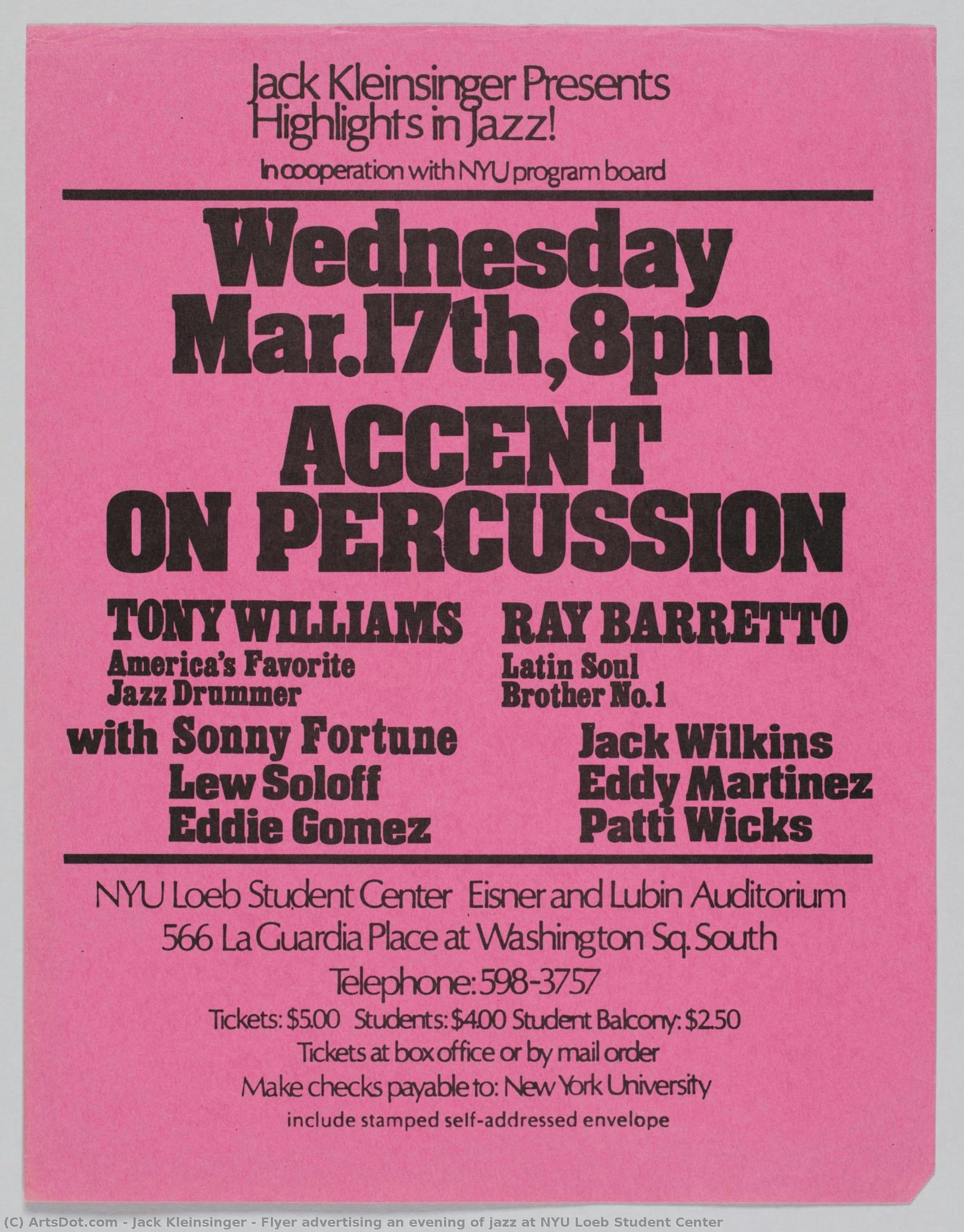
Flyer advertising an evening of jazz at NYU Loeb Student Center
 Acrylic On Canvas
- WallArt
- Jazz Promotion Flyer
 1976
1976- Modern
 27.0 x 21.0 cm
 National Museum of African American History and Culture
 詳細を見る
詳細を見る
オンラインプレビューをはるかに凌ぐ、高解像度で鮮明なデジタル画像をご購入いただけます。
各ファイルは、社内の専門家が高度なツールと熟練した手作業によるレタッチを用いて、細心の注意を払って準備されています。すべての画像において、卓越した鮮明度、正確な色彩再現性、そして繊細なディテールを保証いたします。
最終ファイルは、プロフェッショナルな編集・印刷環境ですぐにご利用いただけるよう最適化された状態で、72時間以内にメールにてお届けいたします。これは、一流のデザインスタジオ、出版社、ギャラリーから信頼されているものと同等の品質です。
デジタル画像のご注文に付随する特典
高品質なデジタル画像配信を、確かな品質で。
ArtsDot.com を選ぶことは、単に画像を手に入れることではありません。それは、プロの手によって精密に仕上げられ、満足保証が付いた高品質なデジタルアートワークを受け取ることを意味します。ご注文いただいた際に自動的に付随する内容は、以下の通りです:

メールですぐにお届け
ご注文から72時間以内に、高解像度のデジタル画像ファイルがメールでお手元に届きます。すぐにそのままご利用いただけます。

AI技術で最適化されたデジタルファイル
お客様の作品は、高度なAIツールと専門家による手作業の編集を組み合わせてプロフェッショナルに最適化されており、細部のディテール、鮮明さ、そして正確な色再現性を最大限に引き出しています。

一生涯無料の再送サービス
ファイルを誤って削除したり、紛失してしまったりしましたか?ご安心ください。いつでも無料で再送いたします。

輸入手数料は一切かかりません
関税や手数料、配送料を気にすることなく、お気に入りのアートワークをすぐにお楽しみいただけます。デジタルダウンロードは常に免税です。

色彩再現の保証
プロ仕様のツールとカラーマネジメント技術を用いることで、デジタル画像が元の色を最大限に忠実に再現することを保証いたします。

60日間満足保証
ご購入いただいたデジタル画像にご満足いただけない場合は、60日以内であれば、修正または100%の返金(理由を問う必要はありません)をさせていただきます。

100% 返金保証
ご満足いただけない場合は、デジタルファイルを受け取ってから60日以内であれば、理由を問わず全額返金いたします。

まとめ買い割引
3枚購入で10%OFF - 5枚購入で15%OFF - 10枚以上購入で20%OFF。クリエイティブなプロジェクト、ギャラリー、エージェンシーに最適です。
A Night in Jazz: NYU Loeb Student Center Flyer, 1976
- This captivating flyer, measuring 27 x 21 cm, offers a rare glimpse into the vibrant jazz scene of New York City during 1976. Produced by Jack Kleinsinger Presents Highlights in Jazz!, it’s more than just an advertisement; it's a tangible artifact of a specific moment in musical history and student life at NYU.
- The design is strikingly simple yet effective, utilizing a dark pink background – a color choice that evokes both the energy of a jazz club and the sophistication of the era. The bold black lettering immediately draws the eye to the central announcement: “Wednesday / Mar.17th, 8pm / ACCENT / ON PERCUSSION.” This typographic emphasis underscores the event’s core focus – a percussion-driven evening of jazz.
- The flyer prominently features a handwritten date of "1976," subtly anchoring the piece within its historical context. This detail adds an element of authenticity and intrigue, hinting at the ephemeral nature of events and the passage of time. The inclusion of key performers like Tony Williams, Ray Barretto, and Jack Kleinsinger himself speaks to the caliber of talent showcased that evening.
Artist & Context: Frank Stella and the Rise of Minimalism
Frank Philip Stella (1936-Present), a pivotal figure in 20th-century art, is the artist behind this evocative flyer. Born in New York City, Stella’s career reflects a profound shift in artistic sensibilities – moving away from representational painting towards abstraction and geometric forms. His work, particularly during the mid-1960s, aligned with the broader movement of Minimalism, characterized by its rejection of subjective expression and focus on fundamental elements like line, shape, and color. The flyer’s clean lines and bold typography resonate with this minimalist aesthetic, reflecting Stella's influence on graphic design and visual communication.Technique & Materials: A Window into Production
- The flyer was produced using traditional printing techniques of the time, likely offset lithography. This method would have involved creating a stone or metal plate based on the artwork’s design, which was then used to transfer ink onto paper. The dark pink color was achieved through careful selection and mixing of pigments, while the black lettering utilized a durable, high-quality printing ink.
- The handwritten "1976" suggests a hand-applied element, possibly added as a final touch or for verification purposes. This small detail adds to the flyer’s personal feel and reinforces its status as an original artifact. The paper stock itself – likely a smooth, uncoated paper – further contributes to the flyer's tactile quality.
Symbolism & Emotional Impact: More Than Just an Event
This flyer represents more than just an advertisement for a jazz concert; it’s a snapshot of a cultural moment. The emphasis on percussion reflects the growing popularity of avant-garde jazz in the 1970s, which often featured complex rhythmic patterns and improvisational sections. The location at NYU's Loeb Student Center speaks to the university's role as a hub for artistic expression and student engagement. The flyer’s aesthetic – the bold typography, the vibrant pink background – evokes a sense of excitement, energy, and sophistication, transporting the viewer back to a specific time and place. It is a beautiful example of how design can capture not just information but also the spirit of an event. This reproduction offers a unique opportunity to own a piece of musical history and appreciate the artistry of both the performer and the graphic designer.関連作品



作家の略歴
Frank Stella: A Pioneer of Minimalism and Geometric Abstraction
Frank Philip Stella, born in Malden, Massachusetts on May 12, 1936, was a towering figure in the latter half of the 20th century’s art world. He wasn't merely a painter; he was a sculptor, printmaker, and architect whose relentless exploration of form and color fundamentally reshaped our understanding of abstract art. Stella’s career spanned six decades, marked by a constant evolution from vibrant, expressionistic beginnings to the austere geometries that would define his most celebrated work. His life, intertwined with artistic innovation and a deliberate rejection of traditional notions of representation, offers a compelling narrative of an artist who consistently challenged conventions.Early Influences and Artistic Beginnings
Stella’s artistic journey began not in formal art schools but within the domestic sphere. Growing up in a household where his father, a gynecologist, supplemented his income by painting houses, Stella developed an early familiarity with color and material – sanding floors and applying paint alongside his father. This seemingly mundane experience instilled in him a profound appreciation for the physicality of materials and the inherent qualities of surfaces. His mother, Constance Santonelli, was also an artist, nurturing his creative spirit from a young age. He attended Phillips Academy Andover, where he excelled academically and demonstrated a keen interest in design and visual communication. Crucially, a formative trip to the Art Center School in Los Angeles during his high school years exposed him to the work of pioneering abstract expressionists like Jackson Pollock and Franz Kline – artists who emphasized process and materiality over traditional subject matter. This encounter proved pivotal, steering him away from representational art and towards a more purely formal approach.The Rise of Minimalism and “Primaries”
Stella’s breakthrough came in 1959 with the exhibition of his "Primary Structures" at the Museum of Modern Art in New York City. These paintings, characterized by their stark simplicity – flat planes of color on unprimed canvas – were a direct challenge to the prevailing abstract expressionist movement, which often prioritized emotional content and gestural brushstrokes. The “Primaries” series (1958-60) consisted of four black and white pinstripe paintings, a deliberate rejection of any illusionistic depth or narrative. Stella famously declared that these works were "nothing more" than "a flat surface with paint on it," stripping away all connotations of symbolism or personal expression. This radical statement encapsulated the core tenets of minimalism: reducing art to its essential components – form, color, and material – and eliminating any suggestion of a hidden meaning.Expanding the Palette and Geometric Exploration
Following the success of the “Primaries,” Stella’s work continued to evolve, marked by an increasing exploration of geometric forms and a broadening of his palette. He moved away from the purely monochrome surfaces of his early minimalist paintings, introducing stripes, grids, and other structured patterns. Works like "Flag" (1959-60) – a vibrant red and white striped canvas – became iconic symbols of the era, provoking debate about the nature of art and its relationship to perception. Stella’s later works, such as the “Auxiliary Fields” series (1964-72), further pushed the boundaries of geometric abstraction, incorporating complex arrangements of lines, rectangles, and colored fields that seemed to defy conventional spatial relationships.Later Years and Legacy
Throughout his career, Frank Stella remained a restless innovator, experimenting with new materials and techniques. He moved his studio from New York City to Rock Tavern, New York, in the late 1970s, seeking greater solitude and connection to the land. In 2009, he was awarded the National Medal of Arts, recognizing his profound contribution to American art. Stella’s influence extends far beyond his own artistic output; he played a crucial role in shaping the minimalist movement and inspiring generations of artists to explore the possibilities of geometric abstraction. His work continues to be exhibited and studied worldwide, cementing his place as one of the most important and influential figures in 20th-century art. He died on May 4, 2024, at the age of 87, leaving behind a legacy of bold experimentation and unwavering commitment to the power of pure form.
jack kleinsinger
1936 - , United States of America
プロフィール概要
- Artistic Movement Or Style:
- Minimalism
- Post-painterly abstraction
- Artists Or Movements Influenced By This Artist: ['Minimalism']
- Artists Who Influenced This Artist:
- Franz Kline
- Jackson Pollock
- Date Of Birth: May 12, 1936
- Date Of Death: May 4, 2024
- Full Name: Frank Philip Stella
- Nationality: American
- Notable Artworks: ['Four Black Pinstripe Paintings']
- Place Of Birth: Malden, Massachusetts, USA

