

 プレビュー
プレビュー
 シェアする
シェアする シェアする
シェアする
 詳細を見る
詳細を見る

 ダウンロード
 似ている作品
 X線調査
X線調査 スライドショー
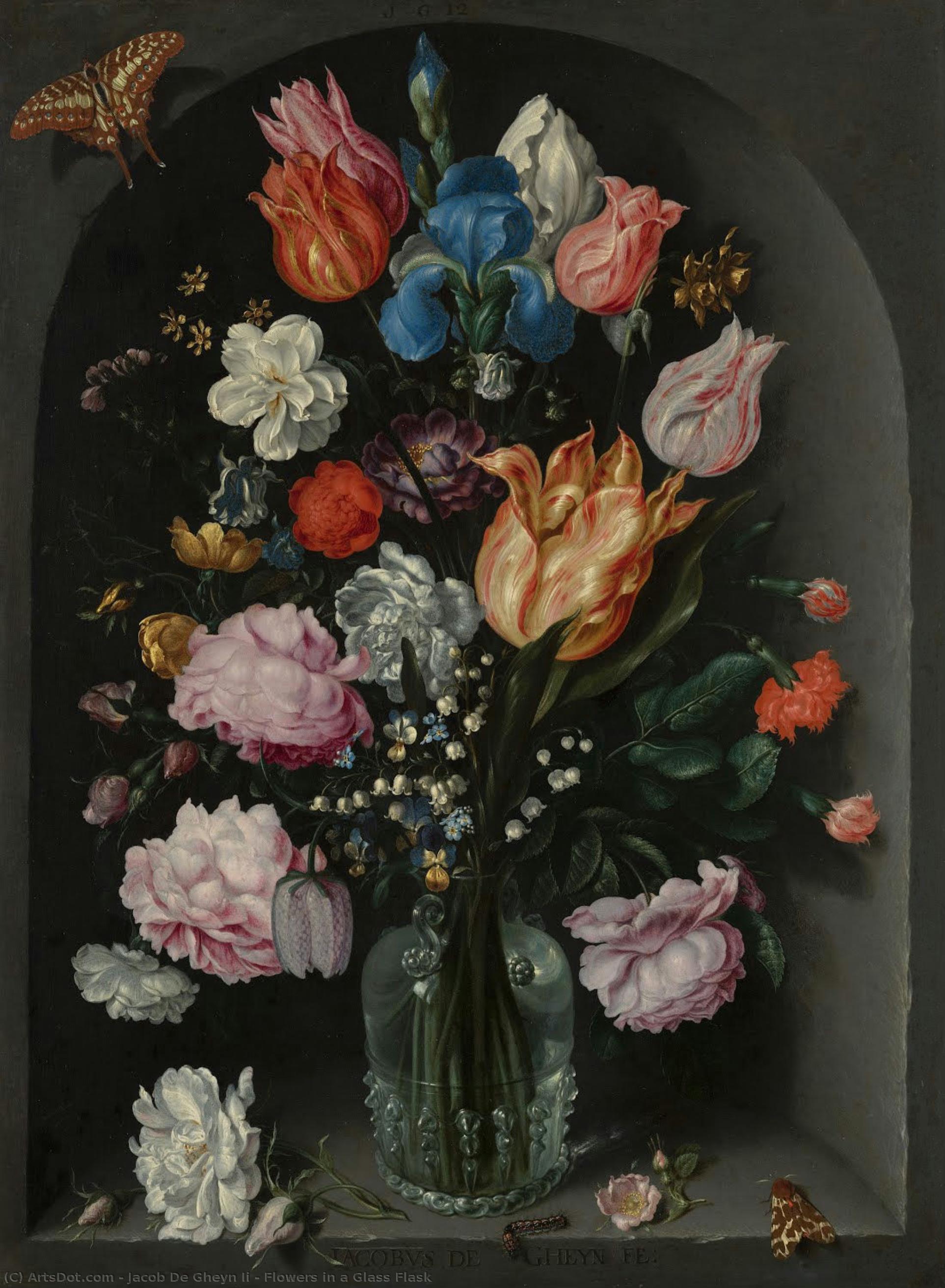
Flowers in a Glass Flask
 Oil
Oil- WallArt
- Dutch Golden Age
 1612
1612- Early Modern
 58.0 x 44.0 cm
 モウリツハウイス
 詳細を見る
詳細を見る
ジークレー/アートプリント
迅速な制作と多彩な仕上げオプションを備えた、ミュージアムクオリティのジークレーまたはキャンバスプリント。 ( 手描きの絵画を購入 画像を購入)




P118B $10

P118H $10

P118W $10

P438Z $10

P508JH $12

P508YH $12

P805H $10

P805Z $10

P919BZ $10

P919G $10

P919XJ $10

P959ZH $10

P968JZ $12

W106C $8

W218G $10

W218JH $8

W218Y $10

W307PJ $10

W316G $10

W316PJ $8

W316Y $10

W398PJ $8

W4111J $10

W500HY $15

W500JH $15

W692G $12

W849H $8

W940BG $15

W953PJ $8




作品のオリジナル比率に合わせた、当店の規定サイズからお選びください。

特定のフレームやスペースに合わせて、ご自身でサイズを指定することも可能です。選択されたサイズが元の画像の比率と一致しない場合、作品をトリミングするか、鏡面反射または単色での塗りつぶしによって画像を拡張いたします。制作を開始する前に、ご確認用のデジタルモックアップをお送りいたします。
画面上のプレビューには、実際のトリミングや拡張は反映されませんのでご注意ください。最終的な構図を正確に確認できるのは、モックアップのみとなります。
カスタムサイズも承っておりますが、元の比率を維持するためには、あらかじめ用意されたリストからサイズを選択することをお勧めいたします。


 ガラスオプションは、110cm未満のサイズでのみご利用いただけます。

Flowers in a Glass Flask
ジークレー/アートプリント
複製画のサイズ
-


合計金額
$ 62
作品詳細説明
A Symphony of Petals: The Eternal Bloom of De Gheyn
In the quiet stillness of the early seventeenth century, a transformative moment in art history unfolded within the studio of Jacob de Gheyn II. His masterpiece, Flowers in a Glass Flask, serves as a breathtaking window into the dawn of Dutch Realism, capturing a moment where botanical precision meets poetic imagination. Unlike many still-life painters of his era who sought to replicate a single, static bouquet, De Gheym embarked on a more ambitious, almost impossible mission: to create a "portrait" of perfection. By meticulously arranging blossoms that bloom in entirely different seasons—tulips, roses, and daisies existing together in a singular, eternal spring—he transcended the limitations of nature to present an idealized vision of beauty that defies the passage of time.
The visual impact of the work is immediate and profound. Set against a deep, velvety black background, the vibrant palette of pinks, blues, yellows, and oranges seems to radiate light from within the canvas itself. This dramatic use of chiaroscuro—the interplay of intense light and shadow—not only lends a three-dimensional sculptural quality to each petal but also directs the viewer's eye with surgical precision. The glass flask, rendered with masterful translucency, sits elegantly upon a table, its delicate reflections adding a layer of sophisticated realism that invites the observer to lean closer, captivated by the shimmering interplay of light and liquid.
Symbolism and the Art of the Impossible
Beyond its surface beauty, Flowers in a Glass Flask is a profound meditation on life, mortality, and the human desire for permanence. In the tradition of the Dutch Golden Age, every element within such a composition carries a weight of symbolic meaning. The presence of butterflies dancing amidst the flora introduces a sense of ephemeral movement, acting as a poignant reminder of the fleeting nature of existence—the vanitas theme that was so prevalent in the seventeenth century. While the flowers are depicted at the height of their glory, there is an underlying awareness that such splendor is momentary.
De Gheyn’s technique reflects a transition from the structured linearity of Mannerism to a more organic, naturalistic approach. By placing the most magnificent blooms at the very front of the arrangement, he ensures that no detail is lost to shadow, allowing the viewer to appreciate the intricate textures of each stamen and leaf. This deliberate composition creates an intimate connection between the subject and the spectator, making the bouquet feel as though it is reaching out from the darkness into our own space.
An Elegant Addition to the Modern Interior
For the discerning collector or interior designer, a high-quality reproduction of this work offers more than mere decoration; it provides a focal point of historical depth and sophisticated elegance. The painting’s ability to command attention through its rich color contrasts makes it an ideal centerpiece for a variety of settings, from a contemporary minimalist gallery wall to a classic, richly textured study. It brings with it an air of quiet luxury and intellectual curiosity, sparking conversation about the intersection of science, art, and nature.
Investing in a hand-painted reproduction of De Gheyn’s work allows one to possess a piece of the Dutch Golden Age, preserving the meticulous brushwork and emotional resonance of the original. Whether used to add a touch of botanical romance to a bedroom or to provide a dramatic anchor in a formal dining room, Flowers in a Glass Flask remains a timeless testament to the enduring power of beauty captured through the lens of mastery.
関連作品

アーティストの略歴
A Life Etched in Detail: Jacob de Gheyn II and the Dawn of Dutch Realism
Jacob de Gheyn II, a name resonating through the annals of 17th-century art, embodies the fascinating transition from the stylized elegance of Northern Mannerism to the burgeoning realism that would define the Dutch Golden Age. Born around 1565 in Antwerp, his artistic journey was deeply interwoven with the political and cultural currents of his time. Initially trained by his father, Jacob de Gheyn I—a skilled glass painter, engraver, and draftsman—the young Jacob absorbed a foundation in meticulous detail and precise execution. However, it was his five-year apprenticeship under Hendrik Goltzius in Haarlem that proved pivotal, shaping his early style with its characteristic linearity and dramatic flair. This period instilled within him a mastery of engraving techniques, which would become his primary medium for much of his career.From Siege Scenes to Serene Gardens: A Career Shaped by Patronage
De Gheyn’s life was marked by a constant seeking of patronage, a common necessity for artists of the era. His move to Leiden in the 1590s coincided with a commission that would catapult him into prominence: an engraving of the Siege of Geertruidenberg. This wasn't merely a depiction of military action; it was a carefully constructed piece of propaganda, designed to enhance the image of Prince Maurice of Nassau, Prince of Orange. The event itself had been more spectacle than fierce battle, attracting onlookers as much as soldiers, and de Gheyn’s engraving skillfully captured this sense of controlled power and orchestrated display. This success opened doors to further commissions, notably his employment by the Dutch royal family in The Hague around 1605. Here, he transitioned from scenes of conflict to the creation of serene gardens for Prince Maurice, including the design of two pioneering grottoes—a testament to his versatility and adaptability. Following Prince Maurice’s death in 1625, he continued to serve Frederick Henry, further solidifying his position as a favored royal artist.The Abandonment of Engraving: A Shift Towards Painting and Etching
Around 1600, de Gheyn embarked on a significant artistic shift, largely abandoning engraving in favor of painting and etching. This decision wasn’t a rejection of his earlier skills but rather an exploration of new possibilities. It was during this period that he began to pioneer several genres within Dutch art—the earliest female nudes, vanitas still lifes, and floral compositions. His paintings, though fewer in number than his engravings, reveal a growing interest in naturalism and subtle psychological observation. He produced over 1,500 drawings throughout his life, encompassing landscapes, botanical studies, and anatomical investigations – a testament to his relentless pursuit of accurate representation. The creation of 117 engravings for the military manual *The Exercise of Armes* while living in Amsterdam further demonstrates his continued engagement with technical precision and detailed observation.A Legacy Etched in Family and Remembrance
De Gheyn’s influence extended beyond his own artistic output, deeply impacting his son, Jacob de Gheyn III (1596-1641). The younger Jacob followed in his father's footsteps as a skilled engraver, becoming known for his portraits. Notably, he was the subject of two pendant portraits by Rembrandt van Rijn in 1632—one depicting himself and another portraying his friend Maurits Huygens. These portraits are not merely likenesses; they offer intimate glimpses into the lives and personalities of these individuals, showcasing a shared aesthetic sensibility and intellectual curiosity. De Gheyn’s marriage to Eva Stalpaert van der Wiele of Mechelen in 1595 provided him with a stable family life, but it was his artistic dedication that ultimately defined his legacy. He died in The Hague in 1629, leaving behind a body of work that continues to captivate and inspire.Historical Significance: Bridging Mannerism and Realism
Jacob de Gheyn II occupies a unique position in art history as a pivotal figure bridging the gap between Northern Mannerism and Dutch realism. His early engravings demonstrate the stylistic hallmarks of Mannerism—elongated figures, elegant poses, and intricate ornamentation. However, his later work reveals a growing emphasis on naturalistic detail, accurate observation, and psychological depth. He wasn’t simply replicating reality; he was interpreting it through a lens of scientific curiosity and artistic sensitivity. His meticulous botanical studies, anatomical investigations, and early nude paintings paved the way for the development of Dutch still life painting and portraiture in the 17th century. De Gheyn's work is not merely beautiful; it’s a testament to the power of observation, the pursuit of knowledge, and the enduring human fascination with the natural world. He stands as a crucial link in understanding the evolution of Dutch art, a master engraver who dared to embrace new techniques and explore uncharted artistic territories.
jacob de gheyn ii
1596 - 1641
基本情報
- Artistic Movement Or Style: Northern Mannerism, Dutch realism
- Artists Who Influenced This Artist: ['Hendrik Goltzius']
- Date Of Birth: 1565
- Date Of Death: March 29, 1629
- Full Name: Jacob de Gheyn II
- Nationality: Dutch
- Notable Artworks:
- Venus and Amor
- Woman & Child
- Four Studies of Mice
- Place Of Birth: Antwerp, Belgium
関連記事

黄金世紀の巨匠たち:バロック絵画が彩る10選|ArtsDot
オランダ黄金時代の10大傑作を紐解く!レンブラント、フェルメール…バロック絵画の魅力と時代背景を深く探求。ArtsDotで、至高のアートコレクションと空間演出のヒントを見つけよう。高品質なアートプリントで、お部屋を華やかに。
Jan Jansz Wijnants: A Study in Dutch Golden Age Still Life & Floral Transience
Explore the captivating world of Jan Wijnants and Dutch Golden Age still life painting. Discover symbolism, masterful techniques & lasting influence on floral art history. Learn more!
Pieter de Hooch: Illuminating Dutch Domestic Life & Golden Age Charm
Explore the captivating world of Pieter de Hooch, a master of Dutch Golden Age painting. Discover his innovative use of light, intimate domestic scenes, and lasting influence on art history. Learn more at ArtsDot.

Golden Age Reflections: Dutch Baroque Painting & Cultural Innovation
Explore the Dutch Golden Age of painting! Discover key artists like Vermeer & ter Borch, their innovative techniques, and the rich cultural context behind these Baroque masterpieces. Learn about collecting & appreciating this iconic art period.

Illuminating Innovation: Exploring the Dutch Golden Age of Painting
Explore the Dutch Golden Age of painting with ArtsDot. Discover Rembrandt, Vermeer & other Masters. Learn about key characteristics, iconic artworks, and lasting influence. Expert insights for collectors & enthusiasts.

