

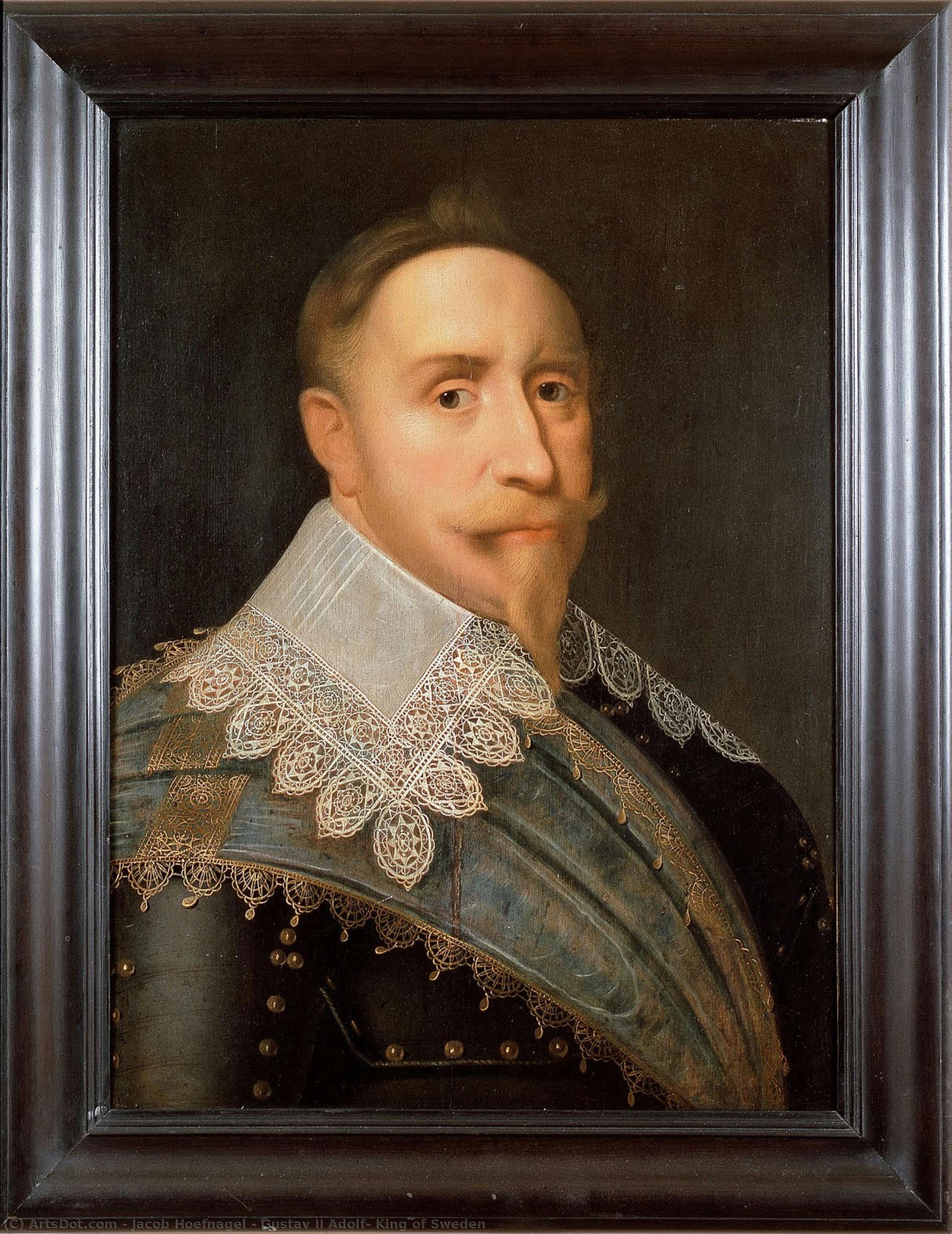
 プレビュー
プレビュー
 シェアする
シェアする シェアする
シェアする
 詳細を見る
詳細を見る

 ダウンロード
 似ている作品
 X線調査
X線調査 スライドショー
Gustav II Adolf, King of Sweden

 詳細を見る
詳細を見る
ジークレー/アートプリント
迅速な制作と多彩な仕上げオプションを備えた、ミュージアムクオリティのジークレーまたはキャンバスプリント。 ( 手描きの絵画を購入 画像を購入)




































作品のオリジナル比率に合わせた、当店の規定サイズからお選びください。

特定のフレームやスペースに合わせて、ご自身でサイズを指定することも可能です。選択されたサイズが元の画像の比率と一致しない場合、作品をトリミングするか、鏡面反射または単色での塗りつぶしによって画像を拡張いたします。制作を開始する前に、ご確認用のデジタルモックアップをお送りいたします。
画面上のプレビューには、実際のトリミングや拡張は反映されませんのでご注意ください。最終的な構図を正確に確認できるのは、モックアップのみとなります。
カスタムサイズも承っておりますが、元の比率を維持するためには、あらかじめ用意されたリストからサイズを選択することをお勧めいたします。


 ガラスオプションは、110cm未満のサイズでのみご利用いただけます。

Gustav II Adolf, King of Sweden
ジークレー/アートプリント
複製画のサイズ
-


合計金額
$ 62
関連作品









アーティストの略歴
Jacob Hoefnagel: A Renaissance Naturalist and Court Artist
Born in Antwerp around 1573, Jacob Hoefnagel’s life was a vibrant tapestry woven from artistic pursuits, diplomatic endeavors, and the shifting currents of European politics. More than simply a painter, he was a multifaceted figure – a miniaturist, draftsman, art dealer, diplomat, merchant, and even a political player during a tumultuous era. His legacy rests primarily on his remarkably detailed illustrations of natural history subjects, a field where his meticulous observation and artistic skill converged to create works that continue to fascinate and inform us today. Hoefnagel’s career unfolded against the backdrop of the late Renaissance and early Baroque periods, a time of burgeoning scientific inquiry and artistic experimentation.
His early life was deeply intertwined with the artistic lineage of his father, Joris Hoefnagel, a renowned miniaturist and court painter to the Dukes of Bavaria and Emperor Rudolf II. Unlike his father, who began as a merchant dealing in luxury goods, Jacob received formal training under Abraham Liesaert in Antwerp’s Guild of Saint Luke, marking a deliberate shift towards a dedicated artistic career. This structured education provided him with the foundational skills necessary for his later success, though it was arguably his experiences outside the confines of the guild – his travels and interactions within various European courts – that truly shaped his distinctive style.
The Court Artist and Scientific Observation
Hoefnagel’s rise to prominence began with his publication in 1592 of *Archetypa studiaque patris Georgii Hoefnagelii*, a groundbreaking collection of engravings depicting plants, insects, and small animals. This work, meticulously copied from his father's drawings, established him as a skilled illustrator and demonstrated an early fascination with the natural world. His subsequent years were spent at the court of Rudolf II in Prague, a position he held until 1613. During this time, he produced a remarkable body of work that blended Mannerist elegance with a burgeoning scientific approach to observation – a hallmark of his artistic identity.
The works created during his time at the Prague court are particularly noteworthy. *Orpheus charming the animals* (circa 1613) exemplifies this fusion, showcasing a dramatic scene rendered in a late Mannerist style, yet imbued with an astonishing level of detail and realism. Similarly, *Winter* (1618) captures a frozen landscape with a precise attention to texture and light, reflecting the growing interest in scientific understanding of natural phenomena. These paintings weren’t merely decorative; they were carefully constructed studies, demonstrating Hoefnagel's commitment to accurate representation.
A Turbulent Life: Politics and Exile
Hoefnagel’s life was not without its challenges. Financial difficulties plagued him throughout his career, often attributed to the court’s failure to consistently pay his salary. He became deeply involved in the political turmoil of the Thirty Years' War, siding with Frederick V, the Protestant Winter King of the Palatinate, against the Catholic Habsburg dynasty. This allegiance ultimately led to his downfall; he was convicted *in absentia* of embezzlement and all his possessions were confiscated. This period marked a significant turning point in his life, forcing him into exile.
Driven by political conviction, Hoefnagel sought refuge in the Dutch Republic, where he served as an agent for the Bohemian estates. He spent several years in Amsterdam, engaging in trade and diplomatic activities. His experiences during this time undoubtedly influenced his artistic output, adding a layer of complexity to his depictions of human interaction and social dynamics. His final years were marked by continued travel and shifting allegiances, culminating in his death around 1632 in Hamburg.
Notable Works and Lasting Legacy
Jacob Hoefnagel’s artistic output is remarkably diverse, encompassing portraits, topographical views, emblems, and of course, his celebrated natural history illustrations. His *A Young Man Caressing an Old Woman* (circa 1605) offers a poignant example of his ability to convey complex emotions through subtle gestures and nuanced expressions – a testament to his skill as a portraitist. His meticulous depictions of insects, flowers, and animals were not simply aesthetically pleasing; they represented a significant contribution to the burgeoning field of natural history illustration.
While he may not be as widely recognized as some of his contemporaries, Jacob Hoefnagel’s work holds a unique place in art history. He stands as a bridge between the artistic conventions of the Renaissance and the scientific observation that would characterize the early Baroque period. His legacy lies not only in the beauty of his paintings but also in his pioneering approach to naturalistic illustration – an approach that continues to inspire artists and researchers alike. His detailed studies remain valuable resources for understanding the flora and fauna of his era, offering a glimpse into a world where art and science were inextricably linked.
Jacob Hoefnagel
1575 - 1632 , Belgium
基本情報
- Artistic Movement Or Style: Mannerism, Natural history
- Artists Or Movements Influenced By This Artist: ['Abraham Liesaert']
- Artists Who Influenced This Artist: ['Joris Hoefnagel']
- Date Of Birth: 1573, Antwerp
- Date Of Death: c.1632, Hamburg
- Full Name: Jacob Hoefnagel
- Nationality: Flemish
- Notable Artworks:
- Orpheus charming animals
- Winter
- A Young Man Caresses an Old Woman
- Place Of Birth: Antwerp, Belgium

