

 プレビュー
プレビュー
 プリントを購入
 シェアする
シェアする シェアする
シェアする
 詳細を見る
詳細を見る

 ダウンロード
 似ている作品
 X線調査
X線調査 スライドショー
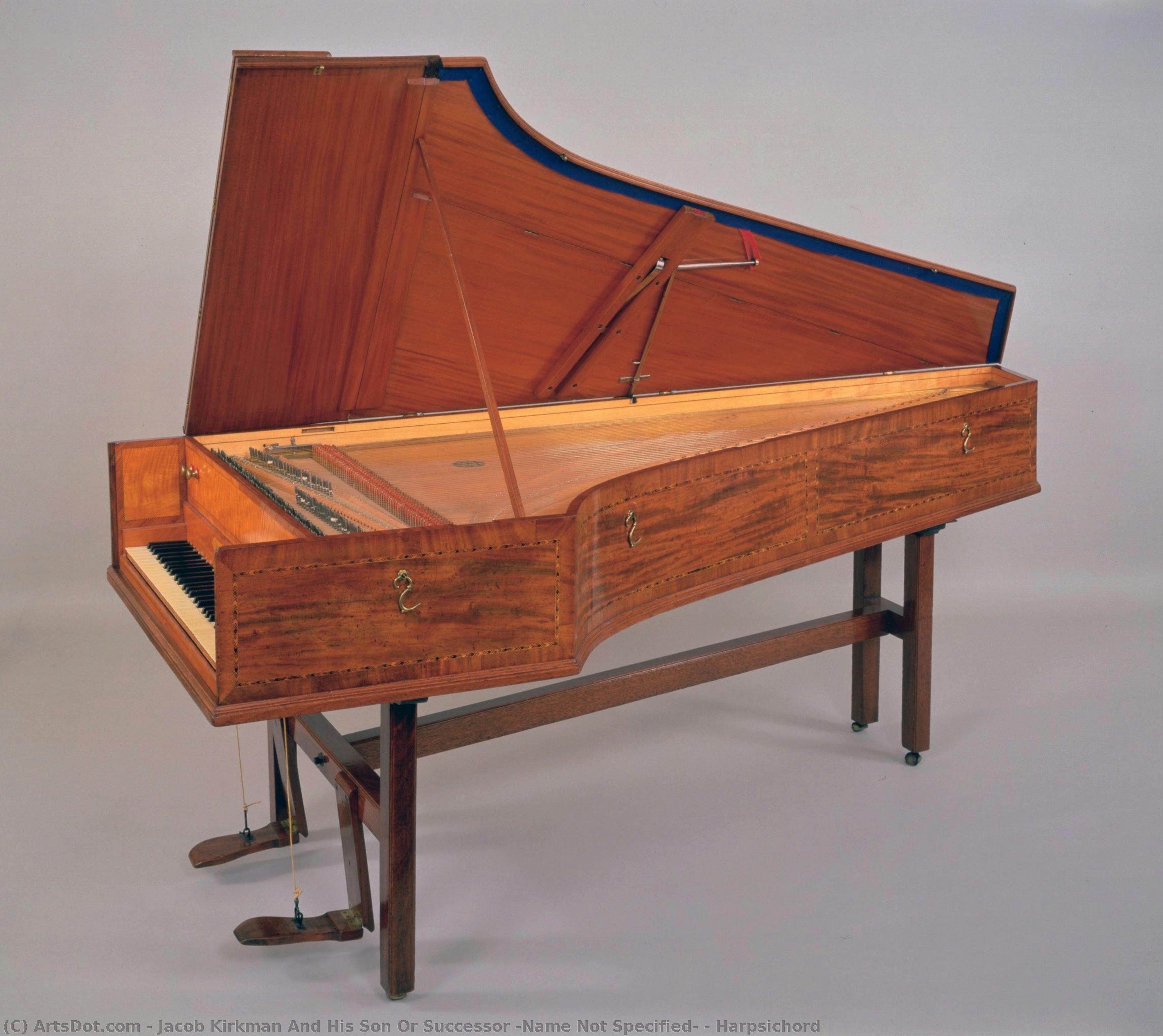
Harpsichord

 詳細を見る
詳細を見る




































作品のオリジナル比率に合わせた、当店の規定サイズからお選びください。

特定のフレームやスペースに合わせて、ご希望のサイズをご入力いただけます。選択されたサイズが元の画像の比率と異なる場合、アートワークをトリミングするか、手描きで要素を追加して絵画を拡張いたします。デジタルモックアップ を制作し、制作開始前にご確認(承認)をいただきます。
画面上のプレビューは、実際のトリミングや拡張を正確に反映しているものではありません。最終的な構図は、モックアップによってのみ正確にご確認いただけます。
カスタムサイズもご利用いただけますが、元の比率を維持するためには、あらかじめ用意されたリストからサイズを選択することをお勧めいたします。
ご注文後、ArtsDot.com チームより詳細な指示をお送りするとともに、仕上がりイメージ(モックアップ)をご提供いたします。


 ガラスオプションは、110cm未満のサイズでのみご利用いただけます。

Harpsichord
複製技法
複製画のサイズ
-


合計金額
$ 263
関連作品










アーティストの略歴
Jacob Kirkman: The Alsatian Artisan Who Shaped English Harpsichord
Born in Bischweiler, Alsace – a region steeped in musical tradition – Jacob Kirkman’s journey to becoming one of England's most celebrated harpsichord makers is a testament to ambition, skill, and the enduring legacy of craftsmanship. His life story intertwines with the burgeoning musical landscape of 18th-century London, where he established himself as a master instrument builder, ultimately serving Queen Charlotte herself. Kirkman’s influence extended far beyond his own lifetime, shaping the evolution of English harpsichord design and contributing significantly to the nation's rich musical heritage.
Kirkman’s early life remains somewhat shrouded in mystery, but it is known that he began as a cabinetmaker – a practical foundation that undoubtedly informed his meticulous attention to detail and mastery of materials. Around the early 1730s, seeking opportunity, he traveled to England, immersing himself in the work of an obscure Flemish harpsichord maker. This apprenticeship proved crucial, providing him with the foundational knowledge of instrument construction necessary for his future success. He quickly distinguished himself through his technical skill and artistic sensibility, eventually securing a position as harpsichord maker to Queen Charlotte in 1763 – a remarkable achievement that cemented his reputation within the highest echelons of British society.
The Kirkman Family Legacy: A Dynasty of Instrument Makers
Kirkman’s story is inextricably linked to that of his family. He wasn't a solitary genius, but rather part of a thriving lineage of instrument makers – a dynasty known as the Kirckmans (or Kirchmanns). His nephew, Abraham Kirkman, joined him in partnership around 1772, and later, Abraham’s son Joseph continued the family tradition. This collaborative environment fostered innovation and ensured the continuation of their distinctive style. The Kirkman firm became renowned for producing a significant number of harpsichords during this period, rivaling the output of other prominent makers like Burkat Shudi.
The Kirkman family’s approach to instrument building was deeply rooted in the traditions of the Low Countries – specifically, the intricate designs and techniques developed by Flemish master craftsmen. They adopted the Ruckers-type harpsichord construction, characterized by its robust frame, sophisticated action, and elegant soundboard. However, the Kirkmans quickly adapted these influences to create a uniquely English style, incorporating distinctive features such as elaborate veneering, exquisite marquetry, and intricate inlay work on the keywell – the area surrounding the keyboard.
A Distinctive Style: Inlay, Marquetry, and the Evolution of Design
What truly set Kirkman’s harpsichords apart was their exceptional aesthetic quality. The family's artisans were celebrated for their mastery of inlay and marquetry, transforming the instruments into miniature works of art. The keywells, in particular, were often adorned with stunning floral patterns, geometric designs, and elaborate scenes – showcasing a remarkable level of skill and attention to detail. These decorative elements weren’t merely superficial; they contributed significantly to the instrument's overall sound quality by subtly altering the resonance within the case.
The Kirkman firm developed three distinct models of harpsichord: single-manual instruments with eight-foot and four-foot ranges, as well as double-manual instruments offering expanded tonal possibilities. A notable innovation was the introduction of a “buff stop,” a mechanism that allowed the player to briefly amplify the sound of certain notes – a feature highly valued by musicians at the time. The Kirkmans also experimented with the ‘machine stop’, which muted the strings, allowing for practice without disturbing neighbors.
Legacy and Historical Significance
Jacob Kirkman’s impact on English harpsichord making is undeniable. His instruments were prized by royalty, nobility, and musicians alike, contributing significantly to the development of musical performance in England during the 18th century. More than a hundred Kirkman harpsichords survive today, offering invaluable insights into the craftsmanship and design trends of the period. These surviving instruments serve as tangible reminders of Kirkman’s legacy – a testament to the skill, artistry, and enduring influence of an Alsatian artisan who helped shape the soundscape of England.
Kirkman's work is frequently studied by musicologists and instrument historians, ensuring that his contributions to musical history are not forgotten. His instruments continue to be played and appreciated for their beauty, craftsmanship, and exceptional tonal qualities, solidifying his place as one of the most important figures in English harpsichord making.
jacob kirkman and his son or successor (name not specified)
1710 - 1792 , France
基本情報
- Artistic Movement Or Style: Harpsichord maker
- Date Of Birth: March 4, 1710
- Date Of Death: 1792
- Full Name: Jacob Kirkman & Son
- Nationality: English (Alsatian origin)
- Notable Artworks: ['Harpsichord 1 manual – 8’”, “Harpsichord 1 manual – 8’ – 8’ – 4’”, “Harpsichord 2 manuals – 8’ – 8’ – 4’”\n ],\n "Artists who influenced this artist": [\n "Hermann Tabel",\n "Flemish harpsichord makers"\n ],\n "Artists or movements influenced by this artist": [\n "Burkat Shudi",\n "English Harpsichord Makers"']
- Place Of Birth: Bischweiler, France

