

 プレビュー
プレビュー
 プリントを購入
 シェアする
シェアする シェアする
シェアする
 詳細を見る
詳細を見る

 ダウンロード
 似ている作品
 X線調査
X線調査 スライドショー
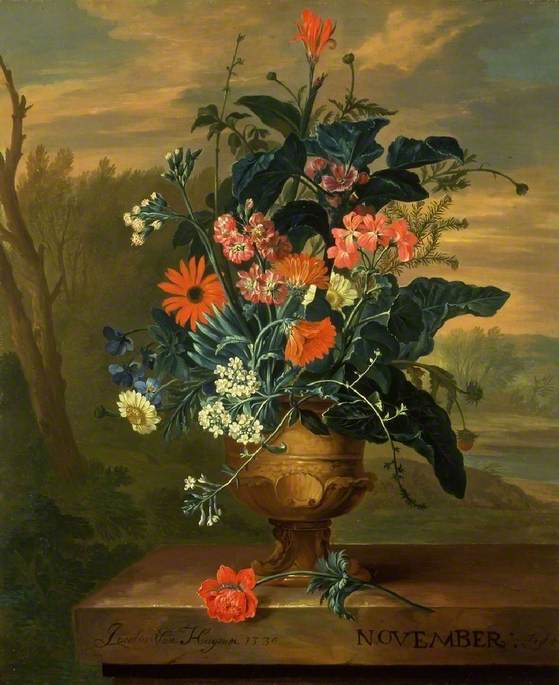
Twelve Months of Flowers November
 Oil On Canvas
- WallArt
- Dutch Golden Age
 76.0 x 63.0 cm
 Fitzwilliam College
 詳細を見る
詳細を見る




P118B $10

P118H $10

P118W $10

P438Z $10

P508JH $12

P508YH $12

P805H $10

P805Z $10

P919BZ $10

P919G $10

P919XJ $10

P959ZH $10

P968JZ $12

W106C $8

W218G $10

W218JH $8

W218Y $10

W307PJ $10

W316G $10

W316PJ $8

W316Y $10

W398PJ $8

W4111J $10

W500HY $15

W500JH $15

W692G $12

W849H $8

W940BG $15

W953PJ $8




作品のオリジナル比率に合わせた、当店の規定サイズからお選びください。

特定のフレームやスペースに合わせて、ご希望のサイズをご入力いただけます。選択されたサイズが元の画像の比率と異なる場合、アートワークをトリミングするか、手描きで要素を追加して絵画を拡張いたします。デジタルモックアップ を制作し、制作開始前にご確認(承認)をいただきます。
画面上のプレビューは、実際のトリミングや拡張を正確に反映しているものではありません。最終的な構図は、モックアップによってのみ正確にご確認いただけます。
カスタムサイズもご利用いただけますが、元の比率を維持するためには、あらかじめ用意されたリストからサイズを選択することをお勧めいたします。
ご注文後、ArtsDot.com チームより詳細な指示をお送りするとともに、仕上がりイメージ(モックアップ)をご提供いたします。


 ガラスオプションは、110cm未満のサイズでのみご利用いただけます。

Twelve Months of Flowers November
複製技法
複製画のサイズ
-


合計金額
$ 263
作品解説
A Symphony of Autumnal Bloom: Jacob van Huysum's "Twelve Months of Flowers - November"
Step into a world where botanical artistry meets the gentle embrace of autumn with Jacob van Huysum’s exquisite painting, “Twelve Months of Flowers – November.” This captivating work, likely part of a larger series dedicated to each month’s floral bounty, transports us to a serene outdoor setting, bathed in soft light and brimming with the vibrant hues of late fall. More than just a still life, it's a celebration of nature's enduring beauty, meticulously rendered with a level of detail that speaks volumes about the Dutch Golden Age’s fascination with observation and artistry.
The Painterly World of Jacob van Huysum
Jacob van Huysum (1687-1740) emerged from a distinguished lineage of flower painters in Leiden, inheriting both skill and artistic vision from his father, Justus, and brother, Jan. While influenced by his family’s legacy, Jacob forged his own path, developing a style characterized by an unparalleled attention to detail and a remarkable ability to capture the fleeting essence of blossoms. His work stands as a testament to the Dutch Golden Age's dedication to scientific illustration combined with artistic expression. He later moved to England where he gained patronage from influential figures like Sir Robert Walpole, contributing significantly to decorative art at Houghton Hall and collaborating on the monumental *Historia Plantarum Rariorum*, a landmark achievement in botanical documentation.
A November Arrangement: Color, Composition, and Technique
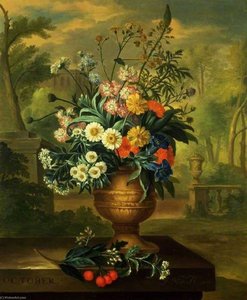
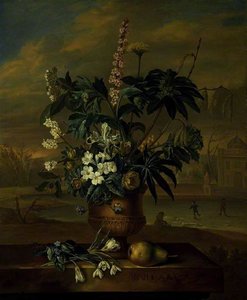
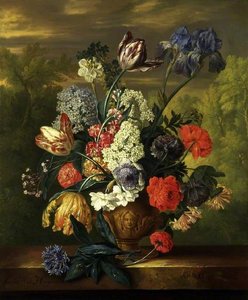
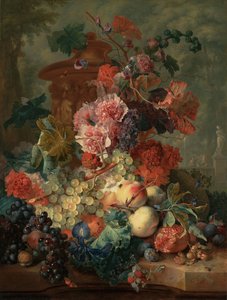
“Twelve Months of Flowers – November” presents a lavish floral arrangement contained within an ornate vase—likely bronze or brass, its intricate details hinting at antique craftsmanship. The composition is a riot of color; deep reds, fiery oranges, soft pinks, pristine whites, vibrant blues, and sunny yellows intertwine with lush green foliage. Van Huysum’s technique is masterful. He employs a realistic style, meticulously capturing the textures of petals, leaves, and stems. Light dances across the surfaces, creating subtle highlights and shadows that lend depth and dimension to each bloom. The background, rendered in softer tones, serves as a gentle backdrop, allowing the vibrant colors of the flowers to truly shine. Note the delicate rendering of water droplets on some blossoms—a hallmark of Van Huysum’s skill, demonstrating his ability to capture not just the appearance but also the very essence of life.
Symbolism and Historical Context
The tradition of depicting floral arrangements by month was popular during the 17th and 18th centuries. Each flower held symbolic meaning—a language understood by contemporary viewers. While specific interpretations can vary, November’s selection likely evokes themes of transition, reflection, and the beauty found even as nature prepares for winter's rest. The painting reflects a broader cultural fascination with botany and natural history that flourished during this period. The meticulous detail and realistic rendering align perfectly with the scientific spirit of the age, while the opulent vase and rich colors speak to the prosperity and refined tastes of the Dutch Golden Age elite who commissioned such works.
An Enduring Legacy: Beauty Captured in Time
“Twelve Months of Flowers – November” is more than just a beautiful painting; it’s a window into a bygone era, a testament to the skill of Jacob van Huysum, and a celebration of nature's enduring beauty. The meticulous detail, vibrant colors, and serene composition combine to create an artwork that continues to captivate viewers centuries later—a timeless masterpiece perfect for enriching any space with its elegance and charm.
関連作品
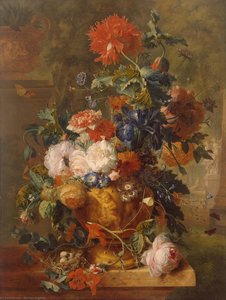
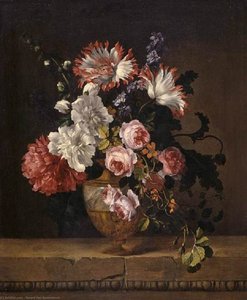
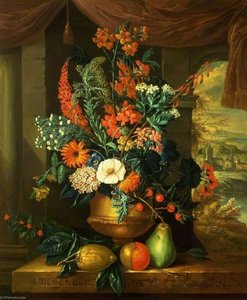
アーティストの略歴
The Painter of Flowers: The Life and Legacy of Jacob van Huysum
In the grand tapestry of the Dutch Golden Age, few threads shine with as much delicate brilliance as the botanical works of Jacob van Huysim. A master of the ephemeral, he possessed an uncanny ability to freeze the fleeting vitality of a blossom within the permanence of oil on canvas. Born around 1688 in Amsterdam, Jacob was not merely an artist but a scion of a profound artistic dynasty. He descended from a lineage deeply rooted in the Leiden tradition, receiving his formative training under the watchful eye of his father, Justus van Huysum. This early immersion in the meticulous study of nature provided him with more than just technical skill; it instilled a scientific reverence for the natural world that would define his entire professional trajectory.
While his brother, Jan van Huysum, would also achieve immense fame, Jacob carved out a distinctive niche by blending the decorative elegance of still life with the rigorous precision of scientific illustration. His development was marked by an extraordinary command over texture and light, allowing him to render the velvety petal of a rose or the translucent dewdrop on a leaf with startling realism. This mastery was not confined to the borders of the Netherlands. Around 1721, Jacob’s journey took him to London, where his talent caught the attention of the British elite. Under the patronage of influential figures such as Sir Robert Walpole and Mr. Lockyear, he contributed to the opulent decorative schemes of legendary estates like Houghton Hall, bringing a touch of Dutch botanical splendor to the heart of English aristocracy.
A Monumental Contribution to Botanical Science
Beyond the singular beauty of his standalone canvases, Jacob van Huysum’s most enduring historical significance lies in his role as a bridge between art and science. He was a pivotal figure in shaping the visual language used to document the natural world during an era of global exploration. This is most vibrantly realized in his monumental collaboration with John Martyn on the Historia Plantarum Rariorum. This ambitious undertaking, supported by the artistry of Elisha Kirkall, produced fifty meticulously engraved plates that captured exotic flora from distant lands, including the Cape of Good Hope, North America, and Mexico.
Through this work, Jacob’s art transcended mere decoration to become a vital tool for botanical discovery. His ability to translate the complex structures of rare plants into accessible, breathtaking imagery helped fuel the scientific curiosity of the 18th century. The following elements characterize his most celebrated contributions:
- Scientific Precision: An unwavering commitment to anatomical accuracy in every stem, stamen, and leaf.
- Global Perspective: The introduction of exotic, non-European species into the European artistic consciousness.
- Technical Innovation: A sophisticated use of light and shadow that gave three-dimensional life to two-dimensional engravings.
The Eternal Bloom: Artistic Mastery and Enduring Influence
The works of Jacob van Huysum, such as his evocative Twelve Months of Flowers series, continue to captivate audiences with their rhythmic composition and vibrant palettes. Whether depicting the crisp chill of a January frost or the sun-drenched abundance of May, his paintings evoke a sense of seasonal continuity and the inexorable cycle of life. His technique—characterized by fine brushwork and an almost microscopic attention to detail—ensured that each piece functioned as both a feast for the eyes and a record of biological wonder.
Though he passed away in 1740, leaving behind a legacy intertwined with his father and brother, Jacob van Huysum remains a singular figure. He did not merely paint flowers; he celebrated the very essence of life itself. His ability to marry the aesthetic demands of the Baroque period with the burgeoning empirical spirit of the Enlightenment ensures that his work remains a cornerstone of botanical art history, inviting every viewer to pause and admire the intricate, fleeting miracles of the natural world.
Jacob van Huysum
1687 - 1740
基本情報
- Artistic Movement Or Style: Botanical painting
- Artists Or Movements Influenced By This Artist: ['William Houstoun']
- Artists Who Influenced This Artist:
- Jan van Huysum
- Georg Dionysius Ehret
- Date Of Birth: 1687
- Date Of Death: 1740
- Full Name: Jacob van Huysum
- Nationality: Dutch
- Notable Artworks:
- Virga aurea
- Abrikozen en pruimen
- Place Of Birth: Amsterdam, Netherlands
関連記事

黄金世紀の巨匠たち:バロック絵画が彩る10選|ArtsDot
オランダ黄金時代の10大傑作を紐解く!レンブラント、フェルメール…バロック絵画の魅力と時代背景を深く探求。ArtsDotで、至高のアートコレクションと空間演出のヒントを見つけよう。高品質なアートプリントで、お部屋を華やかに。

レンブラント傑作25選:光と影の巨匠、魂を揺さぶる名画の世界 | ArtsDot
レンブラントの傑作25選。光と影の魔術師が描いた魂を揺さぶる名画の世界へ。美術史に残る自画像、夜警、宗教画…ArtsDotで高品質なアートプリントやインテリアアートをお楽しみください。コレクションはこちら→

Golden Age Reflections: Dutch Baroque Painting & Cultural Innovation
Explore the Dutch Golden Age of painting! Discover key artists like Vermeer & ter Borch, their innovative techniques, and the rich cultural context behind these Baroque masterpieces. Learn about collecting & appreciating this iconic art period.
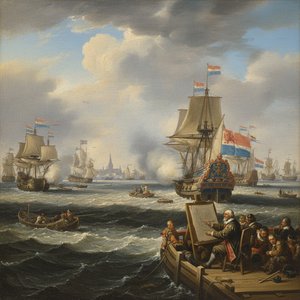
Willem van de Velde the Elder: Master of Maritime Painting & Chronicler of the Dutch Golden Age
Discover the captivating maritime paintings of Willem van de Velde the Elder, a master chronicler of the Dutch Golden Age. Explore his unparalleled realism and lasting influence on naval art history.

Illuminating Innovation: Exploring the Dutch Golden Age of Painting
Explore the Dutch Golden Age of painting with ArtsDot. Discover Rembrandt, Vermeer & other Masters. Learn about key characteristics, iconic artworks, and lasting influence. Expert insights for collectors & enthusiasts.

