

 プレビュー
プレビュー
 シェアする
シェアする シェアする
シェアする
 詳細を見る
詳細を見る

 ダウンロード
 似ている作品
 X線調査
X線調査 スライドショー
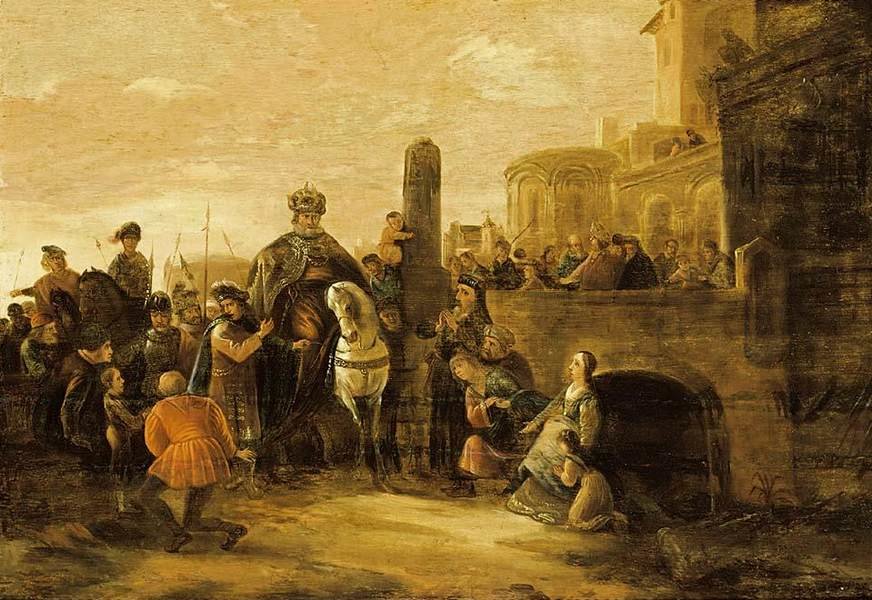
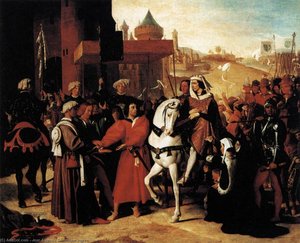
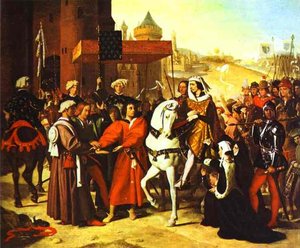
The Triumph Of Mordechai

 詳細を見る
詳細を見る
ジークレー/アートプリント
迅速な制作と多彩な仕上げオプションを備えた、ミュージアムクオリティのジークレーまたはキャンバスプリント。 ( 手描きの絵画を購入 画像を購入)




































作品のオリジナル比率に合わせた、当店の規定サイズからお選びください。

特定のフレームやスペースに合わせて、ご自身でサイズを指定することも可能です。選択されたサイズが元の画像の比率と一致しない場合、作品をトリミングするか、鏡面反射または単色での塗りつぶしによって画像を拡張いたします。制作を開始する前に、ご確認用のデジタルモックアップをお送りいたします。
画面上のプレビューには、実際のトリミングや拡張は反映されませんのでご注意ください。最終的な構図を正確に確認できるのは、モックアップのみとなります。
カスタムサイズも承っておりますが、元の比率を維持するためには、あらかじめ用意されたリストからサイズを選択することをお勧めいたします。


 ガラスオプションは、110cm未満のサイズでのみご利用いただけます。

The Triumph Of Mordechai
ジークレー/アートプリント
複製画のサイズ
-


合計金額
$ 62
関連作品

アーティストの略歴
Michelangelo Merisi da Caravaggio: A Revolutionary of Light and Shadow
Michelangelo Merisi, better known as Caravaggio, remains one of the most intensely debated and profoundly influential figures in art history. Born in Milan in 1571, his life was a whirlwind of dramatic events—a rebellious youth, a period of intense artistic innovation, accusations of murder, and ultimately, an exile marked by continued turmoil. His brief but explosive career irrevocably altered the course of painting, establishing techniques that would be imitated and adapted for generations to come. Caravaggio’s legacy rests not just on his stunning works, but also on the radical departure he made from established artistic conventions, forging a new path toward realism and emotional intensity within religious art.Early Life and Artistic Beginnings
Caravaggio's early life remains shrouded in some mystery. He was born into a family of artists – his father and stepfather were both painters – and received a basic artistic education in Milan. However, it wasn’t until he moved to Rome in 1592 at the age of twenty-one that his career truly began to take shape. Rome, then the epicenter of European art, was a magnet for young artists seeking patronage and recognition. Initially struggling to find work, Caravaggio specialized in still lifes – vibrant arrangements of fruits and flowers – selling them on the streets to supplement his income. These early works, though modest, demonstrated an innate talent for capturing texture and color with remarkable immediacy. Crucially, he began experimenting with a technique that would become his signature: dramatic lighting, known as *tenebrism*. This involved stark contrasts between light and shadow, pushing figures forward against the dark background of the canvas – a device that created a sense of theatrical drama and heightened emotional impact.The Rise to Fame and Revolutionary Techniques
Caravaggio’s fortunes dramatically shifted in 1595 when he caught the eye of Cardinal Francesco del Monte, a prominent patron known for his discerning taste. The cardinal provided Caravaggio with quarters and commissions, launching him into the Roman art scene. His first major public works – *The Calling of Saint Matthew* and *The Martyrdom of Saint Matthew*, painted for the Contarelli Chapel in the church of San Luigi dei Francesi – were groundbreaking. These paintings shattered traditional conventions by depicting biblical scenes with a startling realism and immediacy. Caravaggio didn’t idealize his subjects; instead, he used ordinary people—often from the streets—as models, imbuing them with dignity and humanity. He placed these figures directly within the picture plane, as if they were stepping out of the canvas and into the viewer's space. Furthermore, his masterful use of *tenebrism* created a powerful sense of drama, drawing attention to key moments and amplifying the emotional intensity of the scenes. As one contemporary critic observed, Caravaggio’s lighting was “as though in a room with a single window and the walls painted black,” creating an almost unnaturally intense effect.Controversy and Exile
Despite his rapid success, Caravaggio's life was marked by instability and conflict. He possessed a volatile temper, engaging in frequent brawls and acts of violence – including slashing a man’s cloak, throwing an artichoke at a waiter, and even assaulting a police officer. In 1606, he tragically escalated a dispute with a young man into a deadly swordfight, killing him. Rather than face justice, Caravaggio fled Rome, abandoning his reputation and leaving behind a trail of scandal. He sought refuge in Naples, then traveled to Malta, where he was granted membership in the Knights of Malta after painting *The Beheading of Saint John the Baptist*. However, his temper flared again, leading to imprisonment and expulsion from the order.Later Years and Legacy
Caravaggio spent his final years in Sicily, where he suffered a severe injury during another bar brawl, leaving him permanently scarred. He eventually returned to Naples, where he continued to paint until his death in 1610 at the age of thirty-nine. The circumstances surrounding his demise remain uncertain, though illness is often cited as a contributing factor. Despite his short life and turbulent existence, Caravaggio’s influence on European art was immense. His innovations in lighting, composition, and modeling—particularly *tenebrism*—were widely imitated by artists throughout Europe, shaping the course of Baroque painting for decades to come. Artists like Rembrandt, Rubens, and Velázquez all owe a debt to Caravaggio's revolutionary approach. His work continues to captivate viewers today with its dramatic intensity, emotional depth, and unparalleled realism, solidifying his place as one of history’s most important and enduring artists.
jacob willemsz de wet
1610 - 1675 , Netherlands
基本情報
- Artistic Movement Or Style: Caravaggism
- Artists Or Movements Influenced By This Artist: ['Baroque']
- Artists Who Influenced This Artist: ['Leonardo da Vinci']
- Date Of Birth: 1571
- Date Of Death: 1610
- Full Name: Michelangelo Merisi da Caravaggio
- Nationality: Italian
- Notable Artworks:
- The Calling of Saint Matthew
- Supper at Emmaus
- David and Goliath
- Place Of Birth: Milan, Italy
関連記事

Golden Age Reflections: Dutch Baroque Painting & Cultural Innovation
Explore the Dutch Golden Age of painting! Discover key artists like Vermeer & ter Borch, their innovative techniques, and the rich cultural context behind these Baroque masterpieces. Learn about collecting & appreciating this iconic art period.

黄金世紀の巨匠たち:バロック絵画が彩る10選|ArtsDot
オランダ黄金時代の10大傑作を紐解く!レンブラント、フェルメール…バロック絵画の魅力と時代背景を深く探求。ArtsDotで、至高のアートコレクションと空間演出のヒントを見つけよう。高品質なアートプリントで、お部屋を華やかに。
Pieter de Hooch: Illuminating Dutch Domestic Life & Golden Age Charm
Explore the captivating world of Pieter de Hooch, a master of Dutch Golden Age painting. Discover his innovative use of light, intimate domestic scenes, and lasting influence on art history. Learn more at ArtsDot.

Dutch Baroque Masters: 10 Paintings That Shaped an Era | ArtsDot
Journey through the Golden Age with our guide to the Top 10 Dutch Baroque masterpieces! Explore iconic paintings by Rembrandt, Vermeer & Frans Hals. Find museum-quality art reproductions and elevate your home decor at ArtsDot.com.

Illuminating Innovation: Exploring the Dutch Golden Age of Painting
Explore the Dutch Golden Age of painting with ArtsDot. Discover Rembrandt, Vermeer & other Masters. Learn about key characteristics, iconic artworks, and lasting influence. Expert insights for collectors & enthusiasts.

