

 プレビュー
プレビュー
 プリントを購入
 シェアする
シェアする シェアする
シェアする
 詳細を見る
詳細を見る

 ダウンロード
 似ている作品
 X線調査
X線調査 スライドショー
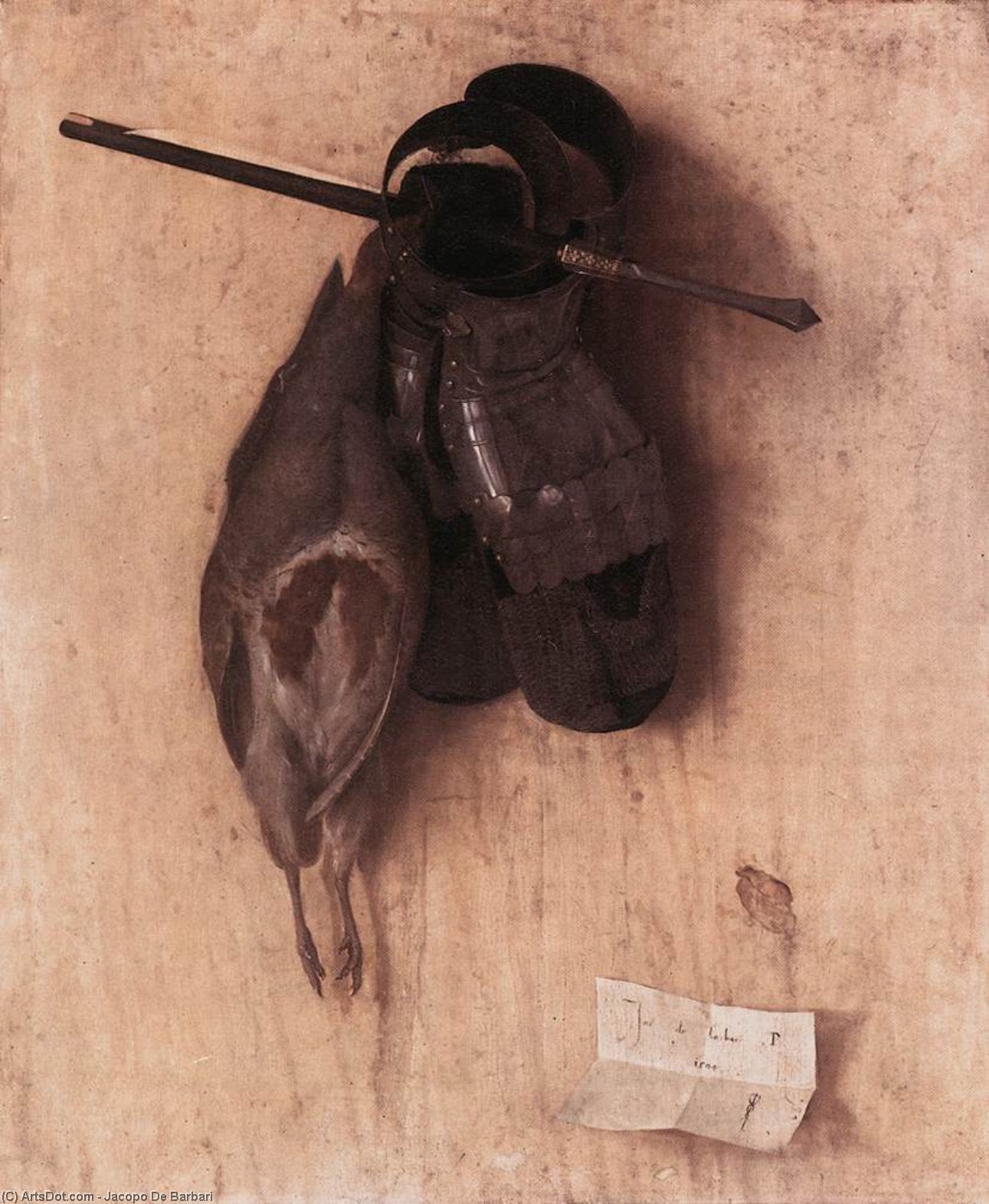
Still-Life with Partridge and Iron Gloves
 Oil On Canvas
- WallArt
- Renaissance
 1504
1504- Renaissance
 52.0 x 42.0 cm
 アルテ・ピナコテーク
 詳細を見る
詳細を見る




P118B $10

P118H $10

P118W $10

P438Z $10

P508JH $12

P508YH $12

P805H $10

P805Z $10

P919BZ $10

P919G $10

P919XJ $10

P959ZH $10

P968JZ $12

W106C $8

W218G $10

W218JH $8

W218Y $10

W307PJ $10

W316G $10

W316PJ $8

W316Y $10

W398PJ $8

W4111J $10

W500HY $15

W500JH $15

W692G $12

W849H $8

W940BG $15

W953PJ $8




作品のオリジナル比率に合わせた、当店の規定サイズからお選びください。

特定のフレームやスペースに合わせて、ご希望のサイズをご入力いただけます。選択されたサイズが元の画像の比率と異なる場合、アートワークをトリミングするか、手描きで要素を追加して絵画を拡張いたします。デジタルモックアップ を制作し、制作開始前にご確認(承認)をいただきます。
画面上のプレビューは、実際のトリミングや拡張を正確に反映しているものではありません。最終的な構図は、モックアップによってのみ正確にご確認いただけます。
カスタムサイズもご利用いただけますが、元の比率を維持するためには、あらかじめ用意されたリストからサイズを選択することをお勧めいたします。
ご注文後、ArtsDot.com チームより詳細な指示をお送りするとともに、仕上がりイメージ(モックアップ)をご提供いたします。


 ガラスオプションは、110cm未満のサイズでのみご利用いただけます。

Still-Life with Partridge and Iron Gloves
複製技法
複製画のサイズ
-


合計金額
$ 263
A Quiet Meditation on Mortality and Materiality
Before you stands a captivating still life, a moment suspended in time that invites deep contemplation. This piece, Still-Life with Partridge and Iron Gloves by Jacopo de' Barbari, is far more than a mere arrangement of objects; it is a carefully orchestrated meditation on the transience of life set against the permanence of crafted things. The composition draws the eye immediately to the central grouping—the pair of gloves resting delicately upon one another, guarded above by an intriguing piece of ironwork, perhaps salvaged from some forgotten helmet. These mundane yet evocative items anchor the scene, suggesting narratives untold and lives lived.
The Artistry of Jacopo de' Barbari
Jacopo de’ Barbari, a Venetian pioneer whose career remains wrapped in scholarly mystery, imbues this work with an undeniable sense of sophisticated realism. While his biography whispers of enigmatic origins, the resulting art speaks with crystalline clarity. His technique allows him to render textures—the soft down of the hanging partridge, the cool gleam of aged iron, and the subtle nap of fabric—with breathtaking verisimilitude. The painting possesses a quiet dignity; it is not loud in its drama but profound in its suggestion. To own a reproduction of this work is to possess a piece of Venetian Renaissance mastery, capturing an era where art served as both decoration and deep philosophical inquiry.
Symbolism Woven into the Still Life
The symbolism within this 1504 composition is rich and layered, characteristic of Northern Italian still life traditions. The partridge, hanging with its head bowed, serves as a potent memento mori—a gentle reminder of decay and the cycle of nature. Juxtaposed against this organic fragility are the iron gloves and helmet fragment. Iron speaks of human endeavor, defense, and the passage of time through oxidation. Together, these elements create a dialogue: the fleeting beauty of life versus the enduring, yet ultimately weathered, artifacts of human experience. It asks the viewer to consider what truly endures.
Integrating Art into Modern Living
For the discerning collector or interior designer, this artwork offers unparalleled depth for any curated space. Its muted palette and sophisticated composition allow it to harmonize beautifully within settings ranging from richly paneled libraries to minimalist modern galleries. The quiet drama inherent in the piece adds an intellectual weight that elevates a room beyond mere aesthetics. A high-quality reproduction allows you to bring this historical resonance into your contemporary life, serving not just as decoration, but as a thoughtful conversation starter for any gathering.
関連作品
アーティストの略歴
The Enigmatic Visionary of Venice and Nuremberg
Jacopo de’ Barbari remains one of the most captivating enigmas of the Renaissance, a master whose life story is as layered and complex as the trompe l'oeil illusions he perfected. While his precise origins are shrouded in the mists of history, contemporary accounts—including those from the legendary Albrecht Dürer—firmly anchor him to Venice. Though scholars debate whether he was born closer to 1450 or 1470, the artist’s presence in the historical record is undeniable and profound. He moved through the great courts of Europe not merely as a painter, but as a pioneer of perspective, bridging the gap between the delicate sensibilities of Italian art and the rigorous, detailed traditions of the Northern Renaissance.
His journey was one of remarkable geographical and stylistic expansion. Around 1500, Barbari embarked on a transformative odyssey that would redefine his artistic identity. Leaving the canals of Venice behind, he traveled to Germany, where he served under Emperor Maximilian I in Nuremberg. This period of intense cultural exchange saw him operating under the name Jacop Walch—a moniker likely derived from "Wälsch," a term used by Germans to denote a foreigner, specifically an Italian. His travels continued through the courts of Frederick III of Saxony and Joachim I of Brandenburg, allowing him to weave together the luminous color palettes of his Venetian roots with the meticulous, almost scientific precision characteristic of German masters.
A Master of Illusion and Detail
The true genius of Barbari lies in his ability to manipulate the viewer's perception, creating works that challenge the very boundary between art and reality. He is perhaps most celebrated for his groundbreaking contributions to the still life genre. In his celebrated works, such as the Still-Life with Partridge and Iron Gloves, he achieved a level of trompe l'oeil—or "deceive the eye"—that had not been seen since antiquity. By rendering textures like cold iron, soft leather, and organic plumage with such startling accuracy, he invited viewers into a meditative space where the permanence of crafted objects met the fleeting nature of life.
Beyond the intimate scale of his still lifes, Barbari demonstrated an unparalleled command over large-scale topographical art. His Plan of Venice, created in 1500, stands as a monumental achievement in printmaking. This breathtaking woodcut offers a bird's-eye view of the Venetian Republic at its zenith, presenting an aerial odyssey through intricate canals and islands. It is more than a map; it is a masterpiece of Renaissance cartography and artistic vision, showcasing a level of detail that captures the grandeur and complexity of the city with almost supernatural clarity.
Legacy and Artistic Influence
The historical significance of Jacopo de’ Barbari cannot be overstated. As one of the first Italian Renaissance artists of true stature to work extensively in Northern Europe, he acted as a vital conduit for artistic innovation. His style was deeply informed by the masters of his era, drawing strength from the linear perspective of Andrea Mantegna and the technical rigor of Albrecht Dürer. Yet, he was far from a mere imitator; his work possessed a highly individualistic spirit, characterized by a unique blend of Italian grace and Northern precision.
His contributions to the evolution of printmaking—through twenty-nine engravings and three massive woodcuts—left an indelible mark on the European artistic landscape. Even as his personal biography remains partially lost to time, his visual legacy endures through:
- The invention of modern still life: Establishing the foundations for the genre through the use of hyper-realistic textures and symbolic arrangements.
- Mastery of perspective: Utilizing trompe l'oeil techniques to expand the psychological depth of Renaissance painting.
- Cultural synthesis: Creating a stylistic bridge between the Mediterranean and Germanic artistic traditions, enriching the shared heritage of the Renaissance.

jacopo de barbari
1460 - 1516
基本情報
- Artistic Movement Or Style: Trompe l'oeil & Woodcuts
- Artists Or Movements Influenced By This Artist: ['Renaissance Art']
- Artists Who Influenced This Artist:
- Mantegna
- Dürer
- Date Of Birth: c. 1460/70
- Date Of Death: before 1516
- Full Name: Jacopo de' Barbari
- Nationality: Italian
- Notable Artworks:
- The Triumph of Death
- Mantegna’s Lamentation
- Place Of Birth: Venice, Italy
関連記事

ジャコポ・ティンコレット:至高の25選 – ヴェネツィア巨匠のドラマと光の世界 | ArtsDot
ジャコポ・ティンコレットの至高の25選。ドラマと光の世界を彩るヴェネツィア派巨匠の名画を紐解きます。ルネサンス絵画からバロック絵画まで、ArtsDotで高品質な複製画やインテリアアートを見つけましょう。傑作コレクションをオンラインで探求してください。
Silent Narratives: Exploring the Enduring Appeal of Still Life Painting Across Centuries
Explore the rich history of still life painting with ArtsDot. Discover Dutch Masters, decode vanitas symbolism & learn about collecting timeless art. Expert insights and museum-quality reproductions.
古典的静物画から現代抽象まで:ヴィラでのエンターテイメント空間を格上げする美術複製の世界
ルネサンスから現代アートまで、高品質な美術複製をArtsDot.comで。静物画、ヴァニタス、抽象絵画など、ヴィラ空間を格上げする一点を見つけましょう。カスタムメイドやアートアドバイザーによる無料相談も。
The Enduring Appeal of Still Life: A Historical & Contemporary Exploration
Explore the rich history & symbolism of still life painting with ArtsDot. Discover masterpieces from the Dutch Golden Age, learn about vanitas art, and find expert guidance for collecting timeless artworks.
Clyfford Still's Abstract Expressionism: A Study of Color, Form & the Existential Landscape
Explore the profound world of Clyfford Still's Abstract Expressionism with ArtsDot. Discover his unique style, existential themes & investment potential. Expert analysis for discerning collectors.

