

 プレビュー
プレビュー
 シェアする
シェアする シェアする
シェアする
 詳細を見る
詳細を見る

 ダウンロード
 似ている作品
 X線調査
X線調査 スライドショー
 統計情報
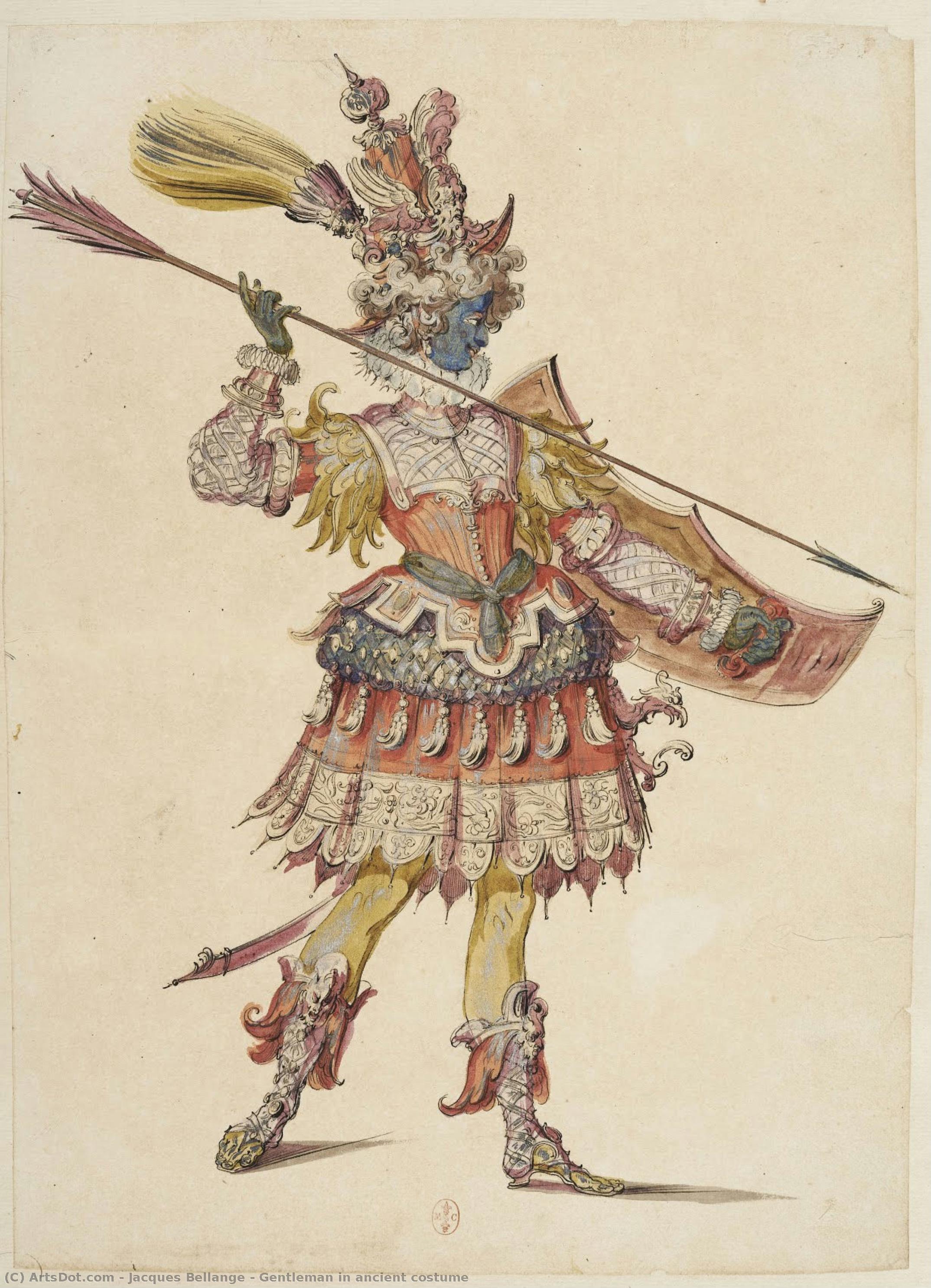
統計情報Gentleman in ancient costume


 詳細を見る
詳細を見る
手描き油彩複製画
当社のアーティストが、お客様のご希望のサイズと額縁に合わせて、キャンバスに手描きで制作する油彩画です。 ( プリント版に切り替え デジタル画像販売へ切り替え)




P118B $10

P118H $10

P118W $10

P438Z $10

P508JH $12

P508YH $12

P805H $10

P805Z $10

P919BZ $10

P919G $10

P919XJ $10

P959ZH $10

P968JZ $12

W106C $8

W218G $10

W218JH $8

W218Y $10

W307PJ $10

W316G $10

W316PJ $8

W316Y $10

W398PJ $8

W4111J $10

W500HY $15

W500JH $15

W692G $12

W849H $8

W940BG $15

W953PJ $8




作品のオリジナル比率に合わせた、当店の規定サイズからお選びください。

特定のフレームやスペースに合わせて、ご希望のサイズをご入力いただけます。選択されたサイズが元の画像の比率と異なる場合、アートワークをトリミングするか、手描きで要素を追加して絵画を拡張いたします。デジタルモックアップ を制作し、制作開始前にご確認(承認)をいただきます。
画面上のプレビューは、実際のトリミングや拡張を正確に反映しているものではありません。最終的な構図は、モックアップによってのみ正確にご確認いただけます。
カスタムサイズもご利用いただけますが、元の比率を維持するためには、あらかじめ用意されたリストからサイズを選択することをお勧めいたします。
ご注文後、ArtsDot.com チームより詳細な指示をお送りするとともに、仕上がりイメージ(モックアップ)をご提供いたします。


 ガラスオプションは、110cm未満のサイズでのみご利用いただけます。

Gentleman in ancient costume
複製技法
複製画のサイズ
-


合計金額
$ 263
A Vision of Noble Resolve: Exploring Jacques Bellange’s “Gentleman in Ancient Costume”
Jacques Bellange, a luminary of Northern Mannerism—a movement that wrestled with profound psychological complexities and celebrated dramatic visual impact—stands as an enigmatic figure within the annals of Lorraine’s artistic heritage. Despite leaving no canvases bearing his signature, Bellange's etchings have achieved enduring renown, securing him a prominent position amongst the most influential artists of his time and resonating powerfully with collectors globally. The rediscovery of his oeuvre in the 20th century catalyzed renewed scholarly interest, cementing his legacy as an artist singularly devoted to capturing the spirit of his era—a testament to the transformative power of printmaking. The Artwork Itself: A Portrait Steeped in Symbolism “Gentleman in Ancient Costume” presents a striking depiction of a man adorned in regal attire reminiscent of classical antiquity. The image portrays him confidently holding aloft a shield emblazoned with heraldic symbols – likely representing his lineage and status—and gripping a spear, signifying strength and preparedness for defense. Notably, he stands on one leg, an arresting compositional choice that lends the figure an air of solemn dignity and deliberate poise. Bellange’s meticulous attention to detail extends beyond mere representation; every line and shading contributes to conveying an inner state of contemplation and resolute determination. The vibrant palette—primarily dominated by earthy reds and browns accented with flashes of gold—reflects the stylistic conventions of Mannerism, prioritizing expressive color over naturalistic accuracy. Northern Mannerism: Artistic Expression Amidst Uncertainty Born around 1575 in Bassigny (likely La Mothe), Jacques Bellange’s biographical details remain elusive, mirroring the broader anxieties and intellectual ferment characteristic of Northern Europe during the early 17th century. The siege of Lorraine by French armies in 1645 tragically obliterated his hometown, erasing tangible traces of his life and family history—a poignant reminder of the fragility of existence within turbulent times. Nevertheless, Bellange’s artistic output speaks volumes about the movement's core tenets: a preoccupation with psychological realism, achieved through stylized figures and distorted perspectives; and an embrace of dramatic contrasts to heighten emotional intensity. This stylistic approach sought to grapple with existential questions—questions of faith, mortality, and human experience—amidst the backdrop of religious Reformation and political upheaval. Technique & Craftsmanship: The Art of Etching – A Legacy Preserved Bellange’s mastery lay primarily in etching—a technique that allowed for unparalleled precision and tonal subtlety. He employed a stylus to incise lines onto copper plates, creating a matrix from which multiple impressions could be produced. Subsequent application of acid selectively removed metal from the plate surface, revealing the etched lines beneath – a process demanding considerable skill and patience. The resulting prints achieved astonishing clarity and depth, capturing nuances of light and shadow that would have been unattainable with oil paint alone. This meticulous craftsmanship ensured that Bellange’s artistic vision endured beyond his lifetime, guaranteeing the preservation of his distinctive style for generations to come. Concluding Reflections: An Echo of Timeless Beauty “Gentleman in Ancient Costume” transcends mere visual representation; it embodies the spirit of Northern Mannerism—a movement dedicated to confronting profound truths about human existence. Bellange’s work invites contemplation on themes of nobility, courage, and inner fortitude, mirroring the anxieties and aspirations of his era. Its enduring appeal lies not only in its technical brilliance but also in its ability to evoke a visceral emotional response – a reminder that art possesses the capacity to transcend time and connect us to the deepest recesses of human consciousness. Reproductions of this captivating artwork offer an opportunity to experience firsthand the legacy of Jacques Bellange, a singular voice whose etchings continue to inspire awe and admiration.関連作品
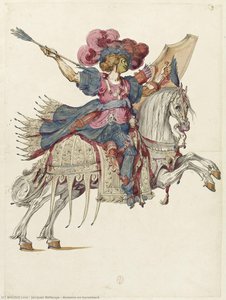
アーティストの略歴
A Shadowy Master of the Northern Mannerist Spirit
Jacques Bellange remains one of the most enigmatic and captivating figures in the history of European printmaking. A master of the Northern Mannerist style, his life was lived in the twilight of the late Renaissance, a period defined by elongated forms, theatrical tension, and an almost feverish psychological intensity. Though much of his personal biography remains shrouded in the mists of the early 17th century, his artistic legacy is vibrantly clear through the intricate lines of his etchings. Born around 1575 in the Bâse-les-Vosges region of France, Bellange emerged from a landscape of shifting borders and intense religious fervor, eventually finding his creative home within the sophisticated courtly circles of Nancy.
The traces of his early life are as delicate and elusive as his etchings. While historical records regarding his family origins are sparse, scholars often point to his rapid ascent within the Duchy of Lorraine as evidence of a significant, perhaps even noble, connection. There is much speculation that he may have been the illegitimate son of a high-ranking patron, a theory supported by the prestigious title of "knight" attributed to him and his seamless integration into the court of the Dukes of Lorraine. By 1595, he was already established in La Mothe, honing a craft that would soon transform the medium of printmaking into a vehicle for profound emotional expression.
The Elegance of the Lorraine Court
Bellange’s career reached its zenith under the patronage of Henri II and Philippe III, the Dukes of Lorraine. This period of courtly stability provided him with the luxury of time and resources, allowing him to refine a technique that was uniquely his own. Unlike many of his contemporaries who focused on the clarity of the High Renaissance, Bellange embraced the complexities of Mannerism. His work is characterized by a restless energy, where figures seem to twist and writhe with an almost supernatural grace. In the halls of Nancy, he developed a visual language that blended the sacred with the profane, creating works that were as much about the human psyche as they were about religious devotion.
His mastery of the etching needle allowed him to manipulate light and shadow with unprecedented drama. Through the meticulous use of hatching and cross-hatching, he could conjure textures ranging from the heavy folds of ancient drapery to the weathered skin of a street performer. This technical prowess is perhaps most evident in his ability to imbue even the simplest subject with a sense of profound mystery. Whether depicting a noble figure or a common musician, Bellange’s hand is unmistakable, leaving behind a trail of silvery, luminous lines that seem to vibrate with life.
A Legacy Etched in Light and Shadow
The true significance of Jacques Bellange lies in his ability to capture the ephemeral. His oeuvre serves as a window into a world of intense spiritual struggle and theatrical beauty. Some of his most enduring works demonstrate this range:
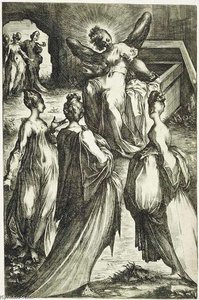
- The Three Marys at the Tomb: A striking example of his religious gravity, where dramatic figures and intricate details converge to create a moment of profound biblical tension.
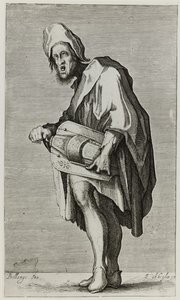
- Hurdy-Gurdy Player: A masterpiece of character study, showcasing his ability to use complex linework to capture the hunched, weary essence of a street musician, imbuing a common subject with deep psychological depth.
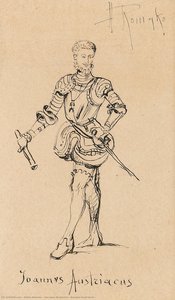
- Gentleman in Ancient Costume: An exploration of the Mannerist obsession with historical fantasy and stylized elegance, featuring a warrior adorned in attire that evokes a sense of mythic grandeur.
Though his life was cut short in 1616, Bellange’s influence endured far beyond the borders of Lorraine. His rediscovery in the 20th century brought a renewed appreciation for the expressive potential of the etched line and the enduring power of the Mannerist aesthetic. Today, he is celebrated not merely as a court artist, but as a pioneer who pushed the boundaries of printmaking, leaving an indelible mark on the history of Western art through his hauntingly beautiful, shadow-drenched visions.
Jacques Bellange
1575 - 1616 , France
基本情報
- Artistic Movement Or Style: Northern Mannerism
- Artists Or Movements Influenced By This Artist: ['Renaissance']
- Artists Who Influenced This Artist: ['Hendrik Goltzius']
- Date Of Birth: c. 1575
- Date Of Death: 1616
- Full Name: Jacques Bellange
- Nationality: French
- Notable Artworks:
- Lamentation
- The Three Marys at the Tomb
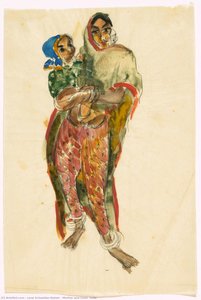
- Gypsy with a Child
- Place Of Birth: Bâse-les-Vosges, France
関連記事
Etching: A Historical Survey of Technique, Aesthetic Qualities & Enduring Artistic Significance
Explore the rich history of etching, from its origins to Rembrandt's masterful innovations. Discover the technique, aesthetic qualities & enduring legacy of this captivating art form. Expert insights for collectors and enthusiasts.
The Northern Renaissance: A Flourishing of Realism, Religious Reform & Artistic Innovation
Explore the Northern Renaissance! Discover Jan van Eyck's innovations, religious shifts, & key artists of this influential period. Expert analysis and insights into Early Netherlandish painting at ArtsDot.
The Intricate World of Etching: A Historical Survey of Technique, Aesthetic Evolution, and Enduring Artistic Impact
Explore the rich history of etching, from its origins to modern practice. Discover techniques, key artists like Rembrandt, and insights for collectors. A comprehensive guide by ArtsDot.
Etching Masters: 10 Legendary Prints That Revolutionized Art | ArtsDot
Journey through 10 legendary etching masterpieces by Rembrandt, Dürer & Goya. Explore the history of printmaking and discover timeless art for your home. Find museum-quality reproductions at ArtsDot.com.
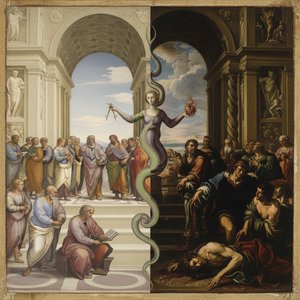
Mannerism: Bridging Renaissance Harmony & Baroque Drama – A Study of Style & Affectation
Explore the fascinating world of Mannerism! Discover its key characteristics, pioneering artists like Pontormo & Bronzino, and its pivotal role in bridging Renaissance harmony to Baroque drama. A comprehensive guide for art enthusiasts.