

 プレビュー
プレビュー
 プリントを購入
 シェアする
シェアする シェアする
シェアする
 詳細を見る
詳細を見る

 ダウンロード
 似ている作品
 X線調査
X線調査 スライドショー
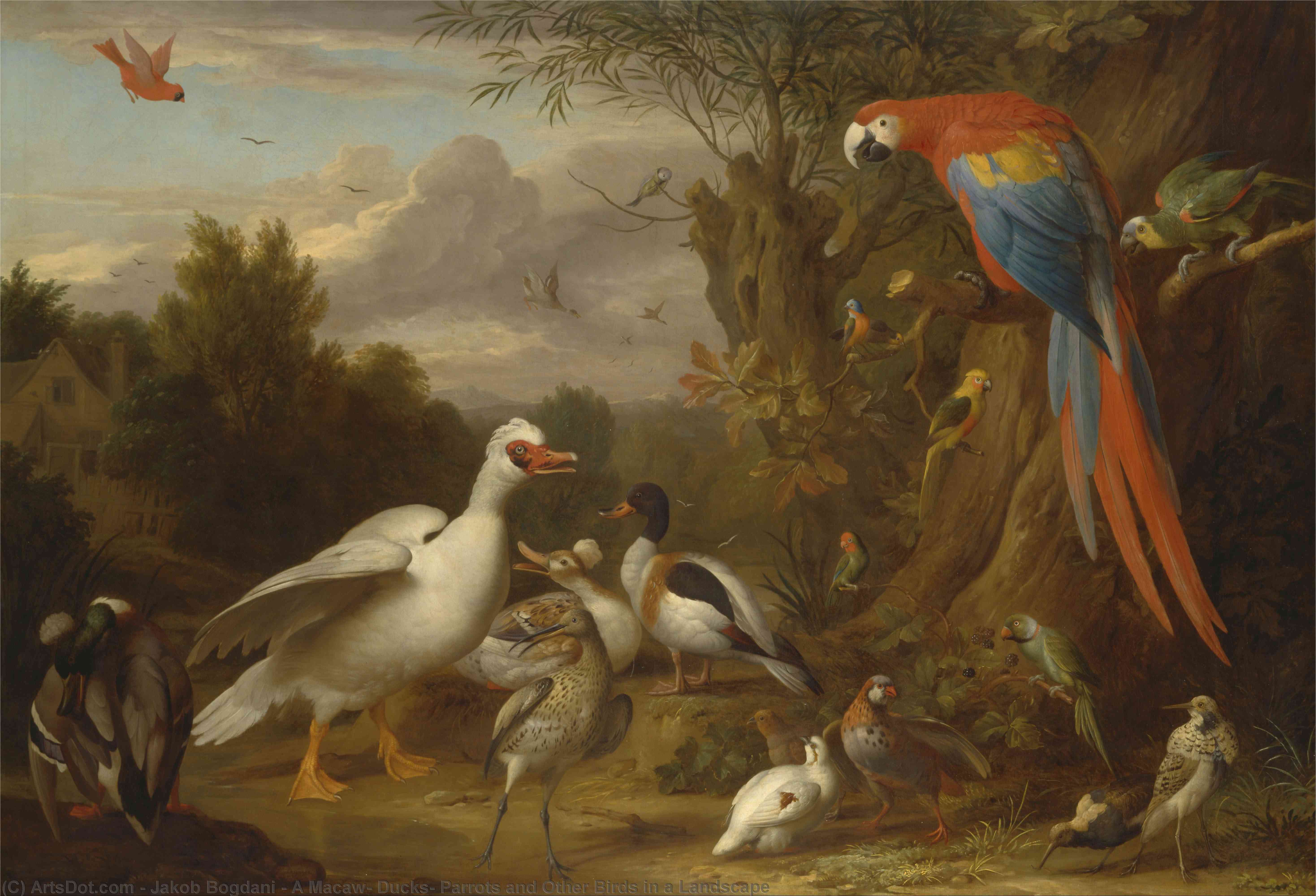
A Macaw, Ducks, Parrots and Other Birds in a Landscape


 詳細を見る
詳細を見る




































作品のオリジナル比率に合わせた、当店の規定サイズからお選びください。

特定のフレームやスペースに合わせて、ご希望のサイズをご入力いただけます。選択されたサイズが元の画像の比率と異なる場合、アートワークをトリミングするか、手描きで要素を追加して絵画を拡張いたします。デジタルモックアップ を制作し、制作開始前にご確認(承認)をいただきます。
画面上のプレビューは、実際のトリミングや拡張を正確に反映しているものではありません。最終的な構図は、モックアップによってのみ正確にご確認いただけます。
カスタムサイズもご利用いただけますが、元の比率を維持するためには、あらかじめ用意されたリストからサイズを選択することをお勧めいたします。
ご注文後、ArtsDot.com チームより詳細な指示をお送りするとともに、仕上がりイメージ(モックアップ)をご提供いたします。


 ガラスオプションは、110cm未満のサイズでのみご利用いただけます。

A Macaw, Ducks, Parrots and Other Birds in a Landscape
複製技法
複製画のサイズ
-


合計金額
$ 263
関連作品








アーティストの略歴
Jakob Bogdani: A Bohemian Painter of Exotic Wonders
Jakob Bogdani (6 May 1658 – 11 November 1724), sometimes spelled Jacob and Bogdány, was a truly remarkable artist—a Hungarian-British painter who captivated the courts of Europe with his vibrant still lifes and, most famously, his breathtaking depictions of exotic birds. His career spanned nearly six decades, marked by a journey from the artistic traditions of Sáros County in Hungary to the bustling art scene of London, ultimately establishing him as one of the foremost avian painters of his era. Bogdani’s legacy lies not just in the sheer beauty of his paintings but also in their ability to transport the viewer to distant lands and evoke a sense of wonder at the natural world.Early Life and Artistic Training
Born in Eperjes (now Prešov), Slovakia, in 1658 – a region then part of the Habsburg Kingdom of Hungary – Jakob Bogdani’s early life was deeply rooted in the traditions of his family. His father, Lucas Bogdani, was himself a painter, providing him with an initial foundation in artistic techniques. However, the turbulent political landscape of 17th-century Hungary, marked by religious tensions and shifting borders, likely prompted a move to Vienna in his youth. It was here that he received more formal training, immersing himself in the artistic currents of the Habsburg court. Crucially, Bogdani’s exposure to Dutch art during this period proved transformative. Amsterdam, then a vibrant hub for trade and artistic exchange, became his next destination in 1684. There, he honed his skills under various masters, absorbing the techniques of chiaroscuro and the meticulous detail characteristic of the Dutch Golden Age. His time in Amsterdam also introduced him to Miklós Tótfalusi Kis, a fellow Hungarian letter cutter and typographer, fostering connections within the intellectual circles of the city.London’s Royal Patronage and Artistic Flourishing
In 1688, Bogdani relocated to London, a move that proved pivotal to his career. The court of Queen Anne, seeking fresh artistic talent after the reign of James II, eagerly embraced his distinctive style. He quickly gained recognition for his still lifes—particularly those featuring game birds and lavish displays of fruit – alongside his increasingly celebrated depictions of exotic species. Admiral George Churchill, a brother of the Duke of Marlborough, became one of his most important patrons, commissioning works that likely drew inspiration from the admiral’s renowned aviary at Windsor Park. This connection highlights the growing fascination with natural history and the collection of rare specimens during this period. Bogdani's ability to capture the textures and plumage of these birds with such astonishing realism was a testament to his keen observation skills and masterful technique. His work wasn’t merely decorative; it reflected a burgeoning interest in the wider world, fueled by expanding trade routes and scientific exploration.A Master of Exotic Avian Art
Bogdani's true genius lay in his ability to render exotic birds with unparalleled skill and artistry. He specialized in species rarely seen in European menageries – cockatoos, macaws, mynas, and many others – often imported at great expense for the wealthy elite. His paintings weren’t simply portraits; they were carefully constructed compositions that combined these rare specimens with familiar European birds like tits, woodpeckers, and jays, creating a dynamic interplay of color and form. A recurring motif was the inclusion of a bird adorned in vibrant red plumage – scarlet ibis, red avadavat, or northern cardinal – adding a dramatic focal point to his works. The painting “Two Icelandic Falcons,” housed at Nottingham Castle Museum and Art Gallery, stands as a particularly striking example of his mastery, showcasing an exceptional level of detail and spatial awareness. This piece, painted around the late 17th or early 18th century, demonstrates Bogdani’s ability to create depth and movement within a relatively small format.Legacy and Influence
Jakob Bogdani's influence extended beyond his own lifetime. His work served as inspiration for later bird painters, notably Marmaduke Cradock, who adopted many of Bogdani’s compositional techniques and subject matter. Furthermore, one of his paintings – “Peacock with Geese and Hen” – was famously used as the cover art for Procol Harum's 1974 album *Exotic Birds and Fruit*, cementing his place in popular culture. His paintings are now exhibited in prestigious collections such as the Hungarian National Gallery, a testament to their enduring artistic merit. Bogdani’s legacy is not merely one of technical skill but also of capturing the spirit of exploration and wonder that characterized the Age of Discovery – a reminder of the beauty and diversity of the natural world, rendered with exquisite detail and captivating artistry.
jakob bogdani
1658 - 1724
基本情報
- Artistic Movement Or Style: Still life, Exotic bird painting
- Artists Or Movements Influenced By This Artist: ['Marmaduke Cradock']
- Artists Who Influenced This Artist: ['Tobias Stranover']
- Date Of Birth: May 6, 1658
- Date Of Death: November 11, 1724
- Full Name: Jakob Bogdani
- Nationality: Hungarian-British
- Notable Artworks:
- Untitled (AQTTBT)
- Untitled (AQTTCB)
- Peacock with Geese and Hen
- Place Of Birth: Eperjes, Slovakia

