

 プレビュー
プレビュー
 シェアする
シェアする シェアする
シェアする
 詳細を見る
詳細を見る

 ダウンロード
 似ている作品
 X線調査
X線調査 スライドショー
 統計情報
統計情報The White Jug
 Abstract Expressionism
 77.0 x 77.0 cm
 詳細を見る
詳細を見る
オンラインプレビューをはるかに凌ぐ、高解像度で鮮明なデジタル画像をご購入いただけます。
各ファイルは、社内の専門家が高度なツールと熟練した手作業によるレタッチを用いて、細心の注意を払って準備されています。すべての画像において、卓越した鮮明度、正確な色彩再現性、そして繊細なディテールを保証いたします。
最終ファイルは、プロフェッショナルな編集・印刷環境ですぐにご利用いただけるよう最適化された状態で、72時間以内にメールにてお届けいたします。これは、一流のデザインスタジオ、出版社、ギャラリーから信頼されているものと同等の品質です。
デジタルアート
個人での鑑賞、印刷、クリエイティブなプロジェクト用に、高解像度ファイルをダウンロードできます。 ( プリント版に切り替え 手描きの絵画を購入)
デジタル画像のご注文に付随する特典
高品質なデジタル画像配信を、確かな品質で。
ArtsDot.com を選ぶことは、単に画像を手に入れることではありません。それは、プロの手によって精密に仕上げられ、満足保証が付いた高品質なデジタルアートワークを受け取ることを意味します。ご注文いただいた際に自動的に付随する内容は、以下の通りです:

メールですぐにお届け
ご注文から72時間以内に、高解像度のデジタル画像ファイルがメールでお手元に届きます。すぐにそのままご利用いただけます。

AI技術で最適化されたデジタルファイル
お客様の作品は、高度なAIツールと専門家による手作業の編集を組み合わせてプロフェッショナルに最適化されており、細部のディテール、鮮明さ、そして正確な色再現性を最大限に引き出しています。

一生涯無料の再送サービス
ファイルを誤って削除したり、紛失してしまったりしましたか?ご安心ください。いつでも無料で再送いたします。

輸入手数料は一切かかりません
関税や手数料、配送料を気にすることなく、お気に入りのアートワークをすぐにお楽しみいただけます。デジタルダウンロードは常に免税です。

色彩再現の保証
プロ仕様のツールとカラーマネジメント技術を用いることで、デジタル画像が元の色を最大限に忠実に再現することを保証いたします。

100日間満足保証
ご購入いただいたデジタル画像にご満足いただけない場合は、100日以内であれば、理由を問わず修正または100%の返金対応をさせていただきます。

100% 返金保証
ご満足いただけない場合は、デジタルファイルを受け取ってから100日以内であれば、理由を問わず全額返金いたします。

まとめ買い割引
3枚購入で10%OFF - 5枚購入で15%OFF - 10枚以上購入で20%OFF。クリエイティブなプロジェクト、ギャラリー、エージェンシーに最適です。
A Dynamic Exploration of Form and Color: James Cumming's "The White Jug"
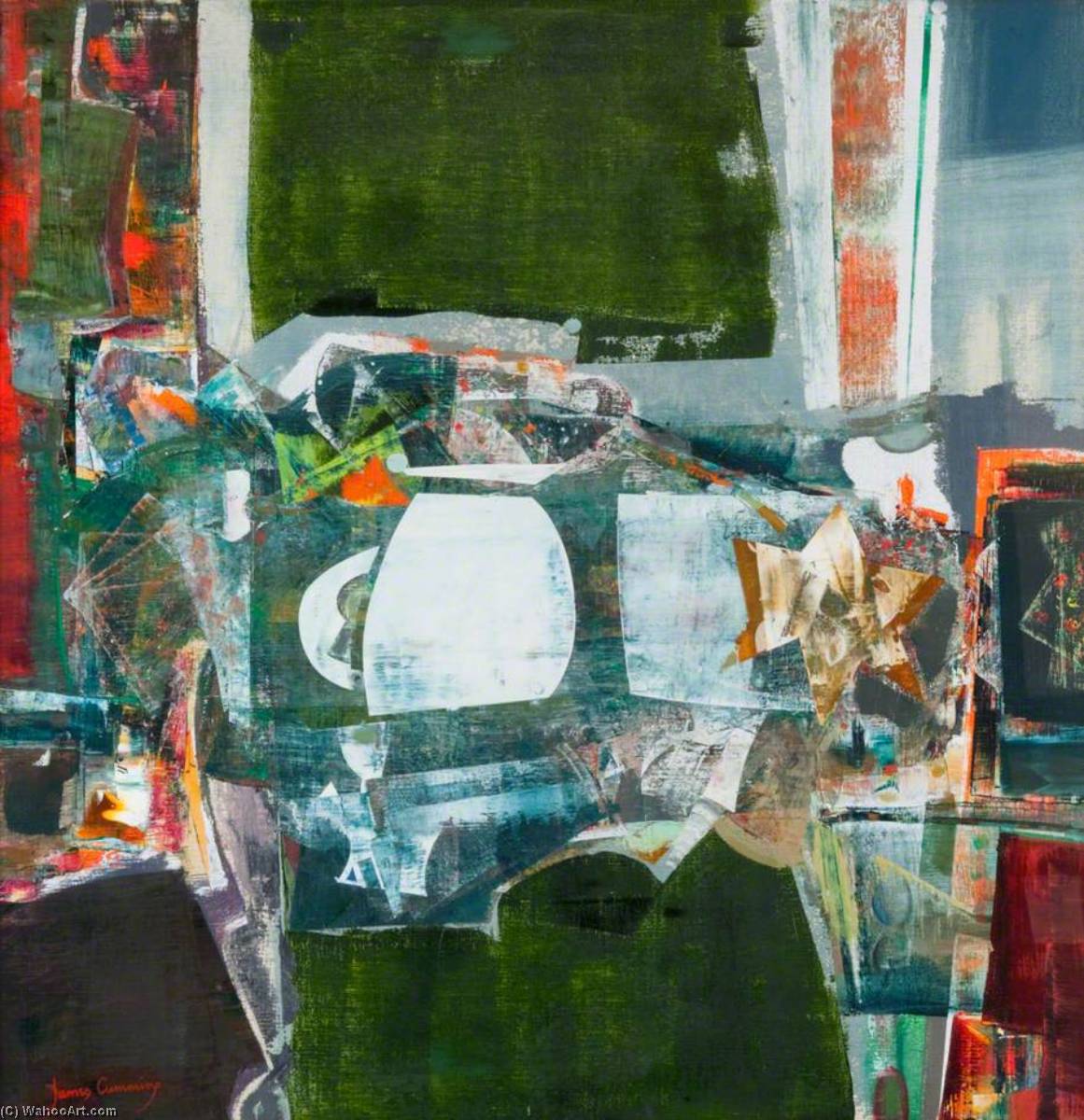
James Cumming’s “The White Jug” is a captivating abstract expressionist painting that pulsates with energy and visual complexity. This piece, created by the Scottish artist known for his contributions to the Edinburgh School, offers a compelling glimpse into the expressive power of color and form. While the title suggests a representational element, the artwork itself eschews recognizable imagery, instead presenting a vibrant landscape of overlapping geometric shapes against a dominant dark green background.
Style and Technique: Gestural Abstraction
The painting firmly resides within the realm of abstract expressionism, a movement that prioritized spontaneous gesture and emotional impact over traditional representation. Cumming’s technique is characterized by thick brushstrokes and visible texture – a hallmark of impasto – which creates a dynamic surface full of visual interest. The layering of oil paints suggests a process of experimentation and adjustment, with colors interacting in unexpected ways. The fragmented lines and varying sizes of the shapes contribute to a sense of controlled chaos, balanced by an overall harmony. There's a deliberate flattening of perspective, rejecting traditional depth cues and drawing attention to the two-dimensional surface of the canvas.
Color Palette and Composition: A Symphony of Contrasts
“The White Jug” boasts a diverse color palette that blends warm and cool tones, creating a lively and engaging visual experience. Red, orange, blue, white, and gray intermingle with the prevailing dark green, generating striking contrasts and visual tension. The asymmetrical composition, with the darker green area occupying the lower portion of the image, further enhances this dynamic interplay. While seemingly chaotic at first glance, the arrangement reveals a carefully considered balance – dense clusters of shapes are juxtaposed with sparser areas, guiding the viewer's eye across the canvas.
Symbolism and Emotional Impact: Open to Interpretation
As an abstract work, “The White Jug” resists easy interpretation. It doesn’t depict a specific scene or object but instead evokes feelings and sensations through its formal elements. The energetic brushstrokes and vibrant colors can be interpreted as representing energy, tension, or even fragmentation – reflecting the anxieties and uncertainties of the post-war period in which Cumming was working. The inclusion of white provides a crucial element of contrast against the darker background, acting as both a visual anchor and a symbol of hope or clarity amidst complexity. Ultimately, the painting’s power lies in its ability to resonate with viewers on an emotional level, prompting individual interpretations and personal connections.
Historical Context: The Edinburgh School
James Cumming was a significant figure within the Edinburgh School, a group of Scottish artists who emerged after World War II. This movement emphasized intellectual depth and draughtsmanship alongside expressive experimentation. Cumming’s background as both an artist and a lecturer at the Edinburgh College of Art shaped his approach to artmaking, fostering a rigorous yet innovative spirit. “The White Jug” exemplifies this ethos – it is not merely a spontaneous outburst but a considered exploration of form, color, and their potential for conveying complex emotions.
関連作品


作家の略歴
The Melodic Line: The Life and Legacy of James Cumming
James Cumming (1922–1991) was a painter whose work functioned as a bridge between the structured precision of geometry and the profound depths of human emotion. Born in Dunfermline, Scotland, his early life was marked by a remarkable discipline that extended far beyond the canvas. Before he became a cornerstone of the Edinburgh School, Cumming was a gifted musician, excelling at the piano with a level of distinction that suggested a lifelong devotion to technical mastery. This rhythmic sensibility, nurtured under the guidance of influential teachers like George Watson at the Edinburgh College of Art, would later manifest in his brushwork, where every stroke seemed to follow an internal, melodic logic.
His journey through the mid-twentieth century was shaped by both global upheaval and personal discovery. During his wartime service with the RAF Transport Command, Cumming traveled through India and Burma, experiences that expanded his cultural horizons and provided a diverse palette of perspectives. These travels, combined with the profound spiritual influence of Rudolf Steiner’s Anthroposophy, infused his later work with a search for holistic meaning and symbolic depth. The rugged, spiritual landscapes of the Isle of Lewis, explored during his time as an Andrew Grant Scholar, became a cornerstone of his repertoire, resulting in celebrated Hebridean paintings that captured the raw, atmospheric essence of Scotland’s western isles.
A Synthesis of Form and Spirit
As an artist, Cumming refused to be confined by a single movement, instead opting for a sophisticated synthesis of styles. His technique was a masterful dialogue between draughtsmanship and expressive abstraction. In works such as “The White Jug,” one observes a vibrant landscape of overlapping geometric shapes that pulsate with energy, yet the composition retains an underlying stillness. He possessed a rare ability to use color—often in bold, saturated tones—to convey atmospheric depth and a contemplative mood, making his canvases feel both intellectually rigorous and emotionally resonant.
His artistic development can be viewed through several key thematic lenses:
- Geometric Abstraction: A fascination with the structural integrity of form and the interplay of shapes.
- Landscape and Spirit: The translation of the rugged Hebridean terrain into spiritual, symbolic imagery.
- The Human Element: Portraits and figurative works, such as “The Calvaryman,” that explore the psychological weight of the human experience through meticulous detail.
Mentorship and Historical Significance
Beyond his individual contributions to the canvas, Cumming’s impact on the trajectory of Scottish art was profound due to his long-standing tenure as a lecturer at the Edinburgh College of Art from 1950 to 1982. In this role, he was not merely an instructor but a mentor to a new generation of luminaries, including Sandy Moffat and John Bellany. His presence in the academy ensured that the rigorous intellectual exploration and technical excellence he championed would continue to influence the post-war Scottish art scene for decades.
Today, James Cumming is remembered as an independent spirit who stood outside the mainstream of post-war painting, carving out a unique space where the cerebral and the visceral meet. His legacy remains etched in the halls of the Edinburgh College of Art and within the collections of institutions that recognize his role in defining the modern Scottish aesthetic—a legacy defined by a tireless pursuit of beauty through both structure and soul.
James Cumming
1922 - 1991
プロフィール概要
- Artistic Movement Or Style: Edinburgh School
- Artists Or Movements Influenced By This Artist: ['Robin Philipson']
- Artists Who Influenced This Artist: ['George Watson']
- Date Of Birth: 1922
- Date Of Death: 1991
- Full Name: James Cumming
- Nationality: Scottish
- Notable Artworks:
- The Calvaryman
- The White Jug
- Woman with Second Sight
- Place Of Birth: Dunfermline, Scotland