

 プレビュー
プレビュー
 プリントを購入
 シェアする
シェアする シェアする
シェアする
 詳細を見る
詳細を見る

 ダウンロード
 似ている作品
 X線調査
X線調査 スライドショー
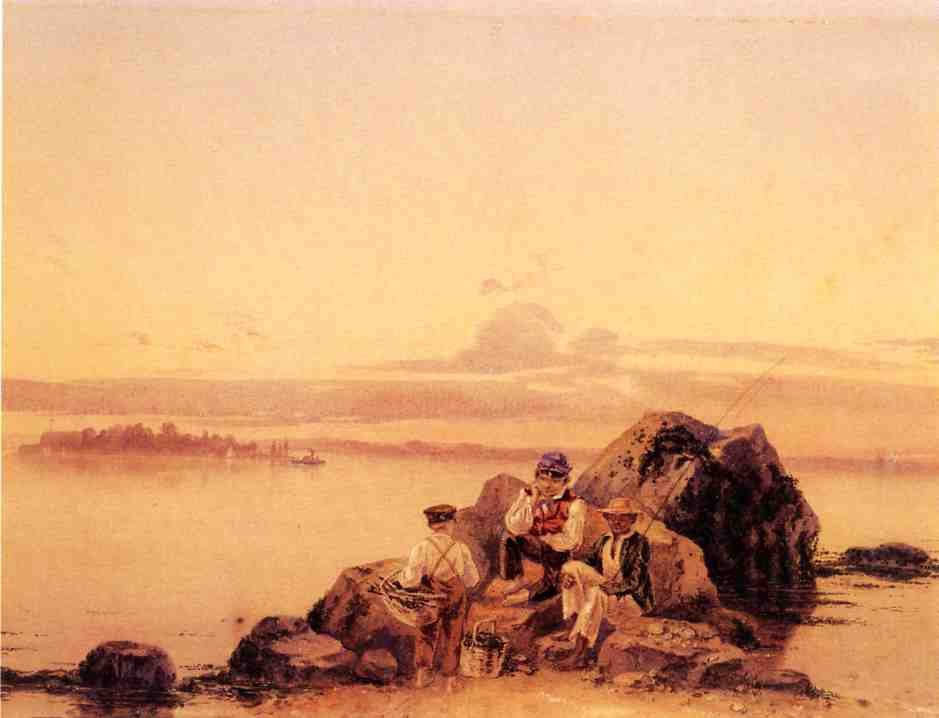
A Day Fishing
 詳細を見る
詳細を見る




































作品のオリジナル比率に合わせた、当店の規定サイズからお選びください。

特定のフレームやスペースに合わせて、ご希望のサイズをご入力いただけます。選択されたサイズが元の画像の比率と異なる場合、アートワークをトリミングするか、手描きで要素を追加して絵画を拡張いたします。デジタルモックアップ を制作し、制作開始前にご確認(承認)をいただきます。
画面上のプレビューは、実際のトリミングや拡張を正確に反映しているものではありません。最終的な構図は、モックアップによってのみ正確にご確認いただけます。
カスタムサイズもご利用いただけますが、元の比率を維持するためには、あらかじめ用意されたリストからサイズを選択することをお勧めいたします。
ご注文後、ArtsDot.com チームより詳細な指示をお送りするとともに、仕上がりイメージ(モックアップ)をご提供いたします。


 ガラスオプションは、110cm未満のサイズでのみご利用いただけます。

A Day Fishing
複製技法
複製画のサイズ
-


合計金額
$ 263
関連作品


アーティストの略歴
A Quiet Observer of Rural England and America
James Goodwyn Clonney, born in the maritime atmosphere of Liverpool around 1812, remains a captivating figure whose life and art bridged the gap between the Old World and the burgeoning American landscape. While his origins are rooted in the British Isles, his artistic soul was profoundly shaped by the vast, unfolding vistas of the United States. Arriving in America by 1830, Clonney initially found his footing not with a brush, but through the precise and meticulous craft of lithography, working for prominent firms in New York and Philadelphia. This early training as a commercial draftsman instilled in him a disciplined eye for detail and a linear clarity that would later distinguish his paintings from the more loosely rendered works of his contemporaries.
His transition from printmaking to fine art was marked by rapid success within the American academic circles. By 1833, Clonney had already garnered recognition at the National Academy of Design, winning prizes for his skill in rendering classical forms. This period of his life was characterized by a rigorous, academic approach to subject matter, yet even in these early works, one can sense the burgeoning Romanticism that would eventually define his mature style. His marriage to Margaret Mesier, daughter of his former employer, further anchored him into the vibrant artistic community of New York, and by 1840, he had fully embraced his new identity as a naturalized American citizen.
The Poetics of Genre and Landscape
As Clonney’s career progressed, his focus shifted toward the intimate and the pastoral, moving away from classical studies toward the evocative realm of genre painting. He became a master of capturing the quiet, unadorned moments of rural life, imbuing everyday activities with a sense of dignity and timelessness. Influenced by the expressive compositions of David Wilkie and the quintessentially American subjects of William Sidney Mount, Clonney developed a style that was both simple and profoundly eloquent. His canvases often feature small, carefully arranged groups of figures—farmers, fishermen, or families—set against backdrops of rolling hills or tranquil waters.
What sets Clonney apart from the grander, more dramatic scale of the Hudson River School is his preference for the intimate over the monumental. While he shared the atmospheric sensibilities of masters like Frederic Church and Asher Durand, his work often eschews the overwhelming sublime in favor of a more accessible, serene beauty. In masterpieces such as Fishing Party on Long Island Sound off New Rochelle, he demonstrates an extraordinary ability to render light and texture, capturing the shimmering translucence of water and the soft, muted tones of the shoreline. His paintings do not merely document a scene; they invite the viewer into a state of quiet contemplation, celebrating the peaceful rhythms of nature and human existence.
Legacy and Social Resonance
Beyond their aesthetic charm, Clonney’s works often carry subtle layers of social and political meaning. In an era of profound national transformation, his genre scenes occasionally offered poignant commentaries on the social fabric of America. Some scholars have noted the quiet power in his depictions of interracial interactions, where he portrayed Black and white individuals with a sense of shared humanity and friendship that was remarkably progressive for the mid-19th century. This ability to weave subtle narratives into his landscapes adds a layer of intellectual depth to his otherwise tranquil compositions.
Clonney’s later years were spent in the picturesque settings of New York, including Peekskill and Cooperstown, before his death in Binghamton in 1867. Though he did not pursue the massive, panoramic canvases that defined much of the era's landscape art, his contribution to the American canon is significant. He remains a vital link between the disciplined traditions of European academic training and the soulful, observational spirit of American genre painting. His legacy lives on in the delicate balance of his compositions, where every brushstroke serves to honor the quiet majesty of the everyday world.
james goodwyn clonney
1812 - 1867 , United Kingdom
基本情報
- Artistic Movement Or Style: Hudson River School
- Date Of Birth: December 28, 1812
- Full Name: James Goodwyn Clonney
- Nationality: British
- Notable Artworks:
- Fishing Party on Long Island Sound off New Rochelle
- What a Catch
- Place Of Birth: Liverpool, United Kingdom

