

 プレビュー
プレビュー
 シェアする
シェアする シェアする
シェアする
 詳細を見る
詳細を見る

 ダウンロード
 似ている作品
 X線調査
X線調査 スライドショー
 Stats
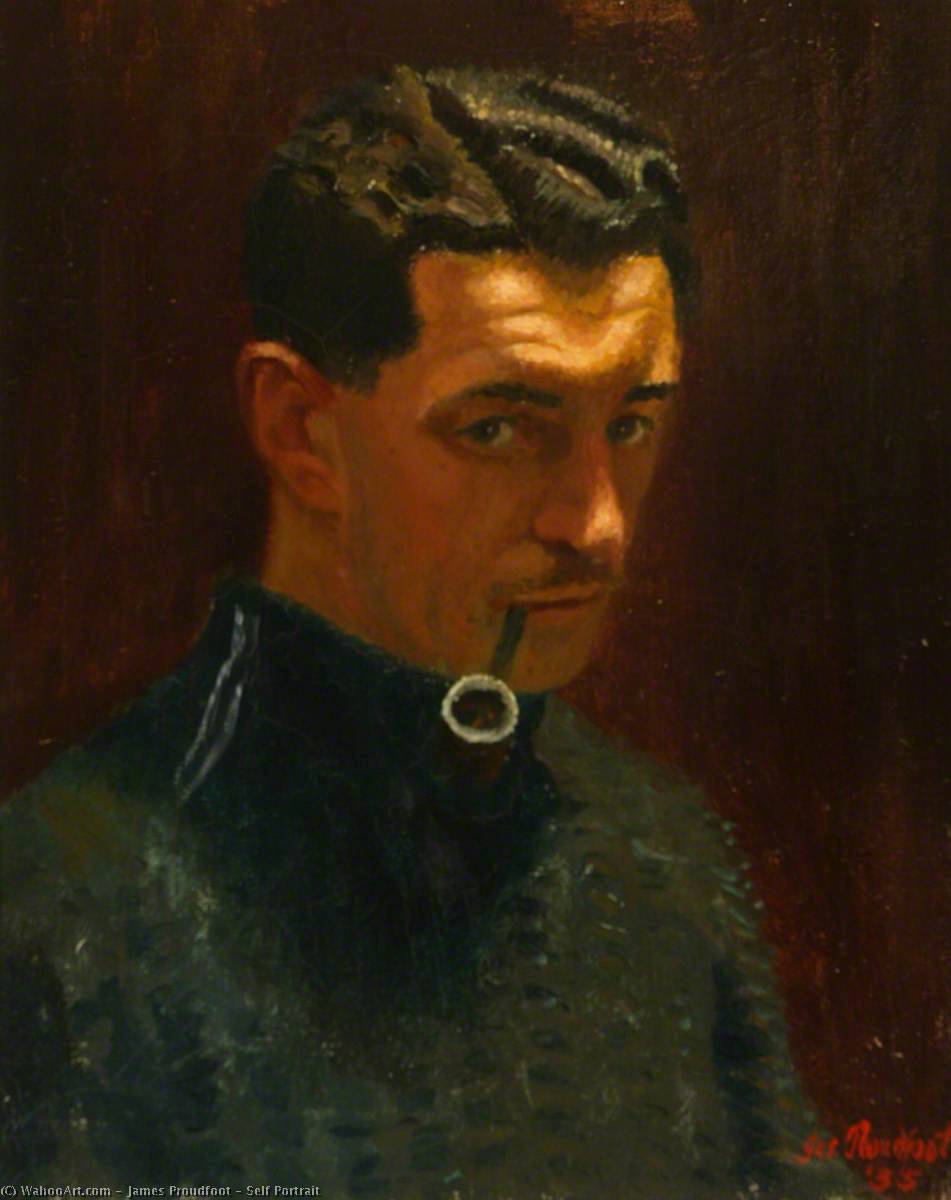
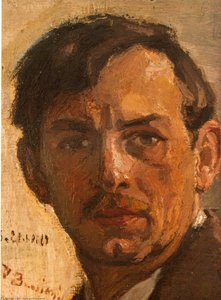
StatsSelf Portrait
 1935
1935 51.0 x 41.0 cm
 詳細を見る
詳細を見る
ジークレー/アートプリント
迅速な制作と多彩な仕上げオプションを備えた、ミュージアムクオリティのジークレーまたはキャンバスプリント。 ( 手描きの絵画を購入 Switch to Digital Image)




































作品のオリジナル比率に合わせた、当店の規定サイズからお選びください。

特定のフレームやスペースに合わせて、ご自身でサイズを指定することも可能です。選択されたサイズが元の画像の比率と一致しない場合、作品をトリミングするか、鏡面反射または単色での塗りつぶしによって画像を拡張いたします。制作を開始する前に、ご確認用のデジタルモックアップをお送りいたします。
画面上のプレビューには、実際のトリミングや拡張は反映されませんのでご注意ください。最終的な構図を正確に確認できるのは、モックアップのみとなります。
カスタムサイズも承っておりますが、元の比率を維持するためには、あらかじめ用意されたリストからサイズを選択することをお勧めいたします。


 ガラスオプションは、110cm未満のサイズでのみご利用いただけます。

Self Portrait
ジークレー/アートプリント
複製画のサイズ
-


合計金額
$ 62
Artistic Style and Influences
Proudfoot's style is reminiscent of other notable artists, such as Rembrandt Van Rijn, who was known for his exceptional self-portraits. The use of oil on canvas in the Self Portrait adds a rich texture and depth to the artwork, drawing the viewer's eye to the subject's contemplative expression. For art enthusiasts interested in exploring similar works, Rembrandt Van Rijn's Self-portrait detalj ng washington is a notable example of the artist's mastery over the medium.Notable Artists and Museums
Other artists, such as Kazimir Severinovich Malevich and Henri Matisse, have also made significant contributions to the world of art. The Museum Eredità Bardini in Florence, Italy, is a notable institution that showcases an impressive collection of artworks, including pieces by prominent artists like Annie Douglas Savage. For those interested in learning more about these artists and their works, La Petite Niche by Annie Douglas Savage is a fascinating example of the artist's unique style.- Key Features: Oil on canvas, 51 x 41 cm, created in 1935
- Artist: James Proudfoot
- Museum: Not specified, but similar artworks can be found at the Museum Eredità Bardini
The Self Portrait by James Proudfoot is a thought-provoking artwork that invites viewers to reflect on the artist's inner world. With its rich texture and contemplative expression, this painting is a notable example of Proudfoot's skillful use of color and composition.
関連作品






アーティストの略歴
James Proudfoot: Bridging Cultures Through Vision
Born in the historic heart of Perth, Scotland, on March 3, 1908, James Proudfoot emerged as a painter of profound sensitivity and cross-cultural depth. His journey from the Scottish Highlands to the vibrant, bustling art scene of mid-2century London is a testament to a life dedicated to capturing the nuances of the human spirit. While his roots were firmly planted in British soil, his artistic gaze was perpetually drawn toward the horizon, seeking a synthesis between Western European sensibilities and the delicate aesthetics of the East. This unique duality allowed him to become one of Britain’s most distinctive voices, creating works that functioned as silent dialogues between disparate worlds.
Proudfoot's formal education provided the rigorous foundation necessary for his later stylistic explorations. After attending Perth Academy, he moved toward the prestigious institutions of London, studying at the Heatherley School of Fine Art and Goldsmiths, University of London. It was during these formative years that his fascination with Oriental art began to take root. He became deeply enamored with the principles of Japanese ukiyo-e prints, meticulously studying their mastery of compositional balance, tonal harmony, and the expressive power of a single, deliberate brushstroke. This dedication to Eastern aesthetics would eventually become the cornerstone of his mature style, informing how he approached both the intimacy of portraiture and the vastness of landscape.
A Life in London: Portraits and Presence
In 1937, Proudfoot established himself in London, a move that would define the most productive era of his career. His presence in the capital was marked by a growing reputation as a portrait painter of exceptional psychological depth. He possessed a rare ability to look beyond the surface of his subjects, capturing not just a likeness, but a window into their character. This skill attracted a diverse range of patrons, including many prominent actors from the London stage and screen. His connection to the theatrical world was further solidified through his marriage in 1945 to the actress Ellen Pollock, a relationship that shared a mutual passion for the arts.
His mastery of the medium was perhaps most evident in his ability to manipulate light and shadow to convey complex emotions. Whether painting a pensive figure or a vibrant street scene, Proudfoot utilized bold colors and expressive brushwork to breathe life into his canvases. His work often reflected the atmospheric tension of the era, blending meticulous observation with an imaginative, almost dreamlike interpretation of reality. Notable works from this period include:
- The Granville Theatre (1945): An impressionistic oil painting that captures the kinetic energy and rich colors of a London street scene.
- Dark Girl (1935): A captivating early work showcasing his skillful use of color and a focus on the subject's mysterious, pensive expression.
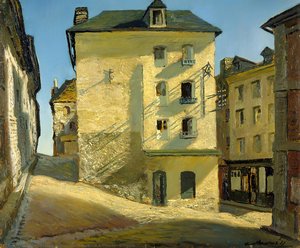
- Sun on a House, Dieppe (1937): A serene representation of a French village that highlights his ability to capture light and architectural charm.
Legacy and Artistic Significance
Beyond the confines of portraiture, Proudfoot’s landscapes were equally ambitious, serving as a canvas for his profound engagement with Asian artistic principles. He often employed techniques reminiscent of Chinese ink wash paintings, seeking to evoke the spiritual essence of a landscape rather than merely its physical topography. This pursuit of a "universal" aesthetic—one that transcended national boundaries—is what grants his work such enduring historical significance. He did not merely paint subjects; he sought to foster an appreciation for cultural interconnectedness through the medium of oil and canvas.
Though he passed away in London on July 15, 1971, the legacy of James Proudfoot remains preserved in esteemed collections, including the University of Bristol Theatre Collection and the Perth Museum and Art Gallery. His life's work stands as a beautiful bridge between the traditions of the West and the philosophies of the East, reminding us that art is a language capable of uniting even the most distant cultures. Through his eyes, we continue to see a world where light, shadow, and spirit converge in perfect, evocative harmony.
james proudfoot
1908 - 1971
基本情報
- Artistic Movement Or Style: British Portrait Painter
- Artists Or Movements Influenced By This Artist: ['British Art']
- Artists Who Influenced This Artist: ['Ellen Pollock']
- Date Of Birth: March 3, 1908
- Full Name: James Proudfoot
- Nationality: Scottish
- Notable Artworks:
- The Gardener
- Portrait of Ellen Pollock
- Place Of Birth: Perth, Scotland, UK