

 プレビュー
プレビュー
 シェアする
シェアする シェアする
シェアする
 詳細を見る
詳細を見る

 ダウンロード
 似ている作品
 X線調査
X線調査 スライドショー
 統計情報
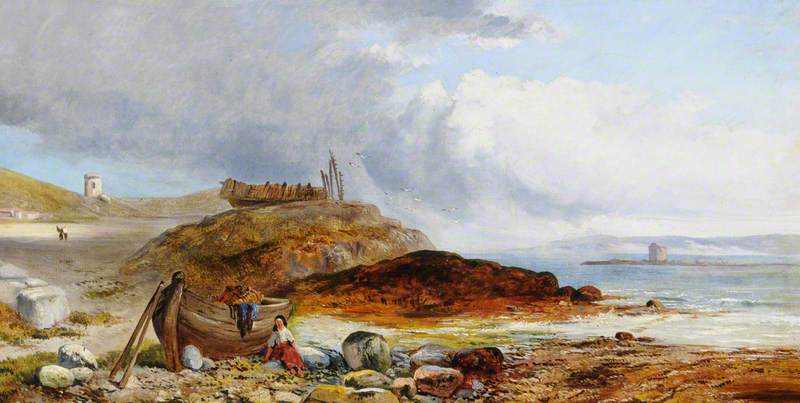
統計情報Belle Greve Bay
 19.0 x 37.0 cm
 詳細を見る
詳細を見る
ジークレー/アートプリント
迅速な制作と多彩な仕上げオプションを備えた、ミュージアムクオリティのジークレーまたはキャンバスプリント。 ( 手描きの絵画を購入 デジタル画像販売へ切り替え)




































作品のオリジナル比率に合わせた、当店の規定サイズからお選びください。

特定のフレームやスペースに合わせて、ご自身でサイズを指定することも可能です。選択されたサイズが元の画像の比率と一致しない場合、作品をトリミングするか、鏡面反射または単色での塗りつぶしによって画像を拡張いたします。制作を開始する前に、ご確認用のデジタルモックアップをお送りいたします。
画面上のプレビューには、実際のトリミングや拡張は反映されませんのでご注意ください。最終的な構図を正確に確認できるのは、モックアップのみとなります。
カスタムサイズも承っておりますが、元の比率を維持するためには、あらかじめ用意されたリストからサイズを選択することをお勧めいたします。


 ガラスオプションは、110cm未満のサイズでのみご利用いただけます。

Belle Greve Bay
ジークレー/アートプリント
複製画のサイズ
-


合計金額
$ 62
関連作品









アーティストの略歴
James Vivien de Fleury: A Master of British Pastoral Landscapes
James Vivien de Fleury (1847-1902) remains a quietly significant figure in 19th-century British art, a painter whose serene and meticulously rendered landscapes capture the essence of the English countryside and Italian waterways. Often overshadowed by his more flamboyant contemporaries, de Fleury’s work reveals a profound sensitivity to light, color, and the subtle rhythms of nature – qualities that imbue his scenes with an enduring sense of tranquility and beauty.
Born in Huddersfield, Yorkshire, into a prosperous wool merchant family, de Fleury's early life instilled within him a deep appreciation for the natural world. His father’s frequent travels to France and Belgium exposed young James to European artistic traditions, while his mother, an artist herself, nurtured his creative spirit. He received a classical education at Marlborough College, followed by studies in architecture at Peterhouse, Cambridge – a grounding that would later inform his precise observation of detail and composition. It was during his time at Cambridge that he discovered his passion for painting, initially as a pastime before dedicating himself fully to the pursuit.
De Fleury’s artistic journey began modestly, with early work in provincial theatres and small commissions. However, it was his move to London and subsequent association with Albert Korda's studio that proved pivotal. Working under Korda, he gained invaluable experience in producing “quota quickies”— inexpensive, mass-produced films—a common practice of the era. These early works, though commercially driven, provided a crucial foundation for his technical skills and understanding of cinematic composition. Crucially, they allowed him to hone his ability to capture fleeting moments of light and atmosphere – a skill that would later define his landscape paintings.
The Rise of a Landscape Painter
A turning point in de Fleury’s career arrived with his relocation to London in the late 1870s. He began exhibiting his work at the Royal Academy, steadily gaining recognition for his evocative depictions of rural England and Italy. His paintings weren't merely reproductions of scenery; they were imbued with a palpable sense of atmosphere – the dampness of a misty morning, the warmth of a summer afternoon, the shimmering light on water. He frequently depicted scenes from the Lake District, the Cotswolds, and the Italian Lakes, drawing inspiration from the picturesque beauty of these regions.
De Fleury’s technique was characterized by meticulous detail and a subtle use of color. He employed a delicate brushstroke to render textures – the rough bark of trees, the rippling surface of water, the folds of fabric. His compositions were often carefully balanced, creating a sense of harmony and serenity. Unlike some of his contemporaries who favored dramatic lighting effects, de Fleury preferred a more restrained approach, allowing the natural light to illuminate his scenes with a soft, diffused glow. His paintings are not grand or imposing; rather, they invite quiet contemplation and offer a glimpse into the peaceful rhythms of rural life.
Key Works and Influences
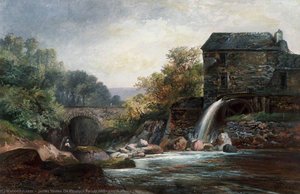
Among de Fleury’s most celebrated works are depictions of the River Thames, the Lake District, and the Italian Lakes. “River with Watermill and Village beyond” exemplifies his ability to capture the essence of a landscape – the interplay of light and shadow, the subtle details of the rural setting, and the sense of timelessness. His paintings of Belle Greve Bay in Jersey, and Luckham in Isle of Wight are also notable for their atmospheric quality and meticulous observation of detail.
De Fleury’s work was influenced by a variety of sources, including the Pre-Raphaelites, whose emphasis on beauty and nature resonated with his own artistic sensibilities. He also admired the works of Constable and Turner, masters of capturing the light and atmosphere of the English countryside. However, de Fleury developed a distinctly individual style – one characterized by its quiet elegance, meticulous detail, and profound sensitivity to the natural world.
Legacy and Historical Significance
Despite not achieving widespread fame during his lifetime, James Vivien de Fleury’s work has enjoyed a resurgence of interest in recent decades. His paintings are now recognized as important examples of 19th-century British landscape art – works that capture the beauty and tranquility of the English countryside with remarkable skill and sensitivity. De Fleury's contribution lies not in grand gestures or revolutionary techniques, but in his quietly assured mastery of observation and representation, offering viewers a serene escape into the heart of nature.
His paintings are held in numerous public collections, including the National Trust, demonstrating their enduring value and significance within the broader context of British art history. James Vivien de Fleury’s legacy is one of understated elegance, quiet beauty, and a profound appreciation for the natural world – qualities that continue to resonate with audiences today.
james vivien de fleury
1847 - 1902
基本情報
- Artistic Movement Or Style: Romantic Landscape
- Artists Or Movements Influenced By This Artist:
- Hudson River School
- Pre-Raphaelites
- Artists Who Influenced This Artist:
- Turner
- Ruskin
- Date Of Birth: 1847
- Date Of Death: 1902
- Full Name: James Vivien de Fleury
- Nationality: British
- Notable Artworks:
- River with Watermill
- Belle Greve Bay
- Lake Lugano
- Margate Coast Scene
- Place Of Birth: Huddersfield, England