

 プレビュー
プレビュー
 プリントを購入
 シェアする
シェアする シェアする
シェアする
 詳細を見る
詳細を見る

 ダウンロード
 似ている作品
 X線調査
X線調査 スライドショー
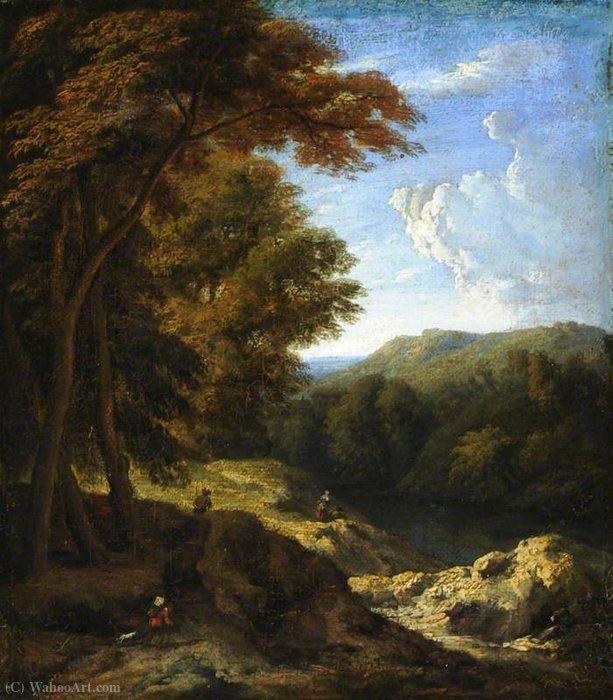
A wooded river landscape
 詳細を見る
詳細を見る




































作品のオリジナル比率に合わせた、当店の規定サイズからお選びください。

特定のフレームやスペースに合わせて、ご希望のサイズをご入力いただけます。選択されたサイズが元の画像の比率と異なる場合、アートワークをトリミングするか、手描きで要素を追加して絵画を拡張いたします。デジタルモックアップ を制作し、制作開始前にご確認(承認)をいただきます。
画面上のプレビューは、実際のトリミングや拡張を正確に反映しているものではありません。最終的な構図は、モックアップによってのみ正確にご確認いただけます。
カスタムサイズもご利用いただけますが、元の比率を維持するためには、あらかじめ用意されたリストからサイズを選択することをお勧めいたします。
ご注文後、ArtsDot.com チームより詳細な指示をお送りするとともに、仕上がりイメージ(モックアップ)をご提供いたします。


 ガラスオプションは、110cm未満のサイズでのみご利用いただけます。

A wooded river landscape
複製技法
複製画のサイズ
-


合計金額
$ 263
関連作品
アーティストの略歴
A Life Immersed in Light and Culture: Jan Baptist Huysmans
Jan Baptist Huysmans, born in Antwerp in 1826, was a painter whose life became inextricably linked with the allure of the Orient. His artistic journey began within the traditional confines of the Royal Academy of Fine Arts in his native city, where he honed his skills from 1843 to 1849. However, it wasn’t until he embarked on extensive travels beginning in 1856 that his true artistic voice emerged. These weren't mere vacations; they were immersive expeditions into the heart of cultures vastly different from his own – Greece, Turkey, Syria, Palestine, Egypt, and Algeria each left an indelible mark on his vision. For thirty years before returning to Belgium, Huysmans made Paris his home, a period crucial for refining his technique and establishing his reputation while continually drawing inspiration from the memories and sketches accumulated during his travels. He wasn’t simply *seeing* these lands; he was meticulously documenting them – not just in paint, but also through detailed sketchbooks and written observations, creating a rich archive of 19th-century life.The Allure of Orientalism and Artistic Development
Huysmans firmly established himself as an Orientalist painter, a movement that captivated European audiences with its romanticized yet often deeply observed depictions of the Middle East and North Africa. His style wasn’t formed in isolation; he acknowledged the influence of Jean-Léon Gérôme, a leading figure in this artistic sphere, and potentially also drew inspiration from British artist John Frederick Lewis. However, Huysmans didn't merely imitate. He developed a unique sensitivity to detail, particularly regarding costumes and accessories, demonstrating an almost ethnographic precision in his work. This wasn’t about exoticizing the “other,” but rather about capturing the nuances of daily life with remarkable accuracy. His paintings offer captivating glimpses into 19th-century travel and culture, reflecting the European fascination with what was perceived as the "exotic" East. He excelled at creating intimate genre scenes – moments plucked from everyday existence in the regions he visited – imbued with strong coloring and a palpable sense of atmosphere.Beyond the Souks: A Diverse Oeuvre
While Huysmans is most celebrated for his Orientalist compositions, his artistic output was surprisingly diverse. He wasn’t solely focused on bustling marketplaces or serene desert landscapes. Throughout his career, he undertook significant religious commissions, creating large-scale works for churches in Jerusalem – a testament to his versatility and skill. Furthermore, he designed decorative panels for both the church and municipal buildings of Gheel and Comines in Belgium, showcasing his ability to adapt his talents to different contexts and scales. Among his most recognized paintings are “A plume of smoke,” “The moorish boudoir,” “The presentation of the bride to the court of syria in damascus”, “The juggler” and “The travellers, 1886”. These works demonstrate a mastery of light, color, and composition, drawing viewers into scenes that feel both distant and intimately familiar.A Legacy Etched in Paint and Prose
Jan Baptist Huysmans was not only a gifted painter but also a keen observer and writer. He understood the importance of documenting his experiences beyond the canvas, publishing his memoirs in illustrated works that provide invaluable insights into his travels and artistic process. Titles like “Voyages en italie et en orient en 1856-1857. notes et impressions 1857” (Travels in Italy and the Orient. Notes and Impressions 1857) and “Voyage illustré en espagne & en algérie, 1862” (Illustrated Travels in Spain and Algeria, 1862) offer a unique blend of artistic observation and personal reflection. These publications are as much a part of his legacy as his paintings, offering a window into the mind of an artist deeply engaged with the world around him. His work continues to be appreciated for its artistic merit and historical value, providing a visual record of 19th-century Middle Eastern life that remains compelling today. After years spent in Paris, Huysmans returned to Antwerp and eventually settled with his wife Maria-Catherina in Hove, Belgium, where he passed away in 1906, leaving behind a body of work that continues to transport viewers to distant lands and bygone eras.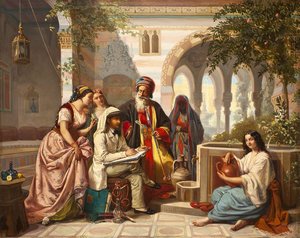
Jan Baptist Huysmans
1826 - 1906 , Belgium
基本情報
- Artistic Movement Or Style: Orientalism
- Artists Who Influenced This Artist:
- Jean-Léon Gérôme
- John Frederick Lewis
- Date Of Birth: 1826
- Date Of Death: 1906
- Full Name: Jan Baptist Huysmans
- Nationality: Belgian
- Notable Artworks:
- A plume of smoke
- The moorish boudoir
- Presentation of bride
- The juggler
- The travellers, 1886
- Place Of Birth: Antwerp, Belgium

