

 プレビュー
プレビュー
 プリントを購入
 シェアする
シェアする シェアする
シェアする
 詳細を見る
詳細を見る

 ダウンロード
 似ている作品
 X線調査
X線調査 スライドショー
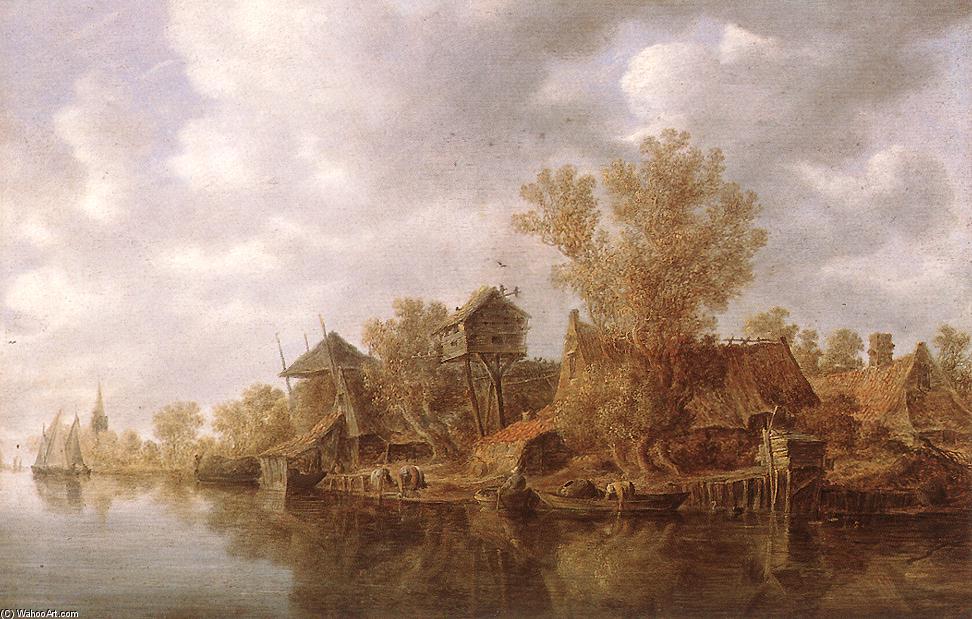
Village at the River
 Acrylic On Canvas
- WallArt
- Dutch Realism
 1636
1636 39.0 x 60.0 cm
 アルテ・ピナコテーク
 詳細を見る
詳細を見る




P118B $10

P118H $10

P118W $10

P438Z $10

P508JH $12

P508YH $12

P805H $10

P805Z $10

P919BZ $10

P919G $10

P919XJ $10

P959ZH $10

P968JZ $12

W106C $8

W218G $10

W218JH $8

W218Y $10

W307PJ $10

W316G $10

W316PJ $8

W316Y $10

W398PJ $8

W4111J $10

W500HY $15

W500JH $15

W692G $12

W849H $8

W940BG $15

W953PJ $8




作品のオリジナル比率に合わせた、当店の規定サイズからお選びください。

特定のフレームやスペースに合わせて、ご希望のサイズをご入力いただけます。選択されたサイズが元の画像の比率と異なる場合、アートワークをトリミングするか、手描きで要素を追加して絵画を拡張いたします。デジタルモックアップ を制作し、制作開始前にご確認(承認)をいただきます。
画面上のプレビューは、実際のトリミングや拡張を正確に反映しているものではありません。最終的な構図は、モックアップによってのみ正確にご確認いただけます。
カスタムサイズもご利用いただけますが、元の比率を維持するためには、あらかじめ用意されたリストからサイズを選択することをお勧めいたします。
ご注文後、ArtsDot.com チームより詳細な指示をお送りするとともに、仕上がりイメージ(モックアップ)をご提供いたします。


 ガラスオプションは、110cm未満のサイズでのみご利用いただけます。

Village at the River
複製技法
複製画のサイズ
-


合計金額
$ 288
作品解説
A Tranquil Reflection of Dutch Rural Life: Exploring Jan Van Goyen’s “Village at the River”
The Village at the River, painted by Jan Josephszoon van Goyen in 1636, stands as a cornerstone of Dutch landscape painting during the Golden Age—a testament to understated beauty and meticulous observation. More than just a depiction of scenery, it encapsulates a particular ethos: a quiet appreciation for the rhythms of rural existence and an artist’s dedication to capturing the very soul of his surroundings. Located in Munich’s Alte Pinakothek, this artwork continues to captivate viewers with its serene atmosphere and masterful execution.The Essence of Dutch Realism
Van Goyen's artistic vision departed from the flamboyant Baroque trends dominating Europe at the time, opting instead for a style rooted in Dutch Realism. Unlike his contemporaries who prioritized dramatic color palettes and elaborate compositions, Van Goyen favored muted tones—primarily browns, ochres, and grays—creating an environment imbued with melancholy yet profoundly comforting. This deliberate restraint wasn’t merely stylistic choice; it reflected the artist's belief that true beauty resided in capturing the subtle nuances of nature rather than overwhelming sensory experience. He skillfully employed oil paints on canvas to achieve remarkable detail, layering thin glazes to build up color and subtly modulating tonal values—a technique that allowed him to convey a palpable sense of atmosphere.A Window into Seventeenth-Century Holland
The painting transports us back to 17th-century Holland, a nation at the zenith of its economic prosperity and artistic innovation. The scene portrays a typical Dutch village nestled alongside a river, populated by modest dwellings adorned with thatched roofs—a commonplace architectural feature indicative of rural settlements during that era. Scattered amongst these buildings are boats engaged in trade or fishing activities, subtly hinting at the economic vitality underpinning daily life. Beyond the visual elements, “Village at the River” speaks to broader cultural values: a reverence for tradition, a connection to the land, and an acceptance of the passage of time—themes that resonate powerfully even today.Composition and Technique: Mastering Atmospheric Perspective
Van Goyen’s compositional brilliance lies in its balanced arrangement—a horizontal format emphasizing the expansive view of the water and surrounding landscape. The foreground is dominated by structures – houses with thatched roofs, a windmill, and boats – carefully positioned to guide the viewer's gaze across the canvas. A towering tree on the right serves as a vertical anchor, framing the scene and enhancing its visual impact. Crucially, Van Goyen skillfully employed atmospheric perspective—a technique that simulates the effects of distance by diminishing color intensity and reducing detail in objects situated further away from the viewer. This masterful manipulation of light and shadow contributes significantly to the painting’s immersive quality, fostering a feeling of tranquility and transporting the observer into the heart of Dutch rural life.Symbolism Beyond Surface Beauty
While seemingly simple on first glance, “Village at the River” is laden with symbolic significance. The muted color palette—browns and grays—represents not just visual harmony but also an acknowledgement of mortality and the cyclical nature of existence. The thatched roofs symbolize humility and connection to the earth—values deeply ingrained in Dutch culture during Van Goyen’s time. Even the boats serve as emblems of trade and prosperity, underscoring the economic strength of Holland while simultaneously hinting at the passage of seasons and the inevitable decline of earthly endeavors.A Legacy Enduring Through Reproduction
Today, “Village at the River” continues to inspire artists and collectors alike—a testament to Van Goyen’s enduring artistic legacy. Reproductions crafted with meticulous attention to detail capture the essence of this iconic landscape masterpiece, allowing admirers worldwide to experience its profound beauty and contemplate its timeless themes. For a glimpse into the artist's life and work, visit https://ArtsDot.com/@/Jan-Van-Goyen. To explore the Alte Pinakothek’s impressive collection of Old Master paintings, navigate /art/list/?Filter=A@D3C4S3-The-Museum-Alte-Pinakothek-(Munich-Germany).関連作品
アーティストの略歴
ヤン・ヨセフスゾーン・ファン・ゴーイエン:風景に刻まれた生涯
生い立ちと修行時代
- 1596年1月13日、オランダのライデンに生まれたヤン・ヨセフスゾーン・ファン・ゴーイエンは、後にオランダ黄金時代の絵画における極めて重要な人物としてその名を馳せることになります。
- 彼はまず故郷ライデンで修行を積み、その後ハーレムにてエサイアス・ファン・デ・フェルデのもとで研鑽を積みました。この基礎となる修行期間が、彼の芸術的発展において決定的な役割を果たしたのです。
芸術的様式とその進化
- ファン・ゴーイなる様式は、その簡潔さ、繊細な色調の変化、そしてグレー、ブラウン、グリーンを主とした限られたパレットの使用によって、一目でそれと見分けることができます。
- 彼は当時流行していた色彩豊かで細密な風景画から脱却し、より写実的で空気感に満ちたアプローチの先駆者となりました。
- 初期の作品にはファン・デ・フェルデの影響が見て取れますが、彼はやがてオランダの風景の本質を捉えることに焦点を当てた、独自の際立ったスタイルを確立していきました。
多作な活動と代表作
- ファン・ゴーイは驚くほど多作な芸術家であり、その生涯を通じて推定1,200点の絵画と1,000点を超える素描を残しました。
- 代表的な作品には、彼のトナリズム(色調主義)風景画の真髄を示す風車のある川の風景や、穏やかな水辺の情景を描き出した湖畔の漁師たちなどがあります。
- 彼は河川、湖、砂丘、そして広大な空の情景を頻繁に描き、オランダの田園地帯が持つ独特の情緒を見事に捉えました。
影響と遺産
- ファン・デ・フェルデから影響を受けた一方で、ファン・ゴーイ自身の作品もまた、後世に多大な影響を与えるものとなりました。
- 彼の教え子の一人であるヤン・ステーンのような芸術家たちに対し、彼は直接的な影響を及ぼしています。
- 写実主義と空気感の効果を重視した彼の姿勢は、後の風景画家たちが歩む道を切り拓いたのです。
経済的苦境と晩年
- 芸術的な成功を収めた一方で、ファン・ゴーイは生涯を通じて深刻な経済的困難に直面していました。
- 彼は「チューリップ・バブル」における投機や不動産投資など、さまざまな事業に手を出しましたが、しばしば深い負債を抱えることとなりました。
- 1656年4月27日にハーグで亡くなった際、彼の負債は1万8,000ギルダーにものぼったと伝えられています。
歴史的意義
- ファン・ゴーイの作品は、オランダ黄金時代絵画の礎石であり、風景画の発展における重要な貢献であると考えられています。
- 彼は17世紀のオランダの精神を捉え、当時の繁栄と土地との結びつきを反映させました。
- その革新的な技法と写実的な描写は、時代を超えて今なお芸術家たちにインスピレーションを与え、観る者を魅了し続けています。
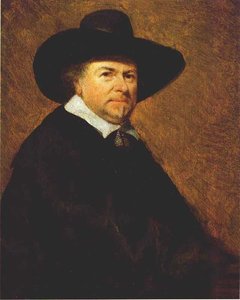
ヤン・ファン・ゴーイェン
1596 - 1656 , オランダ
基本情報
- Birth Date: 1596年1月13日
- Birth Place: オランダ、ライデン
- Death Date: 1656年4月27日
- Influenced: ヤン・ステーン
- Influenced By: エサイアス・ファン・デ・フェルデ
- Movement: オランダ黄金時代絵画
- Name: ヤン・ヨセフスゾーン・ファン・ホーイエン
- Nationality: オランダ
- Notable Works:
- 風車のある川の風景
- 湖畔の漁師
関連記事
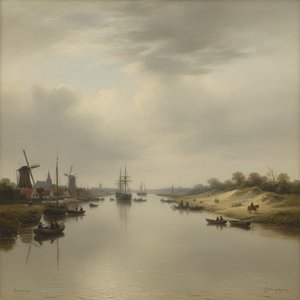
Jan van Goyen: Master of Dutch Landscape & Atmospheric Perspective
Discover Jan van Goyen, the master of Dutch landscape painting. Explore his subtle technique, atmospheric realism & lasting influence on art history. Learn about this 17th-century pioneer at ArtsDot.
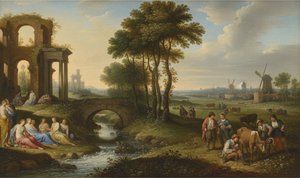
Cornelis van Poelenburch: Bridging Mannerism & the Dutch Baroque Landscape
Discover Cornelis van Poelenburch, a pivotal Dutch Baroque landscape painter bridging Mannerism & Italianate styles. Explore his life, key works, and lasting influence on 17th-century art with ArtsDot.

レンブラント傑作25選:光と影の巨匠、魂を揺さぶる名画の世界 | ArtsDot
レンブラントの傑作25選。光と影の魔術師が描いた魂を揺さぶる名画の世界へ。美術史に残る自画像、夜警、宗教画…ArtsDotで高品質なアートプリントやインテリアアートをお楽しみください。コレクションはこちら→
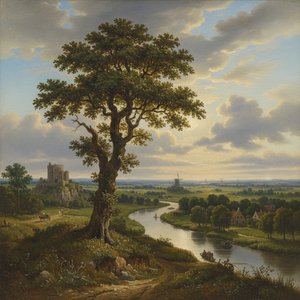
Jacob van Ruisdael: Master of Dutch Landscape & the Evocation of National Identity
Explore the life & work of Jacob van Ruisdael, the preeminent Dutch landscape painter. Discover his technical brilliance, symbolic depth, and lasting influence on art history. Learn about collecting Ruisdael's masterpieces.
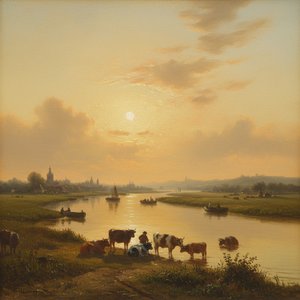
Aelbert Cuyp: Illuminating the Dutch Golden Age with Light & Landscape
Explore the luminous landscapes of Aelbert Cuyp, a master of the Dutch Golden Age. Discover his unique light, serene riverside scenes & lasting influence on art history. Learn more at ArtsDot.

