

 プレビュー
プレビュー
 シェアする
シェアする シェアする
シェアする
 詳細を見る
詳細を見る

 ダウンロード
 似ている作品
 X線調査
X線調査 スライドショー
 Stats
StatsLoose Company


 詳細を見る
詳細を見る
ジークレー/アートプリント
迅速な制作と多彩な仕上げオプションを備えた、ミュージアムクオリティのジークレーまたはキャンバスプリント。 ( 手描きの絵画を購入 Switch to Digital Image)




P118B $10

P118H $10

P118W $10

P438Z $10

P508JH $12

P508YH $12

P805H $10

P805Z $10

P919BZ $10

P919G $10

P919XJ $10

P959ZH $10

P968JZ $12

W106C $8

W218G $10

W218JH $8

W218Y $10

W307PJ $10

W316G $10

W316PJ $8

W316Y $10

W398PJ $8

W4111J $10

W500HY $15

W500JH $15

W692G $12

W849H $8

W940BG $15

W953PJ $8




作品のオリジナル比率に合わせた、当店の規定サイズからお選びください。

特定のフレームやスペースに合わせて、ご自身でサイズを指定することも可能です。選択されたサイズが元の画像の比率と一致しない場合、作品をトリミングするか、鏡面反射または単色での塗りつぶしによって画像を拡張いたします。制作を開始する前に、ご確認用のデジタルモックアップをお送りいたします。
画面上のプレビューには、実際のトリミングや拡張は反映されませんのでご注意ください。最終的な構図を正確に確認できるのは、モックアップのみとなります。
カスタムサイズも承っておりますが、元の比率を維持するためには、あらかじめ用意されたリストからサイズを選択することをお勧めいたします。


 ガラスオプションは、110cm未満のサイズでのみご利用いただけます。

Loose Company
ジークレー/アートプリント
複製画のサイズ
-


合計金額
$ 62
Jan Sanders van Hemessen’s *Loose Company*: A Study in Moral Ambiguity
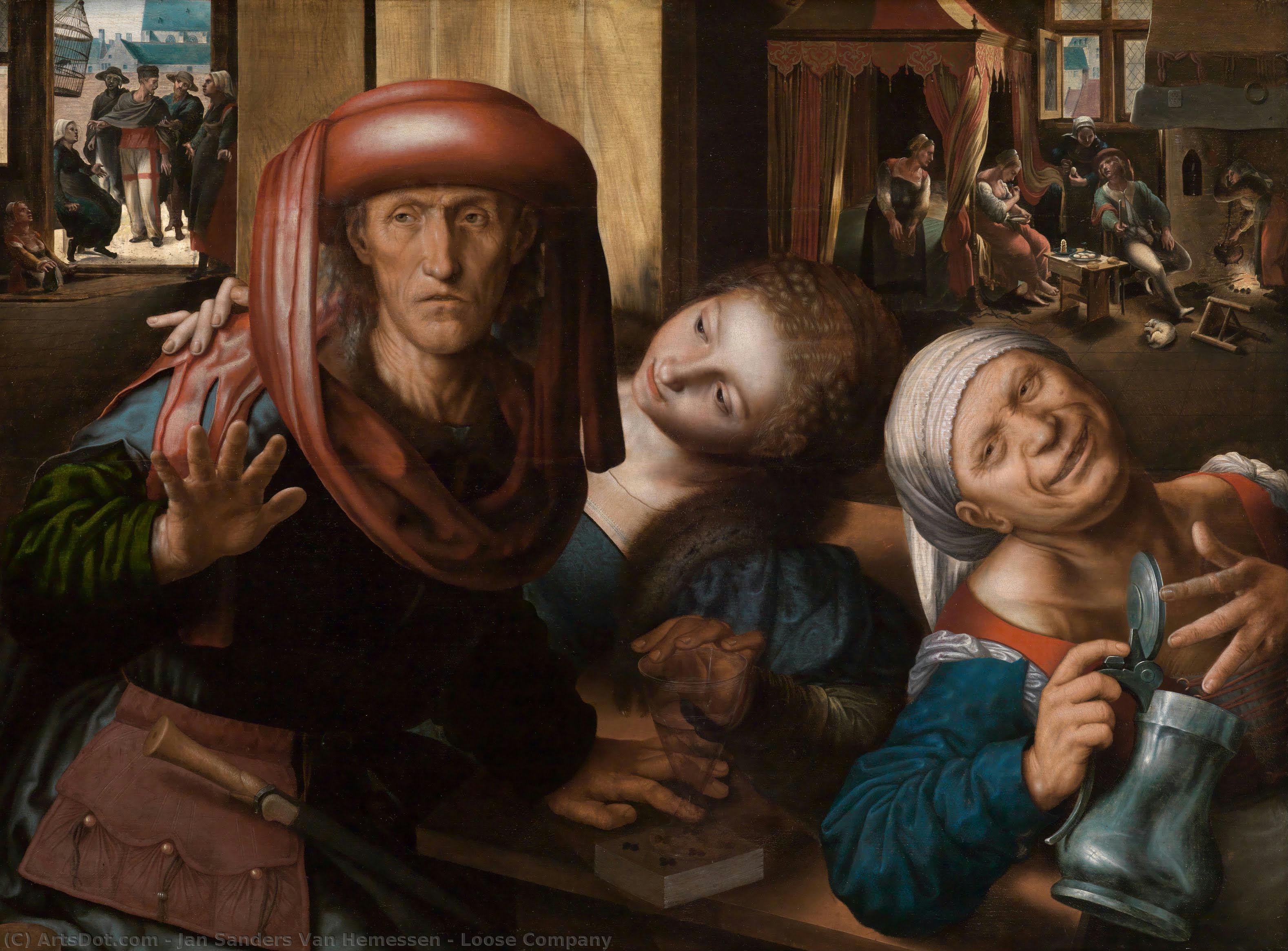
Jan Sanders van Hemessen's Loose Company, painted around 1540, is a profoundly unsettling work that immediately draws the viewer into a scene of stark realism and moral ambiguity. Executed in monochrome – a technique common for panel paintings of this period – the painting’s starkness amplifies its dramatic impact, forcing us to confront uncomfortable truths about human behavior and societal norms. The central figure, a man with an unnervingly vacant expression and a flamboyant red hat, holds two women in his arms; one lies prone, seemingly lifeless or deeply unconscious, while the other rests passively beside him. This immediate juxtaposition of vulnerability and apparent control is the core tension that defines the painting’s enduring power.
- Subject Matter: The scene depicts a moment of potential transgression, though its precise nature remains deliberately ambiguous. It's a genre piece, characteristic of van Hemessen’s work, but unlike many of his contemporaries who focused on idyllic pastoral scenes or festive gatherings, he chose to portray a darker side of human experience.
- Technical Skill: Van Hemessen was renowned for his meticulous attention to detail and masterful use of oil paint. The rendering of textures – the rough fabric of clothing, the smooth skin of the figures – is remarkably realistic, showcasing his technical prowess.
Historical Context & Artistic Influences
Painted during the height of the Northern Renaissance, *Loose Company* reflects a growing interest in portraying everyday life with unflinching honesty. Van Hemessen’s artistic journey began under the tutelage of Hendrick van Cleve I in Antwerp, establishing him firmly within the vibrant artistic milieu of the burgeoning Renaissance Netherlands. His formative years were marked by a profound engagement with classical ideals and humanist scholarship, fueled by his exposure to models from antiquity like Laocoön and Michelangelo's sculptures—influences that would permeate his subsequent oeuvre. The painting’s stark monochrome palette echoes the traditions of Northern European art, particularly the work of artists influenced by Italian Renaissance masters, while simultaneously reflecting a desire for realism and psychological depth.
The painting’s subject matter also aligns with contemporary anxieties surrounding morality and social order. Antwerp in the 1540s was a bustling commercial center, rife with corruption and moral decay. Van Hemessen's depiction of this undercurrent of vice—the potential for exploitation and abuse—was likely intended to serve as a cautionary tale, prompting viewers to reflect on their own behavior and the state of society.
Symbolism & Interpretation
- The Red Hat: The man’s red hat is particularly striking. It could represent wealth, status, or even arrogance – perhaps symbolizing the corrupting influence of power.
- The Unconscious Woman: The prone woman raises questions about consent, vulnerability, and the potential for violence. Her state of unconsciousness adds to the painting's unsettling atmosphere.
- The Cup: The small cup in the lower right corner might represent a moment of indulgence or celebration, further highlighting the scene’s ambiguous nature.
Emotional Impact & Artistic Legacy
*Loose Company* is not a comfortable painting; it challenges viewers to confront uncomfortable truths about human nature and societal failings. Its enduring power lies in its ability to provoke thought and emotion, prompting us to question our own values and assumptions. Jan Sanders van Hemessen’s masterpiece remains a testament to his artistic genius and his willingness to explore the darker aspects of the human condition – a quality that continues to resonate with audiences centuries later. This hand-painted reproduction captures not only the visual details of the original but also its profound emotional impact, offering a unique opportunity to experience one of the most compelling works in Flemish Renaissance art.
関連作品


アーティストの略歴
ヤン・サンダース・ファン・ヘメッセン:フランドル風俗画の先駆者
ヤン・サンダース・ファン・ヘメッセン(1500年頃 – 1566年頃)は、フランドル・ルネサンス美術の歴史において極めて重要な役割を果たした人物です。彼は、風俗画というジャンルに画期的な貢献をもたらし、当時の細部を驚くほど緻密に描き込みながら、道徳的な教訓を内包した場面を見事に表現したことで広く知られています。ベルギーのヘミクセン(当時はブラバント公国の一部)に生まれたファン・ヘメッセンの芸術的旅路は、アントウェルペンのヘンドリック・ファン・クレーヴ1世の指導の下で始まり、勃興するルネサンス期ネーデルラントの活気あふれる芸術的環境の中に、その名をしっかりと刻み込むこととなりました。彼の形成期は、古典的な理想や人文主義的な学問への深い傾倒によって特徴づけられます。それは、ラオコーン像やミケランジェロの彫刻といった古代の傑作に触れたことで刺激を受け、その影響は後の彼の全作品に深く浸透していくことになります。- 初期の修行と旅:ファン・ヘレンセンの徒弟修行は、彼に基礎的な芸術技術を授けただけでなく、1520年代初頭のイタリア遠征を通じてその視野を大きく広げました。この極めて重要な訪問により、彼はフィレンツェやローマの芸術的情熱に身を投じ、レオナルド・ダ・ヴィンチやミケランジェロといった、当時の視覚言語に多大な影響を与えた巨匠たちが提唱した様式的な革新を吸収することができました。また、特筆すべきは1536年中盤、パリ近郊のフォンテーヌブローへも足を運んだことです。そこで彼は、フランス国王フランソワ1世の下でフォンテーヌブロー宮殿の装飾を担ったイタリア人芸術家集団、「フォンテーヌブロー派」の勃興を目の当たりにしました。この経験は、マニエリスム的美学への理解を確固たるものにし、後の時代を特徴づける様式的な発展を予見させるものとなりました。
- ロマニズムの影響と芸術様式:ファン・ヘメッセンの芸術的感性は、イタリア・ルネサンスの理想に深く恩恵を受けたフランドル絵画の一派である「ロマニズム運動」と見事に一致していました。ロマニストたちは、北欧に根付いていた従来のゴシック様式とは一線を画し、フィレンツェ美術の壮大さと洗練を模倣しようと試み、理想化された形態や調和のとれた構図を優先させました。彼の作品にはしばしば古典神話や寓意的な要素が取り入れられており、そこには道徳哲学や知的対話に没頭した人文主義者たちの関心が反映されています。
風俗画と道徳的ヴィジョン
ファン・ヘメッセンの芸術的遺産は、主にフランドル美術において「風俗画」を独立した芸術カテゴリーとして確立させた先駆的な役割にあります。北欧ルネサンス絵画の多くを占めていた宗教的な図像学とは異なり、彼の描く風俗画は日常の生活を捉え、ありふれた活動や人々の交流を、一切の妥協のないリアリズムで描き出しました。しかし、これらの描写は単なる観察記録に留まるものではありませんでした。それらは、緻密に構成された物語と象徴的なイメージを通じて倫理的な教訓を伝える、道徳教育の手段としての役割を果たしていたのです。彼の代表作である「放蕩息子」は、この二重の機能を実に見事に体現しています。当時の建築様式や衣服への細やかなこだわりが光る、豊かに描き込まれた酒場の背景の中で、物語は劇的な緊張感を持って展開され、悔い改めと赦しという寓話の中心的なテーマを浮き彫りにします。この作品は、後の数十年にわたって繁栄することとなる「陽気な仲間たち(Merry Company)」の伝統を予見させるものであり、世俗的な主題に深い精神的な響きを吹き込むファン・ヘメッセンの卓越した手腕を示しています。- 主要な作品:彼の数多くの作品の中には、驚くべき心理的深みをもって聖書の場面を描き出し、賑わう市場の肌に触れるような空気感を捉えた「聖マタイの召命」や、芸術的な創造性を讃える精巧なタブローであり、構図と色彩の卓越した支配力を示す「芸術の母としての自然の寓意」、そして、カタリナ・ファン・ヘメッセン自身を含む著名な人物の肖像画などがあります。これらは、人物の容貌を捉え、その性格を伝える彼の一級の技術を証明しています。
遺産と歴史的意義
1566年の「聖像破壊運動(Beeldenstorm)」は、宗教的な動乱の中でアントウェルペンの芸術的至宝を壊滅させましたが、それでもなお、ヤン・サンダース・ファン・ヘメッセンの影響は消えることなく、フランドル美術の軌跡を形作り、彼を時代を代表する最も重要な芸術家の一人として確立させました。風俗画に対する彼の革新的なアプローチは、従来の芸術的規範に挑戦し、日常の生活を美的な観照の領域へと引き上げ、そこに道徳的な意義を付与したのです。さらに、様式化された形態と劇的なコントラストを特徴とするマニエリスム的美学への関わりは、フランドル美術を表現豊かなダイナミズムの新時代へと押し上げる様式的発展を先取りするものでした。先見の明を持った芸術家としてのファン・ヘメッセンの不朽の名声は、芸術的卓越性に対する彼の揺るぎない献身と、北欧の文化的遺産に対する消えることのない貢献を物語っています。
ヤン・サンダース・ファン・ヘメセン
1500 - 1566 , ベルギー
基本情報
- Artistic Movement Or Style: ロマニスト派
- Artists Or Movements Influenced By This Artist: ['ピーテル・アールツェン']
- Artists Who Influenced This Artist: ['ヘンドリック・ファン・クレーヴ1世']
- Date Of Birth: 1500年頃
- Date Of Death: 1566年頃
- Full Name: ヤン・サンダース・ファン・ヘメッセン
- Nationality: フランドル
- Notable Artworks:
- 放蕩息子
- 聖マタイの召命
- 芸術の母としての自然の寓意
- Place Of Birth: ベルギー、ヘミクセン
関連記事

レンブラント傑作25選:光と影の巨匠、魂を揺さぶる名画の世界 | ArtsDot
レンブラントの傑作25選。光と影の魔術師が描いた魂を揺さぶる名画の世界へ。美術史に残る自画像、夜警、宗教画…ArtsDotで高品質なアートプリントやインテリアアートをお楽しみください。コレクションはこちら→
Early Netherlandish Masters: 10 Paintings That Revolutionized Art & Decor
Journey into the world of Early Netherlandish painting! Explore 10 masterpieces by Jan van Eyck, Rogier van der Weyden & more. Discover stunning detail, symbolism & Renaissance art for your home decor. Find museum-quality reproductions on ArtsDot.com

Giclée Prints: Archival Quality & Aesthetic Nuances for the Discerning Collector
Explore the world of giclée prints with ArtsDot. Learn about archival quality, aesthetic nuances & investment potential. Expert guidance for discerning art collectors seeking museum-quality reproductions and lasting value.

Dark Masterpieces: 10 Iconic Paintings Dominated by Black Tones |
Explore 10 iconic paintings dominated by black tones, from Rembrandt’s chiaroscuro to Goya's dark expressions. Discover the stories behind these masterpieces & find museum-quality art reproductions for your home at .

The Enduring Legacy of Fine Art Prints: Technique, History & Aesthetic Impact
Explore the rich history & techniques of fine art prints. Discover investment potential, assess authenticity, and learn how to preserve your collection with expert guidance. Trusted insights for discerning collectors.