 プレビュー
プレビュー
 プリントを購入
 シェアする
シェアする シェアする
シェアする
 詳細を見る
詳細を見る

 ダウンロード
 似ている作品
 X線調査
X線調査 スライドショー
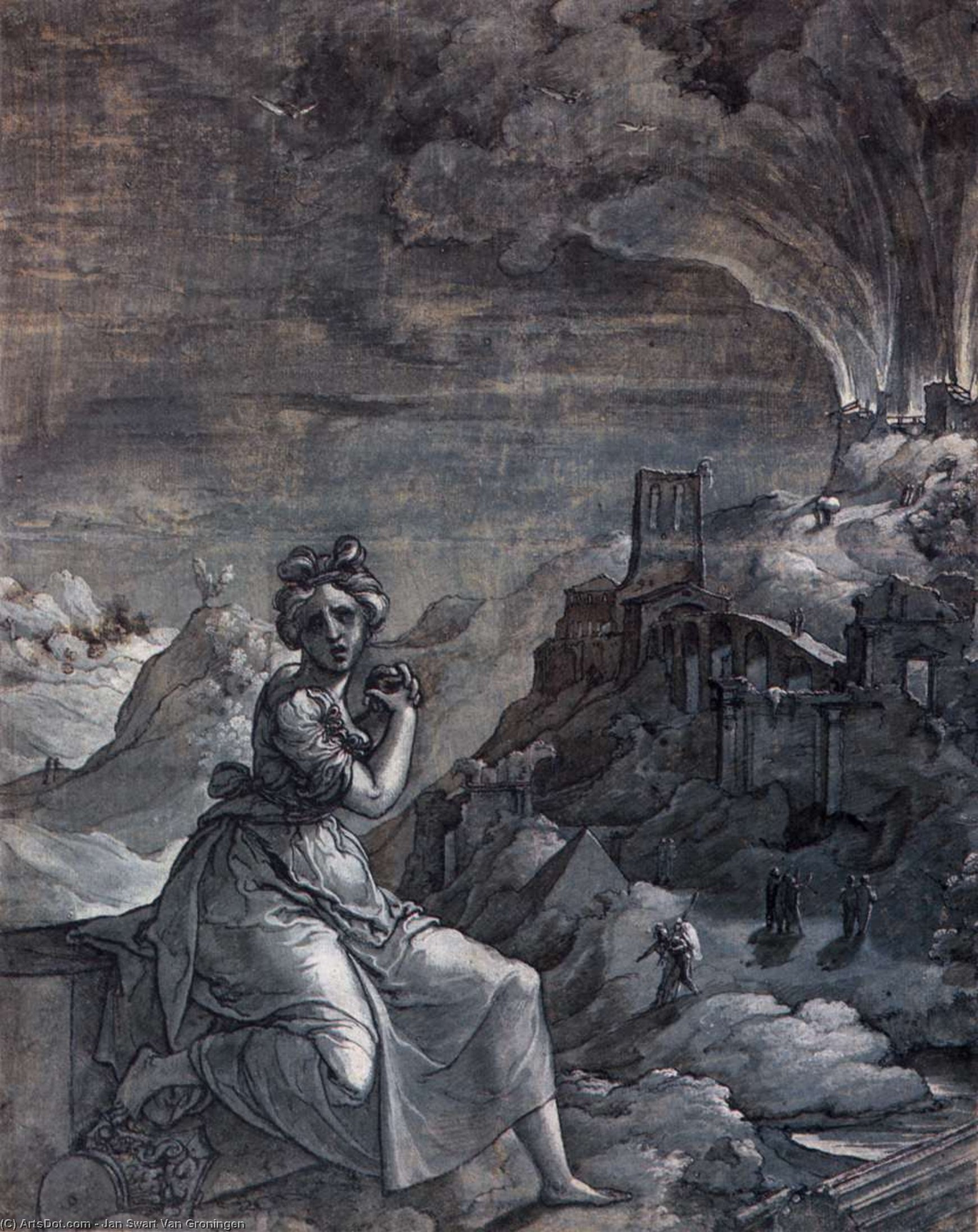
Woman Lamenting by a Burning City
 1550
1550 360.0 x 283.0 cm
 国立美術館 (Rijksmuseum)
 詳細を見る
詳細を見る




































作品のオリジナル比率に合わせた、当店の規定サイズからお選びください。

特定のフレームやスペースに合わせて、ご希望のサイズをご入力いただけます。選択されたサイズが元の画像の比率と異なる場合、アートワークをトリミングするか、手描きで要素を追加して絵画を拡張いたします。デジタルモックアップ を制作し、制作開始前にご確認(承認)をいただきます。
画面上のプレビューは、実際のトリミングや拡張を正確に反映しているものではありません。最終的な構図は、モックアップによってのみ正確にご確認いただけます。
カスタムサイズもご利用いただけますが、元の比率を維持するためには、あらかじめ用意されたリストからサイズを選択することをお勧めいたします。
ご注文後、ArtsDot.com チームより詳細な指示をお送りするとともに、仕上がりイメージ(モックアップ)をご提供いたします。


 ガラスオプションは、110cm未満のサイズでのみご利用いただけます。

Woman Lamenting by a Burning City
複製技法
複製画のサイズ
-


合計金額
$ 263
関連作品







アーティストの略歴
A Master of the Northern Renaissance: The Life of Jan Swart van Groningen
In the vibrant tapestry of the sixteenth-century Low Countries, few names evoke the meticulous grace and spiritual depth of Jan Swart van Groningen. Born around 1495 in the northern Netherlands, Swart emerged as a pivotal figure within the Dutch Renaissance, a period defined by an unprecedented marriage of profound religious devotion and a burgeoning humanist curiosity. His journey, which took him from the quiet landscapes of Groningen to the bustling artistic hubs of Gouda and Antwerp, reflects the broader movement of artists seeking to harmonize Northern European realism with the classical elegance flowing from the Italian peninsula.
The formative years of Swart’s career were deeply shaped by his proximity to other luminaries of the age. During his time in Gouda around 1522, he worked alongside the influential Jan van Scorel. This encounter proved transformative; from Scorel, Swart inherited a sophisticated command of oil painting techniques and an ability to render atmospheric perspective and lifelike flesh tones with startling accuracy. This mastery of light and shadow—often referred to as chiaroscuro—would become a hallmark of his style, allowing him to breathe life into both the rugged textures of the natural world and the delicate expressions of his subjects.
The Italian Influence and the Art of Narrative
Driven by an insatiable artistic ambition, Swart undertook a significant journey to Italy in the early 1530s. Immersing himself in the artistic fervor of Venice, he absorbed the warmth of Mediterranean color palettes and the structural grandeur of Italian Renaissance ideals. This exposure did not merely refine his technique; it expanded his thematic horizons. Upon his return to the Low Countries, his work began to exhibit a more complex interplay between narrative drama and landscape, blending the Northern tradition of minute detail with a new, sweeping sense of composition.
Swart’s versatility was perhaps most evident in his mastery of printmaking. He possessed a unique ability to translate complex theological and political anxieties into the medium of woodcuts. His prints often captured the zeitgeist of his era, such as his evocative depictions of Ottoman cavalrymen—a reflection of the contemporary European fears regarding expansion. Furthermore, his collaborative woodcut series, which portrayed Christ preaching from a ship, demonstrates his capacity for large-scale storytelling, using the interplay of water and light to underscore the divine nature of the sermon.
Legacy of Mentorship and Lasting Significance
Beyond his individual canvases and prints, Jan Swart van Groningen’s legacy is etched into the very fabric of Netherlandish art through his role as a mentor. His artistic partnership with Adriaen Pietersz Crabeth stands as a testament to his dedication to the craft. Under Swart’s guidance, Crabeth developed the skills that would eventually lead him to become a celebrated master of stained-glass art. This lineage of talent ensured that Swart’s influence would ripple through the generations of Flemish and Dutch artists who followed.
The enduring significance of Swart’s oeuvre lies in its ability to serve as a window into the sixteenth-century soul. Whether through his monumental wood panels depicting biblical figures like John the Baptist or his evocative depictions of landscapes, his work captures a world caught between the medieval and the modern. His paintings remain vital studies in:
- Spiritual Resonance: The use of religious narrative to evoke profound contemplation and faith.
- Technical Precision: The seamless integration of oil and tempera to achieve luminous, lasting textures.
- Humanist Realism: The ability to render the human form and natural environments with an almost unsettling accuracy.
Today, as we look upon the works attributed to Jan Swart van Groningen, we see more than mere historical artifacts; we encounter a master who successfully bridged the gap between the earthly and the divine, leaving behind a legacy of beauty, detail, and profound emotional truth.
jan swart van groningen
1495 - 1563 , Netherlands
基本情報
- Artistic Movement Or Style: Renaissance
- Artists Or Movements Influenced By This Artist: ['Dirck Pietersz Crabeth']
- Artists Who Influenced This Artist: ['Jan van Scorel']
- Date Of Birth: c. 1495
- Date Of Death: c. 1563
- Full Name: Jan Swart van Groningen
- Nationality: Dutch
- Notable Artworks:
- The wedding in Kana
- The Triumph of Death
- Place Of Birth: Groningen, Netherlands