 プレビュー
プレビュー
 プリントを購入
 シェアする
シェアする シェアする
シェアする
 詳細を見る
詳細を見る

 ダウンロード
 似ている作品
 X線調査
X線調査 スライドショー
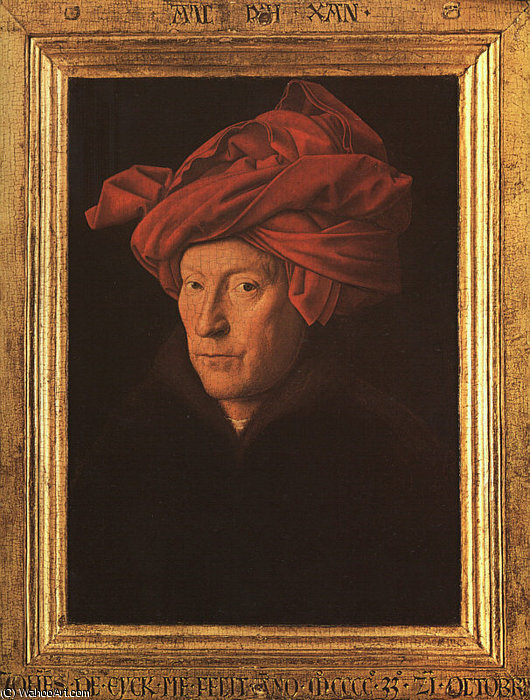
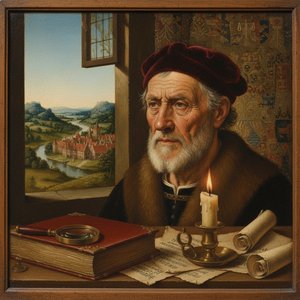
A Man in a Turban (possibly a self-portrait) -


 詳細を見る
詳細を見る




P118B $10

P118H $10

P118W $10

P438Z $10

P508JH $12

P508YH $12

P805H $10

P805Z $10

P919BZ $10

P919G $10

P919XJ $10

P959ZH $10

P968JZ $12

W106C $8

W218G $10

W218JH $8

W218Y $10

W307PJ $10

W316G $10

W316PJ $8

W316Y $10

W398PJ $8

W4111J $10

W500HY $15

W500JH $15

W692G $12

W849H $8

W940BG $15

W953PJ $8




作品のオリジナル比率に合わせた、当店の規定サイズからお選びください。

特定のフレームやスペースに合わせて、ご希望のサイズをご入力いただけます。選択されたサイズが元の画像の比率と異なる場合、アートワークをトリミングするか、手描きで要素を追加して絵画を拡張いたします。デジタルモックアップ を制作し、制作開始前にご確認(承認)をいただきます。
画面上のプレビューは、実際のトリミングや拡張を正確に反映しているものではありません。最終的な構図は、モックアップによってのみ正確にご確認いただけます。
カスタムサイズもご利用いただけますが、元の比率を維持するためには、あらかじめ用意されたリストからサイズを選択することをお勧めいたします。
ご注文後、ArtsDot.com チームより詳細な指示をお送りするとともに、仕上がりイメージ(モックアップ)をご提供いたします。


 ガラスオプションは、110cm未満のサイズでのみご利用いただけます。

A Man in a Turban (possibly a self-portrait) -
複製技法
複製画のサイズ
-


合計金額
$ 263
作品解説
The Genesis of Realism: Unveiling Jan van Eyck's "A Man in a Turban"
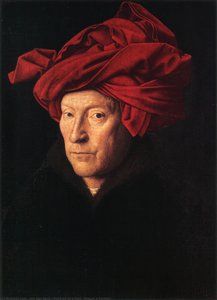
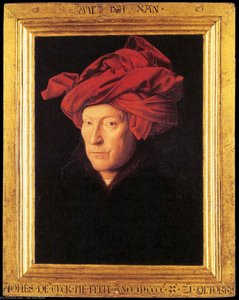
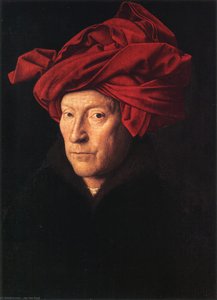
Jan van Eyck’s “A Man in a Turban,” painted around 1433, isn’t merely a portrait; it’s a portal into the burgeoning world of Early Netherlandish painting and a captivating riddle that continues to intrigue art historians. This oil-on-panel masterpiece, now residing within the National Gallery in London, represents a pivotal moment – a shift towards unprecedented realism, meticulous detail, and a profound exploration of human psychology. Van Eyck, already a skilled craftsman, pushed the boundaries of his medium with an audacious confidence, utilizing the revolutionary properties of oil paint to achieve effects previously unattainable. The painting’s power lies not just in its technical brilliance but also in its enigmatic subject: a man shrouded in mystery, gazing directly at the viewer with an intensity that feels both familiar and profoundly distant.
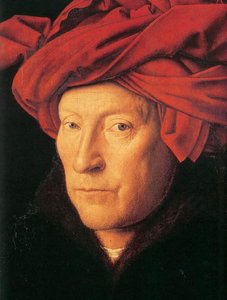
The initial impression is one of striking clarity – a world rendered with astonishing precision. Van Eyck’s mastery of light and shadow creates a palpable sense of depth, drawing the eye to the man's face, where every wrinkle, vein, and subtle shift in expression is meticulously captured. The rich palette, dominated by deep reds, browns, and blues, contributes to the painting’s dramatic effect, while the gold frame—an original element—adds an aura of wealth and prestige. But beyond the surface realism lies a complex web of symbolism and speculation. The man's attire – a dark purple robe with a fur-lined collar and a flamboyant red chaperon (a type of headdress) – speaks to his status as a prosperous individual, though not necessarily of the highest nobility. The choice of this particular headgear is particularly noteworthy, prompting debate about whether it represents a turban, a symbol perhaps of Eastern influences or even a self-referential nod to Van Eyck’s own identity.
Decoding the Symbolism: Self-Portrait or Echo of the Exotic?
The central question surrounding “A Man in a Turban” is undoubtedly his identity. While traditionally interpreted as a self-portrait of Jan van Eyck himself, this remains a subject of ongoing scholarly debate. The painting’s composition—the direct gaze, the carefully rendered features—strongly suggest this possibility. However, the man's unusually prominent and assertive expression, coupled with the fact that he is depicted in three-quarters profile, has led some to believe that he represents a more generalized ideal of masculinity rather than a specific likeness. The turban itself is a key element in this speculation. During the 15th century, turbans were uncommon attire for Europeans and often associated with the East—with its exotic lands, trade routes, and religious traditions. Its inclusion could symbolize Van Eyck’s fascination with these distant cultures, his intellectual curiosity, or perhaps even an aspiration to transcend the limitations of his own time.
Furthermore, the inscription at the top of the frame – “Als Ich Can” (As I can) – is a deliberate and intriguing addition. This motto, typically associated with Van Eyck’s other works, serves as both a boastful declaration of his artistic prowess and a subtle acknowledgment of his limitations. It's a clever play on words, suggesting that while he possesses extraordinary skill, there are always boundaries to be pushed, new techniques to explore. The Greek lettering in which the motto is inscribed further underscores Van Eyck’s cultivated intellect and his engagement with classical learning.
A Window into the Renaissance: Context and Legacy
“A Man in a Turban” emerged during a period of remarkable artistic innovation in Bruges, Ghent, and Brussels – the heartland of Early Netherlandish painting. This era witnessed significant advancements in natural representation, illusionism, and the use of new materials like oil paint. Van Eyck’s pioneering work laid the foundation for subsequent generations of artists, influencing the development of portraiture and landscape painting alike. The painting's meticulous detail and atmospheric perspective were revolutionary for their time, demonstrating a level of realism previously unseen in European art.
The fact that this painting was acquired by Thomas Howard, 21st Earl of Arundel, during his exile in Antwerp underscores its historical significance. It highlights the painting’s value not only as an artistic masterpiece but also as a tangible link to a turbulent period in English history. Today, “A Man in a Turban” stands as a testament to Jan van Eyck's genius and a captivating example of Early Netherlandish art—a work that continues to inspire awe and provoke contemplation centuries after its creation. For those seeking to experience the beauty and historical depth of this iconic painting, ArtsDot offers meticulously crafted reproductions, allowing you to bring this Renaissance treasure into your own home.
View Reproduction | Learn More About Early Netherlandish Painting
関連作品
アーティストの略歴
光と色彩の錬金術師:ヤン・ファン・エイクの世界
ヤン・ファン・エイクの名は、初期ネーデルラント絵画の夜明けを告げ、油彩技法における革命的な使用と不可分である。1390年頃にマストリヒトで生まれ、現在のオランダに位置するこの地で育った彼は、芸術的伝統に浸された家庭に生まれた。兄のフベルトも画家であり、その作品に関する詳細は謎が多いものの、ヤンは天賦の才能を持ち、瞬く間に時代の芸術界において頭角を現した。1422年にはすでにハーグに工房を開き、助手たちと共に仕事を行い、彼の技量を物語る数々の依頼を受けた。この初期の成功は単なる芸術的スキルに基づくだけではなく、ヤンは知性と信頼性を兼ね備えた人物であり、それがすぐに有力なパトロンたちの目に留まることになったのだ。ブルゴーニュ宮廷での活躍:外交と芸術の隆盛
ヤンのキャリアにおける転換点は、ジャン3世(冷酷王)のもとで、そして後にフィリップ4世(善良公)のもとでブルゴーニュ宮廷への仕官だった。これは単なるパトロン関係ではなく、ヤンは外交使節として信頼され、彼の分別と知性に公が自信を寄せていたことを示している。ポルトガルやスペインなどヨーロッパ各地への旅は、多様な文化や芸術的影響に触れ、彼のスタイルを進化させた。宮廷は単なる経済的な安定を提供するだけでなく、野心的なプロジェクトを追求するための資源へのアクセスを提供し、芸術的に達成可能な限界を押し広げた。彼はブルゴーニュ貴族のための画家であるというよりも、彼らの世界の一部となり、その威厳を反映し、高揚させる存在となった。この特異な立場は、同時代の画家がほとんど享受できなかった芸術的自由を与え、実験と革新を可能にしたのだ。油彩の錬金術:技法の革命
油彩の発明者ではないものの、ヤン・ファン・エイクはそれを完璧にしたことには疑いの余地がない。彼の登場以前はテンペラが主流であり、ブレンド能力に制限があり、比較的マットな仕上がりだった。ヤンは、透明感のある顔料を慎重に重ねることで油彩の可能性を最大限に引き出し、空前の詳細さ、輝き、リアリズムを実現した。この技術により、微妙なトーンの変化、豊かな色彩、まるで生きているかのような質感を作り出すことができた。その効果は劇的であり、表面が内側から光り輝き、布地には触覚的な質感が与えられ、肖像画は単なる容姿だけでなく、心理的な深みまでも捉えた。彼の習熟度は単なる技術的なものではなく、顔料を生きているかのような現実へと変える錬金術的なプロセスだった。この革新は無視されず、その後の世代の画家たちに影響を与え、西洋美術の様相を一変させた礎となった。傑作と不朽の遺産
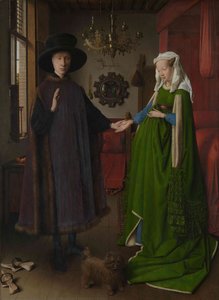
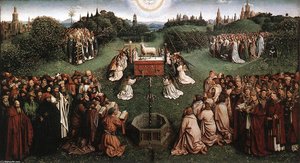
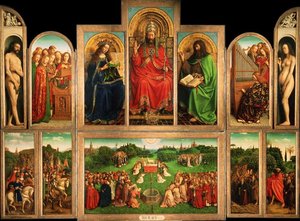
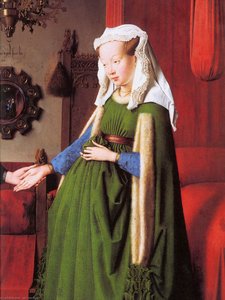
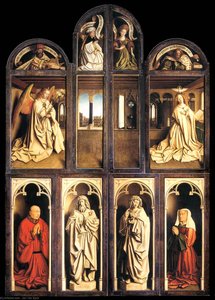
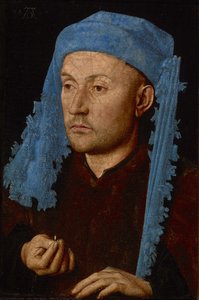
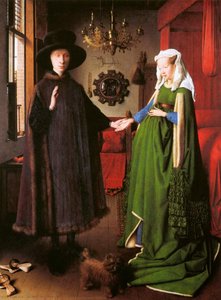
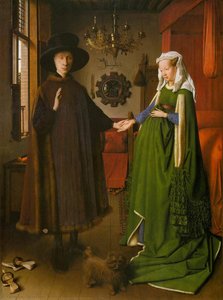
ヤンの芸術的遺産は、比較的少ないながらも深く影響力のある作品群によって確固たるものとなっている。1432年の壮大な多翼祭壇画『ゲント祭壇画』は、宗教的な象徴主義と技術的な才能が融合した最も野心的な試みである。同等に有名なのは、リアリズム、複雑なディテール、そして謎めいた象徴性で称賛される肖像画『アルノルフィーニ夫妻の肖像』(1434年)である。その他の注目すべき作品には、宗教的な場面を驚くべき明瞭さで描写する彼の技術を示す『ドレスデン祭壇画』や、個人の性格を捉える能力を示す傑作『青いターバンの男』などがある。これらの絵画は単なる視覚的表現ではなく、別の世界への窓であり、細部に至るまで徹底的にレンダリングされた世界である。ヤンの影響力は、これらの象徴的な作品を超えて広がり、初期ネーデルラント絵画の発展を形作り、何世紀にもわたって数えきれないほどの芸術家にインスピレーションを与え続けている。1441年にブルージュで亡くなった彼は、今日まで私たちに人間の経験を照らし出す芸術の力を思い出させる遺産を残した。フベルト・ファン・エイクとの関係
ヤンの兄であるフベルトについては、その生涯に関する確かな情報はほとんどない。一部の研究者は彼の存在自体を疑問視しているほどだ。しかし、1426年の課税記録は、彼がその頃に亡くなったことを示唆しており、ヤンと共に初期の作品にも関与していた可能性が高い。ゲント祭壇画におけるフベルトの役割は議論の余地があるものの、兄弟が協力してこの壮大な作品を完成させたという考えは、初期ネーデルラント絵画の理解において重要な意味を持つ。彼らの共同作業は、芸術的才能と家族関係が、当時の芸術制作に与えた影響を示唆している。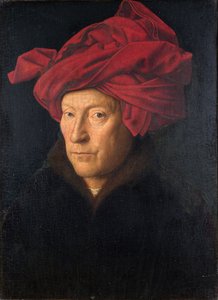
ヤン・ファン・エイク
1390 - 1441 , オランダ
基本情報
- フルネーム: ヤン・ファン・エイク
- 主な作品:
- ゲント祭壇画
- アルノルフィーニ夫妻の肖像
- ドレスデン三連祭壇画
- 青いターバンの男
- 出生地: マストリヒト、オランダ
- 国籍: フランドル人
- 影響を与えたアーティストまたは運動: ['初期ネーデル란드画家']
- 死亡年月日: 1441年
- 生年月日: 1390年頃
- 芸術運動またはスタイル: 初期ネーデル란드絵画
関連記事

Early Netherlandish Masters: 10 Paintings That Revolutionized Art & Decor
Journey into the world of Early Netherlandish painting! Explore 10 masterpieces by Jan van Eyck, Rogier van der Weyden & more. Discover stunning detail, symbolism & Renaissance art for your home decor. Find museum-quality reproductions on ArtsDot.com
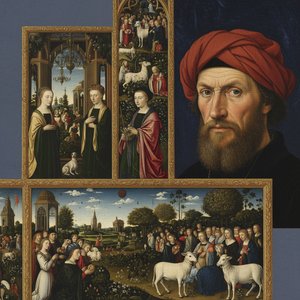
Jan van Eyck: Innovation, Symbolism & the Dawn of Early Netherlandish Painting
Explore the revolutionary art of Jan van Eyck! Discover his groundbreaking oil painting techniques, hidden symbolism, and lasting impact on the Early Netherlandish Renaissance. A deep dive for art enthusiasts.
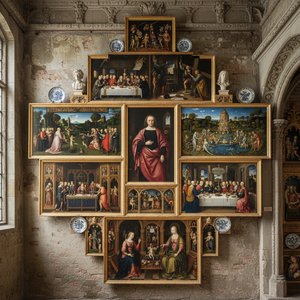
Early Netherlandish Masters: 10 Paintings That Revolutionized Art & Decor
Journey into the Early Netherlandish Renaissance! Explore 10 iconic paintings by Jan van Eyck, Rogier van der Weyden & more. Discover stunning detail, symbolism, and oil painting techniques. Find museum-quality art reproductions for your home at ArtsDot.com.
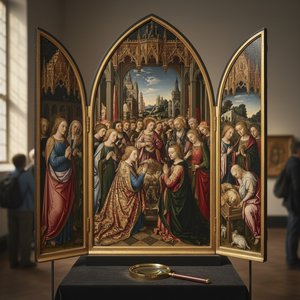
Illuminating Realism: A Comprehensive Exploration of the Early Netherlandish Renaissance Movement
Explore the captivating world of Early Netherlandish painting! Discover Jan van Eyck & other Flemish masters, their revolutionary techniques, hidden symbolism, and lasting legacy. A comprehensive guide for art enthusiasts.
Illuminating Realism: Early Netherlandish Painting (15th-16th Centuries)
Explore the captivating world of Early Netherlandish painting (15th-16th centuries). Discover Jan van Eyck, Hans Memling & more. Uncover revolutionary techniques and hidden symbolism in this definitive guide.