 プレビュー
プレビュー
 プリントを購入
 シェアする
シェアする シェアする
シェアする
 詳細を見る
詳細を見る

 ダウンロード
 似ている作品
 X線調査
X線調査 スライドショー
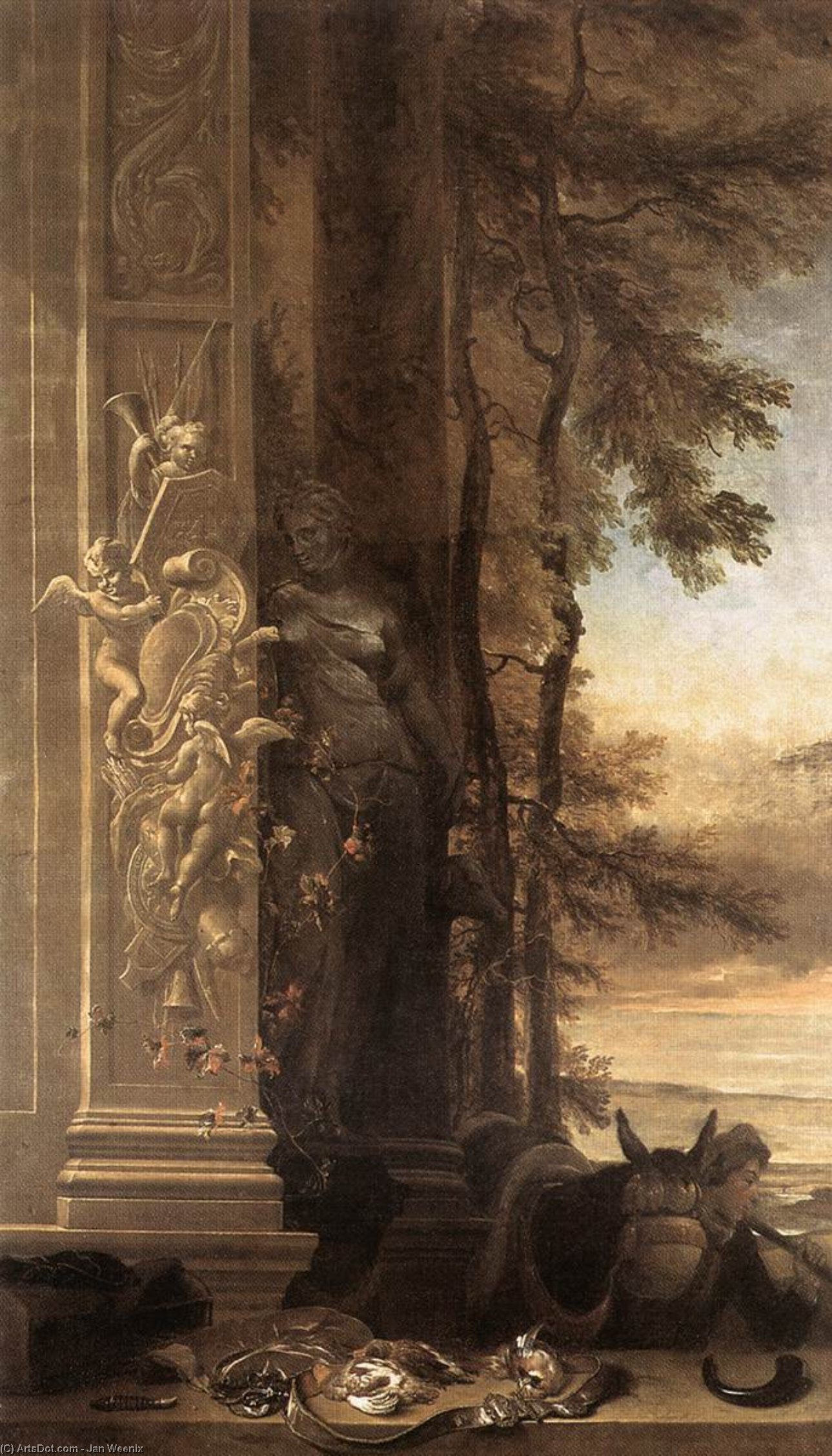
Game Still-Life with Statue of Diana
 Oil On Canvas
- WallArt
- Dutch Golden Age
 1703
1703 345.0 x 214.0 cm
 アルテ・ピナコテーク
 詳細を見る
詳細を見る




P118B $10

P118H $10

P118W $10

P438Z $10

P508JH $12

P508YH $12

P805H $10

P805Z $10

P919BZ $10

P919G $10

P919XJ $10

P959ZH $10

P968JZ $12

W106C $8

W218G $10

W218JH $8

W218Y $10

W307PJ $10

W316G $10

W316PJ $8

W316Y $10

W398PJ $8

W4111J $10

W500HY $15

W500JH $15

W692G $12

W849H $8

W940BG $15

W953PJ $8




作品のオリジナル比率に合わせた、当店の規定サイズからお選びください。

特定のフレームやスペースに合わせて、ご希望のサイズをご入力いただけます。選択されたサイズが元の画像の比率と異なる場合、アートワークをトリミングするか、手描きで要素を追加して絵画を拡張いたします。デジタルモックアップ を制作し、制作開始前にご確認(承認)をいただきます。
画面上のプレビューは、実際のトリミングや拡張を正確に反映しているものではありません。最終的な構図は、モックアップによってのみ正確にご確認いただけます。
カスタムサイズもご利用いただけますが、元の比率を維持するためには、あらかじめ用意されたリストからサイズを選択することをお勧めいたします。
ご注文後、ArtsDot.com チームより詳細な指示をお送りするとともに、仕上がりイメージ(モックアップ)をご提供いたします。


 ガラスオプションは、110cm未満のサイズでのみご利用いただけます。

Game Still-Life with Statue of Diana
複製技法
複製画のサイズ
-


合計金額
$ 263
作品解説
A Hunt Frozen in Time: Unveiling Jan Weenix’s “Game Still-Life with Statue of Diana”
Jan Weenix's "Game Still-Life with Statue of Diana," painted in 1703, isn’t merely a depiction of hunting trophies; it’s a meticulously crafted tableau brimming with symbolism and reflecting the sophisticated tastes of the Dutch Golden Age. The painting immediately draws the eye to its central subject: a magnificent statue of Diana, goddess of the hunt, presiding over a carefully arranged display of slain game – a stag, a deer, and a hare – alongside a loyal hound and a proud horse. This isn’t a scene of raw violence, but rather one imbued with a contemplative stillness, suggesting a moment captured between pursuit and reflection. The composition is remarkably balanced, utilizing atmospheric perspective to create depth and drawing the viewer into this intimate, almost theatrical space.
- The Setting: A subtly rendered forest backdrop provides a naturalistic setting, grounding the scene in the tangible world while hinting at the wildness beyond. The trees are painted with careful attention to detail, their branches and foliage suggesting movement and life.
- Diana’s Presence: Weenix masterfully portrays Diana not as a warrior goddess, but as a serene observer of her own success. Her gaze is direct, yet gentle, conveying a sense of quiet authority and connection to the natural world. The statue itself is rendered with remarkable realism – the texture of the marble, the delicate folds of her garment, all meticulously observed and faithfully reproduced.
- The Animals: Each animal is depicted with exquisite detail, showcasing Weenix’s profound understanding of anatomy and his ability to capture their individual personalities. The stag's proud stance, the deer's graceful posture, and the hare's alert expression all contribute to the painting’s overall sense of realism and vitality.
Masterful Technique: The Language of Dutch Realism
Weenix was a leading figure in the development of Dutch still-life painting during the 17th century, inheriting and refining the techniques of his father, Jan Baptist Weenix. His work exemplifies the principles of Dutch realism – an unwavering commitment to accurate observation and meticulous detail. The artist’s use of *chiaroscuro* (the contrast between light and dark) is particularly striking, creating a dramatic effect that highlights the textures of the game and the statue while simultaneously lending depth and atmosphere to the scene. Notice how subtle gradations of light define the contours of each animal, emphasizing their form and volume. The artist’s brushwork is remarkably controlled, conveying both precision and spontaneity.
Weenix's skill lies not just in his technical proficiency but also in his ability to imbue inanimate objects with a sense of life and drama. He achieves this through careful attention to detail, masterful use of light and shadow, and a deep understanding of the subject matter.Symbolism and Context: A Window into Dutch Society
“Game Still-Life” is more than just a depiction of hunting; it’s a complex work laden with symbolism that reflects the values and beliefs of 18th-century Dutch society. The hunt itself was a popular pastime among the wealthy elite, symbolizing status, skill, and connection to nature. The presence of Diana reinforces this association, linking the act of hunting to the goddess of the hunt – a figure revered for her prowess and independence. The inclusion of the statue suggests an appreciation for classical art and ideals, reflecting the influence of Italian Renaissance painting on Dutch artists. Furthermore, the *vanitas* elements—the scattered feathers, the discarded weapons—serve as reminders of mortality and the fleeting nature of earthly pleasures, a common motif in still-life paintings of the period.
A Legacy Endures: Reproductions and Inspiration
Originally housed at the Alte Pinakothek in Munich, this iconic painting continues to captivate viewers today. ArtsDot offers high-quality reproductions that faithfully capture the artistry and atmosphere of Weenix’s masterpiece. Whether adorning a grand salon or a more intimate space, “Game Still-Life with Statue of Diana” evokes a sense of timeless elegance and invites contemplation on themes of nature, beauty, and mortality. Explore our collection to bring this remarkable work into your home and experience the enduring legacy of Jan Weenix.
関連作品

アーティストの略歴
オランダ・リアリズムの遺産:ヤン・ウィニックスの生涯と芸術
1641年にアムステルダムで生まれたヤン・ウィニックスは、芸術的伝統が深く根付いた家系に生を受け、高名な父ヤン・バプティスト・ウィニックスから絵画への情熱を継承しました。彼の幼少期に関する詳細な記録は一部謎に包まれていますが、若きヤンが父の工房で基礎的な修行を積み、静物画や動物を描写するために不可欠な技法を吸収したことは間違いありません。それはまさに、オランダ黄金時代の芸術の真骨頂とも言えるものでした。この家族の影響は単なる技術的なものに留まりませんでした。自然を細部まで観察することへの深い敬意と、その美しさを驚くべき写実性をもって描き出そうとする献身的な姿勢が、彼の魂に刻み込まれたのです。また、イタリア滞在を通じて作品にイタリア風の感性を吹き込んだ父自身の芸術的旅路も、間違いなくヤンの形成されつつあった美意識を形作りました。当初は父の威名に隠れがちであったものの、ヤンは瞬く間に独自の地位を確立し、17世紀オランダ絵画という活気あふれる風景の中に、唯一無二の道を切り拓いていったのです。バロック様式の開花
ウィニックスの芸術様式は、バロック時代の絶頂期に花開き、ドラマチックな演出、豊かな細部、そしてダイナミックな構図を好んだ当時の時代精神を色濃く反映しています。彼は決して孤立して創作していたわけではありません。海洋画で名高いヘンドリック・コルネリス・ヴルームや、動物画のスペシャリストであるメルヒオール・デ・ホンデクーテルといった同時代の画家たちの影響が、彼の画法に繊細な彩りを添えていました。しかし、ウィニックスはこれらのインスピレーションを統合し、彼にしか成し得ない独自のスタイルへと昇華させたのです。彼のキャンバスは、羽毛の光沢、毛皮の柔らかさ、果実の繊細な透明感など、質感の描写において写真のような精密さを特徴としています。これらはすべて、熟練した筆致と、光と影に対する鋭い洞察力によって成し遂げられました。キアロスクーロ(明暗法)、すなわち光と闇の劇的な相互作用は、奥行きと視覚的な興味を生み出し、見る者を抗いがたいリアリズムで画面の中へと引き込みます。さらに鮮やかな色彩設計が主題に生命を吹き込み、そこに即時性と活力をもたらしています。彼は画面内の要素を配置する卓越した技術を備えており、視覚的に美しく、かつ物語性に満ちた、調和のとれた構図を作り出すことに長けていました。傑作とパトロンたち
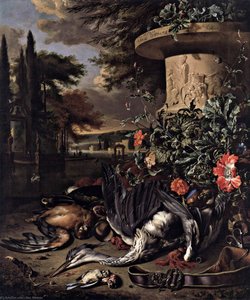
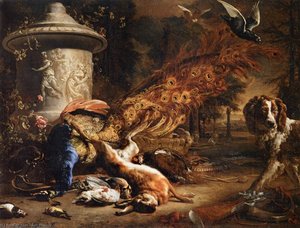
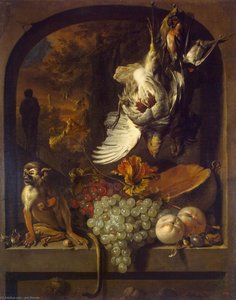
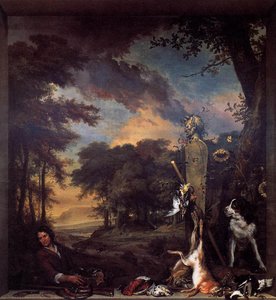
そのキャリアを通じて、ヤン・ウィニックスは技術的な輝きと魅力的な主題によって称賛される膨大な数の作品を残しました。例えば、庭園の壺の傍らにある狩猟と果実の静物画(1714年)のような作品は、獲物となる鳥、瑞々しい果実、建築的な細部といった多様な要素を、複雑で視覚的に圧倒的な構成へと見事に融合させる彼の能力を象徴しています。野ウサギとその他の獲物の静物画(1697年)では、動物の解剖学的構造と質感への習熟が見られ、対象の生命感を驚くべき正確さで捉えています。また、座る猿(1685年以前)のような小規模な作品においてさえ、動物に個性や表情豊かなキャラクターを吹き込む彼の才能が垣間見えます。こうした卓越した技術は、有力なパトロンたちの目に留まらないはずがありませんでした。1702年、ウィニックスは選帝侯プファルツのヨハン・ヴィルヘルムの宮廷へと招かれ、他の著名な画家たちと共に、ベンスベルク城のために大規模な狩猟場面を描き上げました。これは彼の名声の高まりと芸術的技量の証左といえるでしょう。こうした依頼は彼に経済的な安定をもたらしただけでなく、さらなる技術研鑽の機会を与えたのです。オランダ美術への永続的な影響
ヤン・ウィニックスはバロック期において、狩猟静物画や獲物画を普及させる上で極めて重要な役割を果たし、これらのジャンルを単なる装飾の域を超えたものへと高めました。彼の作品はコレクターたちの間で熱狂的に求められ、オランダの芸術的伝統の発展に大きく貢献しました。彼は単に自然を模倣したのではなく、独自のレンズを通して自然を解釈し、当時の観衆の心に深く響くリアリズム、ドラマ、そして審美的な美しさを絵画に宿らせたのです。彼の遺産は彼自身の創作物だけに留まりません。娘のマリア・ウィニックスもまた、熟練した花画家として家族の伝統を継承し、ウィニックスの名が後世にわたって芸術的卓越性の代名詞であり続けることを確かなものにしました。今日、ヤン・ウィニックスの絵画は世界中の美術館や個人コレクションで大切に保管されており、自然界の見事な描写を通じて、今なおアーティストたちにインスピレーションを与え、観る者を魅了し続けています。それは、オランダ美術史という豊かな織物に対する、彼の不朽の貢献の証なのです。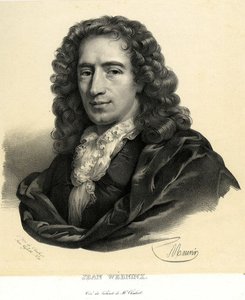
ヤン・ウィーンクス
1641 - 1719 , オランダ
基本情報
- Artistic Movement Or Style: オランダ・バロック
- Artists Or Movements Influenced By This Artist: ['マリア・ウィニックス']
- Artists Who Influenced This Artist:
- ヤン・バプティスト・ウィニックス
- ヘンドリック・ヴルーム
- Date Of Birth: 1641年
- Date Of Death: 1719年
- Full Name: ヤン・ウィニックス
- Nationality: オランダ
- Notable Artworks:
- 狩猟と果物の静物画
- 野ウサギの静物画
- 座る猿
- 白孔雀
- Place Of Birth: オランダ、アムステルダム
関連記事
Abraham Hendricksz van Beyeren: Pioneering Dutch Still Life & the Banquet Tradition
Explore the captivating world of Dutch Golden Age still life with Abraham van Beyeren. Discover his innovative techniques, symbolic banquet scenes & lasting influence on art history. Learn about collecting these masterpieces.
Jan Jansz Wijnants: A Study in Dutch Golden Age Still Life & Floral Transience
Explore the captivating world of Jan Wijnants and Dutch Golden Age still life painting. Discover symbolism, masterful techniques & lasting influence on floral art history. Learn more!
Jan Steen: A Master of Dutch Genre Painting & the Golden Age
Explore the life & art of Jan Steen, a leading Dutch Golden Age painter renowned for his humorous genre scenes & insightful social commentary. Discover his techniques, legacy, and collecting tips.
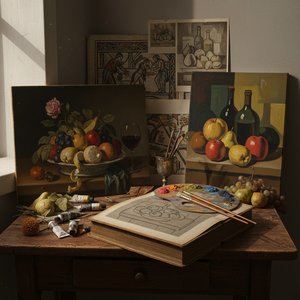
Silent Narratives: Exploring the Enduring Appeal of Still Life Painting Across Centuries
Explore the rich history of still life painting with ArtsDot. Discover Dutch Masters, decode vanitas symbolism & learn about collecting timeless art. Expert insights and museum-quality reproductions.

黄金世紀の巨匠たち:バロック絵画が彩る10選|ArtsDot
オランダ黄金時代の10大傑作を紐解く!レンブラント、フェルメール…バロック絵画の魅力と時代背景を深く探求。ArtsDotで、至高のアートコレクションと空間演出のヒントを見つけよう。高品質なアートプリントで、お部屋を華やかに。