 プレビュー
プレビュー
 シェアする
シェアする シェアする
シェアする
 詳細を見る
詳細を見る

 ダウンロード
 似ている作品
 X線調査
X線調査 スライドショー
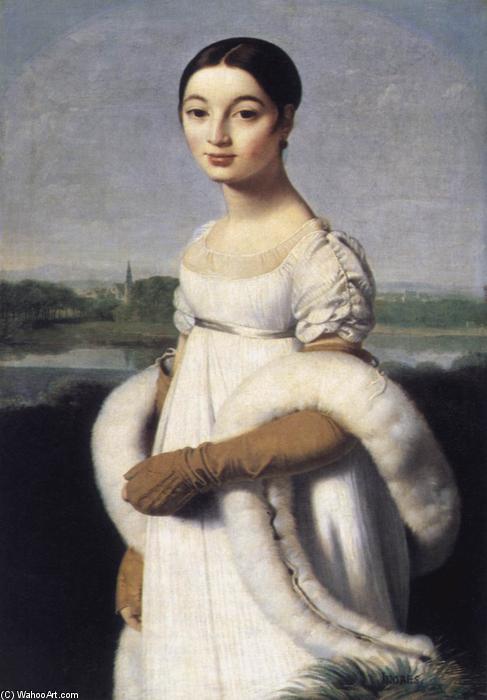
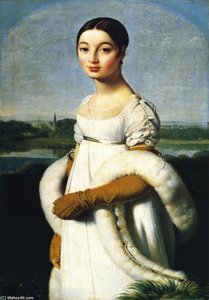
Mademoiselle Caroline Rivière
 Acrylic On Canvas
- WallArt
- Neoclassical Precision
 1806
1806 100.0 x 70.0 cm
 ルーブル美術館
 詳細を見る
詳細を見る
ジークレー/アートプリント
迅速な制作と多彩な仕上げオプションを備えた、ミュージアムクオリティのジークレーまたはキャンバスプリント。 ( 手描きの絵画を購入 画像を購入)




P118B $10

P118H $10

P118W $10

P438Z $10

P508JH $12

P508YH $12

P805H $10

P805Z $10

P919BZ $10

P919G $10

P919XJ $10

P959ZH $10

P968JZ $12

W106C $8

W218G $10

W218JH $8

W218Y $10

W307PJ $10

W316G $10

W316PJ $8

W316Y $10

W398PJ $8

W4111J $10

W500HY $15

W500JH $15

W692G $12

W849H $8

W940BG $15

W953PJ $8




作品のオリジナル比率に合わせた、当店の規定サイズからお選びください。

特定のフレームやスペースに合わせて、ご自身でサイズを指定することも可能です。選択されたサイズが元の画像の比率と一致しない場合、作品をトリミングするか、鏡面反射または単色での塗りつぶしによって画像を拡張いたします。制作を開始する前に、ご確認用のデジタルモックアップをお送りいたします。
画面上のプレビューには、実際のトリミングや拡張は反映されませんのでご注意ください。最終的な構図を正確に確認できるのは、モックアップのみとなります。
カスタムサイズも承っておりますが、元の比率を維持するためには、あらかじめ用意されたリストからサイズを選択することをお勧めいたします。


 ガラスオプションは、110cm未満のサイズでのみご利用いただけます。

Mademoiselle Caroline Rivière
ジークレー/アートプリント
複製画のサイズ
-


合計金額
$ 62
Mademoiselle Caroline Rivière: A Portrait of Transient Beauty
Jean-Auguste-Dominique Ingres’s “Mademoiselle Caroline Rivière,” painted in 1806, is more than just a portrait; it's a carefully constructed tableau of youthful beauty, poised on the cusp of womanhood and shadowed by an undercurrent of melancholy. This exquisite work, now residing within the hallowed halls of the Louvre, offers a rare glimpse into the artistic sensibilities of one of France’s most celebrated painters – a man known for his unwavering dedication to classical ideals yet possessed of a strikingly sensual eye. The painting immediately draws the viewer in with its delicate palette and the subject's enigmatic expression, hinting at a story unspoken.
The central figure, Caroline Rivière, is depicted in a simple white dress, a color that speaks volumes about innocence and purity – a deliberate choice by Ingres to emphasize her youth. A luxurious fur stole, draped around her shoulders, adds a touch of aristocratic elegance while simultaneously contributing to the overall sense of quiet contemplation. Her hand rests lightly on a handbag, a small detail that subtly suggests both practicality and a certain social awareness. Notably, she is not gazing directly at the viewer; instead, her eyes are turned slightly away, towards an unseen point in the landscape – a gesture that invites speculation about her thoughts and feelings, fueling the painting’s inherent sense of mystery.
Neoclassical Precision and Ingres's Signature Style
“Mademoiselle Caroline Rivière” is a quintessential example of Ingres’s Neoclassical style. He meticulously rendered every detail with an almost photographic precision, employing a technique characterized by sharply defined lines, smooth surfaces, and a masterful control of light and shadow. This commitment to anatomical accuracy, however, is tempered by a willingness to introduce subtle distortions – the elongated neck, the extended nose – that betray a deeper artistic intent. These deliberate deviations from strict realism are not errors but rather conscious choices designed to heighten the emotional impact of the portrait.
Ingres’s approach can be compared to that of Jan van Eyck and other Early Netherlandish painters, artists he greatly admired. The painting's flatness, its emphasis on surface detail, and its slightly unsettling realism were initially met with mixed reactions at the 1806 Salon, where it was deemed “Gothic” due to its polished finish and perceived resemblance to these earlier masters. However, modern art historians now recognize this as a deliberate stylistic choice by Ingres, reflecting his desire to bridge the gap between classical tradition and contemporary artistic expression.
A Landscape of Sentiment and Historical Context
The background landscape is not merely decorative; it plays a crucial role in shaping the painting’s overall mood. The muted tones of the trees and sky create a sense of serenity, but also hint at a subtle sadness. Ingres masterfully uses atmospheric perspective to draw the viewer's eye towards Caroline, emphasizing her isolation within this tranquil setting. This technique, reminiscent of Poussin, creates a harmonious balance between figure and landscape – a hallmark of Ingres’s artistic vision.
It is important to note that “Mademoiselle Caroline Rivière” was painted during the Napoleonic era, a period of significant social and political upheaval in France. Caroline Rivière's father, Philibert Rivière, was a prominent court official, and the commission for this portrait reflects his desire to immortalize his family’s status and lineage. The painting therefore offers a fascinating window into the lives of the French aristocracy during this transformative time.
Symbolism and Emotional Resonance
Beyond its technical brilliance, “Mademoiselle Caroline Rivière” is imbued with layers of symbolism. The young woman's frowning expression – a subtle yet powerful detail – suggests a quiet melancholy, perhaps reflecting the fleeting nature of youth and beauty or hinting at an unspoken sadness. The handbags, though seemingly mundane, represent both practicality and social connection, subtly highlighting Caroline’s position within her society.
Ultimately, “Mademoiselle Caroline Rivière” is a poignant meditation on beauty, transience, and the complexities of human emotion. It's a testament to Ingres’s extraordinary talent – his ability to capture not just the outward appearance of his subjects but also their inner lives. A hand-painted reproduction offers an unparalleled opportunity to appreciate this masterpiece in exquisite detail, bringing its timeless elegance and emotional depth into your home.
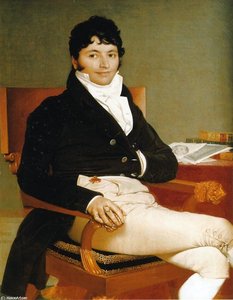
アーティストの略歴
線と形態の遺産:ジャン=オーギュスト・ドミニク・アングルの世界
ジャン=オーギュスト・ドミニク・アングルという名は、新古典主義の精密さと、まるで彫刻のような絵画への接近法を象徴する言葉です。1780年にフランスのモントバールで生まれ、彼の芸術的遍歴は、古典的な理想への揺るぎない献身と、芽生える官能性、そして慣習に挑戦しようとする意志によって彩られています。アングルは単に過去を複製しただけでなく、それとの深遠な対話を行い、時代を定義するとともに未来の革命を予感させるスタイルを築き上げました。
彼の初期の人生は、将来的な芸術的追求のための確固たる基盤を提供しました。父親のジャン=マリー・ジョゼフ・アングルもまた画家であり彫刻家であり、幼いドミニクに幼い頃から形態と技術への愛を植え付けました。この最初の訓練に続き、彼はトゥールーズのアカデミー・ロワイヤル・ド・ペinture、彫刻、建築で学び、ギヨーム=ジョゼフ・ロックの下でスキルを磨きました。しかし、1797年にパリに移り、ジャック=ルイ・ダヴィッドの下で修行したことが、彼の道を真に決定づけました。新古典主義の第一人者であったダヴィッドは、厳格な規律と、線、形態、歴史的題材を重視する姿勢を彼に与え、これらの原則はアングルのキャリアを通して彼の作品の中心となりました。
理想美への探求
アングルの芸術哲学は、イタリア・ルネサンスの巨匠に対する深い賞賛に基づいています。特にラファエロは絶え間ないインスピレーションの源でした。彼は線が形態を定義し感情を伝える力に信じており、単なる表現を超越した理想化された美を追求しました。この探求は、1801年に彼に名声をもたらした『アガメムノンの使者、アキレウスのテントにて』に見られます。この絵画は、彼の細部への綿密な注意、正確な線描技術、そして明確な物語的焦点—新古典主義様式の特徴—を示しています。
しかし、アングルは単なる模倣者ではありませんでした。彼は徐々に独自の声を開発し、古典的な原則に独特の官能性と心理的洞察力を融合させました。彼の肖像画は特にこの進化を実証しています。新古典主義の特徴である形式的な優雅さを維持しながら、彼は形態や空間を微妙に歪め、後のキュビスムのような表現主義的な変形を予感させる、不安でありながらも魅惑的な効果を生み出しました。『ミスター・ベルタンの肖像』(1833-1834)は、長く伸びた手と強烈な視線が特徴で、この革新的なアプローチの好例です。
歴史を超えて:オリエンタリズムと晩年の傑作
『ルイ13世の誓い』(1827)のような歴史的および神話画で高く評価されている一方で、アングルは他のジャンルも探求しました。特にオリエンタリズムが顕著です。エキゾチックな場面や女性ヌードの描写、例えば驚くべき83歳という年齢で完成した『トルコ風呂』(1862)は、官能的で神秘的なものへの魅力を明らかにしています。これらの作品は、理想化された表現に対して批判されることもありますが、彼の実験と境界線を押し広げる意欲を継続的に示しています。
アングルの後期キャリアは、変化する芸術的状況の中で展開しました。ロマン主義の台頭が新古典主義の支配に挑戦しましたが、アングルは古典的な理想への献身を揺るぎなく保ちながら、彼の作品の中にロマン主義的な感受性を組み込みました。彼は次世代のアーティストたちを形作り、伝統と現代性との間の架け橋としての地位を確固たるものにする、非常に影響力のある教師となりました。
永続的な影響
ジャン=オーギュスト・ドミニク・アングルは1867年にパリで亡くなり、今日まで共鳴し続ける遺産を残しました。彼の線、形態、そして理想化された美への重点は、世代を超えたアーティストたちに深く影響を与えました。驚くべきことに、彼の作品は、ラディカルな異なるスタイルを支持した芸術家たちさえ魅了しました—アンリ・マティスやパブロ・ピカソは、彼の古典的な形態に活力と感情を吹き込む革新的なアプローチを賞賛しました。
アングルの絵画は今では世界中の主要な美術館に収蔵されており、彼の不朽の芸術的ビジョンへの証となっています。彼は芸術史における重要な人物であり続けています—過去の伝統を守るだけでなく、未来への道を開いた巨匠です。彼の作品は、美の本質、線の力、そして古典的な理想の時代を超越した魅力について考察するよう私たちを誘います。
主な作品
- アガメムノンの使者、アキレウスのテントにて (1801)
- ルイ13世の誓い (1827)
- ミスター・ベルタンの肖像 (1833-1834)
- トルコ風呂 (1862)
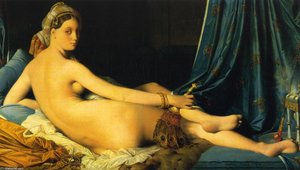
- グランド・オダリスク (1814)
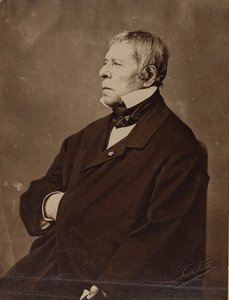
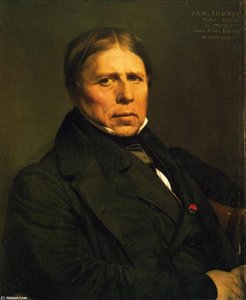
イングレス
1780 - 1867 , フランス
基本情報
- フルネーム: ジャン=オーギュスト・ドミニク・アングル
- 主な作品:
- アガメムノンの使者
- ルイ13世の誓い
- ベルタン氏の肖像
- トルコ風呂
- 出生地: モンタウバン、フランス
- 国籍: フランス人
- 影響を与えたアーティスト:
- アンリ・マティス
- パブロ・ピカソ
- 影響を受けたアーティスト:
- ラファエロ
- ニコラ・プーサン
- ジャック=ルイ・ダヴィッド
- 死亡年月日: 1867年1月14日
- 生年月日: 1780年8月29日
- 芸術運動またはスタイル: 新古典主義
関連記事
至高の芸術:新古典主義を象徴する10選 – 華麗なる巨匠と時代を彩る傑作の世界
新古典主義を代表する10選!ダビッド、アンジェリカーら巨匠の傑作を紐解き、時代を超えた美と知性を探求。油絵、版画など高精細なアートプリントで、お部屋を華やかに彩りませんか?ArtsDot.comで至高の芸術を体験してください。
Jacques-Louis David: Neoclassical Ideals & Revolutionary Witness
Explore the life & art of Jacques-Louis David, leading Neoclassical painter of the French Revolution. Discover iconic works like 'The Death of Marat' and his lasting impact on art history. Expert analysis & high-quality reproductions at ArtsDot.
Charles Le Brun: Master of French Baroque Classicism & His Enduring Legacy
Explore the life & art of Charles Le Brun, master of French Baroque Classicism. Discover his royal commissions, influence on Versailles, and enduring legacy through detailed analysis & stunning artworks.
Simon Vouet: A Baroque Master's Journey from Italian Influence to French Classicism
Explore the life & art of Simon Vouet, a pivotal French Baroque painter who introduced Italian styles to France. Discover his masterpieces and lasting influence on 17th-century art.
Anne-Louis Girodet: Bridging Neoclassicism & Romanticism with Emotional Truth
Explore the captivating world of Anne-Louis Girodet, a pivotal figure bridging Neoclassicism & Romanticism. Discover his masterpieces and unique artistic vision with ArtsDot.