

 プレビュー
プレビュー
 プリントを購入
 シェアする
シェアする シェアする
シェアする
 詳細を見る
詳細を見る

 ダウンロード
 似ている作品
 X線調査
X線調査 スライドショー
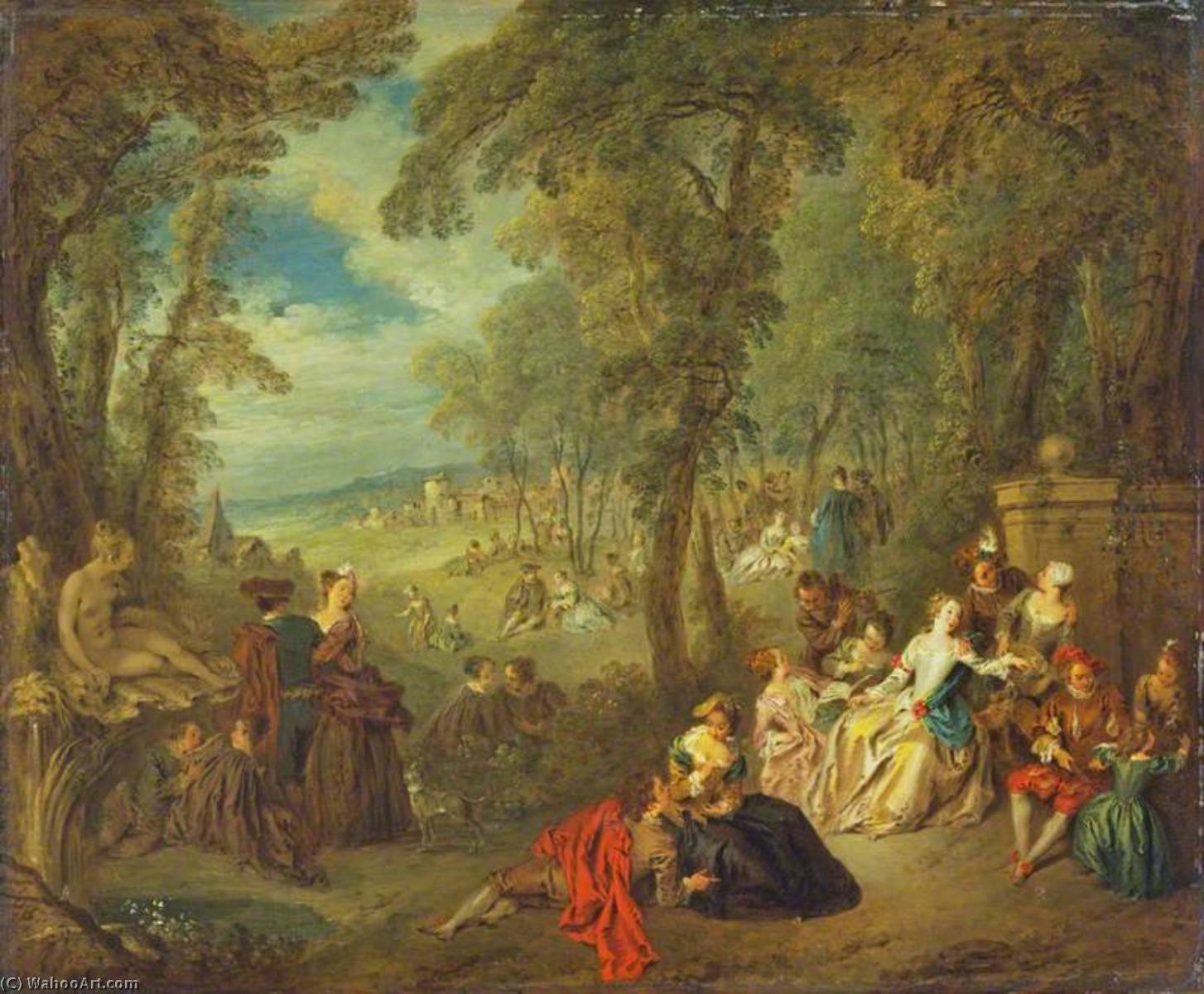
Fête in a Park
 Acrylic On Canvas
- WallArt
- Rococo
 1730
1730 53.0 x 64.0 cm
 ロンドンタワー
 詳細を見る
詳細を見る
オンラインプレビューをはるかに凌ぐ、高解像度で鮮明なデジタル画像をご購入いただけます。
各ファイルは、社内の専門家が高度なツールと熟練した手作業によるレタッチを用いて、細心の注意を払って準備されています。すべての画像において、卓越した鮮明度、正確な色彩再現性、そして繊細なディテールを保証いたします。
最終ファイルは、プロフェッショナルな編集・印刷環境ですぐにご利用いただけるよう最適化された状態で、72時間以内にメールにてお届けいたします。これは、一流のデザインスタジオ、出版社、ギャラリーから信頼されているものと同等の品質です。
デジタル画像のご注文に付随する特典
高品質なデジタル画像配信を、確かな品質で。
ArtsDot.com を選ぶことは、単に画像を手に入れることではありません。それは、プロの手によって精密に仕上げられ、満足保証が付いた高品質なデジタルアートワークを受け取ることを意味します。ご注文いただいた際に自動的に付随する内容は、以下の通りです:

メールですぐにお届け
ご注文から72時間以内に、高解像度のデジタル画像ファイルがメールでお手元に届きます。すぐにそのままご利用いただけます。

AI技術で最適化されたデジタルファイル
お客様の作品は、高度なAIツールと専門家による手作業の編集を組み合わせてプロフェッショナルに最適化されており、細部のディテール、鮮明さ、そして正確な色再現性を最大限に引き出しています。

一生涯無料の再送サービス
ファイルを誤って削除したり、紛失してしまったりしましたか?ご安心ください。いつでも無料で再送いたします。

輸入手数料は一切かかりません
関税や手数料、配送料を気にすることなく、お気に入りのアートワークをすぐにお楽しみいただけます。デジタルダウンロードは常に免税です。

色彩再現の保証
プロ仕様のツールとカラーマネジメント技術を用いることで、デジタル画像が元の色を最大限に忠実に再現することを保証いたします。

60日間満足保証
ご購入いただいたデジタル画像にご満足いただけない場合は、60日以内であれば、修正または100%の返金(理由を問う必要はありません)をさせていただきます。

100% 返金保証
ご満足いただけない場合は、デジタルファイルを受け取ってから60日以内であれば、理由を問わず全額返金いたします。

まとめ買い割引
3枚購入で10%OFF - 5枚購入で15%OFF - 10枚以上購入で20%OFF。クリエイティブなプロジェクト、ギャラリー、エージェンシーに最適です。
作品の詳細
A Moment of Sociable Grace: Jean-Baptiste Pater’s *Fête in a Park*
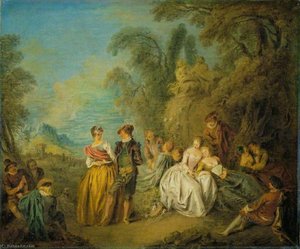
Jean-Baptiste Pater's 1730 painting, *Fête in a Park*, isn’t merely a depiction of an outdoor gathering; it’s a carefully constructed tableau of leisure, social grace, and the burgeoning Rococo sensibility. Captured with a delicate hand and shimmering palette, the scene unfolds within a verdant park setting – a space increasingly valued as a refuge from the formality of court life. The painting immediately draws the eye to a group of elegantly dressed figures engaged in conversation, reclining on cushions, and enjoying the pleasures of the day. Pater masterfully employs light and shadow to create an atmosphere of hazy warmth, suggesting a late afternoon sun filtering through the trees – a common motif in his *fête galante* compositions.
- Subject Matter: The *fête galante*, or “gallant fête,” was a popular genre during the Rococo period, depicting idyllic gatherings of aristocrats enjoying picnics, music, and conversation amidst beautiful landscapes. Pater’s work exemplifies this trend, prioritizing atmosphere and social interaction over dramatic narrative.
- Style & Technique: Pater's style is deeply rooted in the influence of Antoine Watteau, whom he served as a student. He inherits Watteau’s penchant for pastel colors, loose brushstrokes, and an emphasis on creating a sense of fleeting beauty. Notice the subtle layering of figures, the delicate rendering of fabrics, and the almost dreamlike quality of the scene – all hallmarks of Pater's technique.
The Courtier’s Paradise: Contextualizing *Fête in a Park*
To fully appreciate *Fête in a Park*, it’s essential to understand its historical context. The Rococo period, flourishing in the 18th century, was characterized by an embrace of pleasure, luxury, and ornamentation – a direct reaction against the austerity of the preceding Baroque era. Royal courts across Europe, including that of Frederick II of Prussia (for whom Pater painted two similar portraits), sought to cultivate environments of refined entertainment and social connection. The park itself became a symbol of this pursuit, offering a space for aristocratic families to escape the constraints of palace life and indulge in leisurely pursuits.
Frederick the Great, a renowned patron of the arts and a keen admirer of Watteau’s work, commissioned Pater to paint two versions of *The Sultan au Jardin* (The Sultan in the Garden), reflecting his fascination with exoticism and the pleasures of courtly life. *Fête in a Park*, while not directly depicting royalty, embodies the same spirit of aristocratic indulgence and refined entertainment.
Symbolic Layers: Decoding the Details
Beyond its surface beauty, *Fête in a Park* is rich with symbolic details. The figures themselves represent various facets of aristocratic society – musicians, dancers, ladies of leisure, and gentlemen engaged in conversation. The scattered cushions and musical instruments suggest an atmosphere of relaxed enjoyment and artistic appreciation. The trees, rendered with delicate precision, provide a sense of enclosure and tranquility, while the distant landscape hints at the vastness and beauty of the surrounding countryside. Even the clothing worn by the figures—flowing gowns, embroidered jackets, and feathered hats—are laden with symbolic meaning, reflecting social status and fashionable trends.
The inclusion of a Turkish-inspired element – hinted at in the attire of some of the figures – speaks to the European fascination with the Ottoman Empire during this period, representing exoticism and luxury.A Legacy of Elegance: Pater’s Enduring Appeal
Jean-Baptiste Pater's *Fête in a Park* remains a captivating example of Rococo artistry. Its delicate beauty, masterful technique, and evocative atmosphere continue to resonate with viewers today. Reproductions of this painting offer a glimpse into the world of 18th-century aristocratic life – a world defined by pleasure, elegance, and an appreciation for the simple joys of companionship and beauty. It’s a piece that invites us to pause, reflect, and savor the fleeting moments of grace and social connection.
関連作品
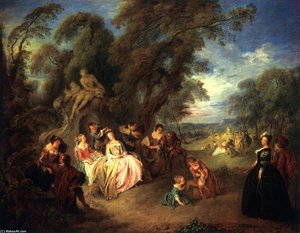
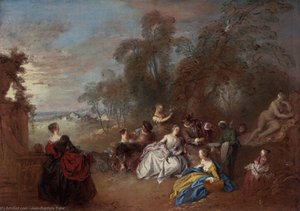
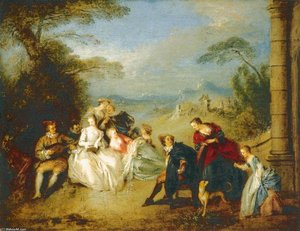
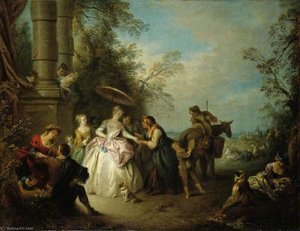
作家の略歴
ジャン=バティスト・パテール:ワトーの唯一の弟子
フランス・ロココ美術の歴史において、ジャン=バティスト・パテール(1695年12月29日 – 1736年7月25日)ほど特異な存在感を放つ画家はいないでしょう。彼は、この時代の最も輝かしい巨匠アントワーヌ・ワトーが残した、唯一の記録ある弟子なのです。フランスのヴァランシエンヌに生まれたパテールの芸術への道は、彫刻家であった父アントワーヌ・パテールの指導のもとで始まりました。父から受け継いだ造形への深い理解と職人技への敬意は、後の彼の作品に確かな基盤を与えました。しかし、パテールの芸術的ビジョンを決定的に形作ったのは、紛れもなくワトーでした。二人の間には、崇拝と摩擦が入り混じる複雑な関係がありましたが、そのダイナミズムこそが、時代を代表する影響力を持った画家を誕生させる原動力となったのです。- 初期の修行と影響:パテールの形成期は、父アントワーヌのもとで彫刻の基礎的な原理を吸収し、技を磨く日々でした。その後、ジャン=バティスト・ギドの下で芸術の研鑽を積みますが、この彫刻的な素養は、後に彼がパリでワトーの師事を受ける際、計り知れない価値となりました。1713年、若きパテールは、繊細なパステルカラーの色彩と、空気に溶け込むような煌めく線によって特徴づけられるワトー独自のスタイルに、瞬時に心を奪われたのです。
- ワトーとの絆:ワトーの影響は、単なる様式の模倣に留まりませんでした。それはパテールの概念的な枠組みそのものに浸透していきました。ワトーの気質が非常に難解であったことは有名ですが、パテールはその巨匠が持つ、空気感や感情に対する深い洞察力を見抜き、自らの作品においてもその追求を怠りませんでした。二人の短い共同作業は、パテールの導き手としてのワトーの遺産を、より強固なものとしたのです。
- ロココ様式と技法:パテールの画風は、優雅さ、軽妙さ、そして官能的な喜びを謳歌するロココ美学を象徴していました。彼は伝統的なパステル調の色使いを用い、驚くべき精密さで煌めく線を引くという、卓越した技法を駆使しました。この独特なアプローチは、後のフランチェスコ・グアルディによる空気遠近法の探求を先取りするものであり、パテールの鋭い観察眼と革新的な精神を物語っています。
代表作とパトロン
パテールの創作活動の核心は、主に「フェート・ギャラント(雅なる宴)」にありました。これは庭園や風景の中で貴族たちが集う牧歌的な情景を描いたジャンであり、ワトーが提唱し、パテール自身が完成へと導いたものです。彼の最も名高い作品には、柔らかな光に包まれた洗練された社交の場を息を呑むような美しさで描き出した「雅なる会話」があります。この作品は、美と優雅さに没頭したロココ時代の本質を見事に捉えています。また、「荷車のある風景」も重要な達成の一つであり、質感や色彩の微妙なニュアンスを伝える彼の能力が示されています。この作品は、グアルディによる画期的な空気遠近法の先駆けとも考えられています。- フリードリヒ大王:パテールは、プロイセン王フリードリヒ2世からの肖像画の依頼を通じて、大きな名声を得ました。特に「ハレムの سلطان(スルタン)」や「庭園のスルタン」といった作品は、王族としての威厳を描き出し、被写体の心理的な複雑さを捉える彼の卓越した技術を証明しており、彼が宮廷画家としての地位を確立する決定打となりました。
- 美術館のコレクション:パテールの作品は、パリのルーヴル美術館やヴァランシエンヌ美術館をはじめ、世界中の権威ある機関に収蔵されています。これらのコレクションは、彼の芸術的価値がいかに永続的であり、歴史的な重要性を持っているかを物語っています。
遺産と芸術的意義
ジャン=バティスト・パテールがフランス・ロココ美術に果たした貢献は、疑いようのないものです。彼はワトーの様式的な革新を受け継ぎながらも、自らの独自の芸術的声を確立し、その時代の精神を捉えた極めて重要な人物でした。その緻密な技法と情緒豊かな構図は、今なお美術史家や芸術愛好家たちの称賛を集め続けています。これこそが、18世紀フランスを代表する画家の一人としての、パテールの不朽の遺産なのです。パテールの生涯と作品についてより深く知るには、ArtsDotをご覧いただくか、ヴァランシエンヌ美術館のウェブサイトを探索してみてください。
ジャン=バティスト・パテール
1695 - 1736 , フランス
プロフィール概要
- Artistic Movement Or Style: ロココ・パステル・パレット
- Artists Or Movements Influenced By This Artist: ['フランチェスコ・グアルディ']
- Artists Who Influenced This Artist: ['アントワーヌ・ワトー']
- Date Of Birth: 1695年12月29日
- Date Of Death: 1736年7月25日
- Full Name: ジャン=バティスト・パテール
- Nationality: フランス
- Notable Artworks:
- コンヴェルサシオン・ガランテ
- 荷車のある風景
- 舞踏会の楽しみ
- Place Of Birth: フランス、ヴァランシエンヌ

