

 プレビュー
プレビュー
 シェアする
シェアする シェアする
シェアする
 詳細を見る
詳細を見る

 ダウンロード
 似ている作品
 X線調査
X線調査 スライドショー
 統計情報
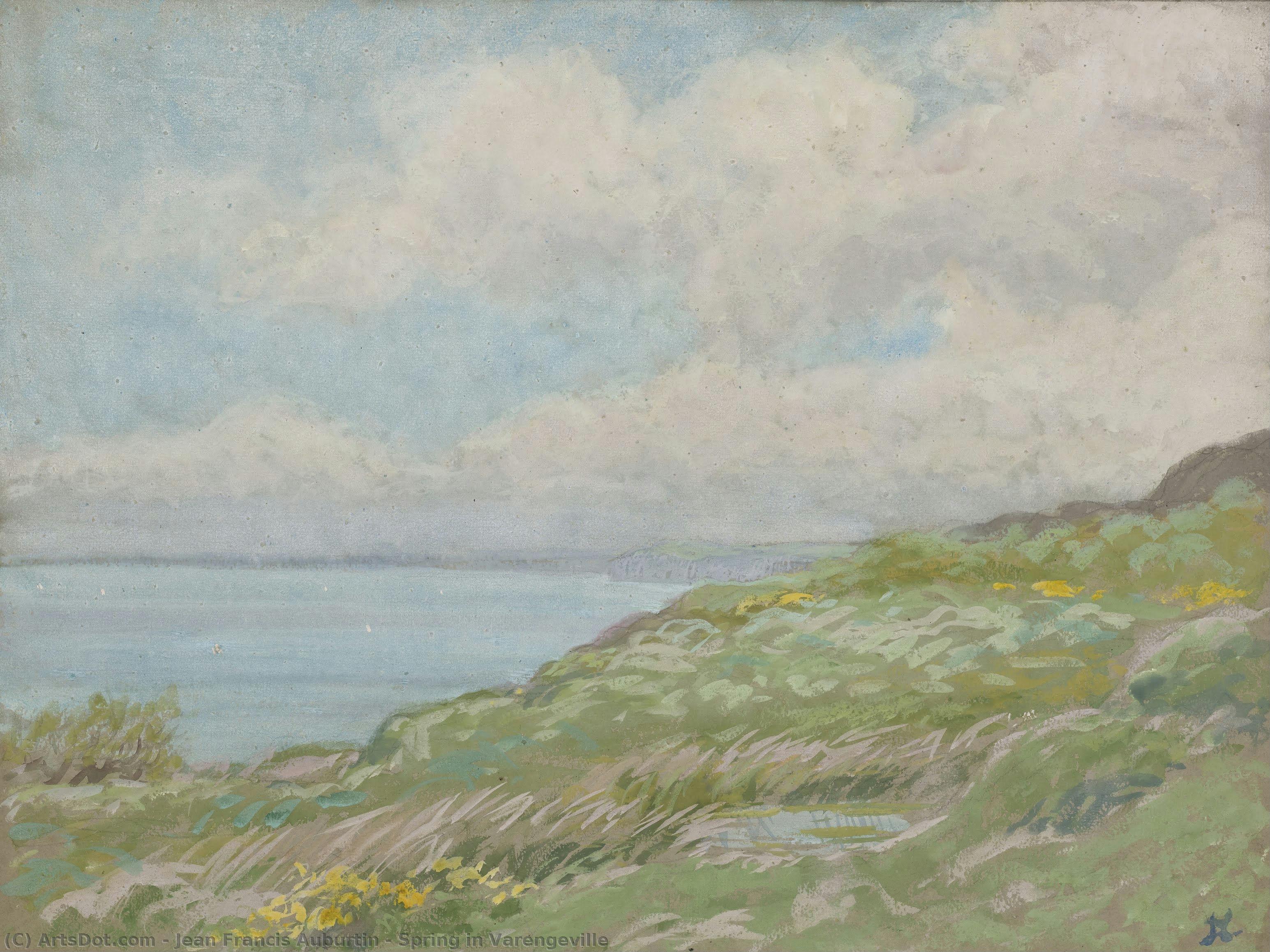
統計情報Spring in Varengeville
 Oil
Oil- WallArt
- Impressionism
 19th Century
 50.0 x 67.0 cm
 Musée des impressionnismes Giverny
 詳細を見る
詳細を見る
手描き油彩複製画
当社のアーティストが、お客様のご希望のサイズと額縁に合わせて、キャンバスに手描きで制作する油彩画です。 ( プリント版に切り替え デジタル画像販売へ切り替え)




P118B $10

P118H $10

P118W $10

P438Z $10

P508JH $12

P508YH $12

P805H $10

P805Z $10

P919BZ $10

P919G $10

P919XJ $10

P959ZH $10

P968JZ $12

W106C $8

W218G $10

W218JH $8

W218Y $10

W307PJ $10

W316G $10

W316PJ $8

W316Y $10

W398PJ $8

W4111J $10

W500HY $15

W500JH $15

W692G $12

W849H $8

W940BG $15

W953PJ $8




作品のオリジナル比率に合わせた、当店の規定サイズからお選びください。

特定のフレームやスペースに合わせて、ご希望のサイズをご入力いただけます。選択されたサイズが元の画像の比率と異なる場合、アートワークをトリミングするか、手描きで要素を追加して絵画を拡張いたします。デジタルモックアップ を制作し、制作開始前にご確認(承認)をいただきます。
画面上のプレビューは、実際のトリミングや拡張を正確に反映しているものではありません。最終的な構図は、モックアップによってのみ正確にご確認いただけます。
カスタムサイズもご利用いただけますが、元の比率を維持するためには、あらかじめ用意されたリストからサイズを選択することをお勧めいたします。
ご注文後、ArtsDot.com チームより詳細な指示をお送りするとともに、仕上がりイメージ(モックアップ)をご提供いたします。


 ガラスオプションは、110cm未満のサイズでのみご利用いただけます。

Spring in Varengeville
複製技法
複製画のサイズ
-


合計金額
$ 263
A Symphony of Light and Shoreline: Rediscovering Spring in Varengeville
In the delicate brushstrokes of Jean-Francis Auburtin, the landscape ceases to be a mere depiction of geography and transforms into a profound emotional experience. His masterpiece, Spring in Varengeville, invites the viewer to step into a world where the boundaries between the earth and the sky dissolve into a luminous haze. The scene captures a verdant, grassy hillside that rolls gently toward the sea, overlooking a tranquil body of water that reflects the shifting moods of the heavens. This is not just a view of the Normandy coast; it is an invitation to stillness, a moment frozen in time where the vitality of spring meets the eternal rhythm of the tides.
The composition is masterfully balanced, utilizing a sense of depth that draws the eye from the lush, textured foreground toward the distant horizon. Two small boats rest upon the water, acting as silent anchors within the vastness of the seascape. These vessels, positioned at varying distances, provide a sense of scale and human presence without disrupting the profound solitude of the landscape. The sky, heavy with soft, billowing clouds, creates a dynamic interplay of light and shadow, casting a gentle, diffused glow over the emerald slopes and the ceruleament blue of the sea. It is through this careful orchestration of elements that Auburtin achieves a sense of atmospheric movement, making the air itself feel palpable to the observer.
The Impressionist Soul and Symbolist Spirit
To understand the technical brilliance of Spring in Varengeville, one must look to Auburtin’s unique position within the French art movement. While his technique draws heavily from the Impressionist fascination with light and color, there is an underlying Symbolist quality that elevates the work beyond simple naturalism. He does not merely record the way sunlight hits a wave; he captures the feeling of nostalgia and the quiet mystery inherent in nature. His palette is a sophisticated arrangement of cool blues, deep greens, and soft whites, applied with a fluidity that suggests both precision and spontaneity.
For the discerning collector or interior designer, this painting offers more than just aesthetic beauty; it provides an emotional anchor for a space. The artwork possesses a restorative quality, making it an ideal centerpiece for rooms designed for contemplation, such as a library, a study, or a serene bedroom. A high-quality reproduction of this piece brings with it the prestige of French art history and the timeless elegance of the coastal landscape. It serves as a window into a bygone era of romanticism, offering a sense of peace and continuity that remains deeply relevant in our fast-paced modern world.
関連作品
アーティストの略歴
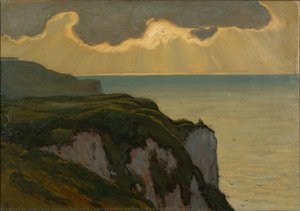
Jean-Francis Auburtin: A Painter of Coastal Dreams
Jean-Francis Auburtin (1866-1930) remains a captivating figure in French art, often described as a painter who captured the very soul of the Normandy and Brittany coastlines. More than simply depicting landscapes, he created immersive experiences—a blend of Impressionism, Symbolism, and a deep connection to the natural world that continues to resonate with viewers today. His work is characterized by a luminous quality, a masterful use of light and color, and an almost palpable sense of atmosphere, inviting the viewer into the heart of his painted scenes.
Born in Paris, Auburtin’s early life was steeped in artistic influence. His father, Emile Auburtin, was an architect who introduced him to the world of design and construction, while his mother, Louise Jeanne Marion, provided a grounding in classical aesthetics. Crucially, he encountered the work of Claude Monet during his studies at the École des Beaux-Arts, an encounter that profoundly shaped his artistic trajectory. Monet’s emphasis on capturing fleeting moments of light and color—a revolutionary approach at the time—became a cornerstone of Auburtin's own practice. He also found inspiration in the Symbolist movement, particularly its exploration of subjective experience and the evocative power of nature.
Early Career & Decorative Commissions
Following his formal training, Auburtin initially pursued a career as a decorator, a path that proved both lucrative and creatively fulfilling. He quickly gained recognition for his ability to transform public spaces with elegant and atmospheric designs. He was commissioned to adorn the ceiling of the Sorbonne’s dining room, the university's zoology amphitheater, and even the prestigious Salle des Colonnes at the Conseil d’État. These commissions demanded a sophisticated understanding of color theory, composition, and spatial design—skills that undoubtedly informed his later work as a landscape painter.
However, Auburtin never abandoned his passion for painting *en plein air*. He meticulously documented his travels along the French coast, creating hundreds of sketches and studies that served as the foundation for his finished paintings. These journeys were not merely excursions; they were deeply personal explorations of light, color, and the rhythms of the sea.
The Language of Light & Color
Auburtin’s distinctive style is immediately recognizable by his masterful manipulation of light and color. He eschewed sharp outlines and precise details in favor of a hazy, atmospheric approach—a technique he honed through years of observing the shifting conditions of the coastline. His palette was rich and luminous, dominated by blues, greens, and golds, often layered with delicate washes of pastel to create an ethereal effect. He frequently employed a technique known as *pointillé*, using small, closely spaced brushstrokes to build up texture and depth—a method reminiscent of Monet but imbued with his own unique sensibility.
His paintings are not simply representations of landscapes; they are emotional responses to the beauty and power of nature. He captured the feeling of a misty morning over the sea, the warmth of sunlight on weathered rocks, and the drama of a storm-tossed coastline—evoking a sense of tranquility, mystery, and profound connection.
Key Works & Legacy
Among Auburtin’s most celebrated works is “Varengeville Church from the Pebble Beach,” a painting that exemplifies his signature style. The church, nestled within a dramatic coastal landscape, is rendered with remarkable sensitivity—its weathered stone walls bathed in soft light and framed by a swirling mist. Other notable paintings include depictions of Étretat’s cliffs, Belle-Île's rugged coastline, and the serene waters of Normandy.
Jean-Francis Auburtin’s legacy extends beyond his individual works. He is considered a key figure in the transition between Impressionism and Symbolism, bridging the gap between objective observation and subjective experience. His paintings continue to be admired for their beauty, atmosphere, and profound connection to the natural world—a testament to his artistic vision and enduring talent.
His work can be found in museums such as the Musée des Impressionnismes Giverny, the Smithsonian American Art Museum, and the MuMa Le Havre, showcasing his influence on French art history.
jean francis auburtin
1866 - 1930
基本情報
- Artistic Movement Or Style: Post-Impressionism
- Artists Or Movements Influenced By This Artist:
- Impressionism
- Symbolism
- Artists Who Influenced This Artist:
- Puvis de Chavannes
- Claude Monet
- Date Of Birth: 1866
- Date Of Death: 1930
- Full Name: Jean-Francis Auburtin
- Nationality: French
- Notable Artworks:
- Varengeville Church
- Normandy Coast
- Place Of Birth: Paris, France
関連記事
Serene Visions: Exploring Themes of Tranquility in Art History & Contemporary Practice
Explore the history of serene landscape art & discover artists who evoke tranquility. Find the perfect calming artwork for your home with expert guidance from ArtsDot.

Impressionistic Landscapes: 10 Masterpieces That Changed Art & Decor
Journey into the heart of Impressionism! Explore 10 masterpieces by Monet, Renoir & Degas that revolutionized landscape art. Discover their stories, techniques & find museum-quality reproductions to elevate your home decor on ArtsDot.com.

印象派風景を彩った至宝:アート史に名を刻む10選
印象派風景の革新を彩った10選。モネ、ルノワールら巨匠の名作を紐解き、色彩と光が生み出す感動の世界へ。アートの歴史とインテリアのインスピレーションをArtsDot.comで。高品質な複製画で、あなただけの空間を創造しましょう。

ジョン・コンスタブルの傑作25選:英国風景画の巨匠が描く自然と光の詩 | ArtsDot
ジョン・コンスタブルの傑作25選。英国風景画の巨匠が描く自然と光の詩の世界へ。ロマン主義を代表する絵画、デダム・ヴェールやヘイ・ウェインなど、ArtsDotで高品質なアートプリントをお楽しみください。インテリアに深みと感動を。コレクションはこちら。

Evocations of Place: A Historical Journey Through Landscape Art
Explore the rich history of landscape art with ArtsDot. Discover renowned artists, movements like Impressionism & Romanticism, and expert guidance for collecting timeless pieces. Find your perfect serene escape today!